Use local search demand to decide what to stock
Compare local rental searches with actual inquiries, availability and completed trials before adding equipment.

A rental shop notices more searches for black folding chairs. Staff hear the same phrase at the counter and begin talking about buying two new carts of them. A closer look shows that some inquiries are for chairs to purchase, others come from venues outside the delivery area, and the jobs the shop could serve tend to cluster on two weekends. The searches identified a possible market. The actual orders and the capacity to fulfill them are what can justify buying stock.
Use local search as an early signal. Define the products and area the business can serve, then compare search activity with actual inquiries, unfilled dates and completed jobs. Run a measured trial on suitable orders. Decide whether to acquire more stock only after you know what customers are asking for and what filling the booking costs.
Define a useful question before looking at numbers
Start with the inventory decision. “Should we carry a second color of folding chair for warehouse pickup?” is easier to answer than “Is there demand for event rentals?” Name the relevant quantity range, crew and fulfillment path. A chair color might require the same loading and cleaning workflow as existing furniture. A larger tent could need a different vehicle and installation staff. Write down the main requirement that would make you consider a purchase and what could rule it out.
Identify the area for the test. A shop with a known delivery zone can compare demand within it and treat outlying areas separately. A pickup-focused shop may see customers arrive from a wider region. Use real orders to choose the useful area and state whether you are examining pickup, delivery or both. If the search tool cannot report at that level, record the geography it actually uses. Give a broad-market figure less weight when it includes many places the shop cannot serve.
Decide whether the purchase adds a new offer or relieves a capacity constraint. A new chair style needs some evidence that customers want that style at a viable rate. More units of the existing style may be justified by lost orders on dates when the warehouse and transport could have served them. The search data can look similar for both questions. The booking records that support the decision are different.
Group searches by intent and by the offer they refer to
Write down actual phrases people use. Include the equipment name, common variants and helpful qualifiers such as rent, pickup or nearby city. Group variants that describe the same rental choice. Give a separate row to terms that may mean a retail sale, trade supply or resale. A term with high volume and unclear intent can be a starting point for research. A specific request for black chair rentals with pickup this weekend is closer to a job the business can investigate.
Use Search Console if your site already appears for the category. Filter to a related collection or product page and look at the queries that show up with enough data. It reflects your site’s visibility and how people use those results. Keyword Planner can give historical estimates for keywords and close variants under selected locations and settings. Those estimates answer a broader question about searches, and they are not a count of orders or even unique people. Record the date range and settings so you can repeat the comparison. Google Search Console performance report and Google Ads historical metrics guidance.
Do not add estimates for very similar queries as if each search were counted only once. Several terms can reflect a similar item or searcher. Use a stable group of plain phrases and observe broad movement over time. Look for similar patterns in what customers actually say on calls and requests. If one term looks attractive, check the likely mix of uses by reviewing queries and product pages that appear, along with the type of requests you can realistically fulfill.

Compare the search signal with orders the shop could serve
Review actual inquiries for the product or a reliable substitute. Keep a short list with the date of the event, useful area, requested quantity, fulfillment, quoted rate and outcome. Note whether the shop lacked the particular equipment, had stock tied up, lacked vehicle or labor capacity, or declined for another reason. Separate customers who asked a first question from those who offered enough information for a real quote. Include mentions of why a suitable substitute was accepted or declined when you know.
Check specific dates before counting lost orders. Three customers may have needed eighty chairs at the same hour, and a fourth could have rented the same chairs later if turnaround conditions allow. Total requested units can exaggerate or underestimate the inventory required. Follow the occupied period from staging through ready return. Look at whether the proposed new chairs would have allowed an additional job to be accepted. If the same truck was already unavailable on all three dates, the extra stock may not have removed the restriction.
Record substitutes honestly. Someone who asks for a black chair and rents an available gray one still gives a clue about preference. The shop already completed that rental, and a new black chair does not create another order by itself. Compare changes in accepted jobs, price actually paid and expected stock use. The team might decide a different color is worth offering for another reason, such as winning a regular venue account that needs it. In that case, record the reason and test it directly.
Look for seasonal and geographic patterns you can serve
Compare the same months or event periods before assuming search growth will persist. A school graduation month, sports event or festival can bring concentrated demand. The shop needs to know whether those events repeat, when requests arrive and whether it can enter early enough to take bookings. Review historical completed rentals and declined dates alongside search estimates. If the signal is limited to one unusually busy weekend, a short-term solution may be a better way to test the offer.
Check whether the category serves a route you already use. A search in a nearby town may produce a valuable inquiry for a standard package, but building a whole new service area to deliver a few chairs could require more resources than the jobs can support. Verify access and truck requirements before counting those requests. Where pickup is a genuine option, record whether people are willing and equipped to collect the rented quantity. Match the opportunity to a service the warehouse can actually stage and recover.
Identify demands the shop sees too late. A growing number of inquiries could come from people searching after most local stock is gone. That can point to dates with unmet need, or to customers whose lead time makes service hard to provide. Ask whether enough people will book earlier under predictable terms. A trial with an ordinary date selection and realistic turnaround can help distinguish interest from orders that can be served reliably.
See what adding the item would change in the warehouse
Model a normal order and a busy one. Use actual dimensions and handling requirements for the equipment, carts, storage and vehicle. For example, a chair color sold by several vendors may stack differently from the existing line. Give it a place on the shelf and plan how it would be labeled, counted and loaded. Compare the two workflows under the same order size. If an item needs its own cart or takes twice as much space, include that impact in the proposed purchase.
Check maintenance and accessories. Ask what parts can be replaced, who can do the work and whether new items use the same packaging or covers. Estimate the preparation and turnaround needed for the days you want to serve. If several variations cannot substitute for each other on a reservation, account for how their smaller pools affect the number of complete orders you can fill. More catalog names can leave a shop with too few usable units of any one offer.
Put the proposed inventory through one real scheduling example. Show which jobs would get the equipment, how staff load it and when it is expected back and ready. Add the existing stock and commitments afterward and look for conflicts. Use the same assumptions for multiple candidates. A product automatically looks useful if the model ignores labor or setup, and the shop needs to know how the job would work in the ordinary schedule.
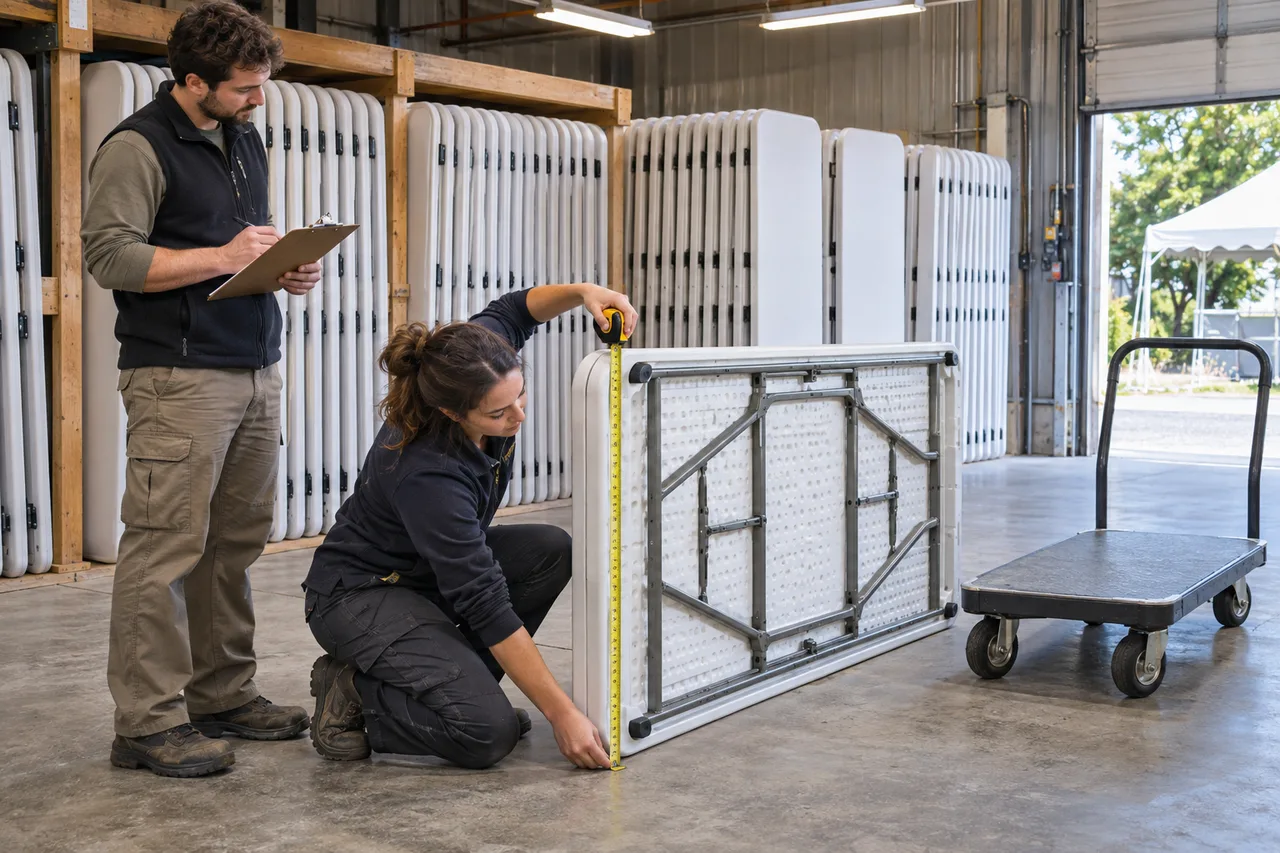
Run a trial before treating interest as a purchase order
Try a small acquisition, a legitimate referral arrangement or approved subrental when practical. Show what the shop can actually provide and when confirmed availability will be known. If the team is gathering interest in an upcoming category, call it that and use an inquiry or waitlist rather than presenting stock that is not ready to book. Clear communication lets the customer make other plans while the business tests the idea.
Choose representative orders and define the test beforehand. An example might be a new black chair package for two comparable venue pickup periods. Track qualified inquiries, actual quotes, completed handoffs, customer feedback and returns. Record which other orders the trial displaced or whether it used an existing gap in the schedule. Evaluate the rate people actually accept and the costs of preparing, delivering and recovering the equipment.
Give the test a finish date and set out when enough evidence would justify more stock. A business might want to see several completed bookings with a viable contribution, repeatable preparation and room to serve other commitments. The right bar depends on how much the shop would spend and how hard a mistake would be to reverse. A lower-cost item can have a different test from furniture that requires a major storage change. Use estimates to set a starting bar and replace them with observed numbers as the test runs.
Calculate the value of the inventory you can actually put to work
Use the full cost of bringing a usable rental unit into the operation. Include purchase, freight, parts, suitable storage and initial preparation. For a specific purchase, note what costs continue with ownership and what varies with an order. Add staff time, delivery and maintenance where it changes. Use supplier quotes and actual shop figures if available. Two products with the same list price can have very different readiness costs.
Suppose a small package would cost 1,600 dollars to put into service and contribute 120 dollars per additional completed rental after direct order costs. Under those illustrative assumptions, fourteen additional rentals would roughly cover the initial cost before the other recurring costs and residual value. If likely orders are only concentrated on three dates and the equipment cannot turn during those windows, the payback may be much slower. Use booked cycles you can reasonably serve, including expected quiet periods.
Compare a conservative scenario and a reasonable higher one. Under one, a few additional orders can be served in open windows and the rest are substitutions. Under the other, the package attracts repeat venue jobs and the shop learns a stable turnaround. Check what kind of evidence supports each forecast. If the answer changes dramatically after removing one optimistic estimate, keep the offer in a smaller trial or wait for more completed work before expanding.
Apply the method when two candidates compete for one shelf
Suppose two chair styles are getting attention and the shop has room for only one new cart. For the first style, the office sees frequent searches and five requests, three of which were from people wanting to purchase chairs. It quoted the two rental inquiries but received neither order because both needed a delivery window already committed to tents. The second style drew less search attention. A venue partner asked for it twice and accepted a quote for a substitute on one date while saying its usual room layout needed the original style the next time. Record what is known about each actual order before comparing the two demand signals.
The first style may still be worth investigating if the business can reach a suitable pickup group. The second calls for a more concrete venue trial. Ask about the next realistic event, the customer’s required count and the rate at which the venue can book. Check the actual space and handling cost for both carts. If neither result supports a normal order, keep using the shelf for existing stock until the business has more evidence. That can preserve room to test again when customer timing or transport changes.
Keep track of the mix you need to sell. A stack of thirty new chairs may only help jobs requiring a smaller quantity. Eighty of one style could satisfy the venue’s typical event but leave less space for other profitable equipment. Compare the most likely order sizes with the inventory pool you can safely operate. If two similar styles combine well only at certain events, confirm which customers accept the mix before treating them as interchangeable.
Build a short decision record. Include the evidence from search, actual accepted or declined orders, available room, direct cost and an estimate of how many additional jobs each candidate would allow. Tell the next buyer why the second candidate received a trial first and what would make you revisit the other one. A structured comparison lets the team collect the missing evidence while avoiding another full discussion each time an interesting term appears.
After the first test, look at what the shop learned even if there was no purchase. It may now know that a referral needs a larger count, that certain dates are impossible without another delivery window, or that search traffic is mostly for retail. Update the notes and choose the next question based on the part that could change an actual booking.
Review what the trial taught you about buying
Gather the evidence by question. What people looked for, what they asked the office to provide, which dates worked and what the order contributed belong on the same page. Keep any relevant failed orders along with the reason. That can show that demand exists but a delivery rule or schedule must change before adding equipment. Ask the people who prepared and received the items what the offer required in practice.
Choose a result staff can use. If demand was strong and the real work fit, buy a measured quantity and record which bookings the stock should enable. If the item only replaces existing sales, compare whether the mix still improves the service or rates the shop can offer. If a different product solves the customer’s need, use a better description or category link before committing to new units. Keep the decision open to change when another season offers better evidence.
Schedule a review after the next busy cycle. Compare actual utilization, labor and completed work with what the business expected. If callers still ask for the product but bookings stay low, look again at price, fulfillment, timing and how the offer is explained. Search interest can continue to guide questions after the purchase. The business can make more dependable decisions when its budget follows the orders it can actually complete.