Use a trade show demo to test equipment turnaround
Use a realistic return scenario at a trade show to see how equipment is checked, repacked and released for the next rental.
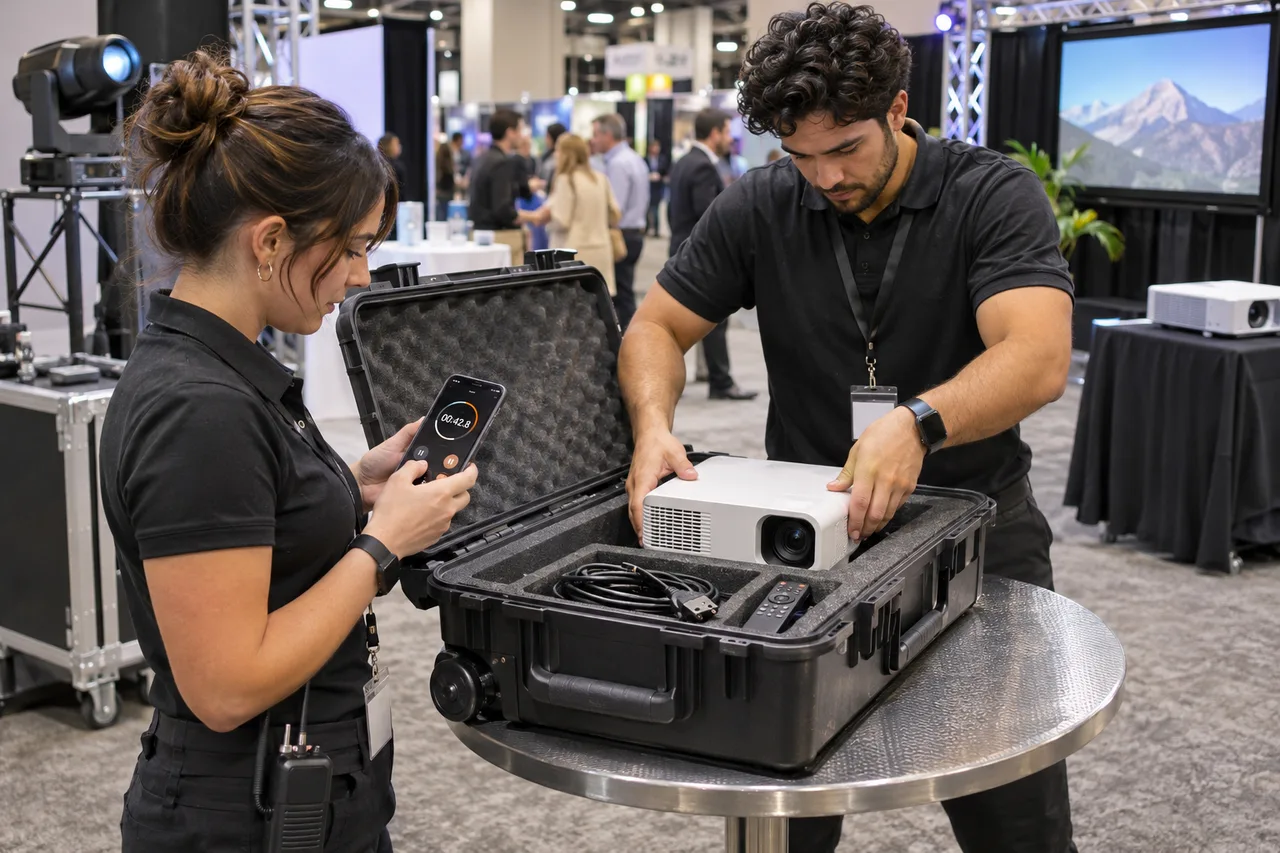
A projector starts cleanly on a vendor's demonstration table. The ports are easy to see, the image looks sharp and the representative packs the unit away in a few minutes. Back at the rental shop, a returned projector may arrive with a borrowed cable, a remote from a different model and a case that still needs to go out that afternoon. The buying question is how quickly staff can recognize what's missing, check the unit and release a complete kit for the next job.
Bring a sample rental journey to the show. Ask to see the product as it will be shipped, used and returned. Give the representative the same case you will use when comparing other equipment. Then decide which parts of the turnaround you can observe on the show floor and which require a test back at the shop. A useful demo produces a few working observations and a plan for verifying the rest.
Pick the turnaround problem the purchase should solve
Review a few recent jobs for the category. Find an ordinary return, a return that delayed another booking and a return that needed repair or replacement. Ask what happened between receiving the item and making it available again. A product can make one step easier while leaving the main delay in place. For example, a display may come out of its case faster, but staff may still have to track down a power supply or wait for the only employee who can verify the setup.
Find out whether the problem stems from the equipment, the process or both. If cases can be checked easily but nobody knows which employee owns the queue, a faster case won't resolve that handoff. If each case contains several parts that look alike and have different connectors, equipment selection may change how easily staff can identify the problem. Write down which delay the demo should help you investigate. Use examples staff remember and circumstances the vendor can reproduce without guessing about the day's warehouse activity.
Make the outcome observable. For instance, the shop might want a technician to check two returned projector kits during a forty-five-minute window between receiving and staging. In that time they need to count accessories, check the right unit, run the normal quick test and record any kit that has to be held. Give the vendor the equipment task and give the crew the full workflow. That lets everyone see what the demonstration can address.
Create a short return scenario you can carry
Choose one item or bundle and describe the rental in a few lines. Include the outgoing pieces, what the customer returned and which job the shop would like to serve next. Use a typical order with a common exception. A standard presentation package might return with the correct projector and case but an unmarked power cord. The next booking has the same kit reserved for a morning meeting. Your staff needs to identify the correct cord and know what to do if it can't be verified.
Bring a simple pick list and a photo of how your current kit sits in its case. You can ask the representative to show which pieces ship with the product and which ones are ordered separately. Ask them to set out the pieces in a way a receiving employee could count. If they work more quickly than your team because they assemble demos all week, treat those times as a demonstration result. Ask them to show what a second person would use to repeat the sequence.
Put the important moments on a worksheet:
- What comes out of the case for the first inspection.
- How the employee identifies the equipment and matches its accessories.
- Where staff look up the manufacturer's guidance for the normal test or care.
- What prevents a kit from going back into available stock.
- How the employee records that the completed kit is ready.
Give the worksheet enough room for a note about tools, staff or space needed at each step. That detail becomes useful when you're back at the shop comparing a fast demo with an existing bench that has limited room for open cases.
Observe the pack and unpack with every piece present
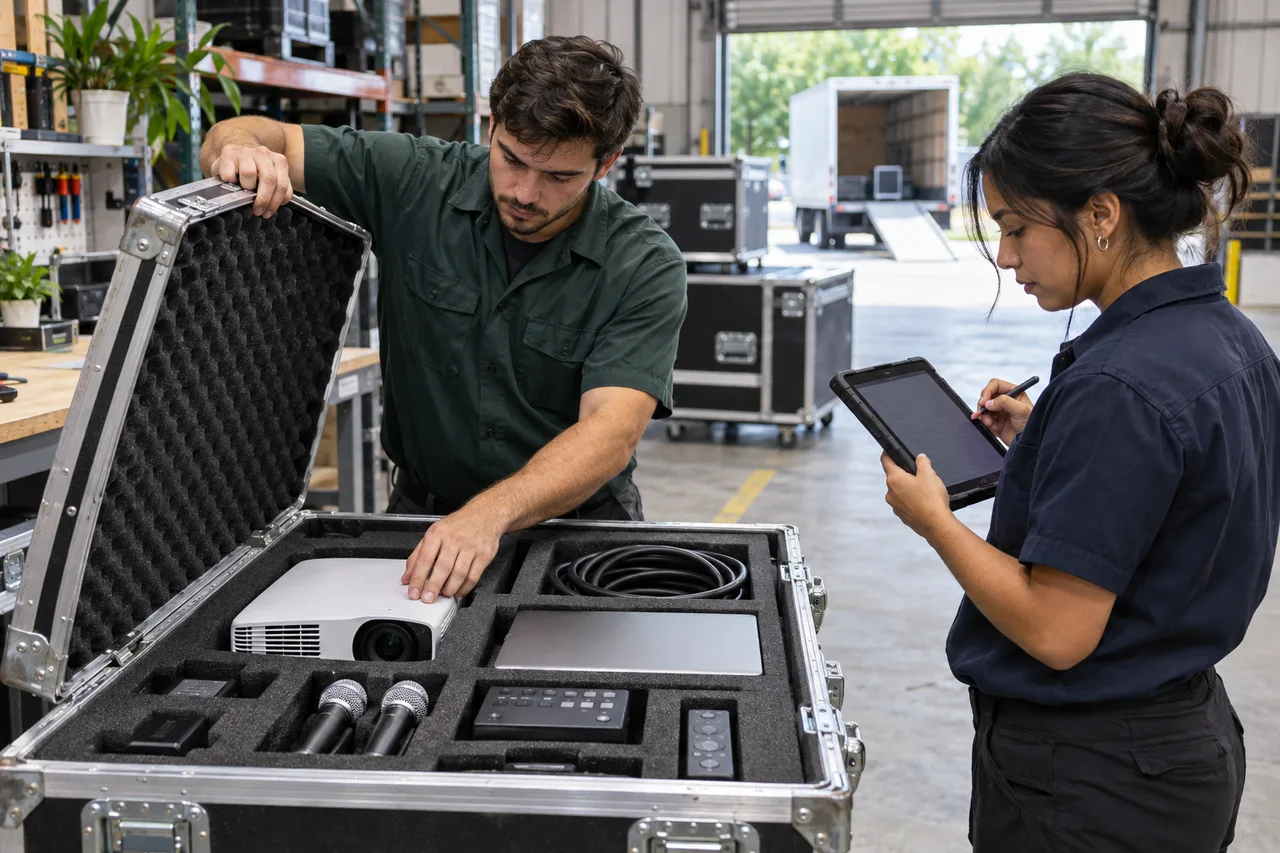
Ask to see what a renter receives. Watch the case open with the usual cables, brackets or accessories inside. Find out whether staff can count each important piece without lifting the main unit out, and whether the case closes with all items packed as intended. If the business often rents an optional accessory, check whether it has a labeled place or travels separately. A case that looks convenient with the bare product may be awkward once staff add the parts their customers expect.
Have the representative show where the model and serial information can be read during an ordinary inspection. Verify whether labels remain visible when the product is in the case, and whether a staff member can match two identical-looking pieces to the correct kit. If you already use inventory labels, discuss where the manufacturer allows new labels to go. Check what staff need to be able to read when one case is open next to another on a busy day.
Ask about the case itself. Ask how staff would spot a missing fastener, damaged wheel or torn insert and whether they can obtain the right replacement while keeping compatible cases in service. Record the answer for the exact case shown on the floor. The equipment purchase may include access to one kind of repair support, and the case may have its own parts and service path. Treat both as things your crew will have to work with.
Measure the touch time and the wait time separately
Use an ordinary clock or timer during the demo if the vendor agrees. Break the observed work into a few stages such as checking the pieces, inspecting and testing, packing, and returning the kit to the ready shelf. Note who was doing the work and what was already out or prepared before the timer started. Five minutes on a show table is useful evidence about the steps you saw. It cannot tell you how long a product will sit in the return area before a staff member can get to it.
Track the difference between staff time and elapsed time. One employee may spend four minutes counting a kit, two minutes setting up the quick check and three minutes packing it. If they have to leave the kit for ten minutes while something charges or runs, record whether they can work on another return during that period. If the test requires a person to remain with the equipment, count that as part of the staff work. At the show, ask which checks are required under the current manufacturer instructions and which can be planned when the demo can't show them.
Add interruptions your shop really sees. Some gear waits for a bench, cleaning, a spare part or someone trained to investigate. That waiting belongs in a separate estimate and may depend on the time of day. Give the owner both observations: how much time the equipment takes while someone is working on it, and how long it takes before the next customer can receive it. The second figure should drive the release promise.
Ask the vendor to walk through one exception
Choose something common for the equipment, such as one accessory missing or a fastener loose inside the case. You can talk through the situation with sample pieces without asking anyone to operate incomplete gear. Ask how the employee identifies the issue and which documented procedure they should follow. Find out whether they can exchange a standard accessory or need a model-specific part. Save the part number and the manufacturer's documentation for staff who make the decision at the shop.
Equipment under review needs a clear home. Follow what the employee does to keep a questionable unit out of the good stock and tell the next person why it's there. Consider, for example, a kit with a missing remote. The body might test fine, but the kit still can't fill the booking as sold. The warehouse has to decide whether an approved spare makes the order complete and whether that substitution affects another reserved job. Those minutes and decisions belong in the test.
Compare the same exception on two models. A replacement that looks simple may become harder when staff have to find the serial information or order from a different supplier. One design might take longer to open but make the missing accessory obvious once the case is open. Note which model gives the receiving crew a more reliable decision under typical conditions. An employee should be able to report that the kit is ready, needs a known replacement, or should be held for a closer assessment.
Compare two examples without confusing booth speed with shop capacity
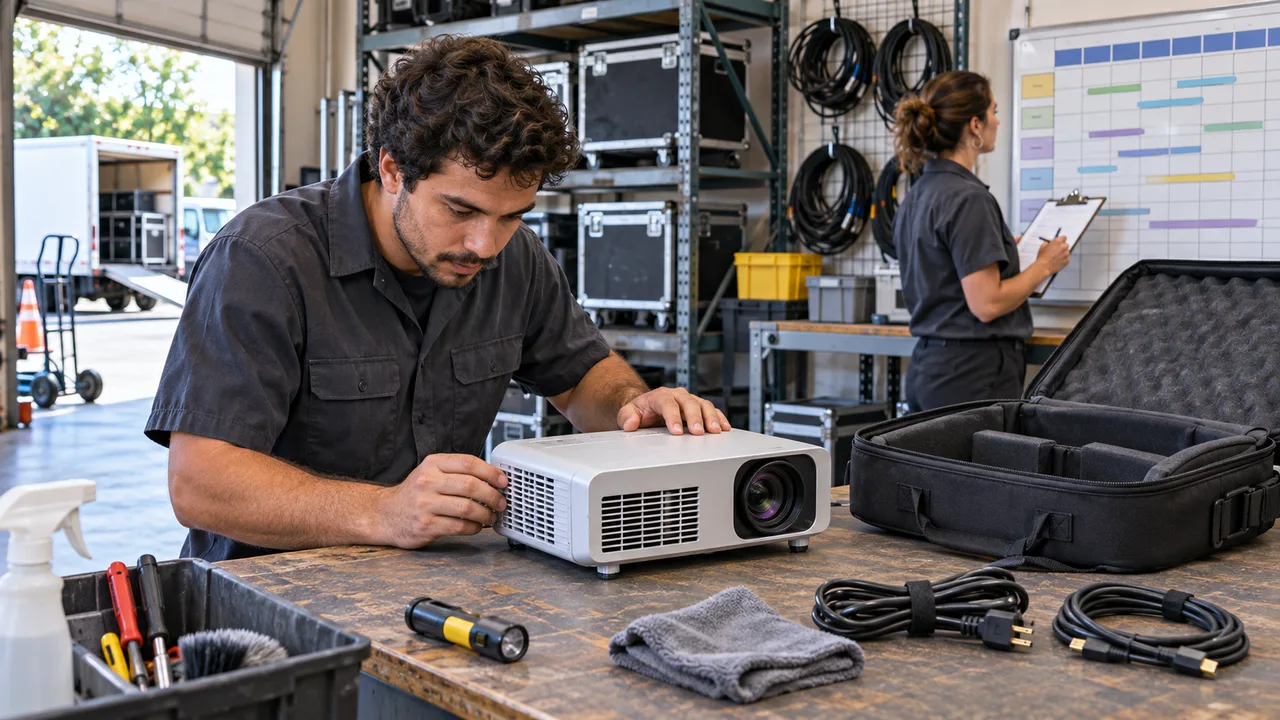
Imagine your existing presentation package takes ten minutes of staff work to check and repack. A new model takes seven minutes at the show once the demonstration is ready. The new model also uses a cable that staff will have to verify separately because it resembles another connector in the shop. With a trained employee and a good tray layout, the difference may be meaningful. If both models must sit in the same queue for almost an hour on Sunday, the shop still needs an earlier inspection slot to turn the package for Sunday's second order.
Put the four closest returns together as a separate exercise. Two kits come back complete. One needs a common replacement and another needs to be held for review. Note which ones your team should check first if the next booking begins soon. Ask whether a technician needs the same bench for all four jobs. If your plan assumes four kits come back ready to inspect at once, check what staff can accomplish when the van has to unload in a particular order. The waiting and sorting can change the result more than a few minutes at the demonstration table.
Carry those observations into the quote discussion. If a case organizer and a few approved spares make the new model easy to reset, price them with the equipment. If the vendor can't show how the case fits the real kit, add a check before the full purchase. Ask staff which feature will change the longest repeated delay. Sometimes having a predictable place to verify each piece helps more than a faster latch.
Repeat the test at the shop with a second employee
Choose a sample or an appropriate vendor installation for a trial. Keep the crew's current work area, tools and receiving instructions for the first attempt so you get a useful comparison. Have one employee do a normal kit check while another records what happened. In a second run, ask the employee who would commonly work that shift to perform the same routine. Make the checklist clear enough for them to use without relying on the buyer's memory of the demo.
Include an ordinary complete return, an incomplete return and one staged request for the next booking. Existing shop safety and handling procedures should apply. If the product needs a longer check or a second set of hands, record where that time comes from. Give staff a way to identify which piece remained in the hold area and to let dispatch know what can be promised before the next appointment. Keep the state tied to a specific item or kit where that distinction matters.
Verify the last step in the business's scheduling process. When a complete kit returns and passes inspection, check which employee makes it available and where dispatch sees that change. When one piece is on hold, read the next order and see whether the system or worksheet clearly warns the person promising the equipment. A product test should reach the decision that matters to the next renter. It may expose an availability issue that no item on the show floor could demonstrate.
Try the release sequence when the next job has two dependent items
Once staff can turn one kit, try a case where the next job depends on two returns and a compatible accessory. A meeting order might need two projectors and a spare remote. One case is checked and verified at noon, another remains on the unloading cart and the spare remote is assigned to a later booking. Sketch out what dispatch will see at noon and what they should see after the next case is inspected. The result lets the shop verify whether employees understand an equipment release as an item-level decision and a booking as a separate promise about a complete group of items.
Have the warehouse employee tell dispatch what it can say to the customer while the second kit is still waiting. If the equipment hasn't yet been verified, the office can decide whether it has a confirmed backup to prepare, another matching unit to offer, or a later pickup window to discuss. Give the role responsible for each decision access to the item status and the time the next check is expected. If no one can explain where the spare remote went, try a simple change in how accessories are attached to the kit or reserved, then run the sequence again.
Record the bottleneck the example exposes. If the constraint is one trained employee working at a busy bench, time a second person using the same written check after appropriate training. If the problem is a reservation that promises gear before the inspection is finished, adjust the availability plan before using the shorter demo time to accept more bookings. Use the result to decide how much the purchase helps and what else has to change to make it work in practice.
Record a decision someone can revisit after the first jobs
Keep the observed steps, times and remaining questions next to the model identifier and quote. Record whether the sample included the exact case, accessories and replacement parts you plan to buy. Write down what the business could confirm at the show and what staff repeated at the shop. If you need a bench, staffing change or inventory label before the new equipment can meet the expected turnaround, add that to the implementation cost and assign someone to handle it.
After the first few real returns, compare the times and exceptions with the trial. Ask staff whether they had suitable work space, whether the parts list matched the equipment and whether the status reached dispatch early enough. If the promised release time slipped, find out where the delay began. A crew can use the record to adjust the checklist, stock approved replacement pieces or schedule a receiving window before deciding whether to buy another group of units.
Give future purchases the same endpoint. For a new category, compare a few known jobs and list what would count as a successful turnaround. At the booth, observe the parts of the job the vendor can show. At the shop, repeat the work until somebody can give a dependable release decision. That process connects equipment buying to the bookings the business can serve.