Use a rental discount to fill a specific gap
Design a rental offer for open weekdays, pickup windows or routes, then measure which new bookings it actually serves.

A rental shop offers twenty percent off everything for a week. The promotion gets attention, but most of the orders arrive for Saturday. That was the day the shop already expected to fill. The warehouse turns down several other inquiries because its pickup lane is full, while the tables and shelving it hoped to rent on weekdays stay in place.
A useful rental discount has a job. It can fill a specific day, use a delivery route that already goes through an area, or help customers try an equipment group that has room in its schedule. Define the open capacity before choosing the offer. Then test whether it attracted the work the business could serve and made enough contribution to justify the change.
Find the capacity you want to fill
Start from the actual stock and service schedule. The business could have equipment ready every Wednesday with few inquiries. It could have space on a regular route but limited room for more pickup customers at the shop. Identify which part of the operation has room. One open resource cannot always serve a booking that also needs a busy crew, vehicle or access window.
Review several comparable periods. Check overlapping bookings, inventory available after inspection, on-site staff, and the amount of work the shop could add. If a certain category nearly always has two units free midweek, that might be a useful candidate. If the same units frequently wait for repair, the issue is readiness. An offer cannot supply equipment that the warehouse has yet to clear.
Name the specific result you want. “Fill three Thursday pickups for garden party packages over the next four weeks” gives the team a way to measure progress. “Get more bookings” can include work the shop would have received at the usual rate. Give the trial a period, a product or service group and a limit that reflects capacity.
Think about who could use the open times. Some renters have a fixed event date. Others can choose between a weekday and a weekend, or between delivery and pickup. An offer with an unrealistic time constraint creates work without connecting to actual demand. Ask the office which kinds of customers have recently asked about a time or service the business can supply.
Choose an offer with conditions that match the work
Discount the booking element that relates to the open capacity. If the fleet has room during weekday pickups, apply the offer to the qualifying pickup and return windows. If the extra capacity is on an existing route, offer a service benefit only for the dates and area the crew can serve. Keep unrelated products and appointment windows out of the offer unless they support the same goal.
Define how someone qualifies. Use dates, products, quantities, locations or a specific service where needed. Put the relevant rule near the amount. “Available for Tuesday and Wednesday collection, with same-day return” gives a renter something they can check. Set a booking cutoff if staff need lead time to stage the gear. A rate offered too close to cutoff can make a normal job harder to prepare.
Choose an amount the business can calculate and explain. It might be a fixed credit, a reduced rate for a named package or a lower service price. Show the offer on an example total. Check whether it combines with other discounts, how it behaves after a date change and whether a minimum equipment quantity applies. The simpler the useful rule, the easier it is to audit after the trial.
Limit availability to a quantity or schedule staff can actually serve. If two extra pickup jobs fit each available day, do not advertise an indefinite number on those days. Use the same stock and calendar controls the regular offer uses. Recheck the eligibility if an order is revised. A promotion should fit the business’s existing commitments.
Work out the price before publishing the offer
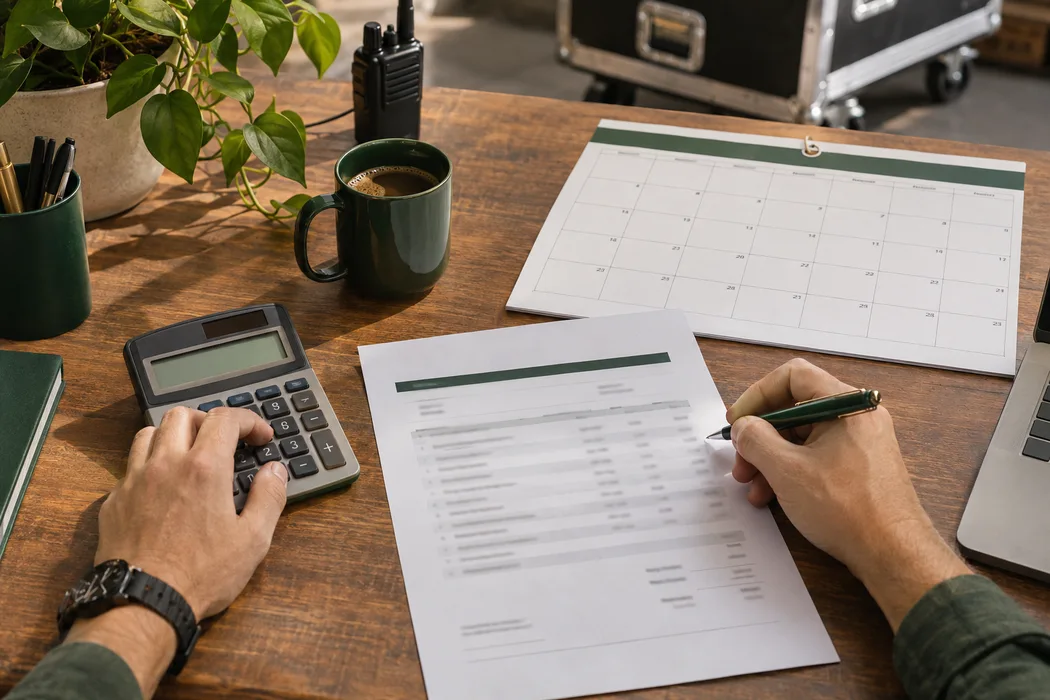
Review similar completed bookings. Estimate the incremental packing, pickup, delivery, return and reset work. Include costs that truly vary with the job and check the effect on the time and space the crew needs. An extra order that joins an existing route can have a different cost from one that requires its own trip. Use the actual service offered when calculating the amount.
Calculate what remains from the order after the discount and those direct costs. Compare with the work the unit might otherwise have served. If the equipment normally sits ready on a Wednesday, an additional booking could make useful contribution at a lower price. If the same unit is likely to be requested by a full-price customer in that window, the revenue the business gives up may need more attention.
Keep the numbers connected to the whole order. A discounted add-on can support a profitable package, and a low equipment price can lead to more handling than the order covers. Identify what terms the offer relies on, including pickup, the included dates and the deadline for return. Test the full amount in the same quote and checkout the customer uses.
Set an operating limit and a budget for the trial. The warehouse may be able to serve only eight additional jobs without changing staff hours. The business can decide the largest amount of discounts it wants to allocate and review the result once those jobs are completed. Keep the cap visible so the team can stop accepting the offer before it adds unwanted work.
Walk a weekday rental offer through the actual schedule
Suppose a shop has six table-and-chair packages, often fully committed on Saturdays and rarely at all on Thursdays. It normally charges $145 for a weekday pickup and expects about $48 in direct handling and preparation cost. Thursday already has a staff shift and a pickup lane that can serve two more small bookings. The owner tries a $20 credit on a defined Thursday pickup package, with its usual return window, over four weeks.
The price on those orders is $125 before any taxes, leaving an illustrative $77 before fixed costs. A full-price order under the same assumptions would contribute $97. If all promoted bookings are additional, four would contribute $308 during the trial. If two would have booked the same Thursday at the full price anyway, those two cost $40 of the earlier expected contribution. Under that second assumption, two additional orders contribute $154 and two existing orders give up $40, for an estimated gain of $114. Check the actual orders before deciding which scenario is closer.
The office checks the appointments against the existing schedule. A customer wants the reduced amount but also wants delivery at the busiest point of the morning. That request should use the ordinary delivery offer if it falls outside the trial. A second customer can pick up Thursday afternoon and return as required. The staff verify the booking and send the confirmation with the correct total and times.
After two weeks, several inquiries ask to keep the package until Saturday. The team reviews whether that option would overlap a confirmed weekend booking. The trial can continue within its original scope, and the office can offer a normal weekend rate for the longer period. The offer remains useful because it fills a window the shop can serve without risking one it already needs.

Present the offer so customers can decide quickly
Explain which dates and service qualify before someone builds a large order. Place the rule near the product package or date choice. Show a complete price with the discount applied once the conditions are met. Keep the amount and included rental period visible before the customer confirms. If the offer is time limited, use the actual end date and current availability.
Give the customer a useful result when a selection does not qualify. If their delivery location is outside the route offer, display the standard service available for that address. If they move to a different day, recalculate the amount and show what changed. Preserve the rest of the cart where possible so they can make the next decision without starting again.
Prepare a short explanation for the office. Include one eligible booking, one ineligible booking and what to do after a customer requests a change. The order should identify the accepted discount and the booking scope. If the customer uses a code on an estimate, the staff view should show which amount applies and what would change if they alter the dates.
Test forwarded messages and mobile screens. A customer may open an offer someone shared with them after the applicable dates are full. Show the current result plainly and offer regular rates or another available window. The promotion can end without breaking the way customers browse and reserve stock.
Verify the offer with a fixture before customers see it
Test the exact package, dates and handoff in a private example. Complete one eligible booking from the product page through confirmation and check the expected price. Open the order as staff and make sure the discount appears alongside the right dates. A person printing the pickup list should see the qualifying window and equipment. A person reviewing payment should see the accepted amount and whether the customer still owes a balance.
Try the cases near the edges. Check the first and last dates of the trial, an order at the cutoff, a quantity beyond the limit and an order that already has a different discount. If an ineligible booking displays a price change, make sure the shopper can understand what happened. Have the office create a quote for the same bookings and see whether its prices agree with the storefront. The shop can then use a consistent answer when a customer asks about it.
Rehearse a change on an accepted test booking. A customer might want to keep the equipment through Saturday or switch from pickup to delivery. Check the new availability and calculate the revised offer according to the terms the business actually uses. Give the customer the choice to keep the approved booking if that remains possible. The warehouse and office should see which dates, service and amount apply after any accepted change.
Check what happens when the last qualifying slot fills. The site can show regular options or a later qualifying window if one still exists. Ask an employee to open the same dates from the staff side and check that they agree. If staff take bookings by phone as well, confirm that the promotion cannot promise a slot the counter has already committed. Capacity stays useful only when all booking channels see the same limits.
Give the crew a way to record extra work
Add a short review step for orders booked during the trial. Note actual staff time, whether equipment was ready and how long the handoff occupied the lane. A simplified check can capture the issues the business predicted without handing workers a second full form. Ask them to record departures from the normal process, especially when an offer that looked straightforward needs an extra trip or a late return check.
Check whether the promoted orders overlap an existing task. If Thursday is usually a quiet pickup day, the warehouse might use the same time to pack weekend deliveries. The new orders fill a customer slot and can still interrupt that packing work. Compare when the crew actually did both tasks. If there is spare time earlier in the day, move the offer to a window that works for the counter and the warehouse.
Review the return schedule as well. A promoted pickup may be cheap to fulfill in the morning and expensive to receive if every customer brings equipment back at closing. Try a clear return window and observe how equipment reaches inspection. Record whether the discount produced useful bookable work or shifted the business’s delay to the next part of the day.
Ask the team to name one difference the next offer can control. It could be a customer pickup deadline, the number of large packages allowed per window or the point when delivery must be reviewed by staff. Put that condition in the visible offer and test it for one period. If the experience improves, you can compare the revised outcome without depending on memory of how hectic the last trial felt.
Measure new work and the effect on other bookings
Count the eligible orders, the completed orders and the direct work involved. Look at the appointment and fulfillment outcome, not only the use of a code. An attempted booking that could not be served does not fill a useful slot. A successful pickup that creates an extra return bottleneck can still need adjustment before the offer expands.
Record whether orders appear new to the window. Ask a practical question at the time the customer chooses if there is a useful and respectful way to learn. Some customers may have moved from a full-priced day. Others may be booking an extra event they could not otherwise schedule. Use comparisons with previous periods and the information you actually have. Avoid claiming that every redemption came solely from the promotion.
Check how the promotion affects nearby days, product groups and service. A Thursday credit can pull work away from Friday and make Thursday full. That can help if it frees the time you need. If the business would have served the same customer on Thursday for the full rate, the effect differs. Review the bookings behind the counts before deciding whether to repeat the offer.
Look at margin, work and customer outcome together. If the warehouse was able to serve the new pickups and each order made useful contribution, consider running another trial during a comparable period. If the shop created a new service bottleneck, try different appointment conditions. If the promotion mainly changed the price on existing orders, start from a different capacity problem.
Close the test and decide what to keep
Set an end date and ensure it reaches the same places the offer appeared. Retire outdated messages and check what an existing customer sees after the end. Use the approved amount for accepted bookings according to the terms already agreed. For new requests, show the current offer. Give staff a final date and examples so they can handle questions from earlier screenshots or quotes.
Review unclaimed slots after the trial. If several customers wanted the package but could not collect at the offered time, record that as a scheduling observation. It may support a future trial with a different window once staffing and equipment availability have been checked.
Keep a short record of the aim, conditions, bookings served and operating result. Write what the team would repeat and what it would change. A promotion can be useful if it proved customers value a different pickup time or a lower-complexity package. The business can keep that service option even if the discount ends.
Choose the next trial by the same process. Find stock or time the business can use, identify a customer who can book it, and calculate how the work will be fulfilled. A reliable offer fills an actual opening and still leaves capacity for commitments customers already made.