Use a job preview when hiring rental crew members
Plan a realistic rental crew job preview using a mock return, clear work expectations and a consistent interview process.
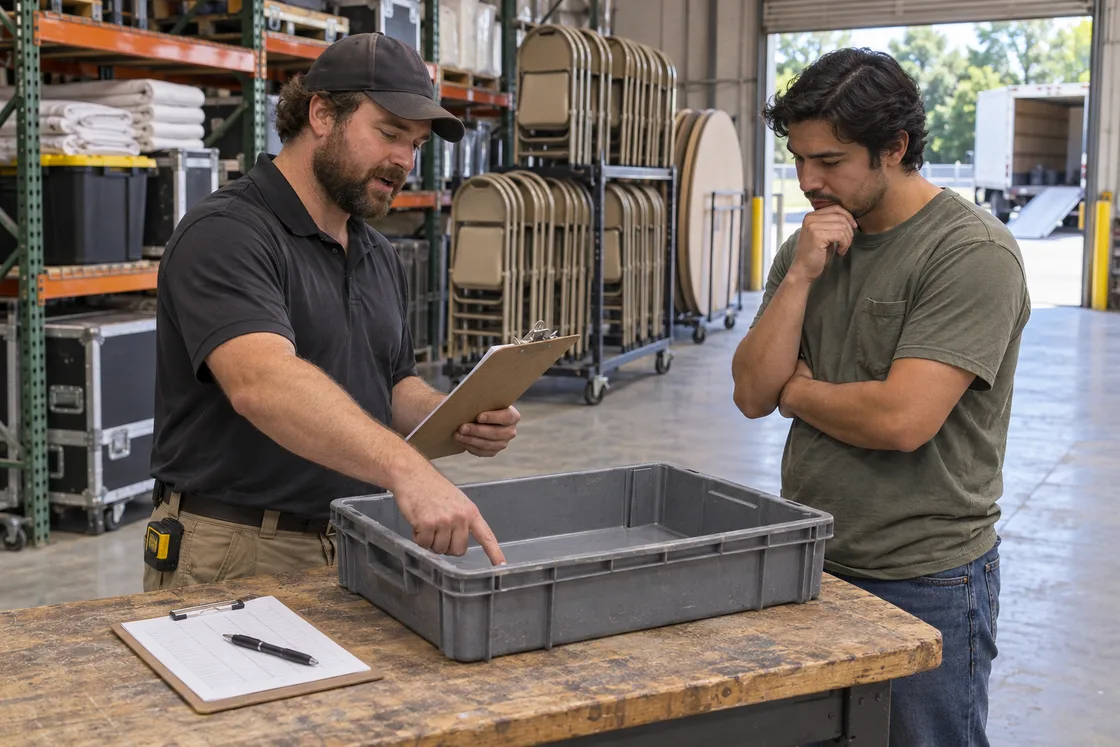
A rental crew job can sound like “help deliver tables,” until a new hire discovers that the shift starts before the venue opens, the team has to reconcile equipment at every stop, and the same truck may return after the evening pickup. A realistic job preview gives applicants those facts early and gives the business a chance to discuss how the work is done. A good preview can fit into a short visit without touching a real order or requiring anyone to take part in a delivery.
Suppose an event rental company needs a warehouse and route assistant for weekends. Recent hires could carry out instructions on a familiar load, yet several had difficulty catching a discrepancy on a return sheet and some expected to finish immediately after the last delivery. The business can describe the whole shift and demonstrate how a return exception is handed off. If the preview is also used to score candidates, it needs a clear reason, a consistent format and criteria tied to the job.
Identify the work the preview should show
Spend part of a shift working alongside the current crew lead. Watch where a new staff member would need information or training and where the role already has to exercise judgment. Separate recurring basics from unusual tasks that sound dramatic in a job description. A route assistant might check a list against visible equipment, ask for another person when a lift is planned as a team task, and notify dispatch when a venue changes the arrival door. The role may also include lifting and loading, but a discussion of approved methods and staffing can be more informative during a preview than a test of who can move a heavy object alone.
Find out which skills the company teaches after hiring. If your inventory system uses icons and shortcuts that only current staff recognize, someone who pauses at the screen may need orientation rather than lacking an essential job skill. Make any sample readable to someone encountering it for the first time. Decide whether the intended behavior is following a manifest, noticing that two counts disagree, asking for clarification or documenting a handoff. You can design a much simpler activity once the target is clear.
Ask the lead what the most common expectation mismatch has been. One applicant may assume the warehouse is the normal work location, another may picture a driving job with no return sorting. Explain where employees report, whether shifts include venue and warehouse time, how schedules are shared and what the approved range of hours looks like. Describe ordinary unfavorable conditions such as outdoor heat, a narrow setup window or rain changing the route. Give honest examples of what happens when those conditions occur.
Decide whether the session is purely informational. A role tour with demonstrations can work well when applicants mainly need to understand the schedule and working environment. If you choose to use an activity to evaluate someone, define what it measures and how you will use the results before inviting people. The EEOC discusses job-related selection procedures, their validation and the importance of reviewing their effects, including whether an effective alternative would reduce adverse impact. Assess any employment requirements that apply to your business and location. EEOC guidance on employment tests and selection procedures
Show a normal shift using actual timings
Build a shift example with the owner of the schedule and someone who has worked it. A Saturday route may begin at the staging bay at seven, with a chair delivery at eight-thirty, a second venue at ten, a return at noon and more collections later. Explain who gives the next assignment, where staff take applicable breaks, and what happens when the last job runs long. If early starts or evening collections are regular parts of the role, put that information in the listing and repeat it before the visit.
Use a diagram or sanitized route sheet rather than sharing real customer addresses. Include the equipment types, venue contact role, the agreed time window and the planned staffing. Show which decisions a new assistant can flag and which person has the authority to change the order. For example, a venue may want to substitute a different room, which changes the route from the truck. The current lead can describe how staff check the details and raise the request while another employee keeps working on what is known.
Give realistic information about pay, orientation and scheduling. Cover the published or stated pay range, what paid onboarding includes, whether the job is seasonal or regular, and how staff hear about shifts and changes. Give a candidate a place to ask questions before agreeing to move forward. A business with highly variable weekend bookings should explain what happens between events instead of implying that every workweek will look like the one on the sample schedule.
Ask what would help the person understand the work. They might want a clearer example of consecutive trips, the standard team for load-out, the warehouse noise level, how a schedule conflict is reported or how much customer contact the role involves. Answer with verified information and record any question that the company has been answering differently across interviews. The next listing or preview can clarify the issue for everyone.

Build a short simulation around a handoff
Use empty bins, a blank route packet and invented data. For a return check, give the applicant a sheet listing four cases by label and set out three matching empty cases plus a fourth with a clearly different label. Show which slot on the form is used for a mismatch. Ask the person to confirm what is present, then explain what they would tell the lead if the remaining case were still missing. Allow questions about labels and instructions before the exercise begins.
A job-related rubric for this task might give one point for identifying the two distinct discrepancies, one for leaving the return open, and one for communicating which case requires follow-up. Published criteria can limit variation between interviewers. A fast guess should not get extra credit if speed is unimportant to the task. An applicant who takes a minute to compare identifiers and records exactly what is missing may demonstrate the process you need. Define a passing or follow-up threshold before running the exercise, and decide how you handle ambiguity or an interviewer who gives different instructions.
Model the process people actually use. If the warehouse puts questionable equipment into a clearly marked inspection bay, tell applicants that action is available. Giving them a sheet they must complete without access to the ordinary instructions tests recall or puzzle solving. Ask them to describe a handoff after learning the process. A single description of a mismatch has clear value to a supervisor if it identifies the right order, case and next decision.
A different role may call for a different activity. For a dispatch assistant, prepare a fictional schedule with two events and a late driver update, then ask the person to relay the new estimated arrival to the correct crew lead. Give the customer-message template the real company uses with the names removed. Observe whether the candidate includes the necessary facts and flags when approval is needed. For a prep associate, show a staging plan and ask which pieces belong with each order after explaining the labels. Keep the exercise close to one task and safely separated from the work of fulfilling bookings.
Prepare the visit so everyone receives the same information
Send a simple invitation that gives the duration, location, parking or transit information, access instructions, what the visit involves and whether it includes an evaluation. Explain the appropriate clothes for the location and what the company provides. Mention who can arrange an accommodation. In the United States, the EEOC gives examples of telling all applicants what the hiring process involves and asking whether they need an accommodation for that process. Structure administrative follow-up with the person responsible for hiring instead of handling sensitive details on a shared interview worksheet. EEOC guidance for applicants and the ADA
Keep the tour on a safe route. Use a workbench or meeting space clear of moving vehicles, operating equipment and open dock edges. Coordinate the timing with warehouse staff so applicants are not expected to step in when a truck arrives. Leave applicant information out of customer-facing dispatch or production records. If the job requires specialized equipment or certified duties, explain how staff are qualified and supervised. Use discussion or a safe demonstration unless an appropriate procedure for assessment has been established.
Maintain a consistent agenda. Start with the job and hours, show the work setting, explain any activity using the same instructions, allow questions and close with next steps. Nominate an alternate interviewer who has practiced the session and can run it the same way. Provide comparable materials and a way to record any meaningful change in the activity. If a label was missing or the workbench was unavailable, document the condition and offer a fair opportunity to complete the intended version.
Plan the line between assessment and work before anyone arrives. Keep a preview on a mock example and outside customer or warehouse production. If you want people to assist with an actual delivery or work a trial shift, arrange it through a properly paid and safe work process, with payroll, training, supervision and coverage reviewed for the role and location. A live shift can present important wage, insurance and safety questions. Decide how they will be handled in advance with the people who manage those obligations for the business.

Record what happened with examples
Take notes that describe what the applicant did in the simulation or asked about in the discussion. “Compared the wrong case label against both relevant entries and explained why the job could not be closed” is a specific observation. “Would fit in great with the guys” is an impression unrelated to the demonstrated task. Keep notes on the activity in the approved hiring system with the appropriate access and retention rules. Ask the people using the rubric to keep unsupported character judgments out of their notes.
Review one fictional example with the crew lead before starting interviews. A mock candidate asks the interviewer to clarify whether all four labels are expected. They identify the extra case and the missing case, tell the lead both, and leave the return in review. Another hypothetical applicant marks everything returned and later mentions it felt like something was wrong. Agree how those actions map to the criteria and whether the instructions allowed a fair comparison. If two interviewers cannot agree on which behaviors the rubric credits, update it before using it with applicants.
Use a separate field for applicant questions and there describe the answer you provided. For example, someone asks whether split weekend hours are a regular expectation and the employer says that happens twice a month. A future disagreement can be clarified using the example schedule and the answer already shared. Preserve what the business promised rather than interpreting a candidate's question as lack of enthusiasm. A person might reasonably want to work out transportation when their last pickup ends after transit stops running nearby.
If a candidate chooses to withdraw after the preview, thank them and give them the ordinary next-contact information if appropriate. Treat a mismatch that surfaces early as data about the job description. The hiring process benefits when a candidate can see the arrangement clearly enough to decide whether it fits. Watch for missing information that repeatedly causes surprises during the visit, and fix the listing so applicants have it before they make the trip.
Work through the session with a new interviewer
Give the alternate interviewer a copy of the mock packet and set up the bench exactly as an applicant would see it. The interviewer should be able to explain the review slot and the handoff procedure without adding a suggestion about which item is wrong. Ask a coworker unfamiliar with the return process to follow the instructions aloud. If one label is hard to read or the candidate needs to remember something that workers usually have written down, change the exercise.
Keep a spare set of mock materials and an electronic version of the directions, so the process can still be presented if a case goes missing or a candidate needs a different format. Put the rubric with the hiring materials and give it a version date. Note which version each person saw. When a package or label convention changes later, update the exercise in one place and withdraw the retired copy from the interview bench.
Translate the preview into a first-week training plan
Use the same work terms when onboarding. If applicants saw a return discrepancy example, new staff should know where the live return process is documented and who can show it to them. Give them approved access to practice and let them review mock cases before handling unresolved records independently. Assign a trainer or shift lead for questions and record which work the new staff member has practiced with supervision.
Connect the timeline in the preview to the actual time reporting and dispatch process. Show where a shift starts, where a delay is recorded, and how staff report that an appointment or venue change pushed the work beyond the scheduled time. Let them practice reporting an unavailable loading door or asking for a team assist. The documents and software should support the behavior demonstrated during hiring. If working practice differs from what was described to applicants, review that difference with the lead and correct the part that is out of date.
Schedule a quick conversation after the first couple of shifts. Ask whether the schedule and tasks matched what the person saw, what needs further practice and which instructions were difficult to find. Compare their comments with the crew lead's observations. If a new staff member understood the mock return but was confused by several conflicting live manifests, improve the manifest process before assuming your exercise needs to be harder.
Check whether this process improves hiring
After a few visits and hires, assess the process with objective questions. Did fewer employees express surprise about the schedule? Did crew leads begin with the same instructions? Did the activity reveal something related to the role that the interview missed? Did applicants have meaningful access to the location and exercise? Review outcomes and look for questions or barriers that the team can resolve. Your hiring adviser can help evaluate selection records and any concerning patterns where applicable.
A business could learn that nearly everyone finishes the case sample correctly, yet new people still misunderstand the second half of a route. In that case, showing a full-day schedule earlier may solve the actual problem, and the activity may no longer warrant the interview time. If a dispatch task is an essential part of the role and the same types of mistakes arise in practice, the company could refine instructions, training and tools alongside an appropriate review of the hiring procedure.
Set a review date for the preview and keep its owner listed with the recruiting materials. Update it when the role changes, warehouses move, routes are reorganized, or another tool changes how handoffs happen. Leave candidates with a clear read on the work, the supervision they can expect and the schedule they would accept. That information and the crew's ability to teach the job do more for a sustainable hire than an impressive demonstration that bears little resemblance to a normal shift.