Turn industry conversations into operational improvements
Turn an idea from a trade show or peer conversation into a small, measurable rental workflow test your crew can repeat.
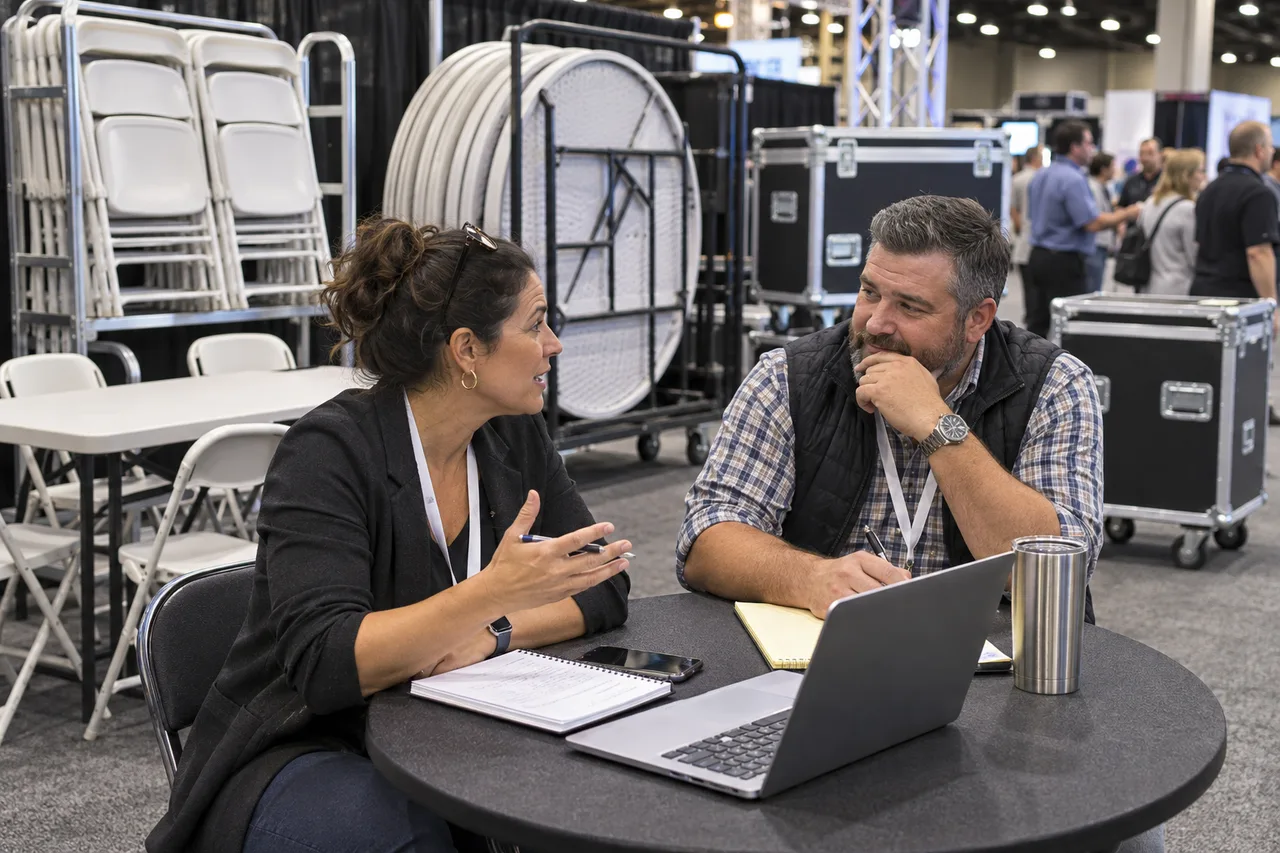
At a rental industry meetup, someone describes how their warehouse detects missing items before a truck leaves. The idea sounds useful, and your crew has lost time on similar mistakes. The other shop uses a different layout and has a dedicated person at the loading door. Copying the whole process may create another task your team can't staff. A smaller test can help you find out which part of the idea makes a difference in your own operation.
Bring home a problem to investigate and an example you can test. Record what the other business observed, what roles and tools made its method work and what it still has to handle manually. Compare that with the way your shop serves an ordinary order. Then set up a trial that produces a result your employees can see. Industry conversations are most valuable when they help you make a better decision about the work in front of you.
Go into the conversation with one operational question
Pick a question your team can answer with a real booking. You could ask how another shop avoids loading a quantity from an earlier version of an order, how it handles equipment that returns too late for the next rental or how it communicates a changed address to a driver. Describe the kind of work and constraint that prompted the question. The person you're speaking with can then give an example that comes closer to your situation.
Keep the description concrete. “We confirm late chair-count changes before loading two trucks on Saturday” tells someone what makes your process hard. A broad question about better dispatch software may produce opinions on tools but little evidence about how to handle the handoff. Ask which worker makes the decision, what they can see and how they know the state changed. Those answers usually travel better from one business to another than the name of the tool.
Choose a respectful level of detail. Share hypothetical or suitably anonymized examples and keep private customer, personnel and business information out of conversations where it isn't needed. Ask before saving or sharing someone's notes or demonstration materials. You can learn how a process works without taking confidential order records or asking another business to disclose its own commercially sensitive terms.
Ask what actually happened the last time they used it
Invite the person to walk through a normal order. Ask what starts the process, who handles it, and what decision the next person makes. For a loading check, the first worker may compare a pick list with the staged equipment. Another may verify that a later order change has been accepted in the office. Write down when those checks happen and whether a supervisor is needed for an exception. That makes the method easier to recognize when you try it elsewhere.
Ask about a time it was difficult. A warehouse with a full-time checker may still have trouble when two vehicles need the same lane or a printout is out of date. Find out what the team does when a product is unavailable or the driver has to leave. Their fallback may be as useful to your shop as the ideal process. Ask what they measure and whether they have any evidence that it saves work or catches problems.
Keep observation and interpretation separate. A person may report that fewer orders needed a second loading pass, or that the crew says it feels easier to find current counts. Both observations can be useful. Record the wording in a way that describes what they actually checked. A conversation can give you a credible reason to test an idea without establishing that the same outcome will happen in your warehouse.
Review the assumptions before taking the idea to your crew
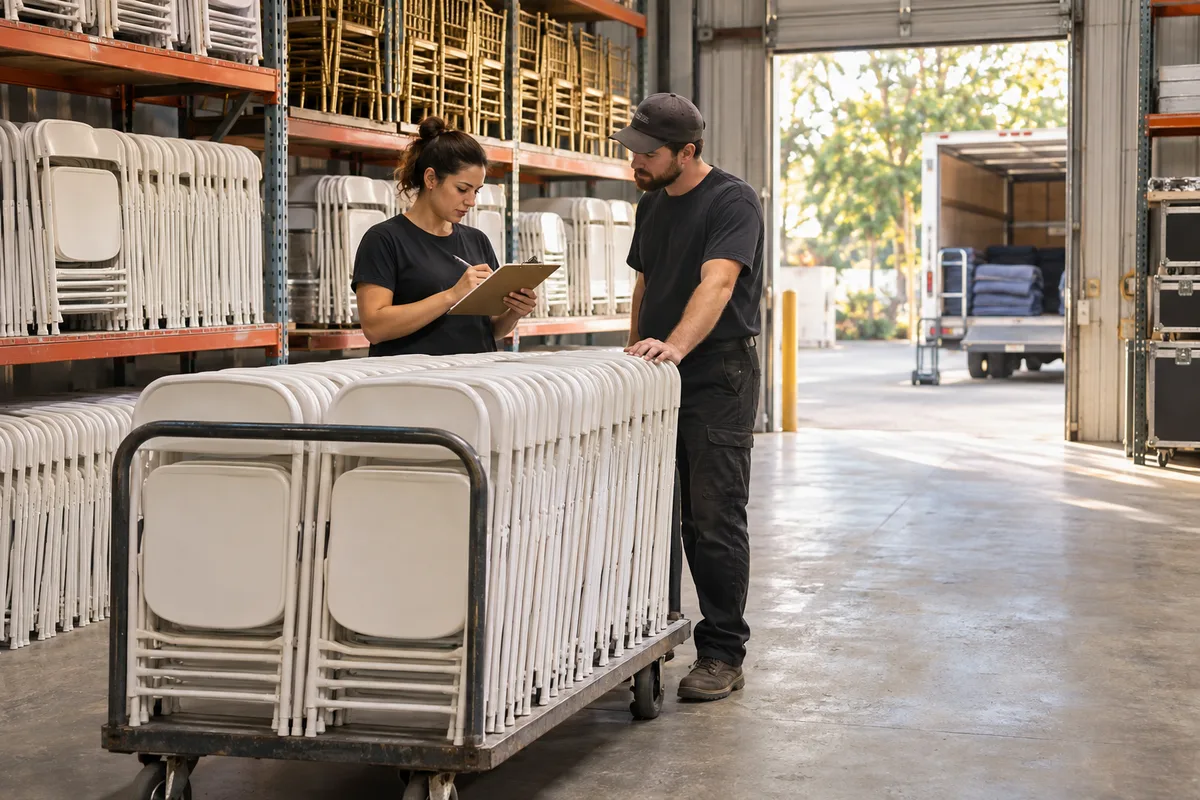
Look at staff roles, equipment and the way work enters the shop. Another business may charge a dedicated employee with checking everything at the door. Yours may have only one person staging and loading until the morning driver arrives. A method that depends on two separate checks might require more time than you have. Decide which part you can adapt, such as a clear copy of the current list or a short review when a changed order reaches staging.
Check whether the stock and job types are comparable. A business that rents by individual equipment ID might scan each item. A shop that serves large table and chair orders may count in groups. Ask the team how it would recognize an exception using its own method. If the approach depends on a specific scanner, label style or computer view, test the underlying decision with tools you already use before assuming you need to buy anything.
Write down circumstances where the idea doesn't apply. A paper revision note might help with a morning warehouse pickup and do little for a driver who has already started a route and needs new instructions. An outside example can suggest an improvement and still leave other handoffs to solve. Choosing one area lets you verify what the first version actually does.
Bring an example back to the people doing the work
Tell the team what you heard and why it might help. Give them the original problem and one comparable order from your business. Ask how they would perform the check with the people, equipment and time they normally have. The warehouse worker may see an easier place to keep a revised list. A dispatcher may recognize a time when the vehicle is already committed and needs a different fallback. Use those details to design a small test.
Choose one adjustment for the trial. For example, the office may add a named person and a revision time to the pick list created after each accepted change. The staging worker uses that view to recognize the latest quantities. The trial checks whether the crew can do this without calling the office again. It also verifies that a requested change doesn't appear as accepted. Keep the usual booking and stock checks in place while trying the new handoff.
State the expected result before running the test. Put the ordinary order and an exception beside the instruction. One might be revised while the warehouse has enough time to update the staging cart. Another might arrive after an employee has already printed the list. A useful result is that the worker can identify the latest agreement, confirm what needs to be packed and tell the right person if the current instructions are unavailable.
Test the idea with enough detail to measure a change
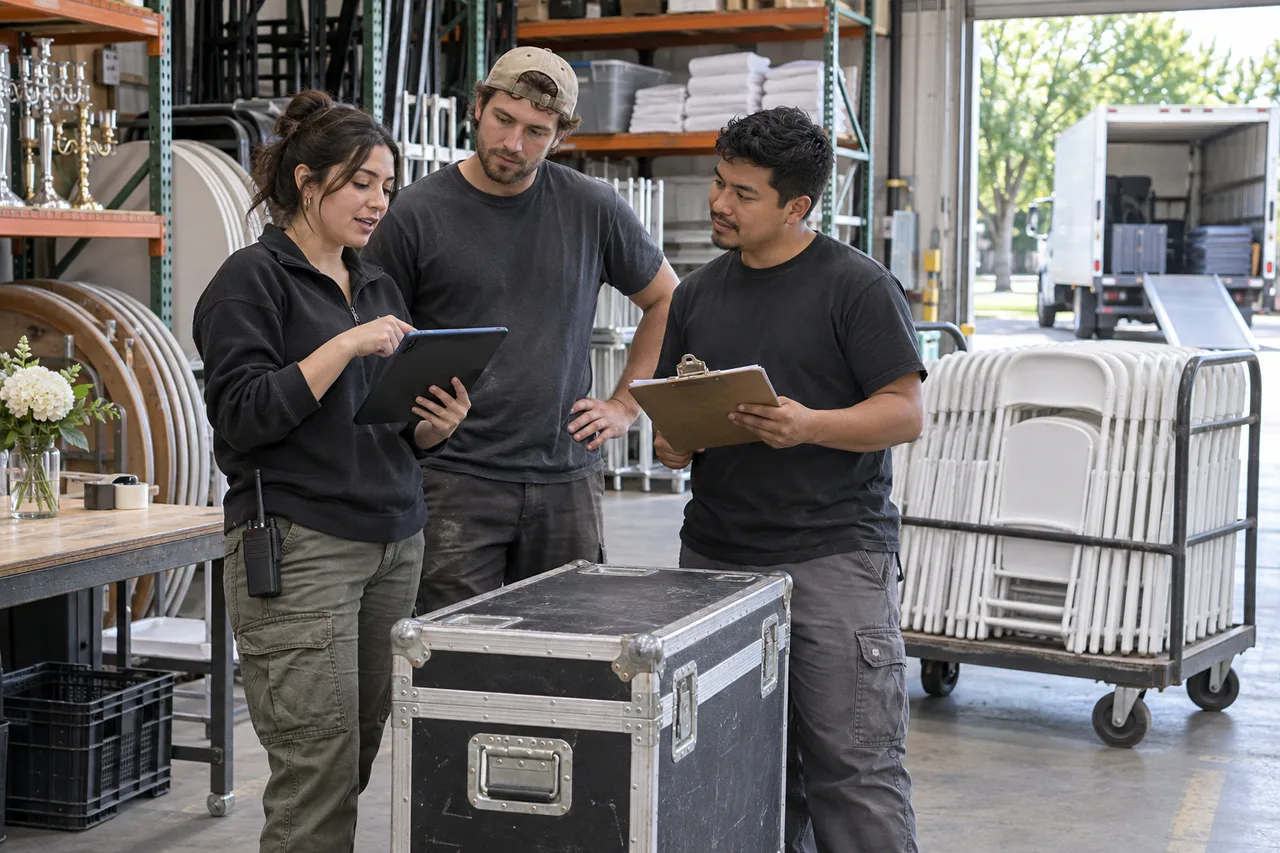
Record what happens on two or three comparable cases. Note the time of the accepted change, the list the warehouse used, whether staff had to check with someone and what the driver loaded. On a trial order that won't be fulfilled, keep the data and communications separate from live bookings. Use a real job only in a way that protects the confirmed agreement and allows the crew to fall back when needed.
Compare the result with how the work happened before. A method may save a few minutes after a change but add a separate task to every ordinary order. Count how often each kind of job occurs. If staff spend less time finding the correct list and can show it agrees with the current booking, put that outcome in the record. If it only works when the person who designed the test is present, see what an employee needs to do it alone.
Ask the people who performed each step what the comparison misses. A new note might be obvious on a laptop and easy to overlook on a phone. A backup worker might need another way to locate a revised copy during loading. Before adding more changes, check the first one on the equipment and devices your crew actually uses. Try it on a routine order after staff have had a chance to practice.
Try a second idea only when you know what the first one changed
Think of a different outside suggestion. A supplier may demonstrate a check for organizing accessories after a return. A peer may explain how their team sets aside equipment that needs review before the next booking. Use that idea to solve a distinct problem. Find a specific returned item and follow it through receiving, inspection and release. Note what the office can see while it is still on hold.
Check which constraints could make the suggestion easier or harder to use. Their shop may have a dedicated return bench, while your team shares the same space for outgoing orders. A useful first test could define which items go on the shared bench and when someone updates availability. If the idea requires a new rack or additional shift coverage, describe what benefit you expect to see before creating that commitment.
Review both workflows without mixing their outcomes. The first may reduce calls while staging. The second may make it easier for sales to tell which equipment is ready. Give each a measure the shop can verify. That lets the owner decide whether to keep both changes or focus effort on the one that resolves a larger problem.
Use a vendor demonstration to ask a different kind of question
Suppose a vendor at the same event shows a product that promises easier item tracking at return. The demonstration follows one labeled case through a clean sequence. Ask what the employee sees if one piece is missing, the case comes back at another location or someone has to put the equipment aside. Ask which steps are part of the standard setup and which need a separate service, device or workflow. Take the current written details you can review later. There is value in an observed sequence even if you never use the product.
At the shop, test the decision the vendor's process makes possible. Take one rented kit you already know and run a practice return. Check how an employee records each piece, identifies a problem and signals whether the next reservation can be served. If the shop currently needs two calls to get that answer, record where they happen. Then try a simple version of the proposed method, such as a consistent place to record items still in review. Measure whether the next person has enough information at the time they make a booking decision.
If the equipment or software seems worthwhile after the practice, request a comparison using the shop's own item types and return sequence. Ask what training and ongoing work would be needed. Save one test that succeeded and one where the staff had to find a workaround. Use both when comparing the cost with what the crew would gain. A useful conversation lets the owner choose whether to change the procedure, test another option or keep the existing setup.
Capture peer advice in a form someone else can question
Consider two people who had different experiences with the same warehouse method. One measures fewer missing items because orders are reviewed at the loading door. The other spends more time checking because the list doesn't show what has already been staged. Ask what kinds of work each business serves and how it keeps the current list. The difference can help you identify what would matter in your own example. Keep both accounts visible rather than choosing the answer that sounds easier to adopt.
Write a brief note with the question, where the idea came from, what you observed and what the shop should verify. It can be as simple as “A peer uses a second door check for changed orders. We need to see whether our staging worker can identify those orders before the truck leaves.” Give the note an owner and possible test date. A staff member who didn't attend should be able to understand what they are supposed to learn. Avoid writing down conclusions the other person never claimed.
Check the trade-off with a real workload
Use a simple capacity exercise before changing the whole shift. Suppose a new door check takes two minutes per order and the crew stages fifteen orders on Saturday. Applying it to every order uses about half an hour of staff time. If only five orders had late changes and those are where the mistakes occur, a check on changed orders would take about ten minutes with the same assumption. Try the narrower version first and see whether workers can accurately identify what qualifies. Keep actual counts and timing beside your estimate.
A shorter check may miss exceptions if the staff don't notice an accepted change. Add an example where a new count arrives just after the list has been printed. See whether the proposed method still reaches the employee who needs it. If the answer depends on scanning every list, revise the estimate. It is better to adopt a process with a known cost than to assume another shop's experience gives you the same savings.
Decide which part deserves a place in the regular process
Meet briefly with the employees who tried it. Ask whether it addressed the problem you heard about and whether there was an unexpected cost or delay. Review one successful order and one where the change didn't work as intended. If the same adjustment helps under normal pressure, give it an owner and write the new direction where staff already look. If it creates a second list nobody owns, simplify it or end the trial.
Put the observation and decision together. An entry might say that showing the revision time reduced the number of calls the warehouse needed on the tested orders. It should also say which orders were checked and what happens when a list has already been printed. A short note gives a later employee a way to see why the change is there and when the shop should review it again.
Follow up with the people who shared the original example if a response is appropriate. Let them know which part you tried and what you learned without sharing anyone's private details. They may have another way to handle a narrow exception. Keep the conversation useful for both businesses by referring to what the team observed and how the setting differs.
Build a record the business can use for the next conversation
Keep a small list of ideas worth trying with the problem, example and person responsible for the next action. Mark what was tested and what happened. Some ideas may need to wait for a quieter period or a different product category. Give them a review date or close them if they no longer address a problem. A short list that the team can review usually does more than a collection of unassigned notes from a show.
Bring the result to the next event or vendor discussion. You can ask a better question after observing one handoff and testing an adjustment. Explain what you were able to improve and where the next limit appeared. That encourages a conversation about how the work happens rather than who uses the most features.
Use every outside example to learn something about your own workflow. See which part of the idea fits the crew, verify it on a normal booking and retain the evidence that helps the next shift. Then choose the next conversation around a problem the business is ready to address.