Track the inventory numbers you can improve
Measure inventory accuracy, readiness, utilization and turnaround so staff can spot and resolve upcoming shortages.
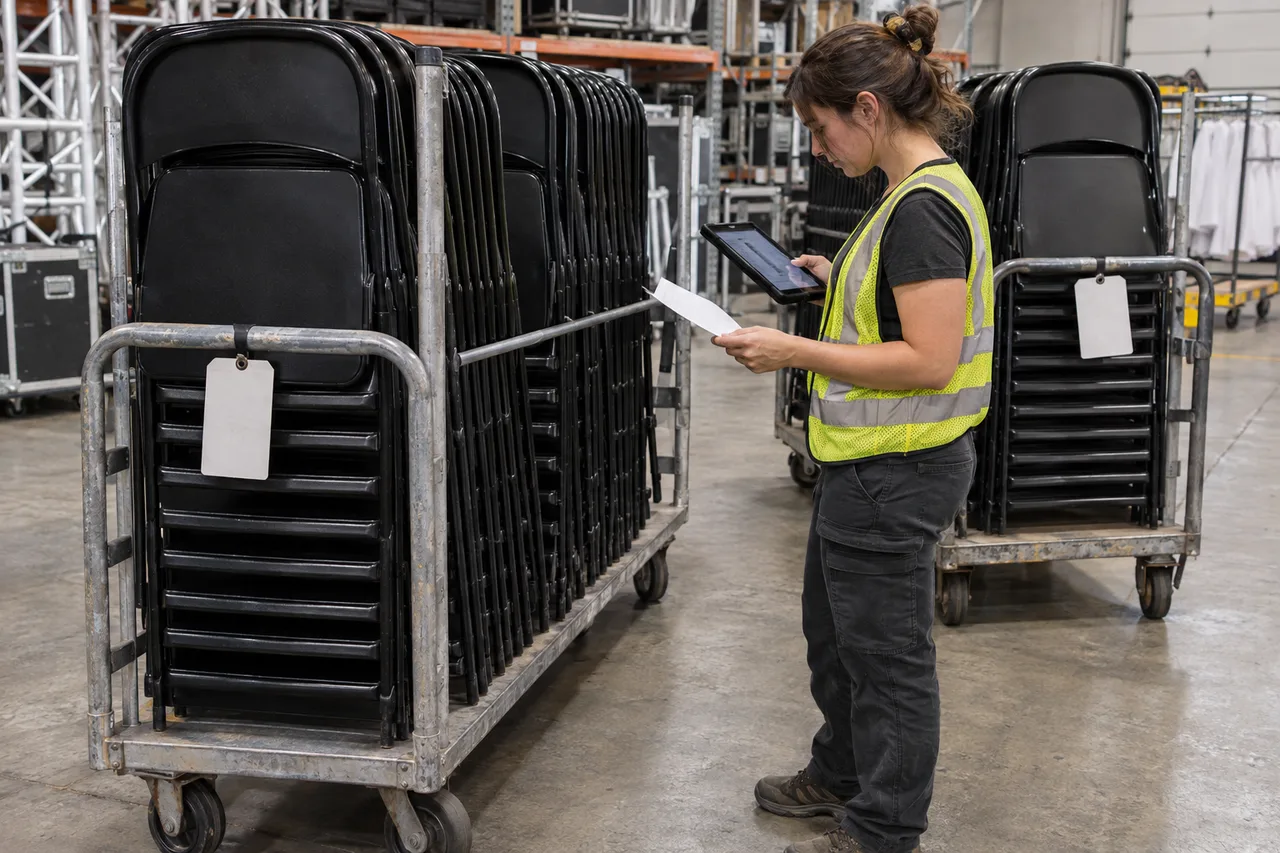
A rental shop has 120 folding chairs in its inventory list. The warehouse counts 116 on a quiet morning, and the office asks whether anything has gone missing. Four chairs are with a customer whose return is due at noon. Later, someone finds a damaged chair among the 116 and moves it to the repair bay. Both counts can be correct while the number the business can promise changes again.
Useful inventory measures explain these differences. They tell the team what is ready, what is committed, and which part of the operation needs attention. Start with the decisions people make from the figures. Then check that every count uses the right time, unit and condition for that decision.
Decide which count answers the question
Record the number of physical units the business owns or controls in the relevant pool. Keep supplier-owned equipment, shared units and goods on transfer visible with their own status where needed. The quantity under your control for an order can be different from the quantity you own outright. Staff should know which pool an inventory figure describes.
Use a ready count for equipment that has been checked and can be prepared for a new order. A unit might be physically in the warehouse and waiting for a part. A cart may be staged for an order that leaves tomorrow. A basic physical count is useful for checking what is on site. A readiness and reservation view tells the business what can be allocated.
Measure availability against a specific period and location. A shop might have only 35 chairs ready now, with another 30 expected back and enough staff to check them before next weekend. A date check should consider the time when the gear must be ready and the time it is held. A stock report for today's receiving shift can use a different cutoff from tomorrow's availability check.
Write the definitions down in a place the office and warehouse can share. Use examples of a ready item, one still being prepared, one committed to an order and one under inspection. Ask someone from each team to explain the counts from the same sample. A disagreement about what a word means is easier to solve before it is used to set next week's booking limits.
Measure count accuracy at the right point in the work
Choose a sample by location, product and time. Count the physical stock at that point, then review the records for movements in progress. If six tables are on an outgoing truck and the warehouse report includes them, check whether both sources agree that they are on site and already assigned. Compare the same boundary rather than treating equipment outside a shelf as missing.
Record where the difference came from. An item can be in the wrong bay, assigned to a different booking, still waiting to be received or truly missing. One result calls for labeling a location. Another calls for recording a handoff earlier or asking a customer about a short return. A single plus or minus figure cannot tell the team what to fix.
Review accuracy for both quantity and identity. If an AV box has four microphones when four were expected, count accuracy can pass even if one of them belongs to another kit. For serialized items, compare the specific asset assigned and observed. A case cleared for one booking should match its contents and the records the business uses to maintain it.
Keep deep counts for the questions that need them. A targeted count can check the equipment used in an upcoming order or a product with repeated discrepancies. A full inventory reconciliation can check for longer-term problems. Schedule each one around the work and use a realistic sample to verify the effect of any change.

Count the shortfalls that reached a confirmed order
Record how often the warehouse had to make an unplanned change after a booking was accepted. This can include an item that could not be picked, an approved substitute, an order delayed for a late return or an emergency transfer. Count affected bookings and record distinct problems on each booking. A single order can need two fixes and still represent one customer affected.
Distinguish a request that exceeded the stock available from a confirmed order the business could not fulfill as planned. If a customer asks for 150 chairs and the business can offer 120, that is a demand signal. If the shop confirms 120 and discovers a shortfall when it packs the order, that is an execution or availability problem. Give each result a separate record so the team can act on it.
Record the reason in terms people can verify. A shortfall might come from equipment under repair, a missed reservation, a package consuming a shared part or a return that was expected earlier. The picking lead can usually state what was observed. The warehouse manager or office can add the cause when confirmed. Keeping the observation and the explanation distinct makes it possible to correct a mistaken assumption later.
Review the upcoming order that could encounter the same issue. If a linen shortage came from cleaning time, check the next order that needs those linens. If the warehouse has two similar chair models and stages the wrong one, inspect the next relevant pick. A metric often helps most when it reveals which booking can still be corrected.
Track how long stock waits between arrival and release
Record when equipment actually returns, when it is counted, and when it is cleared for rental. Some stock moves through those stages quickly. A kit with missing components may need a bench check while a damaged frame waits for repair. The interval from return to release shows how much time the team needs to turn that item around.
Compare times within the same type of work. The average reset time for chairs may tell you little about inflatable inspections or linen washing. Group items that follow the same steps. Measure a handful of examples and review the longer cases. Decide whether the delay came from necessary work, available staffing or a queue that can be reorganized.
Track downtime using a stage the crew can update. A repair waiting for a part is a different decision from stock waiting to be cleaned. If the team only records when something became unavailable, it may miss where it sat for most of the interval. Give each work area a short way to show that it accepted the equipment and what it needs next.
Check how this changes what the sales desk can offer. If a pickup depends on a diffuser panel that returns at noon, the person seeing the calendar should know when it can actually be ready. If the issue is a repeated preparation queue, an earlier return slot or a different bench schedule may help. The data should lead to a better time commitment on the next order.

Calculate use against the capacity you mean to measure
Choose a unit of time that fits the product. For some equipment, rental days per unit can be useful. For a weekend package, it may make more sense to count how many bookable weekend windows were used. The numerator and denominator must describe the same period and units. Compare only products that can reasonably be understood with that measure.
Be clear about downtime. If two of ten identical cases were in repair all week, you might measure booked capacity against all ten to judge the fleet as an investment. For dispatch, you could measure booked capacity against the eight actually ready to rent. Both numbers are useful, with separate names and interpretations. Keep the record of why two cases were unavailable.
Separate utilization from unmet demand. A product booked on all four available Saturdays may be a candidate for more stock, or it might be needed only by one repeat venue with a specific seasonal contract. If customers wanted it on weekdays and couldn't collect it, the issue might be the pickup schedule. Review unfilled requests and stock conditions alongside the booking history.
Check what happened during longer hires. A rental for a full week can occupy the same unit across several days and may require only one outbound and return handoff. Short rentals can yield more individual bookings and more resets. Compare the amount of time, work and space the product takes before using a high booking count to decide whether to buy another.
Work through a stock problem with three measures
Imagine a shop owns 120 folding chairs. On a Thursday count, 116 are physically in the warehouse and four are still with a customer. The four are accounted for. A separate readiness check finds five chairs waiting to be cleaned and one damaged chair in the hold area. That leaves 110 ready on site. Friday's orders already use 104 before the four from the customer and the five in cleaning can be counted on.
A planner wants eight more chairs for Friday. The shop can currently allocate six from ready stock after existing commitments. The warehouse can look at the return and cleaning schedules before committing the last two. If the cleaning area can verify that two will be ready in time, update the readiness record. If the process remains uncertain, offer a model the crew can actually supply.
The next week, the manager reviews the numbers. Two Friday orders required late substitutions, both for chairs that were physically returned but waiting in the cleaning bay. The physical count was accurate. The issue was the interval between receiving and release. The warehouse shifts a staff hour earlier on Friday and follows the next five returns through the bay to see whether they clear before the first pickups.
The team can now check which change is appropriate. Buying more chairs could help if overlapping demand regularly exceeds the fleet. A better cleaning schedule could help if the gear already exists and routinely sits in a queue. Track the readiness gap and the substitute orders during the next comparable week. The best measure is the one that distinguishes between those outcomes.
Compare branches without losing track of movements
Agree on which location owns a count while an item is in transit. A source warehouse can mark equipment dispatched and a destination can confirm what arrived. A useful summary will show the transfer as its own stage until the receiving team has checked the quantity and condition. Counting it as ready in both locations could make the next two bookings depend on the same gear. Counting it as missing could create unnecessary work for the source.
Use the same cutoff for both sites. If one location reports shipments at closing and another checks arrivals the next morning, the combined view may include equipment in different stages. Identify the transfer and time involved, then verify where the stock was at the point the decision had to be made. Look at whether customers were offered pickup or delivery from the location that could actually serve them.
Check discrepancies by route or product when transfers are common. Suppose two of five transfers arrived short over a month, both with partial chair stacks. The receiving count may be accurate, while the sending team used a full-stack tag for a stack of eight. The teams can add an actual quantity to the tag and verify it before loading. Review the next five similar transfers to see whether both counts agree.
Separate a delayed transfer from a stock loss. A delayed vehicle can leave equipment unavailable for an upcoming pickup without changing the overall ownership count. Review whether the team can reschedule the planned handoff, find another source or contact the renter before they arrive. The inventory view needs to point to the immediate decision as well as the eventual reconciliation.
Use the measures to decide which transfers are worth planning in advance. A branch may repeatedly need a small number of the same item while another has spare units on those dates. Compare transfer time and work with the actual bookings served. If the operation usually transfers because a count is stale, correct that problem before adjusting where the fleet lives. For remaining moves, check whether a regular route or a shared reservation process would make timing easier to verify.
Where the same product moves frequently, label the container and record its contents separately. A returned cart may look full while its actual quantity has changed. Ask the receiving employee to check the count before any booking draws from it, and keep the source count available until the difference is resolved.
Turn the results into a short operating routine
Choose three or four measures for the decisions you need to make regularly. A small shop may use count differences, changes to confirmed orders and the age of returns awaiting release. A multi-branch company may also examine transfers or ready units by location. Keep an owner and a reliable way to reproduce each count.
Make the review point part of the real workflow. A daily check can resolve the next shift's shortages. A weekly check can identify repeated delays or locations with inaccurate records. A monthly view can show whether a product needs more space or maintenance budget. Match the period to the thing people can change. Review the exceptions while there is still time to protect the next booking.
Set a threshold that leads to an action. An equipment group with two recently misidentified units might need a label review and a small count before the next big order. A routine turnaround with growing wait time may need a check at the cleaning station. Write down what the team will try and when you will measure it again. Without that step, the same number will keep returning to the meeting.
Check whether the measure itself can mislead. An employee might improve a report by clearing all items immediately, even when inspection remains due. Keep a small audit of actual bookings and equipment. Ask people who use the information which results feel wrong. A useful number is one the team can explain, verify and use to make a better commitment.
Check that the changes make the next promise easier
Review a sample from the start of the booking through return. Look at what customers were shown, which quantity the warehouse staged, and whether the gear was cleared as expected. If the operation changed, check that each team sees the same status. A count improvement matters when it reaches the people who use it.
Note which measures should stay. A temporary check after a reorganization may be helpful for a few weeks. Once staff use the new storage locations correctly, return to a smaller sample. Keep measures that find discrepancies or inform upcoming commitments. Additional reporting should justify the time the crew spends collecting it.
Use results when changing a catalog or route. If a group is popular and routinely ready, test whether adding more could serve actual requests. If a group is constantly delayed by missing accessories, resolve the preparation issue and recheck the stock decision. An inventory number earns its place when it helps the business get the right gear ready and say yes to the bookings it can keep.