Size a rental security deposit to the equipment risk
Compare real loss and inspection records across rental categories to choose a reasonable equipment security amount.
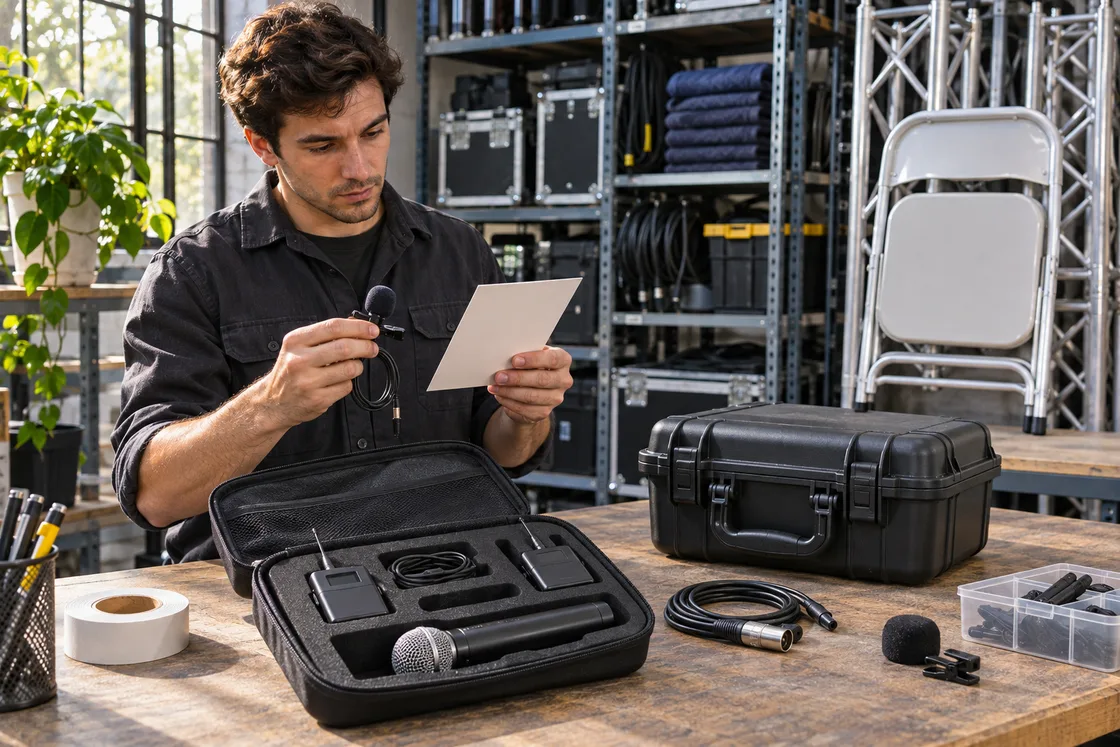
A standard folding chair and a wireless presentation kit can both come back one part short. The chair can often go back into service after a routine review. The presentation kit might be unusable until a compatible transmitter arrives, and the next event may already be on the calendar. Requiring the same amount of security for both orders would be easy to administer. It could also burden the first renter and leave the business with a bigger gap on the second return.
Choose a security amount using your own return records and the work required to keep equipment available. Consider the value and likelihood of common losses, the customer’s total outlay and your ability to inspect, decide and release funds. Make the policy easy to apply to similar orders and give more unusual rentals a documented path. The result should be understandable at a showroom counter without someone having to explain the whole risk model.
Start with the smallest useful set of equipment groups
Group stock by how it comes back and what an exception costs. A business might start with bulk furniture, fitted linens, display structures and serialized electronics. You'll probably find important differences within one group. Folding chairs may be counted by cart. Premium dining chairs might need an individual look for structural damage or fabric stains. A basic microphone rented alone presents a different exposure from a fitted kit whose pieces are matched and listed on a return sheet.
Estimate how much of the actual loss each group produces. Include missing components, damage serious enough to put an item out of service and losses that result from a unit never returning. Keep an appropriate separation between ordinary maintenance or inevitable wear and facts your reviewed terms allow you to charge for. If a chair needs a new glide every few years, a maintenance allowance may be a better fit than a claim against the last renter.
Ask the warehouse what makes an issue expensive. Reparability and lead time can matter. A commonly available cable may cost modestly and be easy to replace before another rental. A custom rack plate costing the same amount may take two weeks to arrive and prevent use of a larger kit. A unit may also be covered by an insurer subject to a deductible, exclusions and conditions. Check the specifics with the person who owns the insurance relationship. Keep expected recovery and the full loss separate in your own worksheet.
Avoid building a rate table for every individual product on the first day. Name a few categories the office can identify during a quote, record who can approve an atypical order, and add a separate category only if enough orders justify it. The first version can be reviewed after a clear number of returns. The people using it need to know where to find the latest values and which orders fall outside their authority.
Assemble evidence from completed and disrupted rentals
Pull a representative set of past orders across part of a year. Sort them by equipment group, not only by sale total. Record complete returns, missing items, condition exceptions, approved costs, recoveries and the time to clear the equipment. Include cases the business decided to waive or absorb and those that were later resolved without a charge. Capturing only collected claims gives an incomplete view of what staff found and what customers experienced.
A useful line describes the order size, the equipment involved, the issue found and the outcome. One record might show that staff spent twenty minutes resolving three counts with no missing pieces after a second check. Another might show an accessory that cost $62 and arrived in three days. If a team paid a supplier to fill the next booking, record that separately so you can see how often it actually happens. Avoid assigning lost revenue to every item that spends time awaiting inspection. Record evidence of bookings that were affected and a reasonable basis for estimating the impact.
Treat a lack of records as a reason to measure. If a new product has yet to be rented, list published or quoted parts costs, the full replacement value, the stock and spares available, and how easily the team can inspect it. Use those facts with an approved initial policy. Write a review date after enough rentals instead of assuming the first estimate should last forever. An experienced lead can identify which smaller components are most likely to go missing because of how kits get packed or used.
Ask how routine handling can reduce the exposure. A team could count chairs before a cart leaves a venue, label adapters and use a fitted insert for a kit, or make packing instructions visible on the case lid. Each improvement can change the frequency or severity of loss. Track those changes alongside the deposit policy. Deposit size is just one part of managing the cash and inventory consequences of returns.

Compare amounts for two typical orders
Build two simple examples using hypothetical costs. A furniture order of forty standard chairs has a rental total of $320. Recent exceptions are typically a missing chair or one that needs a minor repair. The parts and replacement records suggest the common issue is in the $35 to $70 range. A portable audio kit rents for $220 and has a matched component that costs $180 to source. The shop's data shows that missing pieces are rare, but the kit is out of service until those pieces are replaced.
Some businesses might propose $75 of security for the bulk furniture order and $200 for a serialized kit, subject to agreement and local or provider rules. This is a reasoned starting point, based on likely recoverable costs and operational differences. It is possible for the furniture order to incur more than $75 in damage, and possible for the kit to come back complete. The amount states the proposed security arrangement and the final charge depends on the facts, your terms and the process that applies. Treat the examples as a worksheet, then substitute your evidence.
Look at customer affordability alongside the exposure. A renter with a $220 rental and a $200 authorization may need $420 of available capacity at pickup. If the same customer also has a pending authorization for a van, the timing matters. Make the required amount, payment method and timing easy to find in advance. If staff repeatedly encounter a change of card or a decline at pickup, ask whether a different approved arrangement or a lower exposure package would work for those jobs. A large hold that routinely blocks good bookings carries a real business cost.
Test the amounts against a high-quantity order and a very small one. A flat amount for a small pickup may exceed its actual exposure. A simple percentage of the fee may track the value of service or labor more than the cost of the equipment. A category schedule with minimums and thresholds could make sense with reviewed terms and an accurate quote, but it still needs a clear path for mixed rentals. Show the proposed security total at checkout and test the total against some composite orders.
Choose how the security will be handled
Identify which flows your processor and terms allow. A card authorization generally reserves eligible funds temporarily. Capturing a refundable deposit creates a charge followed by an appropriate refund process. Each affects the customer and the office differently. Availability and authorizations depend on the payment method, how it is processed, and the provider's applicable rules. Inspect your operation’s actual transaction timing before basing a policy on it. Stripe’s guide to authorizing and capturing card payments
Consider cash timing for the customer and the business. A held amount can affect what the customer can spend while it remains pending. A captured security charge may result in a refund that takes time to appear after the shop requests it. A provider can also have fees or limitations relevant to your process. Estimate the cost of administration, including payments staff time and follow-up, when you compare the options. Share the proposed policy and workflow with the advisers or providers responsible for any local, contractual or accounting requirements.
Set an achievable inspection window. A photographed set of twenty chairs may be counted while the customer is present. An electronic kit may need a complete inventory and approved function check when the technician is on duty. If you expect staff to release or capture eligible funds from an authorization, check how much time remains on each actual authorization. When a category routinely runs outside that window, use an approved alternative or adjust coverage. A stronger deposit policy includes a credible way to end it.
Write down what happens after a successful return. Explain when the company initiates release or refund and how customers will be notified. The issuer or provider can control later movement, so describe the part your staff can verify. When a return has a question, record whether the payment action is awaiting review and assign an owner. Give an appropriate timing for the next update. An unclear hold period is harder for a customer to accept even when the amount itself is modest.

Standardize the quote and allow controlled exceptions
Give staff a reference with the category, amount, basis, permitted payment arrangements, review path and publication date. Link to it from the order workflow. If staff have to remember which version applies, the same customer can receive different answers by phone and online. Align public pricing and the agreement so the customer can see the separate rental fee and security amount before confirming. Use terms and processes reviewed for the locations and types of customer you serve.
Choose a clear rule for combined orders. For example, the business might assess reusable parts as a single standard bundle, then separately evaluate a high-exposure serial item. Check whether kit components already included in a charge are being counted twice and whether any limit applies. Document which approver handles an order outside the normal categories. A complex event package may need an approved risk review rather than a large automatically calculated security amount that no employee can defend.
Split service fees and secured equipment where that clarifies the total. Delivery and setup can account for much of the invoice while the available equipment is in one standard category. In an attended event, your staff may keep custody of certain units throughout, changing the circumstances under which loss can occur. Say when the security policy applies and, for mixed jobs, which equipment the security arrangement covers. If bookkeeping or policy depends on separately identifying an amount, make that distinction in both the quote and the internal record.
Avoid inconsistent exceptions that an employee cannot explain. A rule permitting approved credit or alternate security for defined institutional accounts should be understandable from their documented terms. Apply the same documented factors to similar orders and give an authorized person responsibility for borderline cases. Keep notes short and relevant to the order. A well-defined policy helps staff avoid using assumptions about customers to fill the gaps.
Compare the extra work with what the policy saves
A separate security amount takes coordination even when every item comes back in good condition. Estimate minutes spent explaining the amount, confirming authorization, inspecting, releasing and answering payment questions. If one small category produces almost no issues but every customer needs a second card interaction, take that pattern into the next review. A simplified security arrangement may release office time that can be used on products with more frequent questions.
Use the same method to evaluate a change in packaging or handoff. If the company begins issuing equipment in a foam insert showing where every item belongs, compare missing-part cases per one hundred orders before and after the change. Check the volume and mix before drawing a conclusion. A drop in repeated small losses provides better evidence for a different deposit amount than a single expensive claim provides for a larger amount across the entire catalog.
Keep the amount and entitlement clear on return day
Prepare a condition checklist for each group. For a chair package it could be counts and any safety or structural issue requiring inspection. For a technical kit it could be asset identifiers, contents, supplied accessories and technical test result recorded by a qualified person. Two photos of the same case on different days are useful only when a reviewer knows which order and asset they describe. Match observations with the outbound record before proposing an adjustment.
Let the customer describe what they saw if there is a dispute. A missing part may be located after the first check, and a scratch may have existed beforehand. Your process should allow one person to record evidence and another to authorize an appropriate payment adjustment where possible. Use the approved terms and documented amount. If nothing is due under the policy, follow the release or refund process promptly and let the renter know what action the business has taken.
Try an example. A kit has $200 in refundable security and comes back with a missing adapter priced at $38 under the applicable, reviewed method. Once the reviewer approves a $38 retention, the remaining $162 follows your refund process. If the deposit was a hold, the office may need to use the appropriate capture and release operations, subject to eligibility. The receipt should explain the action actually taken. A different customer returning the same kit complete should get a straightforward closure without having to ask about the deposit.
Write a path for a larger loss that exceeds the security amount. It may involve verifying the review, notifying the applicable insurer, using an approved payment request and explaining the remaining amount to the customer. Do not automatically collect beyond the approved process or disclose sensitive terms to an unauthorized person. Save the estimate, messages and decision in one case so there is a record if the resolution changes or a payment dispute is opened.
Review after the first busy stretch
Sort exceptions by frequency, cost and customer experience. Compare the retained amount and authorization or refund delay with the figures you estimated. Review cases where staff had to call a manager or the customer did not understand what was due. If the most frequent issue is a $9 adapter, a packaging change and a lower security amount might suit that category. If one premium kit repeatedly waits for hard-to-source parts and a prior promise is hard to meet, check inventory controls as well as the approved security options.
Measure completed returns and decisions in addition to claims. If ninety-five out of one hundred orders are straightforward, the closing procedure for those customers deserves attention. Count how quickly their security amounts are handled. Check how many customers want an update after the shop has already acted. A better receipt or earlier inspection coverage can make the overall policy work more reliably even without a change to the amounts.
Check how a revised policy applies to bookings already accepted under earlier terms. Maintain a record of what each customer agreed to. Publish any future changes with a clear effective date, and train the team using an ordinary and an exception example. Give each category an owner and a review date tied to actual order volume. The policy should accommodate new inventory, supplier changes and updated provider rules as the business grows.
A useful security amount comes from the equipment and from the handoff you can administer. Start with actual exceptions, make the required amount and timing visible, and close the security transaction when the return record supports it. The customer should understand what will happen without learning your internal terminology, and the next employee should be able to follow the decision without rebuilding it from memory.