Set up preseason inflatable safety training
Plan model-specific preseason training around qualified instruction, role-based practice, escalation and observed crew readiness.
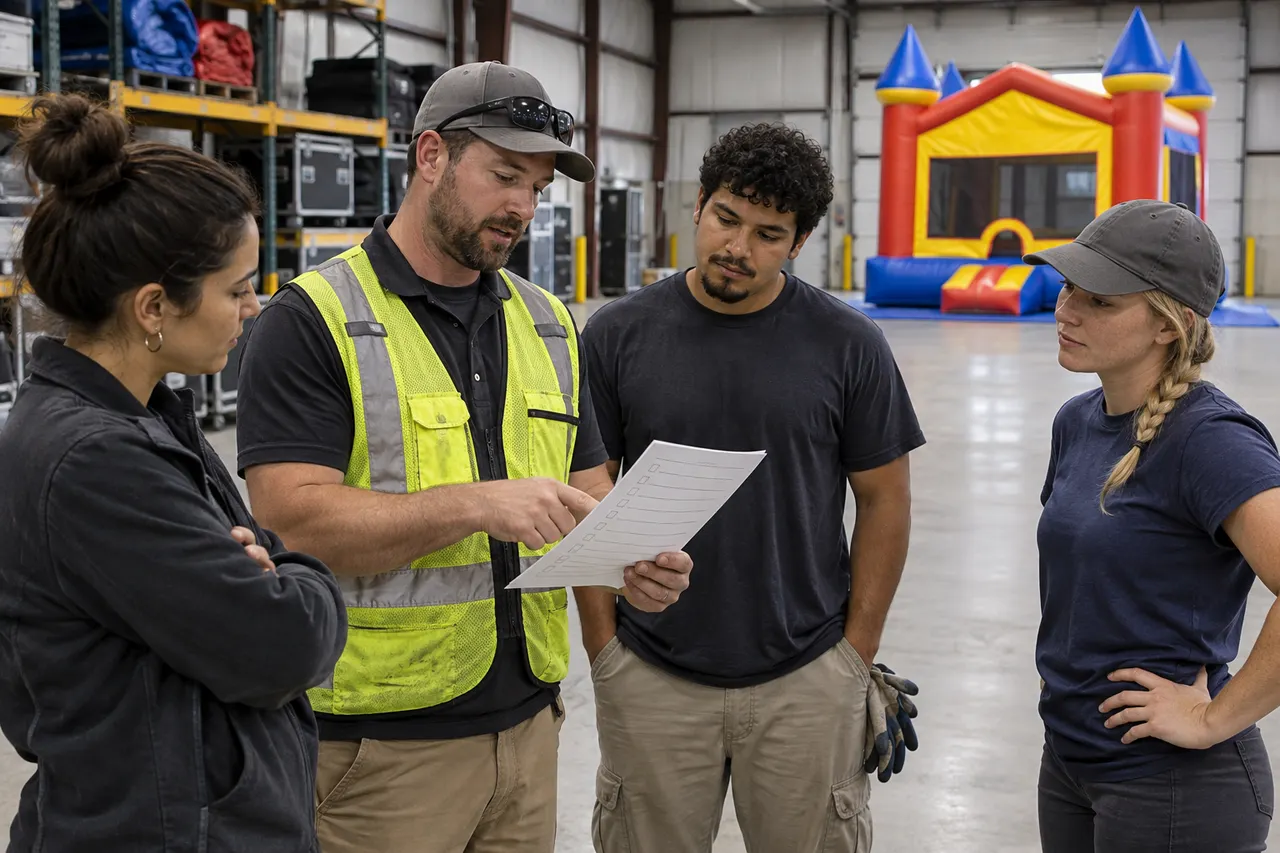
A crew lead arrives for the first event of the season and sees a different surface and narrower access than the office approved. A returning worker remembers last year’s equipment. A new worker has only seen a short demonstration in the warehouse. The group still has time to make a good decision if everyone knows how to stop the job, locate the right instructions and reach the person who can review the change. These are the practical situations a preseason training plan should cover.
Organize preseason inflatable safety training around the actual equipment, the roles at a job and the decisions workers must make. Use current manufacturer instructions, qualified trainers and applicable operating requirements for technical content. The plan should make it possible to observe who can identify a concern, follow the right procedure and hand over the result. A group talk gives staff context. A supervised rehearsal shows whether that context reaches the work.
Establish which instructions govern each model
Inventory the units and related equipment you plan to rent. Verify the manufacturer, model and identifying information and locate current documented instructions for each. Ask a qualified person to identify the requirements that apply to your service, locations and equipment. If a model is unfamiliar or has incomplete documentation, resolve that before using it as part of the season. Keep approved instructions available to the staff who need to consult them at a job.
Keep local and manufacturer information with the training plan. The U.S. Consumer Product Safety Commission publishes guidance for residential and commercial inflatable amusement devices. Use authoritative and current sources for the actual equipment and location. Any operating decision should be made under the applicable qualified procedures. A generic training checklist or a summary of an older event is not a substitute for the current instructions. CPSC inflatable amusement device guidance
Assign responsibility for reviewing changes. A contractor may update its venue conditions, the fleet may include another model or the business may change its transport and staffing. Make it clear who verifies new information and updates the training materials. Keep the date and revision on the documents. Staff need to know which source governs a current job rather than relying on a printed copy that may no longer apply.
Identify what each role needs to demonstrate
List the parts of an ordinary job. The office receives and reviews a request, the warehouse confirms the right equipment, trained workers handle delivery and appropriate site decisions, and the next shift receives the unit back. Some instances have designated operators or attendants and others have a different approved procedure. Identify the authorized responsibilities and the conditions under which one employee can take another role. A job should have people assigned to every required decision.
Write practical outcomes for each role. A booking coordinator may need to identify when a location differs from a known plan and route it for review. A warehouse employee should be able to match the staged unit to its documentation and verify required items under the shop’s procedures. A lead at the site needs to check the approved plan against actual conditions and know who can review changes. Give each worker a scenario that lets the trainer see those tasks in action.
Make it possible to ask for clarification without pressure to continue. Teach staff the approved stop-and-escalate path and how they can record a concern. Identify what to do when nobody can verify a critical detail. Agree on how the office can communicate a pause, change or cancellation to the customer while the responsible people review the work. Participation in a general session is different from being authorized to make all decisions.

Plan a supervised rehearsal from booking through return
Choose an ordinary example job and a verified training setting. Prepare a practice order with customer instructions, confirmed timing and approved site information. Give it to the crew the way they will receive it during the season. Ask the workers to check the unit, find the applicable documentation and decide whether any information is missing. A trainer can identify problems that are hard to see when a worker is only asked to repeat a rule.
Follow the stages under qualified supervision and applicable instructions. Use the documentation for equipment inspection and any technical work. Observe which roles check the current conditions and how they record that the necessary steps happened. Give workers time to explain why a change needs discussion and where they would get an authoritative answer. Do not use last season’s assumptions as evidence that a different model or venue is approved.
Complete the entire return scenario. Ask who confirms the actual unit, records any condition concern and decides whether another employee can proceed with preparation or inspection. Use the approved processes and keep the unit out of circulation whenever release cannot be verified. Connect the resulting record to the next booking. The office should see whether the item is merely back at the warehouse or ready to send again.
Build the session around the documentation people will actually use
Give trainees the references for a common unit and a second example with different requirements. Have them match each document to the model and attach the appropriate reference to a practice booking. Include an unofficial or superseded copy in a controlled exercise and ask which document governs the actual task. Explain how staff check the approved version and who verifies changes. The ability to find the correct instruction is a part of the job, even for a worker who remembers familiar equipment.
Show how the office and warehouse use the same source differently. The office might need the dimensions and the review conditions for a quote. The warehouse needs to verify the selected unit and supporting components. The field crew uses the approved procedures for the work it is authorized to perform. Write down which information is available on the order and when the worker must consult the full instructions. If a customer asks about a model the business has not approved, practice referring that request instead of answering from familiar but different equipment.
Put the relevant work into a simple session outline. Begin with job review and equipment identity, then move to the decisions governed by the qualified trainer. Complete the return and handoff in the same session. Ask workers to review a short sample record before the session and explain which stage it describes. Keep the training timetable realistic. If the crew needs to repeat a task to demonstrate it, leave room to do that under supervision. Closing the session at the planned hour is less important than knowing which tasks still require follow-up.
Rehearse decisions people are likely to face at a real site
Introduce an example where the venue says the approved location is unavailable. Ask the lead to identify what changed and who will review it under the business’s procedures. The workers should be able to pause and inform the office without improvising. Check how they explain the situation to the customer. Record which result is approved and which instructions the crew would need before resuming.
Use a practice issue with a missing or uncertain piece of equipment. The worker should identify the concern, refer it for a qualified decision and keep track of the unit that needs review. If the business considers a replacement, it should be verified from the actual model and instructions. The trainer should record how the crew handles the uncertainty rather than judging whether it found a clever workaround. A successful rehearsal preserves the required checks under time pressure.
Try a scenario where conditions change after the office confirms the schedule. The responsible person must use current, authoritative information and the appropriate review before making any operating decision. Practice how staff receive that decision and communicate it to customers. Include the worker who handles changes and cancellations. A decision made correctly at the venue still needs to reach the next booking and anyone planning equipment collection.
Train how to communicate when an issue crosses roles
Give dispatch a test inquiry that starts with partial information. An employee may receive a change from a venue while the crew is traveling. See whether the staff can find the job, verify what was approved and send the update to the right person. Keep the original plan and the reviewed decision visible. Do not let a message standing alone change the booking status. Give the customer a clear response that matches what the crew can do.
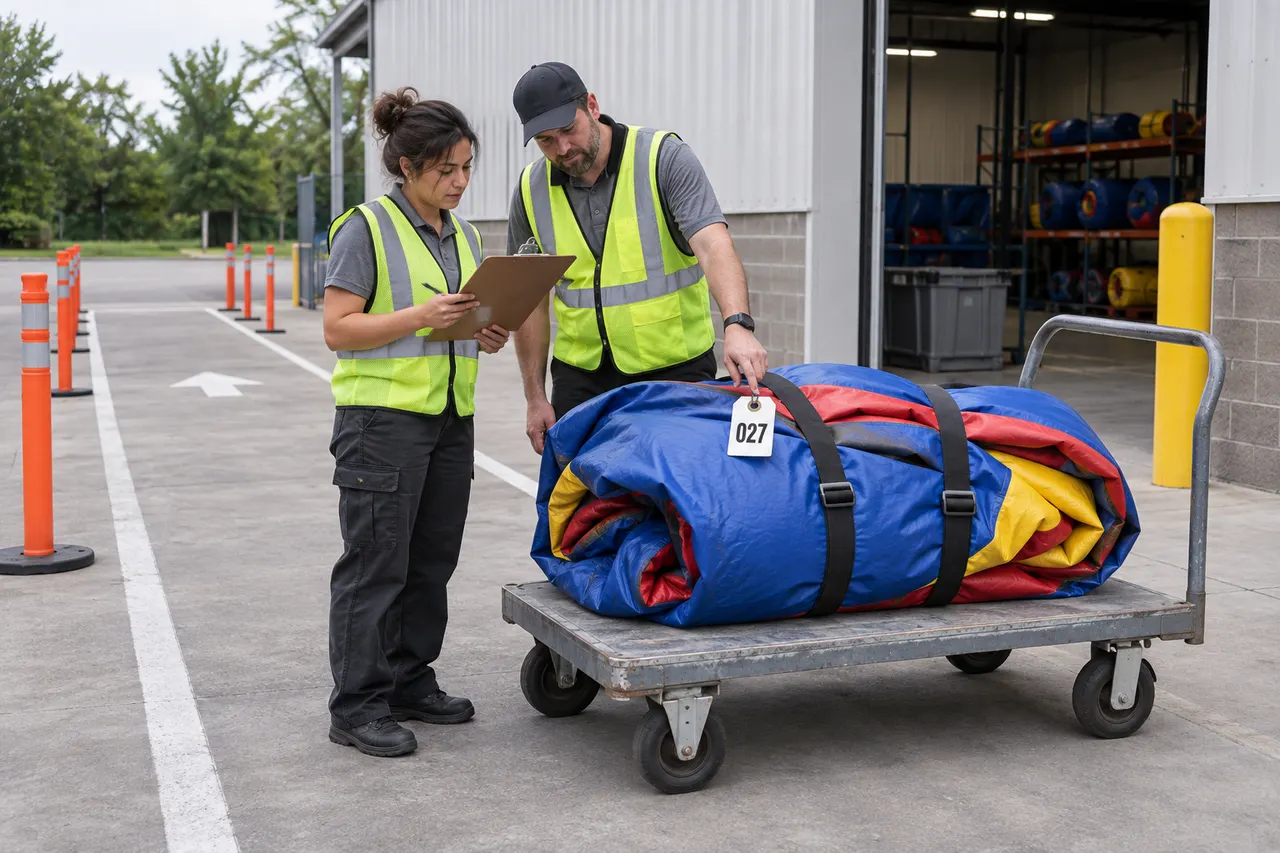
Practice a shift handoff after an unresolved concern. The incoming person should know the unit, current location, status, who is responsible and what review is expected. A general note such as “Check this before Saturday” may be hard to interpret. A record that names the asset and issue offers a real next step. Teach staff to report the facts they observed without speculating about who caused the problem.
Review the emergency and incident procedures with the qualified people responsible for them. Practice how workers locate the approved instructions, identify the site and reach the appropriate help under the organization’s procedure. For an emergency, use the appropriate local emergency services promptly. Keep this exercise distinct from an ordinary scheduling change. Make sure everyone knows where their responsibility begins and who takes the next decision. Keep the training at a scope the organization can properly supervise.
Verify that stopping a task has a clear practical next step
Use a simulated event with a tight arrival window. Give a worker incomplete site information and tell the group that a customer is asking when service can start. Observe who stops the assignment, who calls the authorized reviewer and who gives the customer a status update. The trainee should be able to identify the missing fact and the person who can make the decision. Keep the exercise safely separated from real service. Review whether the job record made the necessary information easy to find.
Practice resuming only after the approved review. Suppose the venue provides new information and the responsible person decides what can proceed. Make the staff confirm the current written plan, identify which parts changed and verify that the new conditions are appropriate under the approved procedures. If the decision is to keep a hold, the worker should know where the unit stays and which bookings need to be reviewed. A pause only helps if the rest of the team uses it as part of a real change process.
Check that authority and responsibility reach temporary workers too. An employee may be authorized to report a concern and stop work even when a supervisor makes the later operating decision. Explain which roles have which authority in the business’s actual procedures. Ask a new person and a returning person to describe what they would say when the team is under pressure. If their answers conflict, make the procedure and the training record clearer before dispatching them.
Document observed work and assign supervised follow-up
Use a short record for each employee and role. Include the models or procedures covered, the date, the trainer and what was observed. Keep an outcome for work an employee can perform with the required authorization, work that needs supervision and topics still needing review. A signature acknowledging attendance can record who was present. A separate observation tells the business which tasks a worker actually demonstrated.
Record the facts that will guide further practice. If a trainee missed a condition change when checking a sample order, mark the exact task and plan how to repeat it. If the schedule or checklist is unclear, fix the process rather than attributing every mistake to the worker. Practice the corrected scenario with enough support and record the result. Keep reasons and next steps with the training record.
Build the first weeks of assignments from those observations. Pair staff as required by your procedures and make role limits visible to the people scheduling jobs. If a worker can perform receiving tasks but is still being trained for another role, make that distinction explicit. Verify the plan again when an employee moves to a new model or service. A familiar crew still needs current instructions and appropriately assigned responsibilities.
Plan training for workers who join after the first session
Create a way to review which roles and models a late hire has covered. A new employee might join after the main preseason session or transfer from work with different equipment. Give them the appropriate supervised training and check what they can demonstrate before making assignments. Do not treat an employee’s previous experience as evidence that they have seen the current procedures. Ask the responsible trainer to identify which tasks can be observed together and which need separate work.
Schedule the review in real operating time. A lead who is already doing a delivery may not have enough availability to observe a separate role properly. Put the practice or supervision on the calendar and give the trainee a clear point of contact. Keep the current limits visible to the dispatcher until the authorized review is complete. If staffing changes unexpectedly, revisit the jobs the business can safely support rather than expecting the roster to substitute unverified workers.
Use a short repeat observation once the employee has worked a few representative assignments. Check a unit or site change and follow the record through return. Ask the worker where the instructions helped and where they needed a person to clarify the decision. Refine the training or job information when the process is unclear. The record can show that a worker has progressed while still preserving the tasks that need another supervised check.
Make the training plan usable throughout the season
Ask a worker to find the correct reference from the device or job record they actually use. Test it in the setting where they need it. If access is unreliable, provide a suitable approved offline copy and tell staff how to check its version. Keep emergency information and contact details accessible through the agreed procedure. Clear information supports training when the crew cannot rely on a familiar lead being beside them.
Set triggers for targeted refreshers. Equipment changes, new sites, staff changes and issues found during actual jobs can show where to repeat a scenario. Keep any relevant authorizations and attendance records current. Hold short reviews after comparable jobs and gather observations from the crew. An unclear instruction or a missed handoff can be addressed in a small focused rehearsal instead of repeating every unrelated topic.
Use the first real bookings as feedback on the process. Verify that people can locate the right documentation, identify the approved conditions, report a concern and see that the next worker received it. Review any stop or hold without treating it as proof of poor performance. A properly recorded pause can show that someone followed the process when faced with an uncertain situation. Improve the part that made the decision harder than it needed to be.
A crew is ready for the season when it can show how it will work on the first real job under the correct procedures. Teach the decisions, run the full handoff and document what the workers actually demonstrated. Make the plan clear enough that a changed site, missing item or unresolved return leads to a qualified review instead of a rushed guess.