Select equipment that earns its space in your fleet
Compare rental equipment by demand, space, vehicle capacity, handling and upkeep before assigning it a rack or buying more.
A warehouse has room for one more rack. The owner can use it for folding chairs that go out almost every weekend or for display pieces that bring in more per rental but need protective covers and two people to move. Both choices can make sense. The useful comparison includes how each piece uses storage, handling time and the routes the business already runs.
Choose rental equipment by looking at what it can contribute in the space and time available. Start with actual orders and the way each item is prepared, transported and received. Then use a short comparison to decide which equipment deserves the next storage position or investment.
Measure the space the item actually needs
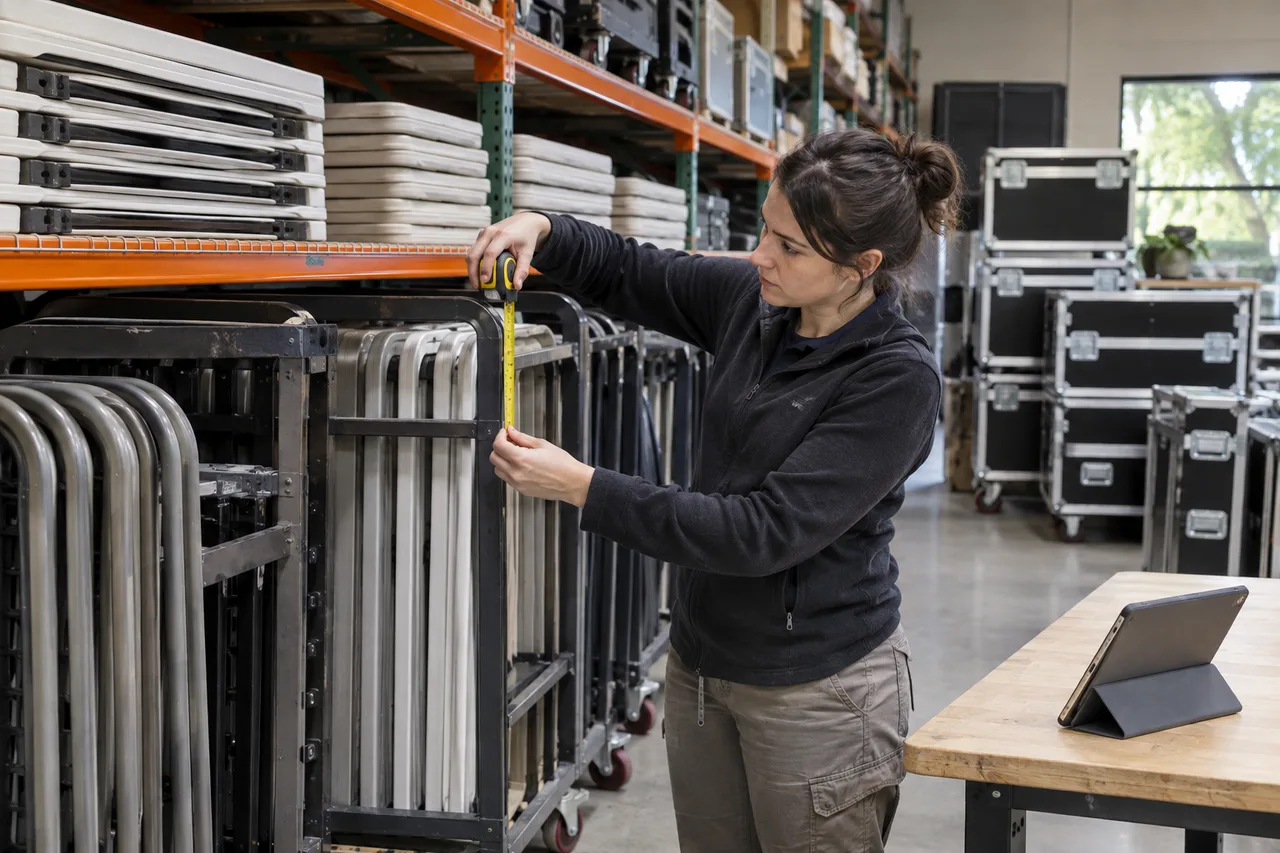
Use the space the item takes while stored, including a practical cart, shelf, rack or case. A table’s dimensions when open tell you whether it fits a room. Its packed dimensions tell you what it needs in the warehouse and on the vehicle. Measure in the configuration the business would actually use, with the covers, carts and components arranged together.
Include the room people need to get it out. A folding rack may occupy a narrow space and need room to turn into the aisle. A group of display pieces may fit neatly on shelves while needing a separate preparation area. Check the path with the people who move the equipment. Protect access required for the building and daily work as you assess the layout.
Record what else will need to move. If the new rack takes the staging area for a popular product, your usable storage has changed even if total square footage is the same. Review the return route and places where incoming gear waits for inspection. A product can be a good fit on a shelf and a poor fit in the space the team needs to prepare it.
Compare alternatives that use space differently. A stackable item could free floor area when several units return together. A case with multiple pieces might need only one shelf but use an extra workbench for counting. Note the dimensions and the operating space each choice requires. Those records help the next person understand why a piece was selected.
Find the jobs the equipment can serve
Look at completed bookings and requests the business could not fulfill. Identify the event types, quantities and rental periods. A product may go out on small orders throughout the year or only on a few seasonal events. Both can be worthwhile. Record what the customer booked alongside it and which service helped the offer work.
Distinguish standalone demand from use as part of a package. A registration table may appear on many bookings because it is included in a standard offer. A particular chair finish might attract a large order even when the rest of the package could use other equipment. Check which piece affects customer choice and which parts are usually accepted because they support the same event.
Look at the times demand overlaps. A product can appear on lots of work and rarely be fully committed. Another may be booked for fewer events and still prevent the business from accepting a second order because the dates always coincide. Review the periods when you had to decline or find a substitute. If the business already has enough equipment and is limited by the crew or vehicle, buying more may leave the real constraint untouched.
Check which customers can actually use the product. Service area, stairs, venue receiving hours and vehicle requirements can change the range of work. A product that needs staffed placement may serve a smaller set of bookings than a simple pickup item. Compare it with alternatives using the practical handoff you can offer.
Count the work each booking adds
Follow the product from the rack to the next ready state. Record the time and people needed to prepare it, confirm its condition, pack or load it, and check it on return. Note any extra trip or specialist support. Use the crew’s records or a small trial. An apparently low-cost item can require time that is easy to miss until there are several at once.
Compare expected upkeep. Some equipment uses inexpensive consumables or regularly needs a minor replacement. Other products may require specialist service, a long wait for parts or protective materials that must be replaced. Keep those facts in the equipment history and distinguish predictable work from isolated incidents. Track why an item was unavailable so the business can evaluate how often it can actually rent.
Estimate how much of the work happens for each order and how much happens per unit. Serving ten matching chairs on one pickup might use the same counter appointment as serving five, with additional counting and handling. A second display piece might need room on the truck and its own protective case. Those costs can grow in different ways. Use the item and service you actually plan to offer.
Look at staff capacity where the work would happen. A longer reset needs time on a day that may already have several returns. A delivery requiring two people may conflict with the shift preparing other orders. Give the business enough capacity to complete bookings already accepted. Check whether the new item uses staff and space you already have or introduces work that needs a separate plan.
Compare contribution with space and time
For each plausible order, estimate the revenue related to the equipment and the direct costs of serving it. Use comparable services and periods. A package with delivery and placement includes different work from a pickup. Keep assumptions about utilization and bookings visible. A calculation based on twenty rentals can be useful when you can also see what happens if only ten arrive.
Relate the result to the resource you are trying to manage. A fixed shelf position may make storage the limiting choice. A small vehicle may limit how much revenue a route can serve. A high-use item needs realistic turnover even if it stores compactly. Use the number that explains what the business can change. A product can store efficiently and still be costly to put into service.
Compare the existing alternatives as well as new purchases. An item you already own may occupy space while requiring repeated repairs and seldom being chosen. Another may support sales of a useful service even with a low per-unit price. Review whether the item can be repaired, moved, listed differently or retired. Freeing a rack with little effect on actual rentals may be more useful than rearranging an entire room.
Avoid assigning all package revenue to several components. Estimate the contribution of a whole representative booking, then observe what changes if you offer a different piece or service. If a product is rented both inside and outside a package, compare those uses separately. The numbers need enough detail to support an actual allocation or purchase decision.
Work through two uses for one rack
Imagine a shop can fit a rack of 32 folding chairs or four large display pedestals in its available area. Orders show that extra chairs could help it accept several planned events on routes that already carry tables. The display pieces might be rented for fewer jobs at a higher amount. The shop reviews where each product goes, how much time it needs and whether another rental can travel on the same vehicle.
The chair option could add $70 to an ordinary furniture order with $24 in added direct handling and reset costs. That example contributes $46 before fixed costs. The display option might add $160 on a larger job with $68 in handling, preparation and transport costs, leaving $92. Four chair orders on those terms contribute the same amount as two display bookings. The business still needs to check whether those bookings exist and whether they fit the rest of the schedule.
The warehouse checks both sets. The chair rack can join regular runs but uses a long part of the load area. The pedestals need extra protection and a separate place to wait at the venue. The business can try the pedestals through a supplier for a few jobs, then record how often they require a dedicated trip. It can also review unfilled chair orders to see if added stock would serve them without needing another driver.
The decision depends on the results. A rack of chairs may be useful if several dates really lack that inventory and handling is manageable. The display pieces may be a better use if customers will pay for them on orders the team can deliver efficiently. The owner records what would change the choice, including the need for more space or the end of a recurring account.
Check the dates when equipment and vehicle space are scarce
Take an actual week and draw the equipment commitments together with dispatch and warehouse work. Start with the dates when you are most likely to run out of room. Write the vehicle load and the gear that is waiting to leave or come back. A unit’s shelf position can look free while the staging area is already full of work. Test the choice against the crowded part of the schedule.
Consider the vehicle as a separate constraint. Suppose the chair option serves several existing venues and the crew can fit it on their truck. A display piece might fit the warehouse and require a dedicated stop because of its dimensions or a narrow setup window. Verify the planned arrangement and handling with people responsible for the vehicle. Put any additional work into the sample order cost before deciding which requests the new unit can serve.
Check collection at the same time. A return scheduled near another large pickup can leave too little floor space for the necessary inspection. Find out whether one group can be checked on arrival and where incomplete items will wait. The business needs space during its busiest hour as well as room to keep the gear through the week. Review both points before reserving another rack.
Use an option that frees the scarce resource when possible. A different cart may move more of the same equipment through the warehouse. A partner might deliver a display piece directly to the venue under a clear agreement. Another product may handle the same event without needing a dedicated crew. Compare the costs and outcomes in the same operating period.
Compare parts, upkeep and the skill needed to keep it rentable
List the parts and supplies that make the product usable. Chairs can need replacement feet or other manufacturer-supported parts. Larger items can need cases or fasteners suited to their model. Check which pieces your staff can inspect and which require service from someone else. When a part is missing, record which reservations would be affected and the time needed to restore availability.
Look for compatibility that simplifies work. A new table size might require separate covers and a new vehicle position. A different variant could use covers, carts or packing methods the crew already understands. Keep measurements and approved components accurate. An apparent match can create real work if staff cannot distinguish which parts fit. Try the parts and packing process with the actual equipment before relying on it in a quote.
Decide which product knowledge must be available on each shift. If a display requires a particular handling procedure or a set has a difficult component count, give the employee a concise reference and a way to ask for help. Estimate time for training and confirm people can do the work at the normal station. A product can be profitable and still hard to offer regularly if someone with the necessary knowledge is rarely available.
Review supplier support for equipment that is central to a package. Ask about replacement items, repairs and normal turnaround before planning heavy use. Build any confirmed downtime or spare requirement into the operating picture. If a product can be rented only when all its components are ready, the usable capacity may be smaller than the count of main pieces on the rack. Give the fleet record the detail staff need to make a reliable promise.
Give an existing product a fair review before moving it out
Choose a review period that reflects the intended use. A summer display may look idle when examined only in winter. A table that serves a venue once a month might be worth keeping if the order is reliable and the handling is simple. Compare the storage needs with the work it makes possible. If the item supports a bundle, consider whether customers still accept the package when the item changes.
Check which near-term commitments depend on the item. Confirm what is already booked and what might need a substitute if you move or retire the stock. Give the office a current availability result for new quotes and preserve approved agreements. If the equipment is transferred to a different site, check whether it can still serve its regular customers within the expected time and service.
Record the amount of space you expect to free, including the rack or packing materials that can leave with the product. Confirm what will use that space before the next purchase. A cleared shelf has the most value when it solves a real storage or preparation problem.
Choose an outcome the business can test. Move it to a different rack for one season, offer it only on a suitable route, or use an approved partner for occasional requests. Compare how often the shop serves the same work and whether the warehouse gets the expected space back. The next decision should use the same bookings and constraints that prompted the review.
Verify the fit while the commitment is small
Try a representative piece before adding a large quantity. Check it on the rack, include it in one of the normal working loads and inspect it after return. Make a short note about fit, handling and what the customer actually used. Compare that with the initial estimate. A small rehearsal can reveal an awkward load, a hard-to-find accessory or an unexpectedly slow reset.
Look for enough demand to make a reliable next decision. A few completed rentals may show that the product works well on certain jobs. Check which requests you would have missed without it. If there is a dependable supplier arrangement, another trial can answer a remaining question before you buy. Use a restricted offer with clear availability so the team can honor the orders it accepts.
Set a review date for items the business already owns. Look at bookings, condition and the work associated with each group. If an item occupies space and has few uses, ask whether people can find it and understand the offer. If they can, decide whether to keep it in reserve, move it to another location or retire it responsibly under the business’s process.
Each time you change the fleet, update the people who count, quote and schedule the equipment. Show what is available, where it lives and which handoff it can support. Check the next few bookings for the new configuration. Equipment earns its space when people rent it for work the business can prepare, deliver and recover reliably.