Schedule Saturday deliveries backward from setup deadlines
Plan Saturday rental deliveries around confirmed setup deadlines, venue access and a route the warehouse and crew can follow.
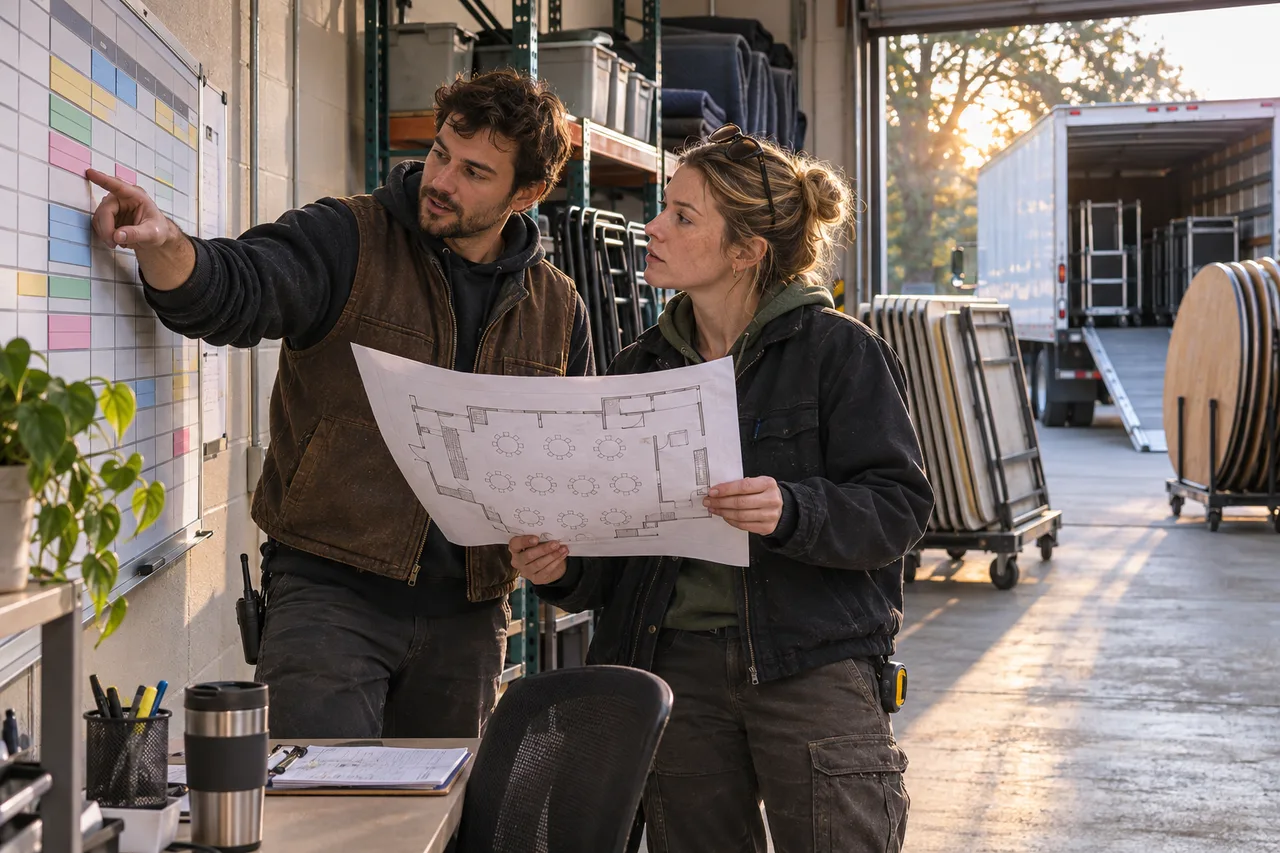
Three customers need rentals on Saturday. One must have furniture set before a 10 a.m. venue walkthrough, one can receive a load any time before noon, and one won't open its service door until 11. Routing the stops by distance alone can put the shortest drive first and miss the walkthrough. Start with the time each customer needs the work finished, then work backward through the steps that have to happen before it.
Pick one upcoming Saturday with at least two kinds of delivery. Use the accepted orders, the dispatch schedule and what each venue has confirmed. Write down the finish time, which parts of the job your crew needs to do, and who can receive it. Ask the people who stage and deliver the work to estimate the time they actually need. A pickup deadline, arrival window and fully set room are different commitments and deserve different entries.
Confirm what the venue means by ready
Ask which person or event sets the deadline. A caterer might need the tables before linen placement at 9 a.m. The customer might want the entire room ready before guest arrival at noon. The venue may have a separate time for the unloading lane. Record each as the kind of time it represents. If an order includes delivery only, confirm where the items will be handed over and when the receiving person can be there.
Put the information the crew needs in the accepted route brief. Include the receiving door, name or role of the site contact, load-in window and the agreed setup or drop-off point. Confirm whether the crew needs to use an elevator or work around another vendor. If the access details are still pending, give them a due time and a person to check. An unconfirmed receiving door can add more uncertainty than a few extra minutes of travel.
Ask the customer or venue how they want to handle an early arrival. The crew might be able to wait in a designated area, or the venue may only allow trucks during scheduled intervals. Follow the venue's normal procedures and give dispatch any details it needs to coordinate. Record a safe alternative holding point when one is available. A route should not depend on workers improvising a place to stop when access is unavailable.
Work backward from a specific finish time
Suppose a room has to be set by 10 a.m. and the crew normally needs forty minutes for the furniture placement. They also need fifteen minutes to unload and a ten-minute period to coordinate access and check counts. That makes 8:55 a.m. a starting point for arriving if those tasks happen in sequence. Add time for normal uncertainty based on similar visits. If the venue opens the dock at 9:15, the planner needs to confirm a different way to complete the work before promising the original deadline.
Estimate travel from the stop that actually comes before it. If a route starts at the warehouse and takes thirty minutes in comparable Saturday conditions, the truck needs to leave at least thirty minutes before the arrival target, with any planned travel margin. Work farther backward to equipment staged, loaded and verified. If warehouse doors open after the useful load time, handle that dependency before putting the goal on the calendar. A driver cannot make up a staging delay by taking time out of a fixed venue window.
Use the same approach for a venue with no setup service. The work might require an access check, unloading, a receipt and room to leave the dock. Confirm whether the receiving party needs to count or inspect items before accepting them. A seemingly simple drop-off can take a different amount of time at two buildings. Use a recent example from the particular venue if the team has one.
Separate fixed windows from stops that can move
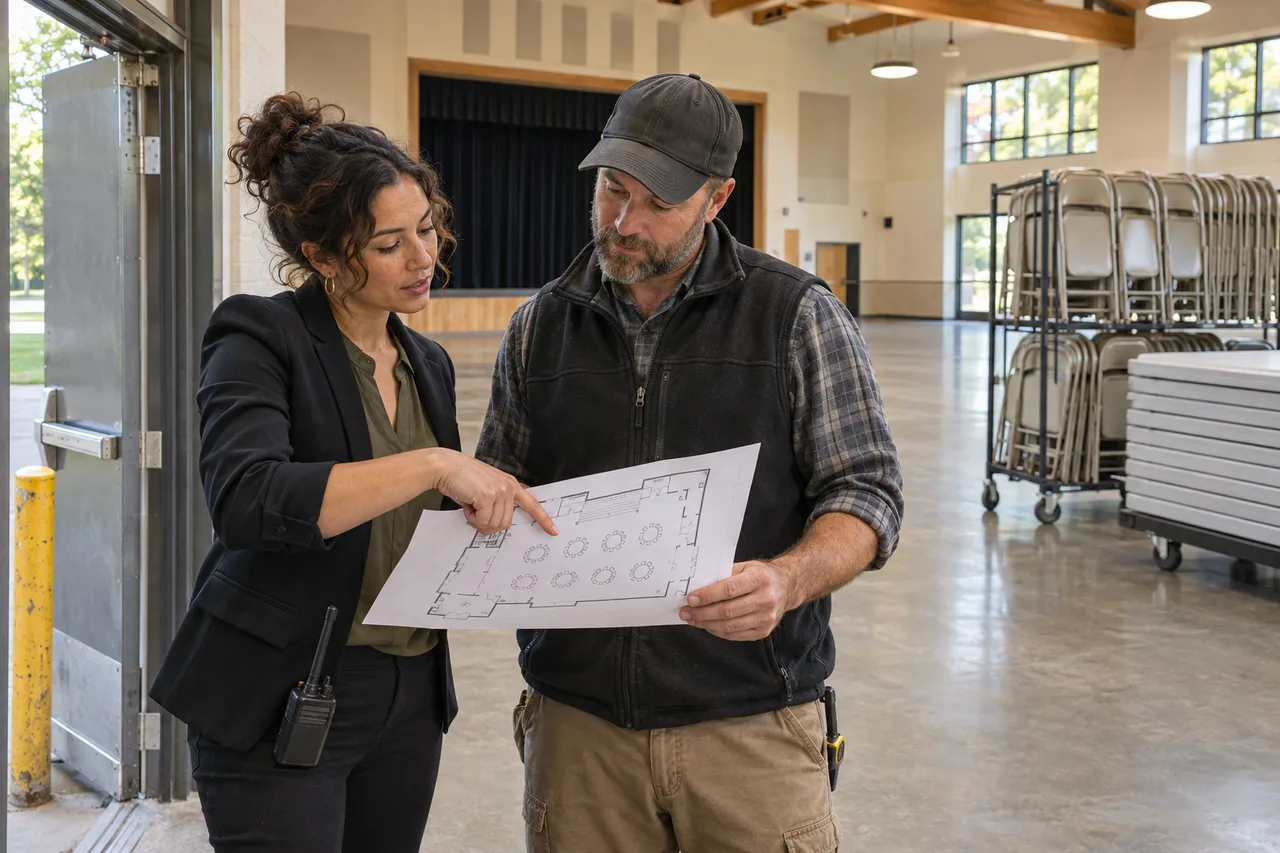
Mark the jobs with an explicit finish deadline or access window. Place those on the route before adding stops with more flexibility. A venue with one dock slot belongs in a different category from a customer who can receive a truck throughout the morning. Confirm which time must remain exact and which the customer can adjust. Leave enough room for a stop to be flexible in practice.
Group compatible deliveries by location and service demand once the fixed jobs are in place. Check whether an early flexible stop would expose a job with a firm deadline to an unmanaged delay. If both stops can fit but the sequence leaves no time to resolve an access issue, consider moving the flexible one later or sending it with a different vehicle. A route with an extra mile can be useful when it gives the customer a more reliable finish.
Review the proposed order with the warehouse. A truck may need to carry equipment in the reverse of drop-off order if the first stop's cases need to be accessible at the door. Some large pieces may require a different arrangement based on how the vehicle is loaded by the trained crew. Use the actual dimensions and handling procedure. If loading a later job prevents the first delivery from being unloaded efficiently, check a separate load or different vehicle before finalizing.
Include people and equipment in every time estimate
Setup time depends on the number of staff who will do it and the work the venue expects. Compare the planned crew with examples where you measured a similar job. If only one person can use the service corridor at a time, adding a person on the truck may not shorten that part. Consider which steps can safely overlap and which are sequential. Agree on an estimate your setup lead can explain before dispatch schedules the next job.
Check which equipment is required to receive and stage the load. Moving through a long service hallway can require multiple trips. Confirm the agreed access route and ask whether the correct carts and handling equipment are available. Find out who will return those tools to the truck before the next stop. Shared equipment may affect two separate routes if both need it at the same time.
Check what the crew needs immediately after each stop. A return trip to the warehouse, a lunch break or a change of equipment can use time that is easy to miss when looking only at map distances. Include time to communicate updates while the vehicle is safely stopped. Give the team one place to find the next confirmed plan and a backup contact if a dispatcher is already speaking with another driver.
Walk through a route with three time commitments
Start with the room that must be ready at ten. The crew plans to arrive at 8:40 to allow for an access check, unloading and setup, with a modest margin if a vendor is still moving gear. The furniture is staged and checked Friday and loaded before the workday begins. The venue has confirmed the access slot and assigned a receiver. Dispatch knows that it will need to revisit the plan if the driver has not reached the dock close to the confirmed time.
The second customer can receive tables from 9:30 to noon and needs no setup. It is twenty minutes from the first venue under normal conditions. Leaving the first location near 10 gives the driver room to reach the flexible stop after the tight deadline. The crew records the expected unload time and verifies that it can reach the second customer's items once the first load has been delivered.
The third job has an 11 a.m. dock opening and an early-afternoon setup deadline. Plan the latest comfortable arrival from its own work estimate and compare it with the route after stop two. If the customer at stop two can't receive the truck until 11:30, the third venue may need priority. Before moving stop two, dispatch checks the receiving person and latest usable time. Another vehicle or a changed appointment could be more reliable than asking one crew to squeeze both in.

Choose what the driver needs when a time changes
Write the agreed plan in terms the driver can use on the road. Show the stop order, arrival window, setup or handoff deadline and who receives the equipment. Mark fixed times and the person who decides a change. If a venue can provide a different door on short notice, record that arrangement with the customer or venue confirmation. Include enough detail to check the instructions without asking the driver to open an unrelated conversation.
Prepare a short delay update staff can deliver through normal channels. It can name the stop, the issue, the current estimate and when another update is due. The crew may need to report that a dock is blocked or a receiver is unavailable, while dispatch checks which later commitment could be affected. Agree who contacts each site and where the latest decision appears after the call. A useful update makes the next action clear when someone else takes over.
Pick a time at which the office will review each firm deadline if a stop is still open. This can be before the final arrival window expires, so there is a chance to reach the venue or rearrange another stop. Use ordinary timings from the route and the work rather than a fixed amount of time that applies to every customer. When dispatch reschedules a flexible visit, check whether there is still a receiving person and enough time to complete it.
Try a delay before the trucks leave
Use the same three-stop plan and assume the first dock opens twenty minutes late. If the room has a fixed finish, check which work can proceed with the people already there and whether someone at the venue can approve an alternate entry. Keep the current commitments visible while dispatch checks. The crew needs to know whom to contact, and the office needs enough information to tell later customers what may change. A delay example can show which calls should happen before anyone tries to shuffle the whole route.
Test a different situation with a staffing change. If a setup lead is called away, consider which tasks the remaining crew can do under the normal procedures and which need another qualified person. Contact the venue or customer before committing to a change. When an approved replacement crew is available, check its arrival and the vehicle it will use, along with the revised staging plan. A new crew member should be able to identify the finish time and agreed scope from the assignment they receive.
Include one scenario where a flexible customer can move. Confirm the expected result both at the dispatch desk and at the site. If the day was already nearing its workload limit, see whether the smaller amount of remaining slack is enough for the new sequence. Writing this down gives the supervisor a practical way to recognize when a day needs another route or a revised commitment.
Make the Friday handoff easy to verify
End Friday with a check of the first truck, first updates and unresolved issues. Count the staged items against the current reservation and note whether any pieces are expected back before loading. Confirm the venue door and receiving contact for the first tight stop. If a booking changed days earlier, verify that the physical pick and current route both use the accepted version. Print or save any allowed route references the driver will rely on if the device is unavailable.
Confirm who can make a decision on Saturday if the person who prepared the route isn't working. The opening shift needs to see which stops can move, which deadlines are fixed and what to do with a venue or vehicle issue. A separate list of open questions can work if it names the affected booking and the time by which a decision is needed. An employee should be able to find the current result without searching every conversation from Friday.
Check the first receiving window with a practice departure. A coworker can describe when to arrive, which part of the order must be ready first and whom to call if the dock is blocked. Someone at the warehouse can then find the right truck and stage the next stop. A five-minute read-through can uncover an obvious mismatch before the next shift has to solve it with a loaded vehicle.
Use the actual day to improve next Saturday
After the route, compare planned and actual arrival, access, unload and setup times. Note where the estimate was useful and where a hidden task made it too short. A venue that routinely takes twenty minutes to open the service entrance may need an earlier arrival or a different receiving arrangement. If the same hallway requires more trips than expected, include the real time when quoting the next setup.
Review the order in which problems appeared. A delay in loading might have affected a firm deadline before anyone knew to contact a later stop. Ask what the team could have seen sooner and what update would have helped. If the next customer had a fully usable flexible window, record how much room it provided. Change the part of the route that created the issue, which may be the load time or dock access rather than the drive.
Keep a few checked examples by venue and job type. Include how many crew members handled the setup, what the access was like and whether the work included a handoff or a complete installation. Use those examples as estimates when a similar reservation arrives. Update them when the crew size, room or loading point changes. This helps the planner explain why one visit needs more time than another that appears close on a map.
Decide when another stop belongs on a separate route
Add a proposed delivery to the open schedule and work backward from its finish. Check the remaining time, crew, vehicle and needed equipment after all confirmed stops. If the added work depends on every existing visit going exactly to plan, offer another arrangement that gives the team space to complete it. Confirm the customer's usable alternatives before accepting the added stop.
Use the same review for a collection you hope to combine with outbound deliveries. A stop can require space in the vehicle and additional time to check the items. The pickup should have a receiving point and agreed time that fit the other commitments. Put both work types on the route so the crew can see which orders it is carrying and which need to be collected. A Saturday plan is ready when staff can stage it, drive it and complete each promised handoff from the same set of instructions.
Review the plan one last time from the perspective of the customer with the earliest deadline. Ask a coworker to identify which vehicle is carrying the order, when it is expected to arrive and how the venue will know if anything changes. Then look at the last stop and check which resources remain available. When both ends of the route have clear instructions, the intervening stops tend to be easier to review.