Route incoming calls to the first available rental coordinator
Set up rental call coverage so the first available coordinator can answer, hand off urgent orders and follow through on callbacks.

On Friday afternoon a customer calls about forty chairs for a Saturday reception. The shop phone rings at the counter, in the showroom and on the owner’s mobile. The counter employee is checking someone out and the owner is on a venue visit. Eventually the call goes to a mailbox no one checks until closing. By then, the customer has already found another supplier. The shop had someone in the office who could have checked the chairs and the dispatch window. The phone system simply gave that person no clear turn to answer.
Design inbound calling around who can help when the customer calls. Use an available coordinator for most new inquiries, a clear escalation path for time-sensitive deliveries and a callback when no one can answer. Give each answered call an owner and a place to record the next step. That creates a process customers can rely on during quiet periods and when the office is busy with a route change.
Find out which calls need a different response
Review a sample of calls from several comparable shifts. Count how many ask about a new rental, how many relate to an active order and how many concern pickup, payment or account administration. Ask the coordinators which questions they can usually resolve and which need another person. Track calls by time of day and day of week. An office that has plenty of coverage through lunch may still miss most calls when staff gather orders at the end of Friday.
Record why a call was missed or transferred where the reason is known. A call might arrive while all coordinators are busy, while none are scheduled or while devices are configured to ring in the wrong place. A caller may hang up right after a long greeting. An answered call may still need a second call because the employee cannot see availability or the actual delivery detail. These conditions can look similar on a weekly total. They call for different operational changes.
Pick a small number of paths to begin. Most stores can send ordinary new inquiries and booking changes to one group that understands the catalog and schedule. An active delivery with a road closure or an upcoming venue deadline may need dispatch. Keep a way for a caller who picked the wrong option to reach a person. Staff can classify the reason once they answer. Make the greeting short enough that a parent, organizer or venue manager can act while doing something else.
Decide what available means for the team
An available coordinator can take a call, check the necessary information and agree on an appropriate next action. Staff need a simple way to show when they are helping another customer, preparing a quote, on break or away from the desk. A person near a phone may look available to the system even if they are handling a customer at the counter. Practice the status changes the employees will actually need and decide whether in-person customer work takes them out of the group.
Choose how the team will share calls. A simultaneous ring can suit a small group when someone is usually able to answer quickly. A queue can offer a call to one staff member at a time based on availability or another supported rule. Some systems can distinguish the person who has been available longest or adjust for the work already assigned to each staff member. Confirm the exact settings and how unanswered offers are returned to the queue. Different tools make different decisions about busy devices and status changes. Amazon Connect documentation on routing profiles.
Cover each role before you depend on a queue rule. Give general coordinators access to product listings, booking details and the delivery options they can quote. Make clear which decisions are referred to dispatch or an owner. A coordinator who can collect the required information and send a useful update will often make more progress than a quick transfer to a phone that rarely gets answered. Write down which issues need a live handoff and which can be assigned for a later answer.
Lay out the path for business hours and closed hours
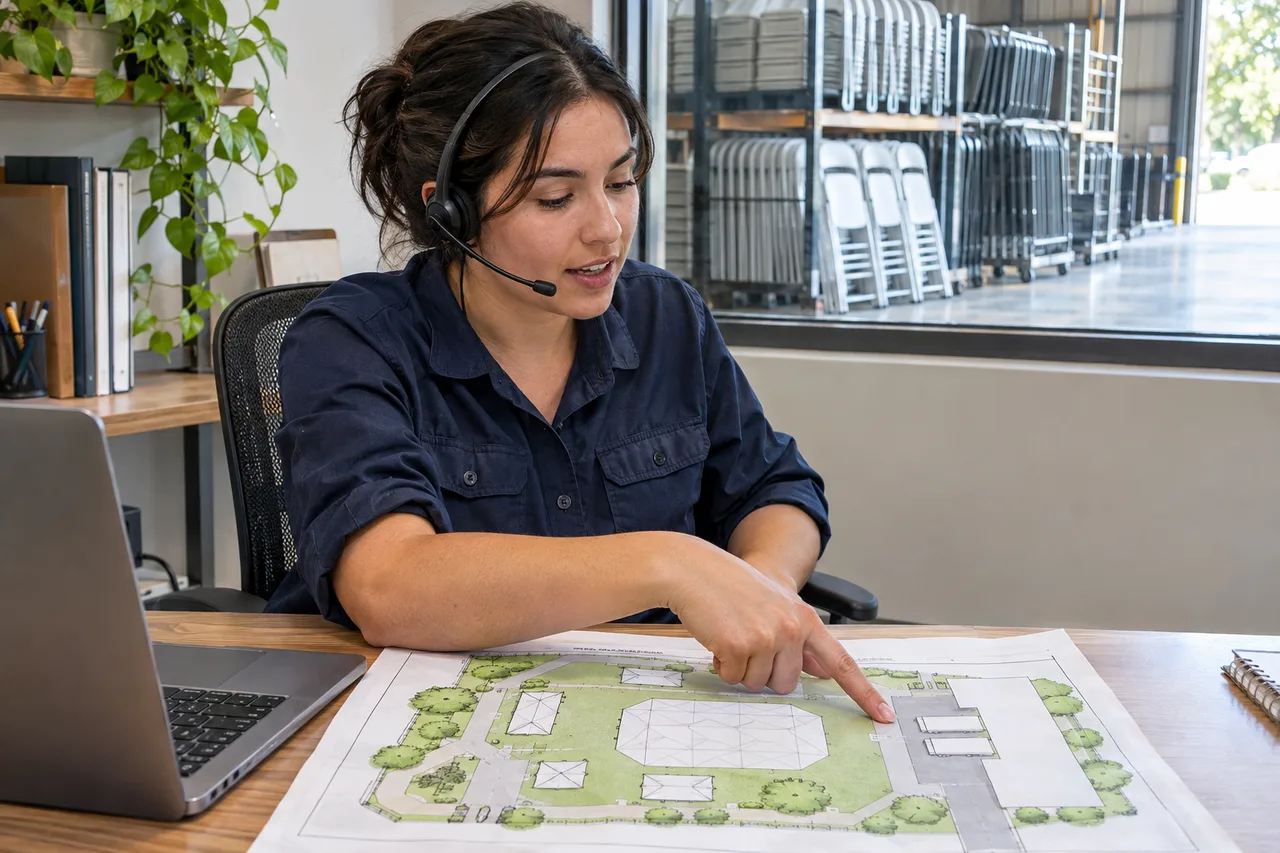
During staffed hours, let the main phone number go to the general group or a simple choice between new requests and active deliveries if the latter needs a separate response. Define the normal queue wait and what happens when that wait runs out. Depending on the tools available, the caller may request a callback or leave a message for a shared inbox. Check that the next employee can see the lead or order behind the call and that one person accepts responsibility for returning it.
Set the closed greeting around actual coverage. Tell callers when they can normally expect a reply and where to reach the shop about a booked delivery if there is an agreed on-call arrangement. Keep holidays, unusually early delivery shifts and temporary closures on the same schedule the office uses elsewhere. Test the cover if the on-call person is driving or working a setup. Only include an urgent path that someone can realistically staff, and make the guidance match the customer’s booking confirmation.
Use a separate plan for short disruptions. A device can lose connectivity during a storm or a headset can stop working at peak time. Know how to take an employee out of rotation, switch a number to approved backup coverage or turn on a limited greeting. Protect customer numbers and messages when using mobile devices. Follow the shop’s existing retention and access process with the backup too. Practice how to restore the main path when the issue ends so a temporary change does not silently become permanent.
Build the conversation around one next action
Start by finding out what the customer is trying to accomplish. For a new request, get the item or event type, requested date or window, approximate quantities and where the rental will be collected or delivered. For an existing booking, look up the order using the appropriate confirmation details. Capture only what the business needs to act. The office can often answer an initial question without requesting the whole event schedule and several contact methods at once.
Give staff a short prompt for things that frequently make a quote incomplete. Venue deliveries may require access, timing or a loading path. An inflatable request may need the location and equipment type for staff to follow the applicable planning process. A warehouse pickup may depend on quantities and vehicle arrangements. Put those prompts where coordinators can see them while taking the call. Let the staff member defer details that someone else must verify and explain how the customer will hear back.
Make the end of the call clear. A coordinator might say they can check an available pickup window and send the customer a quote link by the end of the day. Confirm a return contact and give the customer a clear action if one is required. Assign a due time and the next owner to each unresolved request. A completed phone call can still be an open order question. The next person needs to know what was promised and whether it requires an answer before a particular event.
Transfer context when another person has to take over
Use a brief handoff with the booking reference, the caller’s question and the decision the receiving staff member needs to make. A general coordinator might reach dispatch and say the venue contact wants to move receipt from the west dock to the south dock because a truck is blocking access. Then introduce the caller and confirm that dispatch has the relevant record open. The receiver begins with the practical question, saving the customer from giving the full story again.
Plan for a transfer that fails. If dispatch cannot answer, return the call to the original coordinator or create a time-bound callback. Avoid a sequence where the caller loops through the same greeting and queue several times. Ask for the best contact and what cutoff matters. A placement question about a Monday order can wait longer than a Saturday delivery that is arriving in thirty minutes. Make the urgency rule visible so the office can assign it without inferring everything from a voicemail.
Decide which information belongs in the call or booking note. Record the relevant change, who reported it, when it was requested and which person can approve it. Keep assumptions distinguishable from decisions. For an unresolved delivery question, the new receiving location may be proposed while the old one is still on the confirmed manifest. Send the actual change through the normal dispatch update when approved. The written trail helps a substitute driver follow the same commitment.
Make callbacks reliable during a surge
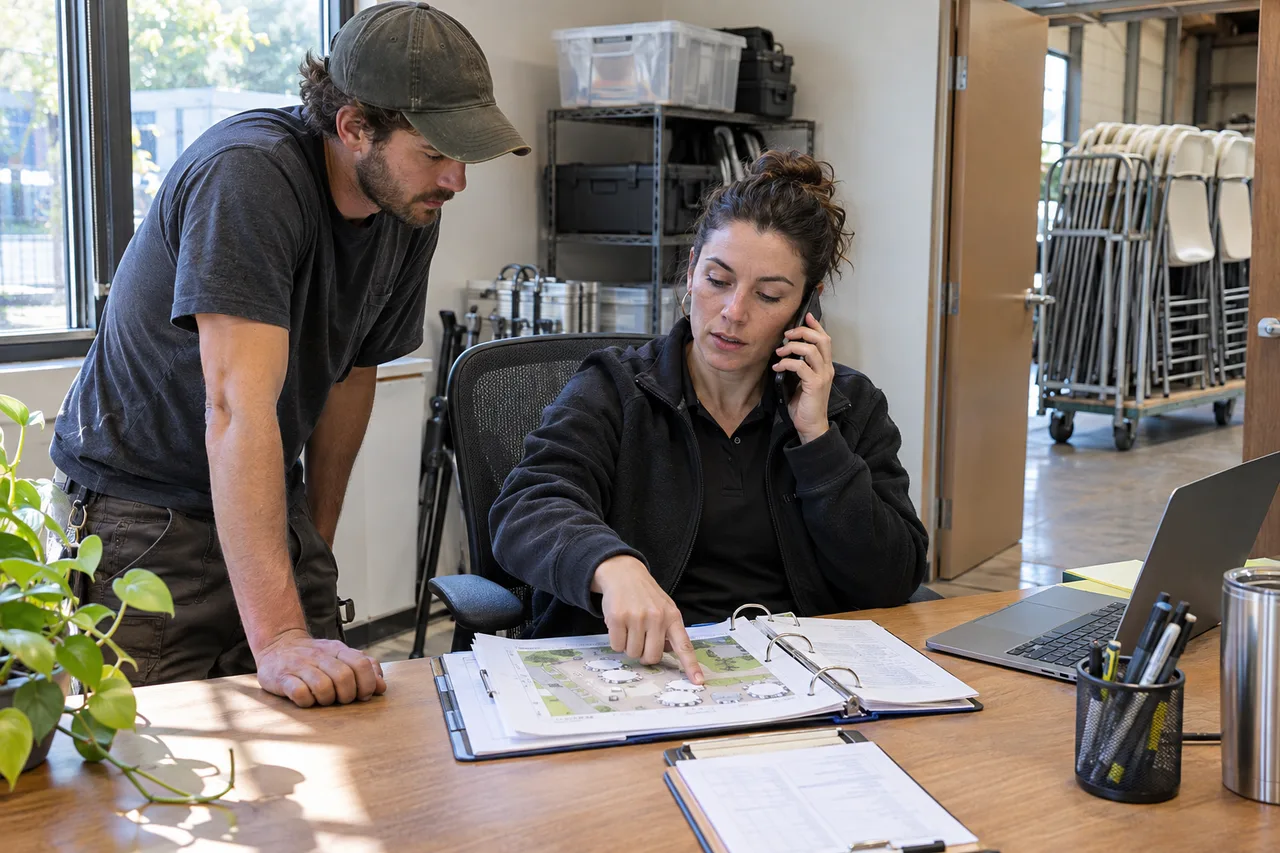
Choose who owns the callback list while calls are heavy. If the platform offers queued callbacks, confirm whether they keep the original priority and what happens when a coordinator is unavailable. An office can also assign callbacks in a shared list after a queue or mailbox ends. The point is for everyone to see the current owner and outcome. Otherwise, a customer who calls three times can receive three returns or slip through because each coordinator assumed someone else handled it. Amazon Connect documentation on queued callbacks.
Connect repeated requests where it is appropriate. A voicemail about a new order and a later call from the same organizer may belong to the same inquiry. Use reliable context before combining them. A school office number can represent several organizers or events. Keep the matching inquiry and call outcomes linked so staff can recognize a repeated attempt without relying on the number alone. Where the platform supports it, show the best time to reach them and the booking deadline.
Record whether a callback connected and what the customer still needs. When a person does not answer, follow the shop’s rules for another attempt or a message, taking their contact preferences into account. Keep a next owner until the question is settled. If someone reaches the shop on another channel first, mark the callback as handled only after confirming the same question was resolved. An honest record of a pending call lets the next shift continue without reopening settled work.
Test where calls go before changing the main number
Run a practice shift using a few staff members and test calls. Try an ordinary availability call with two people free. Have one worker decline, the other take it and verify that the note is ready for that employee to save. Try again while everyone is busy and listen to what the caller hears. Request a callback and confirm that a single task appears with a usable timestamp and owner. Test an answered call into the wrong group and practice the transfer with a short handoff.
Test a closed shift and a device failure. Call after the listed hours, ask about a booked delivery and see where the instruction goes. Check the backup if the assigned staff member is unavailable. Turn off a test device or disconnect the app that receives calls and confirm that the offline employee stops getting offers. Reconnect it and verify that calls return to normal. Ask someone who was not in the design meeting to repeat the test and describe where they would have expected a different prompt.
Keep a way to restore the existing path during a rollout. Ask staff who controls the greeting, the configured number and backup forwarding. Document the intended configuration with access limited to the people who maintain it. Start with a controlled set of hours or a test number when practical, then observe an actual busy period before expanding. Keep your support and carrier steps available because certain changes can take time. A realistic practice call makes it easier to tell which system needs attention when something differs from the plan.
Use a coverage board colleagues can actually follow
A two-person office might designate one person as the primary call handler from opening until the first pickup rush. The second person might be backup while they prepare quotes. Switch those roles after the rush or when the first employee goes on lunch. Make the switch easy to see in the phone and the office schedule. Staff can then decide who should take a delivery call before the phone rings. If an employee ends up busy with an exception, they can change their status and tell the next person what remains open.
Review how the shared voicemail and callback list behave when the day changes. An unresolved Friday call about a future booking should be visible Monday morning, with any earlier promise preserved. A Saturday delivery message should reach the role responsible for that delivery if the shop has arranged coverage. Give the person opening the next shift a quick way to see which questions are waiting, which were answered and which events are approaching. Confirm that access follows current roles when an employee moves away from phone coverage.
Include the person responsible for orders taken at the counter. A customer may call first and then visit with a different phone number or only remember the appointment time. A concise note and an agreed reference let that employee find the correct order and continue without relying on informal recollection.
Review the first busy periods using customer outcomes
Measure a short set of outcomes. Look at answered calls, callers who gave up waiting, successful callbacks and calls requiring an avoidable second contact. Count how many time-sensitive delivery issues reached a decision in time to help. Compare similar shifts and watch for changes in booking demand, staffing and special events. A faster first answer matters most when the person addressing the question also has enough information and authority to make progress.
Look at examples before adding more options. If a run of unanswered calls arrives when a coordinator leaves to retrieve equipment, revise coverage. If many calls bounce from the general group to a specialist, decide whether that specialist should have a clear path or whether the group needs more information. If calls are answered quickly but many requests go without a useful response, fix the queue for follow-up tasks before shortening the greeting again. Make one change at a time where you can observe what changed.
Pick a routine for keeping the settings aligned with the business. Update coverage when staffing changes. Train coordinators to identify urgent delivery issues, save a note and see their outstanding callbacks. Have the route team confirm any changes it needs before the next peak period. A short review of real calls gives the business material for coaching and better instructions without requiring staff to reconstruct a whole shift later.
Walk through the Friday inquiry again
The customer asking for forty chairs reaches a coordinator who is scheduled for calls. The coordinator checks the count and discovers that forty could be ready for pickup earlier than the truck can deliver them. They ask when the venue opens, offer the pickup option and create a callback for dispatch to check the delivery alternative. The customer gets a time to expect a follow-up. When dispatch picks up the task, the venue details and actual quantity are already there.
If the staff are all on the line, the caller can request a callback and get a realistic expectation for timing. The next coordinator claims the task, calls once and carries the request into a quote or closes it with an accurate answer. Both paths accomplish the same work. The next qualified person helps while the information is still useful, and the caller hears what happens next.