Rent event furniture without losing track of condition
Track furniture condition, reference photos and holds from dispatch through return so each piece can be released with confidence.
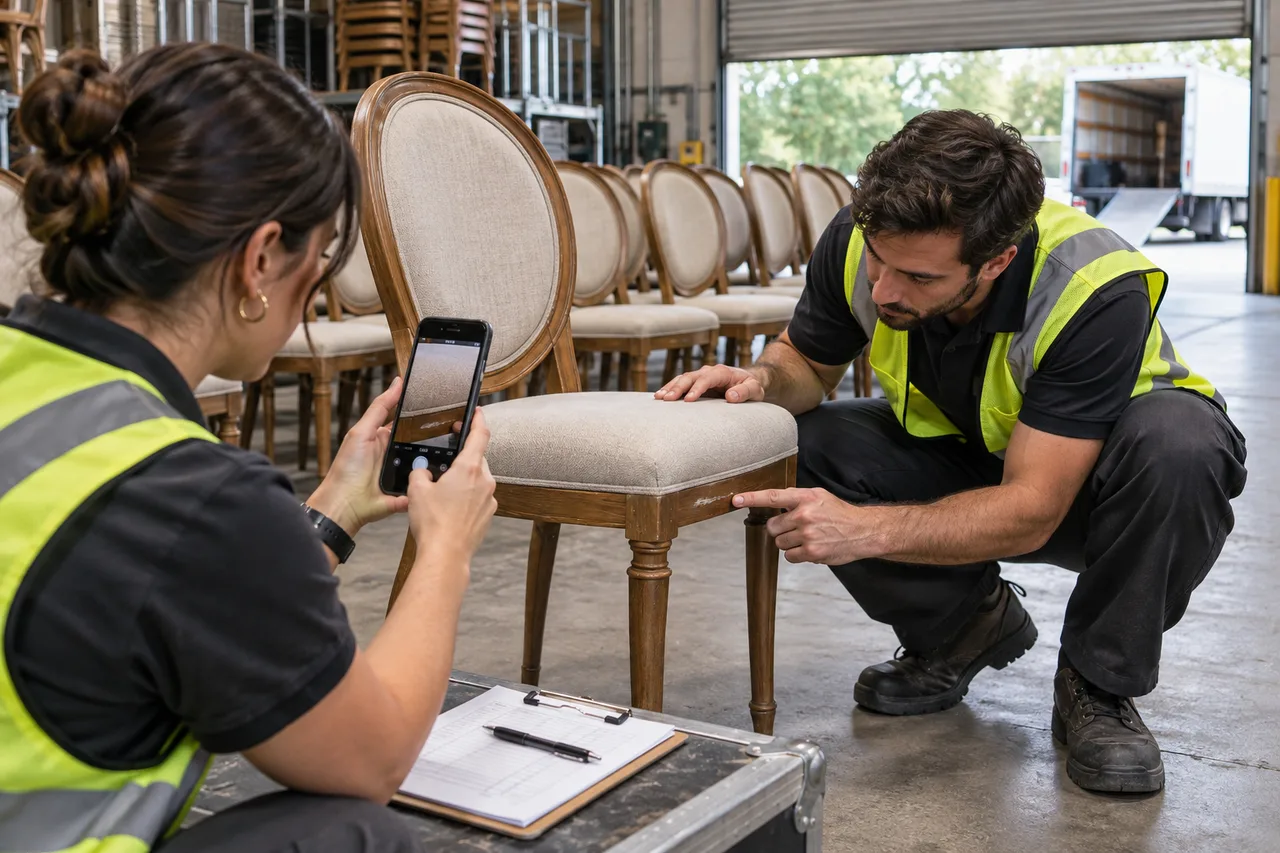
A customer calls about a mark on a chair they received. The warehouse has a shipment photo of a full cart, but it is hard to tell which chair shows the mark or whether it was already recorded. The crew remembers checking the load, and the customer needs someone to answer now. A useful condition record gives both parties facts they can find without relying on memory.
Track furniture condition at the points where people change responsibility for it. Identify the items, record observable details and separate each condition decision from the financial or customer follow-up. That lets staff answer a question about the current booking and decide which pieces can serve the next one.
Decide what condition information is worth recording
Start with the furniture groups you actually rent. A set of matching folding chairs can be checked as a counted group, with exceptions recorded for specific pieces if needed. A distinctive lounge chair or a matching pair of upholstered pieces may need individual records. Use a level of detail that lets the business identify an affected piece at return and make a clear decision about it.
Agree on the observed details that matter. A scuff on a table edge, a damaged finish, a missing removable cushion, or a piece that needs assessment each gives the team something to inspect. Use a short description, the location on the piece, and the condition state. Follow your equipment and service procedures when deciding whether to release it. If the worker cannot determine readiness, identify where to place it and who should review it.
Keep condition distinct from cleanliness and count. A cart can contain the right number of pieces and still need cleaning. A sofa can be clean and have a damaged accessory recorded separately. Show which counts were completed and which checks remain. The office needs to know how many pieces it can promise, and the warehouse needs to know what work is due.
Test the wording with a colleague. If they read “worn” on the record, ask which area they would inspect. Replace vague notes with an observation such as “small mark on the left rear corner of seat, photographed at staging.” Use terms your staff and customers can understand. A brief, specific observation helps later reviewers without requiring an explanation from the first person.
Establish the baseline before the order leaves
Check the furniture under conditions where staff can observe it. Use the shop’s inspection procedure and equipment guidance. Record the condition of pieces where it could matter to the booking, along with the expected quantities and included accessories. Look for an issue that would affect the approved service or what the customer expects to receive before completing the load.
Use reference photos when they help. Photograph the piece, label or other identifier where appropriate, and add a closer view of a relevant area. Keep the images with the order or item record according to the business’s process. If several similar pieces are photographed in one group, make it possible to tell which one has a noted mark. Avoid including unnecessary people or event details in the images.
Check what the customer agreed to. If the approved order calls for matching lounge seats in a certain finish, confirm how the actual pieces compare. When a piece needs substitution, use the ordinary approval and price process. Record which item goes out and condition observed before it leaves. A verified change should reach the crew and the customer-facing record as appropriate.
Give the check a real point in the workflow. Picking can verify identity and count, while a final staging check records the relevant appearance and readiness. If an item is removed after a check, record the replacement and its condition before departure. Avoid keeping a photograph of one piece as the baseline for another. The record needs to reflect the actual load.
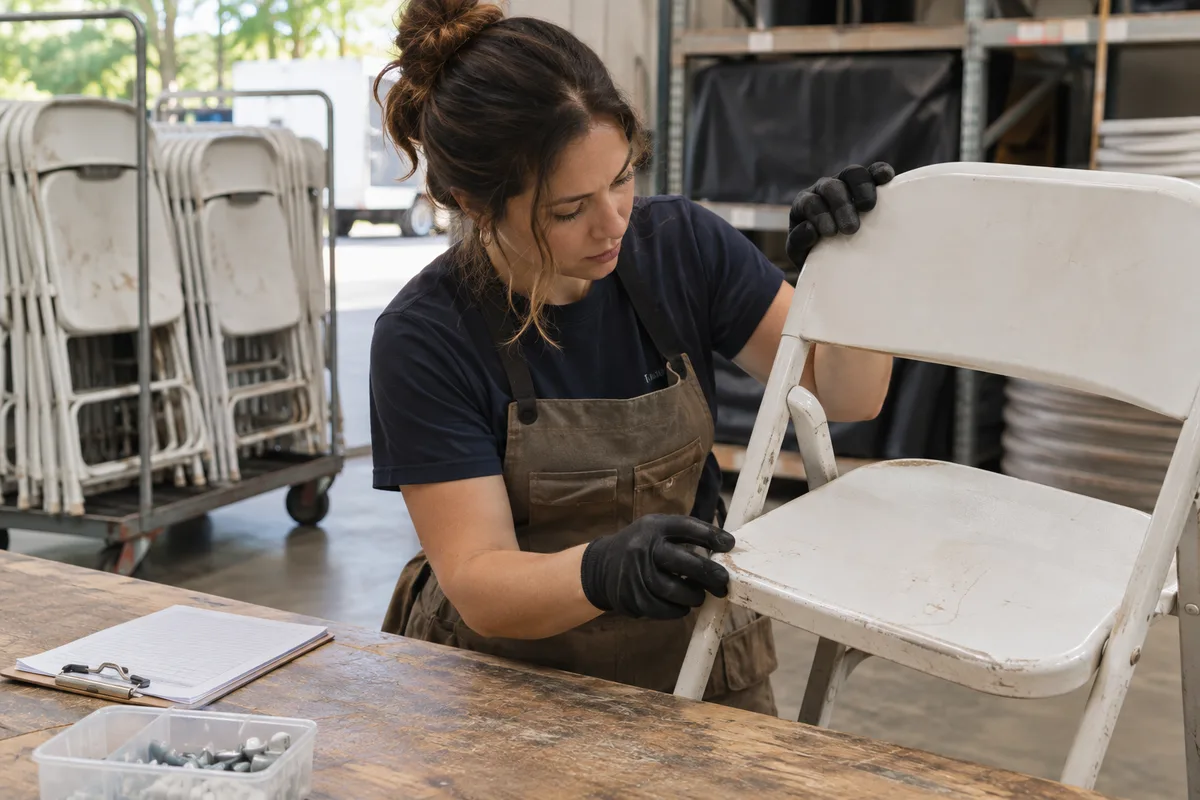
Preserve the handoff at delivery or pickup
Give the employee completing the order a usable list. Show the furniture groups, individual pieces where appropriate, and relevant notes that affect what the customer receives. Confirm the receiving person, location and service scope. At a busy venue, the driver may need to distinguish the rented furniture from items already in the room. Provide a place to record the actual handoff.
Ask for confirmation in the way the business normally handles it. The customer or venue representative may review the number of pieces and note an exception. If the furniture is left at a named receiving point, document what was placed there and who received it. Record which pieces went out regardless of whether the business uses a signature, photo or staff count as evidence.
Capture changes without overwriting the earlier observation. A venue team might notice a mark after unwrapping a chair. Add the new observation with the item, time and next step, and compare it with the baseline. If a replacement has to be sent, record its identity and the approved change. The original and replacement can have separate histories even under the same order.
Give customers a clear way to report an issue. Ask for the booking reference, piece and observed concern. Review their message alongside the condition and dispatch records, and explain the next step. Keep communication focused on the furniture and current booking. A prompt answer often starts with being able to locate one affected item in the record.
Inspect returns from what actually went out
Use the dispatch list to check the expected items and components. Count the pieces at pickup or receiving according to the business’s agreed process. Compare the actual condition with the baseline and record a meaningful difference. If an issue needs assessment, put the item in the correct area and update its availability before another booking uses it.
Handle partial collections explicitly. A venue may release dining furniture at one time and lounge pieces later. Record which groups you received and which are still due. If a cushion is reported missing, check whether it was included and how it was packed. A partial return can show a count and condition without closing the entire order.
Keep the first observation and later decision separate. A receiving worker may note a mark. A trained employee might later determine whether it can be cleaned, needs repair or has no impact on readiness. Record both steps and the time each occurred. The office can review any customer charge according to the agreed terms using the actual facts. The warehouse can hold or release the item based on the equipment check.
Take a comparable photo when it will help identify the condition. Use the same area and enough context to recognize the piece. Keep reference images where authorized staff can find them. An unclear image alone rarely shows what happened. Pair it with a concise description, the actual item and any relevant earlier record.

Walk one chair through a change in condition
Imagine a lounge package includes two matching upholstered chairs, a small table and two removable cushions. At staging, one chair has a small mark on the left rear leg. The employee photographs and describes it and records the identity. The piece passes the required check and remains in the approved order. The client’s receiving record shows which chairs and cushions the crew delivered.
At collection, the driver records that both chairs and the table came back, but one cushion is still inside the venue. A second worker at receiving finds a mark on the front edge of one chair. They record the exact chair and location and compare it with the outbound note. The rear-leg mark and the front-edge mark become separate observations. The chair goes to the affected work area for review.
The office checks the collection record and contacts the venue about the cushion. The person responsible for condition reviews the chair and records which work is needed before release. If the next booking expects both chairs, dispatch receives the timing and can check a verified alternate before changing the customer promise. The next renter’s availability should reflect the physical state of the furniture.
Once the cushion is received and the chair is ready, staff close the remaining work and release the correct units. The history still shows what happened and when. The business can review whether a better packing arrangement or a clearer collection list would reduce the same problem on a future order. The point of the record is to make the next decision possible.
Connect maintenance and availability to the inspection result
Give questionable stock a named place and state. Items awaiting condition review should be visible to the person planning repairs and to the staff making future commitments. Record the relevant item and why it is held. Keep enough room to preserve access to the ready stock and the orders already staged. A marked condition area is most useful when the system represents it too.
Review whether the item can be prepared with ordinary work or needs another service. Use the appropriate procedure for cleaning, repair and approval. Mark which employee or provider has it and the expected next step. Keep any forecast separate from ready status. If a planned repair takes longer, check the next orders that depend on it before changing the promised time.
Release the item with a brief record of the relevant check. Confirm the affected condition, included pieces and assigned storage. If the piece returns to a different stock group, verify which bookings and catalog choices it can serve. A finished repair is easier to rely on when the app and location reflect the same state.
Track repeated issues by model, fixture, route and handling step where useful. A cart that rubs in the same place may lead to a placement or protection change. A small accessory often coming back separately may need a clearer case and count. Decide which change helps the team prevent or spot the problem earlier and use a sample order to review the result.
Use group counts for interchangeable furniture and tags where identity matters
Decide how far the crew needs to trace each product. If a shop regularly sends sixty matching folding chairs, it can count them by a known group and identify any piece that needs extra attention. A lounge piece with a distinct finish can need a specific item identity. A good record reflects how the item is selected, inspected and replaced in a normal booking. Applying the same procedure to every category can create work without improving the decision.
Test a grouped chair return with one exception. A cart is expected to have twenty usable chairs. The crew counts twenty and sets aside one with a condition question. Record twenty received and one held. If the held item already has an identity or can be matched to the order, attach the note there. The ready quantity should change when the worker holds the chair, while the return count stays accurate.
Test the opposite case for individually tracked items. Two similar upholstered chairs arrive back, and one has the known baseline mark. Ask the receiving team to find the right asset using the tag and order. If a photo shows the affected corner but lacks the identifier, check whether the record has enough information to compare the correct item. Provide an easy way to tag the issue when the baseline is set. The next worker should have a reliable way to make the match.
Keep track of paired or interchangeable accessories. A group of chairs may share a rack that has its own identity. An ottoman could travel with a cushion that needs to return to that booking. Use the container record to find the order, then verify the furniture or accessories it holds. If the contents change at load, update the working count. Keeping the two records distinct helps when the rack or bag returns with different items.
Give the office enough to resolve a question without repeating the inspection
Create an order view with the expected and actual items, outbound observation, receiving note and current readiness decision. An office worker responding to a customer can see which facts are confirmed. If one issue needs further assessment, show who is handling it and when they can provide an answer. A quick initial reply can explain the next step while the warehouse completes its review.
Use dates and names that make the images comparable. When a worker saves a photo, tie it to the item and actual stage of the booking. Record whether it came from preparation, delivery or return. Where a customer shares a photo, keep it with their report through your normal process and check which piece they photographed. An employee can then compare the same area of the same item. Keep unnecessary customer details out of shared work views.
Walk through a typical call. A client notices a mark after a furniture piece is placed. The employee verifies the booking, records what the customer saw and checks the staging detail. If the earlier record already documents that mark, use the observed facts while deciding whether the client needs a replacement or accommodation. If the mark appears in a different area, keep that difference visible and ask the person responsible for condition to review it.
Record the result the customer agreed to. A replacement, service change or other outcome needs the order and the crew to show the same arrangement. Keep readiness separate from the customer discussion. A piece can stay held for assessment after the client is satisfied with a replacement. The next booking should draw from the actual ready stock while the business closes the previous issue.
Review which condition notes staff can close immediately and which need a second check. A missing cushion can be separately counted and followed up. An unclear mark may need assessment before the next allocation. Give each case a path the office and warehouse can recognize. When the same question recurs, improve how the relevant observation is made at the earlier handoff.
Make condition records manageable on the next order
Start with the equipment where a condition question creates real disruption. Choose one furniture group and run the checks on a few bookings. Record the time required and which observations actually helped. Train staff with concrete examples from the same group. Avoid expecting a full photo set for every interchangeable chair unless that detail supports a real decision.
Review customer questions and readiness after the pilot. Did staff identify the correct piece, locate the original condition and resolve the next stock question? Was the return decision made in time for the following booking? If the record still misses a part of the process, improve the first point where a person could have checked it.
Use the same checks after a change in furniture, transport or storage. The record can stay short as long as employees can show what went out, what came back and what can be rented next. A dependable condition process protects the booking record and gives the next crew equipment it knows is ready.