Reduce waste in the parts of a rental order you control
Measure avoidable waste in rental orders and test reusable packaging, better returns or fewer repeat trips on real jobs.
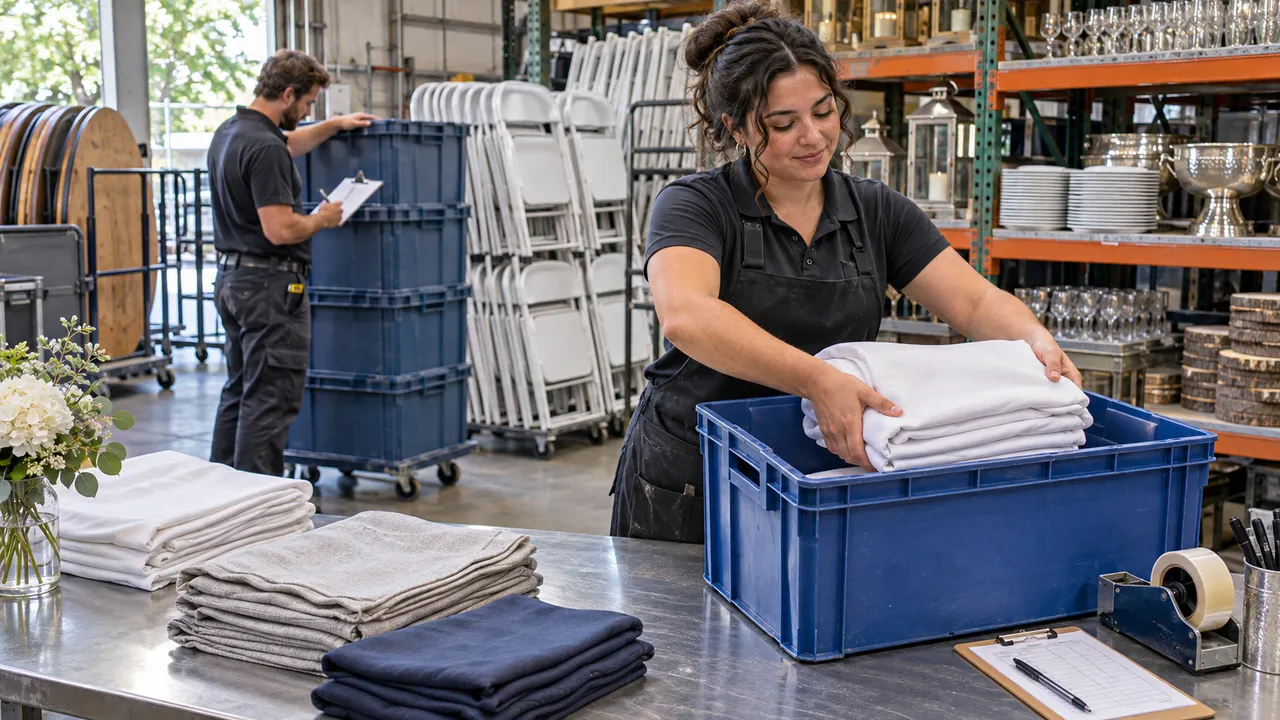
A shop sends twenty table linens to a reception in individual bags. The customer opens all the bags, uses eighteen linens and leaves the rest on a receiving table. On return, nobody can confirm which linens were unused. The warehouse treats them according to its normal return procedure, replaces the packaging and logs another missing hanger. There may be a better way to handle that order, but the shop needs to know which materials can be avoided or recovered without losing track of what is clean, safe or ready.
Start with a small part of a rental order you control. Measure the materials or recurring extra work, then try a change with the people who pack, deliver and receive the equipment. Check that it serves customers and protects the gear throughout the actual rental cycle. Keep the changes that reduce waste under those conditions and record the scope when describing the result.
Follow one normal order through its whole cycle
Choose a recurring order type, such as weekend linens, standard seating or small AV packages. Trace what enters the order when staff pick it, how it travels, what the customer takes out and what comes back. Include reusable protection, consumables, printouts, fuel for repeat trips and replacement parts that the shop buys. Record which materials are required for safe storage, clean handling and protection. Ask which items the venue or customer already supplies.
Look for moments when staff make an extra trip or replace something repeatedly. An item could be packaged twice because one label is needed for the loading dock and another for the event room. A spare assembly could be lost because it has no assigned pocket in the case. A driver could return to the warehouse for linens that were never on the printed list. Identify why those actions happen before removing anything from the process. Sometimes the solution is a clearer transfer or a more useful count.
Keep the sample narrow enough to observe carefully. Ten similar jobs over several shifts can show which steps the team repeats. Skip unusual jobs in the first comparison and record why. A high-end event with specific venue requirements might need a different packing method than an ordinary storefront pickup. For each reviewed job, note the quantity rented, the package or order type, what was used, what returned and what required replacement. Record the reason when it is known, relying on observation instead of guessing.
Choose one material or task to improve first
Separate waste prevention from what you do with materials after use. Avoiding an unnecessary bag, keeping suitable protection in use, and putting accepted material in a recycling stream represent different changes. The U.S. EPA places preventing waste and reusing materials near the top of its general hierarchy for nonhazardous material. Its hierarchy gives a sensible order for investigating alternatives. Confirm what your facility and handling requirements allow for the particular product. EPA nonhazardous waste management hierarchy.
Pick the repeated issue the current crew can observe and change. If each chair order uses several new plastic ties, check which ties secure something in transit and which are only temporary warehouse markers. Your transport and safety procedures still apply. You may be able to replace an internal marker with a reusable tag while keeping approved straps in service. Run the test on the specific marker so staff can see what they are meant to change and why.
Compare the benefit against time and risk of errors. A nicer package may cost more each cycle if staff must match several removable parts or clean an awkward container. A sturdy tote can save supplies and make a delivery easier when it fits the vehicle, protects the goods and normally comes back. Choose a change that should have a visible effect on a representative order. Give it defined measures, including counts and how much extra processing it requires.

Test reusable packaging with the return plan attached
Start with the goods and their approved handling requirements. Look for packaging that protects them through actual movement, labeling and storage. If clean linens require separation from soiled returns, keep that separation in the trial. Pick containers that fit your shelves, carts and vehicle and can be handled safely under the relevant conditions. A crate that uses less disposable material but prevents the expected load from fitting may create an extra trip. Try a normal completed load before buying many containers.
Give reusable pieces their own place on the order. If the crew sends two totes and four covers, show the counts where the receiver will see them. Assign a recognizable return location and say who brings the pieces back. Where a business tracks containers by label, make sure the receiving employee can record the one they actually saw. Use the order history to resolve missing pieces before purchasing replacements. A recoverable container is only a useful choice if people know when it should return.
Build in inspection and preparation for the next order. Record how staff clean approved containers, where damaged containers go and who decides whether a repaired one can return to use. Preserve the measures that already protect hygiene and equipment. At a site, two similar bins can be assigned to different uses. Use a color, durable label or notice where it helps distinguish them. Ask someone from another shift to follow the same process without coaching and record where they hesitate.
Think through return exceptions before adding containers widely
Ask what happens when pickup is delayed and some containers are locked inside a venue. If the shop expects a second batch of orders next morning, calculate how many ready containers remain. If you reuse the same crates in every order, a late return can become a scheduling problem and a reason for staff to buy emergency supplies. Keep sufficient usable containers for the trial and plan what to do when one is missing, so an exception does not make routine work harder for the next crew.
Test a customer with two deliveries and one pickup. The initial receipt may list equipment and packing pieces from one vehicle, while the other driver has a second set. Link both deliveries to the booking and label the containers so a venue contact can match them to the right business. If return is scheduled by the location rather than the customer, agree on the place both parties can reach. Record who confirmed it. A normal handoff procedure helps prevent reusable material from becoming another forgotten item.
Make recovery easy enough for customers. Put any packaging expectations in ordinary pickup or return directions so customers know what to keep. A specific notice like “Place the folded linens in the blue tote and leave it at reception Tuesday” is easy to follow when it matches the agreement. Check whether those directions apply to the particular item and venue. Use the shop’s approved process for any missing equipment or extra fees and tell the office what happened before it contacts the customer.
Reduce repeated trips where the schedule allows it
Compare planned vehicle movements with the work that actually happened. Look for repeated visits caused by packing errors, misunderstood locations or avoidable gaps between drop-off and pickup. Review a few completed routes and include the return leg and second trips. Group the facts by site and order type. A missing part might generate more travel and labor than the part itself is worth. A reliable count and dispatch check can remove that repeat trip while leaving the original service and schedule intact.
Consider consolidation only where it preserves customer commitments and operating conditions. Two nearby orders can share a run when there is suitable vehicle capacity and the agreed site windows allow it. Check actual travel, load order, vehicle requirements and access. Use the approved loading and storage practices for each product. Include enough time to complete the work without passing delays to the next customer. If a cell on the spreadsheet shows an overlap, decide whether the schedules or service need to be changed with the customers’ agreement.
Compare the real route before and after a change. For a suitable order set, record planned and actual miles, loading time, completion time and whether another trip was necessary. Break the result into what happened during the specific run. A road closure or unusual timing at one venue can complicate a comparison. If combining work increased the miles because the truck had to reenter the delivery area later, adjust the schedule or abandon the change for that type of order.
Keep equipment in use by addressing repeat losses and defects
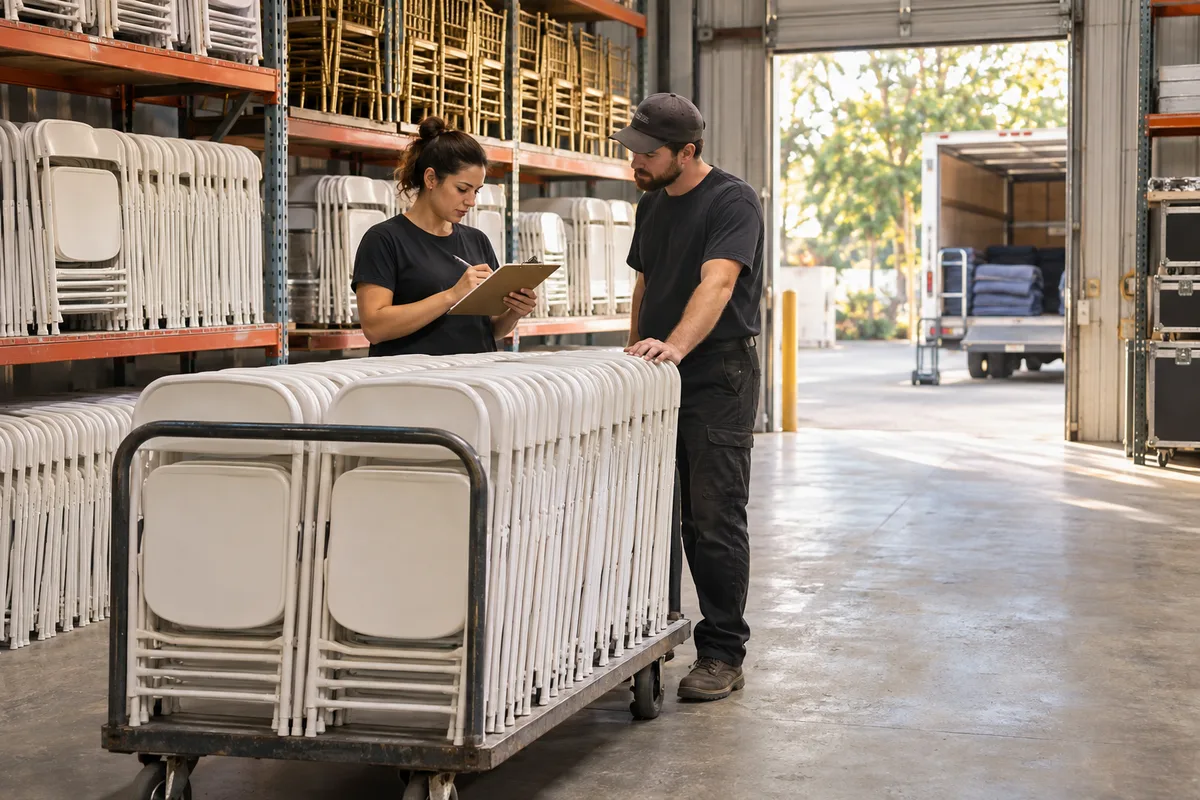
Use return records to identify what commonly goes missing or breaks. Group parts by the product family and point in the process where staff first notice a problem. An AV case might regularly return without one adapter, while a table cover could wear at its corner because carts are loaded a certain way. Review actual notes, photos and counts. Give each test a small purpose, such as using a labeled compartment or trying suitable storage that protects fabric edges.
Put broken or uncertain equipment through your normal review. Separate it from bookable inventory until it meets the applicable release requirements. Repair decisions should follow approved guidance and appropriate professional help. Where a part is designed for replacement, look up what is compatible and who can install it. Record whether a unit was restored, used for approved parts or retired. Fixing a repeat issue saves work only if the alternative can safely and reliably serve future rentals.
Plan purchases around how equipment will be used and maintained. Compare two options for normal wear, suitable packaging, parts availability and compatibility with carts or storage. Check what a vendor supplies and what staff will need to do repeatedly. A useful comparison includes how long the shop expects to use the product and what it will take to support it through the season. Look for actual operating evidence rather than relying on a broad description such as durable or reusable.
Compare what the practice actually costs and saves
Use the same unit to compare the trial and the old process. If a linen order uses twenty new bags, count how many remain in use under the trial and how many totes must be recovered. Add costs for preparing and cleaning the tote where applicable, along with any replacement or extra space. A scale or a material count can be useful depending on what you need to track. Use the measurement that crew members can record reliably across orders, and keep it consistent.
For example, suppose ten comparable orders previously used 200 individual bags in total. After a trial, the orders used 50 bags for items that still required them and reusable containers for the rest under the approved handling procedure. The shop can say it used 150 fewer disposable bags on those ten orders if the counts support it. It should also track container costs, recovery and work time before predicting savings for an entire season. The result might apply only to one part of the catalog or a particular return arrangement.
Watch for a change that shifts work to someone else. A pickup customer may need to do more sorting. The warehouse may spend longer checking returns or drive an extra trip for containers. Ask the workers and customers what changed and how much time it took. Compare direct materials, labor, trip counts and service outcomes. A practice that reliably reduces materials for the same completed work is a stronger starting point than a change measured only at the packing bench.
Make the better practice easy on the busy shift
Change the ordinary work order, packing list or lookup guide so workers can follow the practice at the point of work. Keep the exception path visible. If the approved reusable container is unavailable, put the alternative and the issue reporting path near the relevant instructions. Identify which employee orders supplies and which one reviews unresolved returns. Keep the system small enough to maintain across short shifts, staff changes and seasonal training.
Review the first several cycles and share the numbers with the people doing the work. Ask which step is unclear, what moved too slowly and which materials staff still need. Test the revised steps with a normal order and a late return. If the change has been useful for one product category, test it again before applying it to a different one. You can broaden the practice once you know it works under the new constraints.
Communicate concrete actions customers can see. A shop can say it sends table linens in reusable totes on selected local deliveries if the practice really works that way. Say how customers return them when that matters. Avoid broad claims about all waste or overall environmental impact based on a short test on one type of job. Use accurate descriptions with the relevant conditions. The most useful information for the customer is the part of the process they can follow.
Match disposal instructions to the actual material
Check what your existing collection service accepts before changing labels or telling staff to put something in a different bin. Take an ordinary example, such as used stretch wrap or a mixed-material padded cover. Locate the current instruction for that item and keep the same wording at the station where staff handle it. If something is damaged or has been exposed to an unusual substance, follow its approved handling process instead of deciding its destination from appearance. Shop managers can use local guidance and the collection provider to resolve uncertainties.
Keep disposal data modest enough to trust. If one branch can reliably count the number of reusable bins recovered after each rental, start there. Another shift may be able to record new packaging consumed directly from a reorder sheet. Keep each measurement attached to the location and orders it represents. The team can compare the counts when the reporting scope is consistent. A change in customer volume can move the weekly total even if the packing practice stays exactly the same.
Review the handling instructions when a supplier changes a material or when the shop moves. Two products that look alike may have different instructions from the provider who collects them. Let the person who owns the packing routine update the station guide and explain the change at the next shift meeting. That keeps the actual material and the recorded action aligned.
Give the routine a clear owner and check date
Choose who looks at the data and who can make the next process change. Ask the warehouse lead to note container recovery after the trial or the dispatcher to check whether combined stops stayed within their windows. Set a short review interval that allows a few replications. Keep a copy of what each order required and what the trial changed. Recording the next due date makes it easier to carry the work through a staffing change or the end of the busy season.
Use what the trial teaches to find the next worthwhile improvement. If fewer bags are used but the business keeps losing totes, fix the return instructions or the verification at pickup. If repacking is down and the containers reliably come back, consider another category that has similar requirements. Keep a working record of decisions and choose one next test instead of changing everything at once. Waste reduction becomes durable when the materials, people and actual rental schedule can support it.