Quote tent rentals from a verified site plan
Turn a verified venue plan into a tent rental quote with clear access assumptions, crew time, equipment reservations, and a reliable handoff.
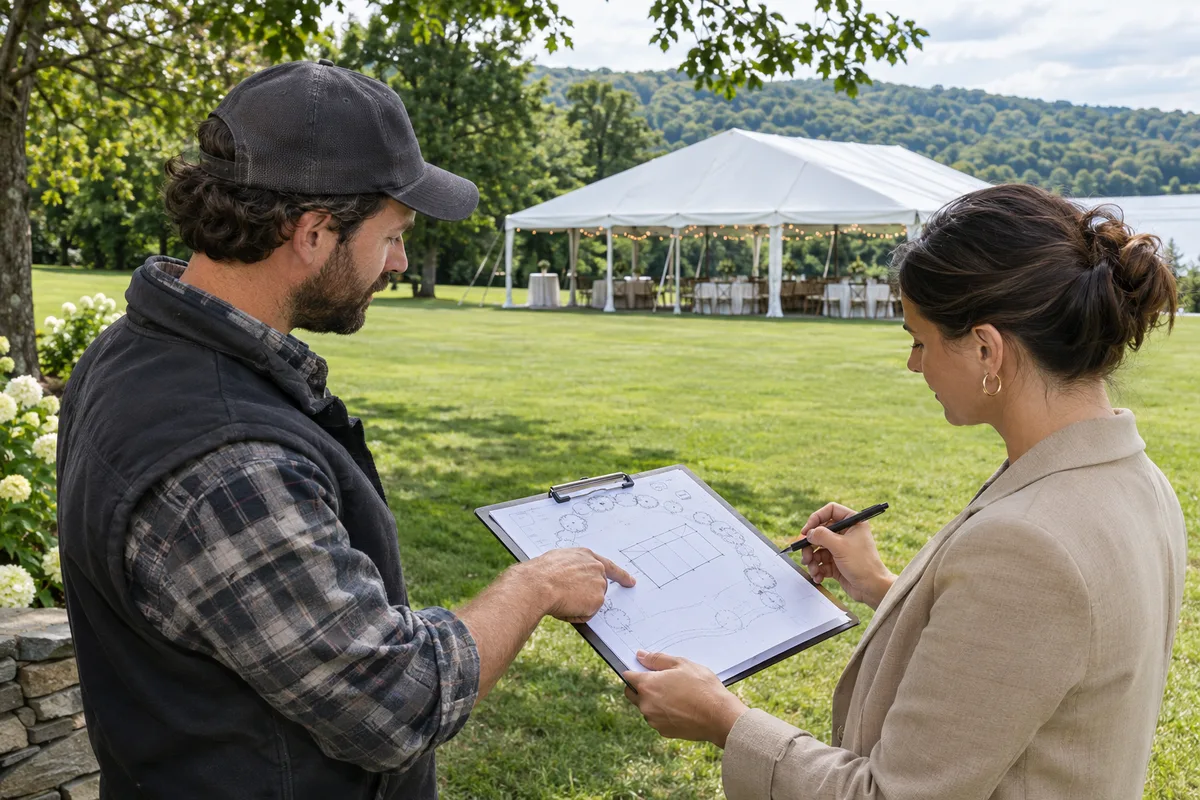
A customer asks for a tent for 100 guests on a Saturday. They send a picture of a lawn and ask whether delivery and setup are included. It is tempting to look up the nearest tent size and reply with a total. The photo does not tell you whether the truck can reach the lawn, when the venue lets you in, what goes under the tent, or which installation methods the venue permits. A fast number can be useful as a budget estimate. A firm quote needs a scope your crew can actually deliver.
The job of the site plan is to turn those unknowns into decisions. The drawing can be simple, with an address, dated measurements, a placement area, and an access route. It becomes useful when someone can explain what each note means for the price or the schedule. Start it while you are qualifying the inquiry, and carry the same version into the quote, the reservation, and the crew handoff. For installation, use the tent manufacturer’s requirements and qualified staff. Venue rules, permits, and site-specific approvals belong in the job plan as explicit responsibilities.
Start with what the event must accommodate
Ask what happens under the tent before asking the customer to choose a size. A seated dinner has different space needs from a standing reception for the same headcount. Find out what the venue and other vendors supply. List guest seating, buffet lines, bar service, staging, a dance floor, and any other use that consumes space. Ask where people enter and where staff need to work. A client’s picture of one attractive tent is a good conversation starter. It leaves most of the actual layout open.
Record an expected guest count and a date for the final number. For an event still growing, make clear which parts of the quote assume the current count and which costs could change. A planner may want to give the client two price points, such as a dinner layout and an arrangement with a larger dance floor. Price each plausible layout as a whole. Swapping the tent size on a line item without reconsidering lighting, flooring, tables, transport, and setup gives an incomplete comparison.
Capture the conditions that affect timing in the same conversation. Separate the event start and end from the windows when your team can be on site. Ask when caterers, florists, and other vendors need the covered area ready. A tent that must be complete before a caterer’s Friday delivery may have to be installed a day earlier than the customer expects. Confirm who can open the site and who can answer questions while the event contact is busy. Note any restriction that will affect an overnight installation or early teardown.
Verify the placement area and how the crew gets there
Request a current venue diagram and photos that identify the exact placement area, the access point, and the path between them. Ask for wide photos taken from more than one side. Capture permanent obstacles, surfaces, and edges that limit the usable area. A site diagram drawn for the venue years ago may show the right field and miss a new fence. Recent photos add context but cannot independently confirm measurements, surface conditions, or permission to install.
Decide how much verification is needed before calling the quote firm. For a well-known venue with a documented layout and confirmed access, a conversation with the venue manager may answer most questions. An unfamiliar site, tight placement, unusual surfaces, or competing access needs may require a visit with the people responsible for installation. State who verified each important detail and when. If a customer has only provided an approximate dimension, mark it as approximate and say what must be confirmed before accepting the proposed placement.
Track vehicle access separately from where the tent goes. A truck can reach the address and still be unable to reach the unloading point. Ask where the vehicle may park, when the gate opens, whether there is a reserved loading area, and whether the crew must carry equipment from a different surface. Identify turns, narrow openings, curbs, steps, and morning traffic where relevant. Confirm what the venue permits for vehicles and equipment on lawns or other sensitive surfaces. Put these facts into the price and schedule instead of leaving the crew to discover them at arrival.
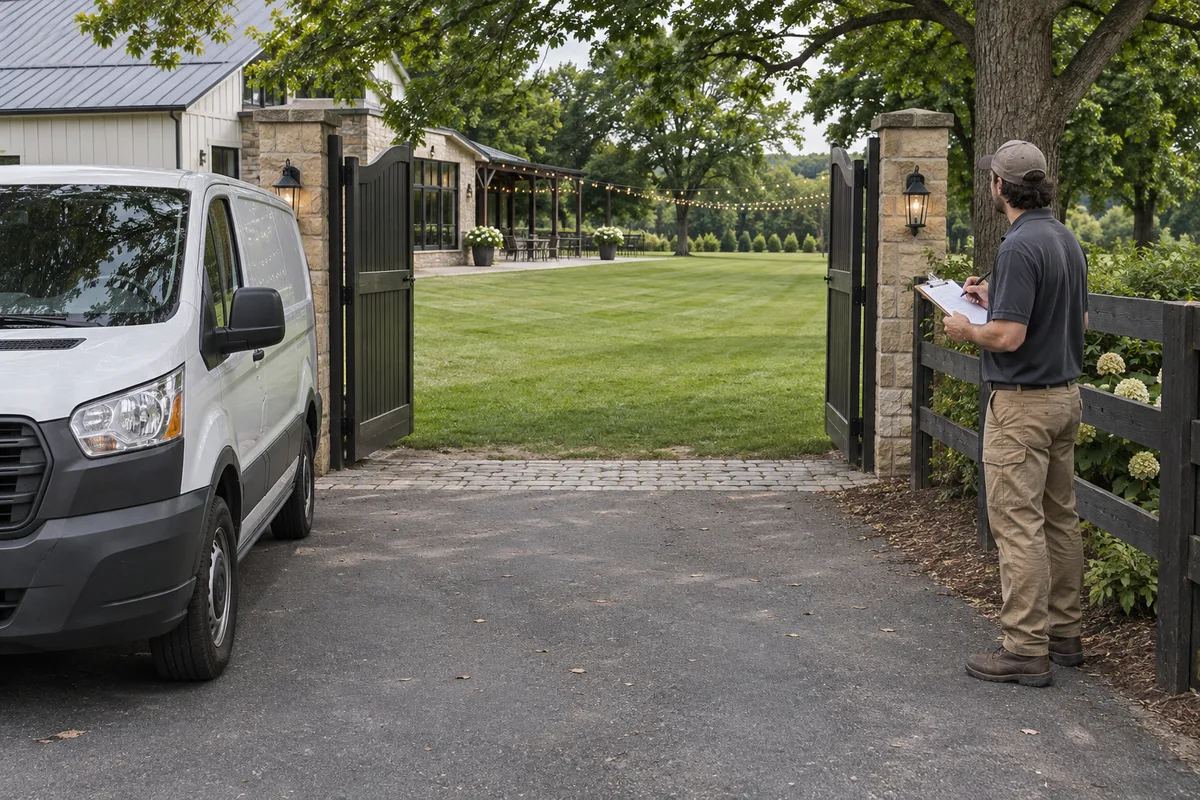
Send a site plan people can check
The plan should give the venue and installation lead the same picture of the job. Mark the placement area, access route, loading point, and relevant site features in an easily readable view. Label the event date, revision date, and venue address. A north arrow or a named landmark helps when more than one lawn looks alike. Store the agreed drawing beside the quote and send the same copy to the venue. Ask the venue contact to flag anything that has changed or that the team has overlooked.
Avoid mixing facts and guesses in a way that is hard to spot. Note which dimensions were measured, which came from the venue, and which are waiting for confirmation. Label a proposed route as proposed until it has been cleared. If the venue asks the crew to move the tent closer to a building, revise the drawing and ask the installation lead to review the change. The new placement may affect the layout, the amount of setup time, or whether the proposed equipment works at all. Confirm the final design and installation requirements before presenting them as commitments.
Document who handles venue approval, permits where applicable, utility location, and any restrictions on anchoring or other installation methods. These items often have different contacts and lead times. A useful entry names the responsible person, the needed decision, and the deadline. “Venue manager to confirm permitted installation methods by Wednesday” can be tracked. “Venue is good with the tent” tells the crew almost nothing about what was checked. If a prerequisite remains open, make its effect on the quote explicit.

Turn the plan into quote lines the client can recognize
Begin with the scope you expect to supply. Use enough detail for the client to compare alternatives fairly. Show the tent and included equipment, optional sidewalls or accessories, and services such as delivery, installation, and teardown. Separate costs that change if the scope changes. For example, if the standard delivery estimate presumes vehicle access to a particular unloading spot and the venue requires a longer carry from the street, state how that change will be priced. Give an allowance or ask for verification before quoting the charge as fixed.
For the internal cost calculation, break the job into departures, arrival and unloading, setup, strike, returns, and any planned wait time. Include the equipment needed at each stage and reserve it along with the tent. You might have three tents available and only enough crews or trucks to install two in overlapping windows. A quote that checks equipment but ignores crew hours can still overpromise. Compare the proposed schedule with the other booked jobs and any known freight, supplier, or subcontractor constraints before promising timing.
State assumptions in sentences a client can review without knowing rental terminology. “Our delivery estimate assumes Friday access to the service gate from 9 a.m. to noon” is an example. Identify exclusions that affect the client’s decision and explain who is expected to supply them. If the client wants a weather alternative, describe what that alternative changes in the scope and when it has to be decided. Keep the accepted price, dated layout, and scope together so subsequent changes can be compared against what was actually agreed.
Get from an estimate to a reservation without losing context
Use clear quote language for each stage. The first number may be a budget range based on a typical job. A scoped estimate can name the equipment and explain which site assumptions still need checking. The final quote confirms the scope you can support and gives the client a way to accept it. If inventory is only reserved when a booking is confirmed, say when that happens. Customers should be able to tell whether they are looking at a price, a temporary hold, or reserved equipment.
Before accepting a new date, check the full period from preparation through return and inspection. Some customers need early installation, venue availability may push teardown to Monday, and returned equipment may need time before it can rent again. Record the actual dates used to reserve the equipment. Attach the site revision the client accepted and make the access window visible in the booking. Tell dispatch what is fixed and what can move. An event’s start time can be fixed even though the driver may arrive within a range.
Plan for changes after the initial quote. Decide which requests can be handled within existing scope, which need an updated price, and which must be reviewed by installation staff before a commitment. Typical examples include a different placement area, more guests, extra items under the tent, a narrower access window, or a late-night strike. Keep a dated record of what changed and who approved it. Recheck equipment and team capacity when timing changes. An easy quote edit can still shift the work onto a truck or crew that has another job.
Use a worked example to separate site risk from price
Imagine the customer wants a seated dinner for 100 on a Saturday, with a caterer and a dance floor. The venue sends a drawing showing a large lawn and says trucks should use the service gate. The contact requests that everything be ready Friday at 3 p.m. You can give a budget range based on the stated event format. Explain that exact pricing depends on the approved footprint, confirmed installation method, and the delivery path. Give the customer a short list of checks and a time for the next update.
During a site review, the venue manager confirms that your crew can unload through the gate until 11 a.m. and will need to leave the vehicle in a designated area. A landscaping project has narrowed the approach since the drawing was made. The installation lead confirms a workable placement in a different part of the same lawn, contingent on completing the required site checks. You revise the plan and confirm the route before calculating crew time. You also block the Friday morning installation window and check whether Monday pickup will keep the tent unavailable for another job.
For illustration, suppose the first estimate included $550 for combined delivery, setup, and teardown. The revised access plan adds two crew-hours priced at $55 per crew-hour and a separate collection trip priced at $85. The service estimate becomes $745. Actual rates depend on your costs and policy. The point is to show which facts changed the number. The client can say yes to a defined scope or work with the venue to reopen the original access option. Either way, the approved scope gives the crew a plan they can recognize rather than a total they have to interpret.
Offer a second option when the venue creates a tradeoff
Sometimes the site supports the full layout, but the crew can only complete it with a change the customer may not value. In that case, price two workable options. Suppose the lawn next to the service road can fit the dinner but leaves the dance floor in a separate covered area. A more distant area might fit both uses together and require a longer carry. Build each option against the same guest count and event hours. Explain how guests, caterers, and crew use the space in each case. Itemize only the costs that help the client compare them, and keep a detailed job estimate internally.
Document what happens if the customer wants elements of both options. A partial choice can create an order that does not match either workable layout. If the client accepts the less expensive placement and later asks to put the dance floor inside, verify the new plan and quote before modifying the reservation. Give options a clear expiration date tied to your stock and staffing decisions, and put the selected option into the accepted proposal. If venue approval for one option is still pending, show that beside the option so the customer can decide whether to wait or move ahead with the approved alternative.
Give dispatch and the crew the version the client approved
Build a handoff with the booking reference, final plan date, equipment list, venue contact, approved loading point, and access window. Include the customer’s event timing and a separate schedule for travel, setup, and teardown. Note any access instructions the driver will need even if they never speak to the sales coordinator. Put unresolved questions where the crew will see them and assign them to someone before dispatch. A last-minute phone call after departure is an expensive way to discover the gate opens later than expected.
Keep the approval record available at the job, with permissions appropriate to the crew’s work. The installation lead needs the current plan and approved setup details. The driver may just need directions, the load list, and the on-site contact. A quick briefing before departure can catch inconsistent instructions, such as when the driver itinerary lists a side gate and the venue-approved drawing shows the service gate. Resolve conflicts with the named contact and update the shared booking record so later shifts see the decision.
When the job is complete, compare planned and actual times. Ask the crew to note any access change, unexpected wait, or equipment that never left the truck. Keep verified venue notes for quoting the next event, with a date and a reminder to reconfirm. A site that worked well in May can behave differently during construction or for a different layout. Compare estimated crew-hours and miles with the actual job before changing your general rates. Some differences belong to one unusual site and others reveal a consistent undercount.
Set a short checklist for the next inquiry
Start with the kind of event, guest count, and the activities the customer expects to put under cover. Ask for the exact venue location, schedule, and contact. Locate the setup area and unloading point, then verify the route and any conflicting use. Confirm which measurements and requirements need a site review. Record who owns each pending approval and when it is due. Build alternatives only after you understand which layout differences change equipment or services.
Before sending the final quote, read it as if you are the client. Can you find what is included, when installation will happen, and which conditions could affect the price? Then read it as if you are the dispatcher. Can you find where the truck goes and how much time the job consumes? Finally, check that the products and crew can be reserved for that entire period. Save the accepted revision with the booking and share the right details with each person involved.
A reliable tent quote connects the customer’s plan to a real place, a defined scope, and a crew that can deliver it. On a straightforward repeat job, that can take a few checks and a familiar site drawing. On a larger or less familiar job, the same questions uncover where you need more time or specialist review. Giving a useful estimate quickly and following it with a verified scope lets the customer plan while you protect the work the crew has to do on site.