Plan your first bike rental fleet around common routes
A 30-day plan to start a bike rental business, size your first fleet, model costs, and test pickup and return before expanding.
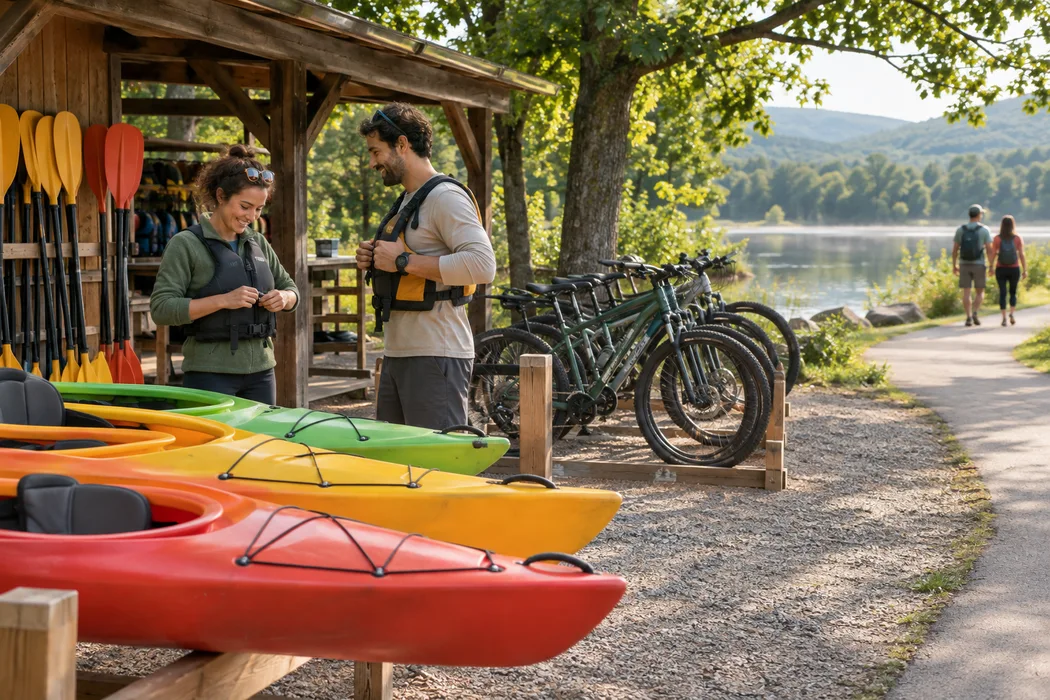
A bike rental business gets its first useful test before it has a big fleet. Picture four people arriving at once: two booked online, one wants to keep a bike until closing, and another needs a frame size you only have in the repair area. Can you give each rider a clear answer without making the next group wait? That moment tells you more about your business than the number of bikes lined up outside.
Build your first operation around one regular trip you can serve. This guide follows an illustrative shop near a trail entrance through its first month, from choosing the offer to seeing whether it makes money. The example uses hypothetical prices and costs. Use your own supplier quotes, staffing costs and booking history before committing money.
Days 1–5: Find the trip you can serve repeatedly
Start by choosing a place where customers can begin and end a ride. A trail entrance with nearby parking requires a different operation from hotel delivery across a city. At a staffed trailhead, customers come to you and you can take a bike out of service immediately if a rider reports a problem. Delivery may reach more people, but your crew also has to handle access, vehicle space, missed handoffs and a trip back to collect every bike.
Visit the area when you expect to rent, including a weekday and a busy weekend. Spend time at both ends of the day. Notice where people park, how long groups take to get ready and whether there are obvious places to return a bike when your team is available. Ask local tourism or event contacts when visitors tend to arrive and what trips they ask about. A busy trail may still have few customers willing to rent there if most visitors already bring their own equipment.
When someone says they would rent a bike, get specific. Ask where they would start, who would ride with them, what time their group could pick up, and what would make them choose another activity. A conversation about a real visit is more useful than a general vote for bike rentals. Keep a simple log with trip length, party size, preferred pickup time and whether they asked about any particular bike or size.
Write the first offer as a customer would see it
Imagine your first offer is a three-hour trail outing that starts and ends at one counter. A customer wants to know which bikes can be booked, how to choose a size, where to meet and when your team needs the group back. Write the booking page in that order. List the equipment included, any eligibility or route requirements that apply, and how to reach the operator if plans change.
Give uncertain requests a review path. A family may need to ask about fit, or a group may want everyone on the same departure. Route these inquiries to a person who can check records and respond with realistic options. Keep the same inventory count for reviewed inquiries and online orders so staff don’t tell a caller that a bike is available after someone has booked it online.
Days 6–10: Turn that offer into a fleet and a schedule
Size the fleet for the trips people described. If most requests are for pairs and small groups using one route, concentrate on the frame sizes and configurations that serve those riders. Ask suppliers which parts can be shared across models, what service support is available, and what a replacement takes when something is out of stock. The most attractive bike in a showroom can be expensive to keep in service if its common parts are hard to obtain.
Write a fleet sheet before ordering. Give each proposed bike or group of identical bikes a row, with size, expected demand, supplier quote, accessories, where it will be stored and who can service it. For a short pilot, a small reserve can help you keep one fitting problem or maintenance hold from breaking a group booking. The reserve is part of your cost, even when it earns nothing that day.
Decide what can happen at the same time. A staff member fitting a customer’s bike can’t also handle a surprise return three blocks away. Leave space between pickup groups for the work that happens around the rental. If you intend to serve both advance bookings and walk-ups, decide what capacity to hold for each and write down when unused capacity can be released.
Test capacity using names and times
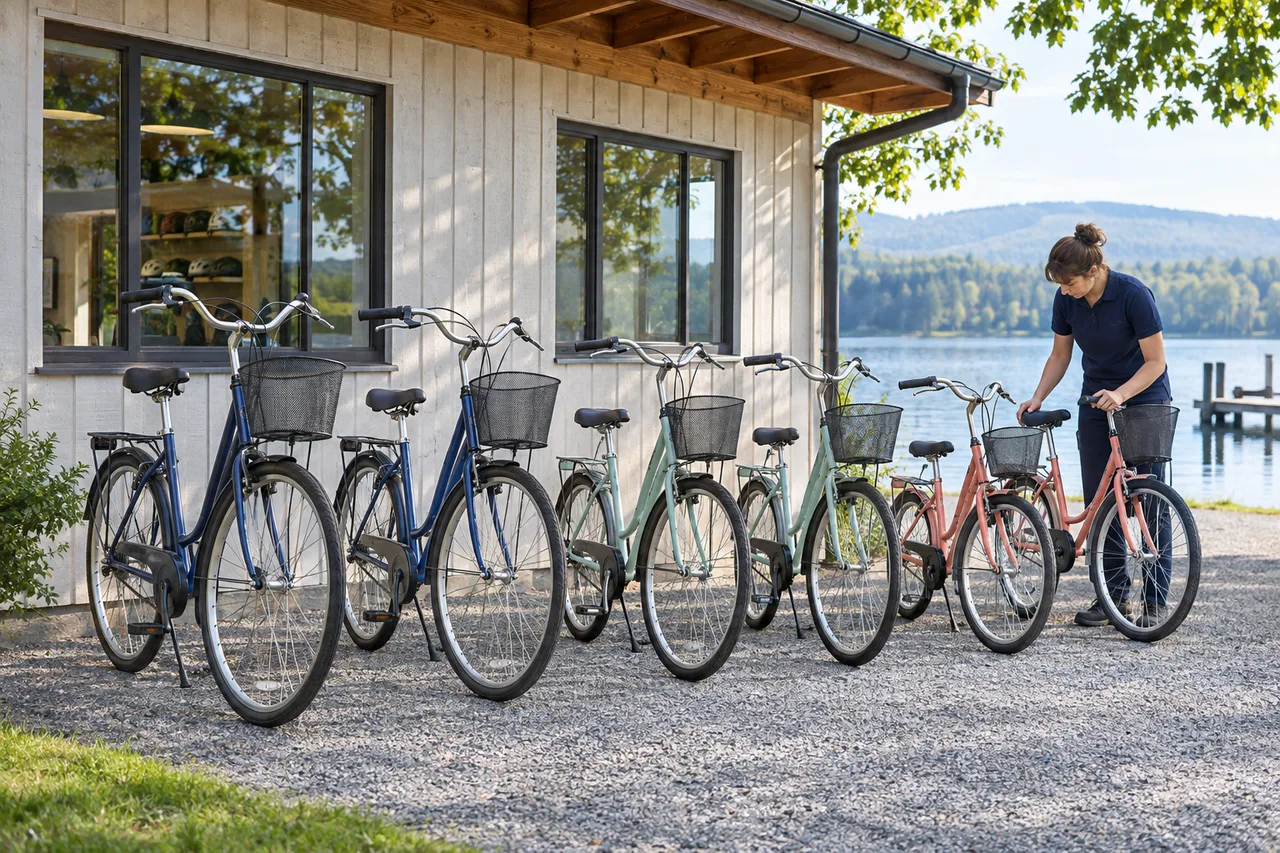
Try an eight-bike pilot with one bike set aside for service or substitution. Seven might be rentable at a given time, with fewer available in a particular size. Put a four-person group on the calendar at 9 a.m. and a two-person group at 9:30. Then add a walk-up who needs the same size as one of the scheduled riders. The test should show whether you have a fitting option, a later slot or simply no offer for that customer.
Next, assign one person to play a returning renter who needs extra time. Check that an employee knows who to contact and how to protect the next booking. If your answer depends on the owner personally remembering which bike went out, build a better check-in record before opening more rental slots.
Days 11–15: Model a slow month before you buy more bikes
Separate the money you spend per rental from the money you spend to stay open. Payment processing, cleaning supplies and a service allowance can rise as more bikes go out. Rent, insurance, phone service and some staffing costs may be due whether anyone books. Include the cash you need for the first fleet and equipment separately so you can see how much working money is left after opening.
Suppose your example shop charges $42 for a three-hour outing. It budgets $14 per completed rental for transaction costs, cleaning, servicing and handling. That leaves $28 per rental before the shop’s fixed costs and owner pay. If fixed costs are $1,960 for a four-week period, 70 completed rentals cover those fixed costs at that contribution, because $1,960 divided by $28 is 70. Fleet repayment, taxes and owner pay would still need to be accounted for.
Now test two months. At 55 completed rentals, contribution is $1,540 and the model is $420 short of fixed costs. At 95 rentals, contribution is $2,660, leaving $700 before the remaining items in your budget. The difference shows how quickly empty slots affect this example. Build estimates for a quiet month, a realistic month and a strong month, and ask how many reserved bikes you can actually get through fitting and inspection at your busiest times.
Compare pickup with delivery as separate offers
If hotel delivery costs an extra $18 in staff time and vehicle expense per order, a $15 delivery fee leaves you with $3 less contribution on the same rental unless other costs change. A van carrying four bikes to one scheduled stop can produce a different result from four separate trips. Estimate both cases, then decide where to offer a fixed fee, where to require a minimum and where to quote the job individually.
Count trips and stops as actually scheduled. A customer who pays for same-day pickup may also need an evening collection when no other jobs are nearby. Keep the cost of that return trip visible in the quote even if the customer sees one combined delivery fee. Update assumptions after a few real jobs instead of assuming that the first estimate was accurate.
Days 16–20: Make every handoff tell the next employee what to do
Use a record for the bike that left, the booking it went with and who reviewed it. Tie accessories to the same record. A separate asset ID helps when two bikes look alike or when a repair affects only one unit. Keep the last condition notes easy for the return crew to find so they can distinguish an existing issue from a new one.
On pickup, confirm the requested bike, agreed time window, contact instructions and items being handed over. Follow the relevant manufacturer guidance and your own approved operating procedures for equipment checks and rider orientation. If a staff member is uncertain about suitability or condition, give them a clear way to pause the handoff and escalate it. A booking confirmation is a commitment to help the customer with their rental, not a reason to send out a questionable unit.
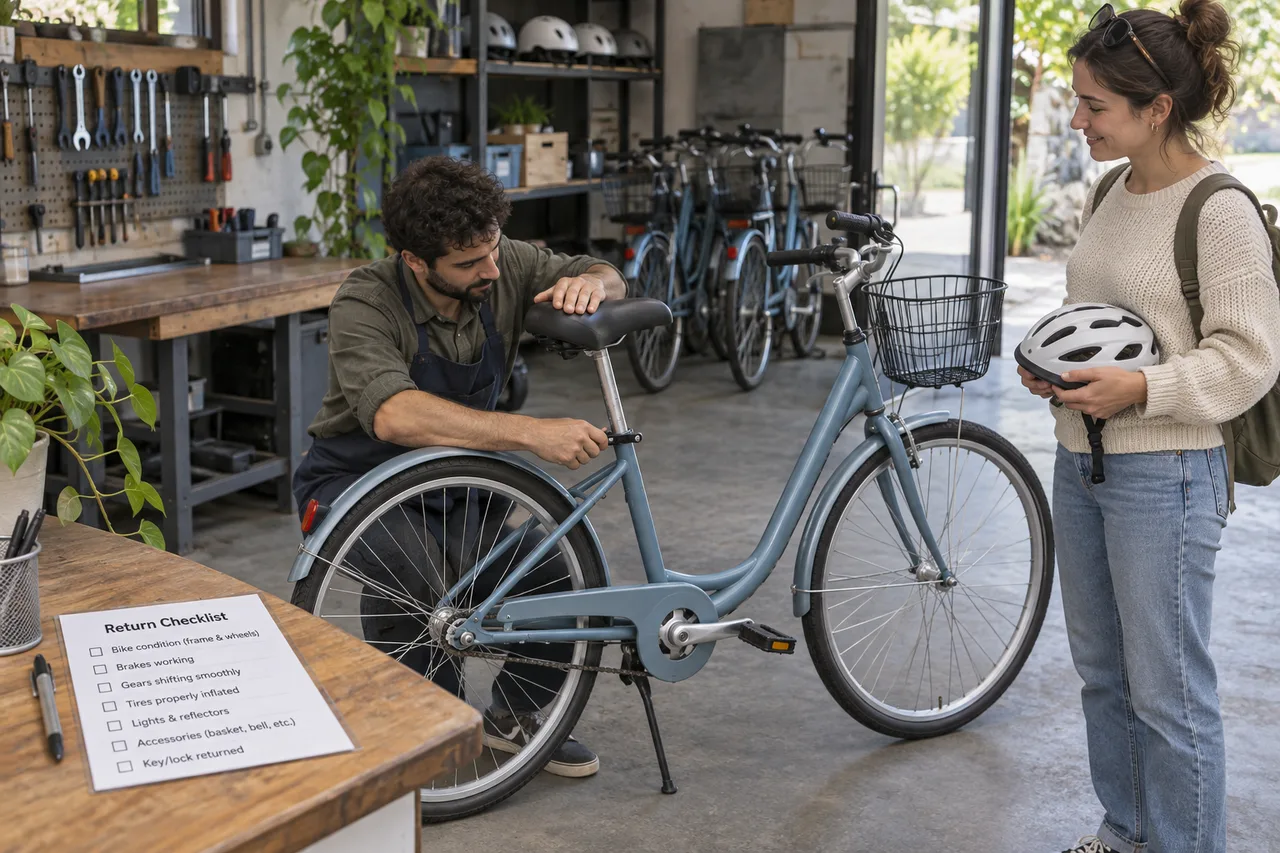
On return, check what came back and make room for inspection before the bike is available to another rider. In the calendar, separate returned, waiting for inspection and ready for rental. If a bike needs service, keep its slot unavailable until the responsible person clears it. Log when the issue was first noticed, when work was completed and whether any upcoming order needs a replacement.
Run a practice day before the first paid booking
- Simulate one online booking and one walk-up for similar departure times. Assign physical bikes and check that the stock count changes for the correct sizes.
- Give the second employee only the records a real shift would provide. Ask them to find the agreed return time, the equipment included and a number the customer can call.
- Reschedule one order and mark a different bike as needing service. Confirm that the booking and the ready-bike count both reflect the changes.
- Simulate a late return and a missing accessory. Verify that the next customer can be contacted and that the outgoing and return records still match.
- Read the booking confirmation on a phone and check the pickup location, customer contact path and final price. Fix any case that requires guessing before accepting orders.
When something fails, identify where the record became wrong. A calendar that blocks the correct size but leaves the office using an old pickup address still needs a fix. Change one part of the workflow, repeat the scenario, and put the expected result in a checklist staff can use on opening day.
Days 21–30: Fill your first slots and review what happened
Open a deliberately limited calendar instead of trying to serve every time customers might request. Put your clearest offer on a page partners can share. A nearby lodging manager may need a link for a predictable morning outing, while a community organizer may need to ask about group size and staggered pickups. Give each person the appropriate link or contact and make sure they describe the same rates and handoff options your staff can deliver.
Use the first week to compare demand with what your team can actually fulfill. Record inquiries you had to turn away as well as completed bookings. If most turnaways are from people seeking a different departure location, one more bike at the current counter may not help. If a common frame size sells out while another stays idle, rebalancing sizes might help more than increasing the total fleet.
Review the week with the people who did the work. Ask how long customers waited at pickup, which times were difficult, and what took the most time at return. Look for a clear operating decision: spread two pickup groups farther apart, add staff coverage at a particular hour, or try an offer designed for a quieter time. Keep the next change small enough to measure.
Track the numbers that lead to decisions
- Available bike slots by size. Use this to see whether a size sells out or has little demand.
- Completed rentals and credible turnaways. Record why you lost the booking and whether an alternate time or size was offered.
- Contribution per completed order. Note whether pickup, delivery and group bookings have different handling costs.
- Minutes from return to ready stock. Watch for bikes waiting on inspection and for repeat issues with the same unit.
- Actual pickup wait and on-time returns. Compare times when groups arrive together with times that have more space between handoffs.
- Referrals that produce bookings. Ask how customers found you and compare completed orders by source before paying for more promotion.
At the end of the month, choose one improvement and define how you’ll tell it worked. If your busiest wait happens from 9 to 9:30, try staggering departures or moving one employee to the counter for that period. Then track wait time without increasing the number of bookable bikes. A shorter wait leaves room for more orders only if the return and inspection stages can handle them too.
Recheck the last handoff of the day
Pick one weekend return that arrives near closing time. Ask the employee on duty how they would record the bike's condition, where they would put it, and whether a customer could reserve it for the first slot tomorrow. A tired crew should have a clear place to leave a bike pending inspection. Give the opening employee enough information to finish the check before the next departure rather than assuming the bike is ready because it was returned.
Questions to resolve before booking opens
How many bikes should I buy first?
Start from the size mix and time slots you can reliably cover. Plan a small fleet that gives you enough information to adjust without filling all available storage. Put some money aside for a substitute, maintenance and items that need replacement more often than expected. A short trial will reveal whether the constraint is the number of bikes, the right sizes or having enough staff at the right time.
Should I rent electric bikes from day one?
Treat them as a separate operating choice. Check local route access and requirements with the responsible authorities, and confirm storage, charging and maintenance procedures with your suppliers and insurer. Compare actual requests and the time your team would need for handoffs and service. If those pieces aren’t ready, an operator can still measure interest before adding that type of bike.
How should I handle damage, lost accessories or bad weather?
Decide what staff should document and who handles exceptions. Make the essentials of your cancellation, payment and return process easy to find before booking. Confirm any deposit or authorization workflow with your processor, and ask a qualified local professional to review applicable requirements and contract language. Give customers a written contact path when conditions change so the office and the rider can agree on the next step.
When does it make sense to add a second location?
First check whether one location is truly limiting the business. If customers at another site consistently ask for the same kind of ride, compare a scheduled pickup arrangement with staffing a second counter. Factor in transfers, replacement capacity and inspection at both ends. Keep all reservations in the same inventory record and decide which site has custody of each bike at any moment.
What should I do after the first month?
Rebuild the capacity and cash estimates with what actually happened. Choose the products, times and partnerships that served real trips at a workable contribution. Fix the recurring handoff problems before opening more slots, and keep a record of what you tried. When you expand, you want to be able to explain what the next investment lets the team do that it couldn’t do before.