Plan a rental conference around decisions you need to make
Plan a rental conference around decisions you can verify with vendor demonstrations, peer questions and practical trials.
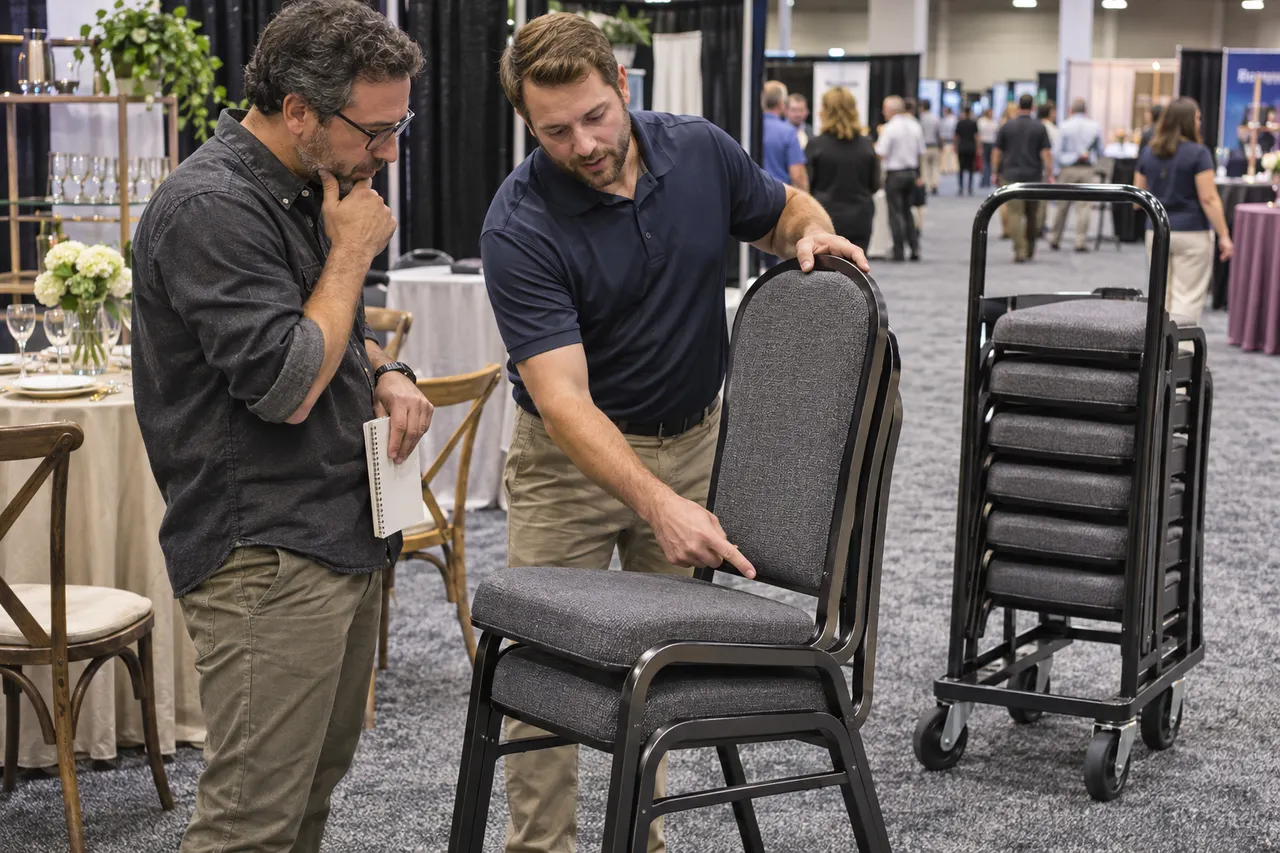
Two people from a rental shop get back from an industry conference with bags of samples, six vendor quotes and a long list of sessions they liked. The next Saturday still runs the way it ran before. The owner spent three days away from the business and cannot tell which details should affect the next hire, equipment order or website change. An agenda built around the shop’s current decisions would give those conversations a place to go when the event is over.
Start planning with the specific decisions your team expects to make. Use the conference to collect evidence you cannot get as easily at home and reserve time afterward to test the promising ideas. An equipment demonstration, peer conversation or workshop is most valuable when you can connect it to a concrete job the business is trying to do.
Pick questions your shop can answer after the event
Write down two or three decisions that matter over the next few months. A shop might need to choose a durable replacement for a chair family, decide how to schedule a second dispatch shift, or find an easier way to give venues current rental quotes. Name the actual date that the decision is due and who participates in it. Identify the missing detail that makes the decision difficult now. For a new chair, the open question may be how fifty can be moved safely in a vehicle the shop already owns.
Define what would make a trip useful. For the chair decision, you might need side-by-side dimensions, compatible carts, lead times and a written delivered quote. For the dispatch decision, you might need one other operator’s example of splitting the day and a way to calculate the additional labor for your own routes. For the software decision, you might need to see a revised quote move through availability, acceptance and warehouse staging. Keep those facts separate from a general wish to learn what is new.
Ask the crew to help write the questions before you go. A warehouse worker may be able to tell you which chair connectors bend first. An office coordinator may know where a customer must repeat their dates to complete a quote. Bring an anonymized example so you can show the shape of the problem without sharing anyone’s booking details. The people doing the work can also tell you what should stay practical under busy conditions, such as opening a work order on a phone at a loading door.
Choose the event based on the decisions in front of you
Check the published program, exhibitors and location before committing. A large equipment show may give you an efficient way to compare physical items and see transport systems. A smaller operator meetup might provide more room to discuss how shops handle returns or staff handoffs. A class taught around real order examples can be useful when the team needs a process rather than a new item. Compare how each event gives you access to needed answers and what information you can obtain through vendor documents or calls from home.
Estimate the full cost of attendance. In addition to registration and travel, include lodging, time away and who will take over normal decisions while the owner or coordinator is gone. Consider the hours that conflict with your busy season. A low ticket price can be expensive if nobody can sign off on a delivery change that weekend. Bring the right role for the questions. A warehouse lead might evaluate a cart more accurately than a general manager, while a sales coordinator might identify where a demo quote leaves out a customer approval.
Choose realistic coverage. If only one person can go, leave space to inspect exhibits carefully and follow up outside the hall. If two people attend, divide tasks they know how to evaluate and schedule time to compare notes. Give both a short list of shared questions so their findings can be reconciled. Check whether recordings, written vendor material or scheduled repeat sessions are available where helpful. The aim is to gain enough evidence to make a decision, with time to think through what you see.
Build a schedule with time for real conversations
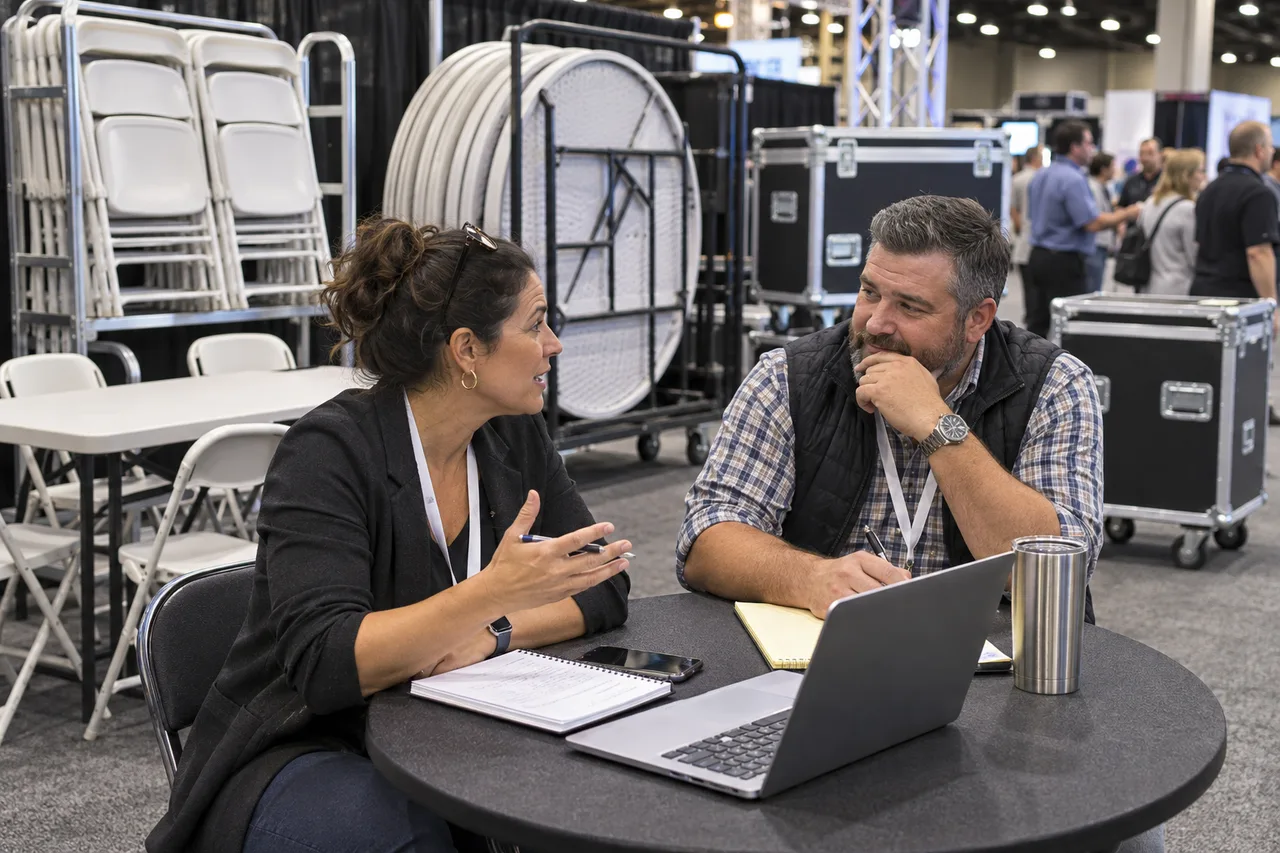
Mark the events that address a specific question and assign an owner to each. Find the sessions with prerequisites, hands-on practice or a speaker whose experience fits the business. Put the most important meetings first, especially if the shop needs several people in the same place. Reserve time between appointments to move across the venue and make a legible note that somebody else could read. A full calendar gives little room to test measurements or clarify something that came up during a conversation.
Contact vendors or relevant peers early when a brief appointment will save time. Say what you hope to compare. A supplier can tell you if they will bring the right material or accessory. A software company can arrange a demo person who understands mixed rentals and sales. A peer can say whether they are comfortable explaining their process without sharing customer details. Ask what to bring and confirm the meeting location. Keep the request limited so it is easy for the other person to help.
Create time to check what you heard. If two speakers give different advice on staging a delivery route, discuss their constraints with them or another operator. One may work many large city venues with narrow load-in periods. The other may primarily serve residential deliveries spread over a wide area. Their practices can both work under the conditions they describe. Write down those conditions and compare them with your own routes before adopting anything.
Use a repeatable example when comparing vendors
Bring a standard request, a few measurements and the main decision criteria. If you are comparing thirty-six-inch cocktail tables, consider the number used in a typical booking, vehicle fit, setup work, accessories and available replacement pieces. Use the same requested configuration with each vendor. Ask for dimensions and actual unit weights in writing, and check any conditions around freight, minimum orders, warranty and service. Prices quoted across a booth may not include everything you have to receive or use the product.
If you are looking at an app, ask the vendor to use the same fictional job instead of walking through a prepared feature list. A simple scenario could be twenty chairs and six tables for a Friday pickup, with a request to add five chairs after the first quote. Watch who sees the change, what happens to available quantity and when a customer knows the order has been accepted. Ask how an employee corrects a wrong entry and what an export contains. Take notes on limits and required integrations.
Compare assumptions before recording a favorite. One demo might show a feature available only in a different plan or environment. Another quote may cover a product version the supplier cannot get before the season. Ask for the details that determine whether you can run the same workflow in your own business. Keep estimated delivery dates distinct from vendor commitments. Decide after reviewing written evidence and checking what the shop needs to change to use the offer.
Ask other operators about a real job
Begin with a specific example in their work. Ask how they move equipment from a Sunday return to a Monday booking, or how they handle three deliveries to one venue on the same day. Ask how large the fleet or crew was for that example and what people actually did. Focus on where it failed on the first try and what changed. Advice about adding a second truck carries more context when the owner explains which shifts, booking windows and labor made that truck worthwhile.
Find out which part of their workflow you can transfer. A shop without a spare dock cannot immediately copy the staging pattern of a warehouse that has three. It could still test a cutoff for packing lists or one review step that prevents mixing orders. Label the idea as an experiment and record what its success would look like under your conditions. Ask whether they measured the effect, and document when the example is an impression rather than an observed number.
Offer an appropriate exchange. Share a general lesson from your own work without disclosing customer information, staff records or private figures. Record contact details and ask the person before relying on their availability after the event. If a conversation leads to an introduction or a sample, write down who is doing what. A specific follow-up has a better chance of helping both shops than a pile of business cards with no notes.
Make written notes that survive the trip home
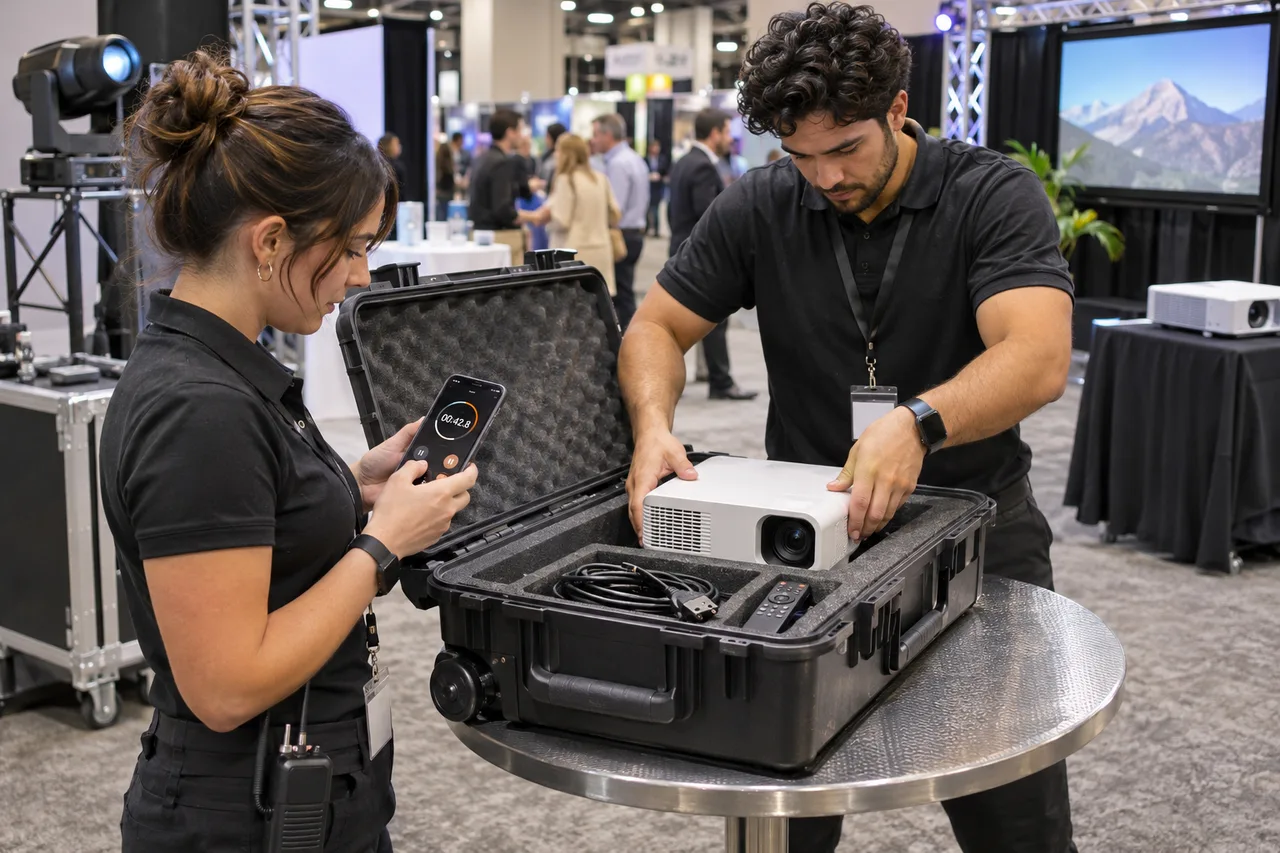
Use a short note for each visit. Include who you spoke with, the question you brought, what you observed, the source of any numbers and one next action. Separate a written specification from a verbal estimate. If you took a photo of a cart tag with the exhibitor’s permission, attach it to the same decision note. A description such as “liked the table” tells the warehouse little when it has to compare three different versions after the show.
Capture one useful reason to investigate or reject a candidate. For example, “The cart clears our storage aisle with the narrower configuration, but there is no confirmed loading height” still has value. It can save the team from debating color or upholstery before checking vehicle fit. Flag the most important detail that remains unknown and record how to resolve it. Keep in mind how the business can use the information on a real schedule, such as seeing how long a replacement part takes to arrive in peak season.
Make time at the end of each day to review the notes. Group details by decision instead of leaving them in the order you collected them. Ask what opportunity could justify a second conversation in the morning and what question is already answered. Share a short update with teammates at home if they need to measure a door or confirm the current way a quote is revised. Getting those facts during the event can improve the remaining meetings.
Follow one decision through the conference floor
Imagine a business that wants to add an outdoor cocktail table without buying another truck. The crew finds that its current table carts are full on most Saturdays. Before the event, it measures the loading space it can reliably reserve and writes down how many tables fit in the typical order. It brings those measurements and a sketch of the standard loading sequence. The owner goes to the first exhibitor with a request to see the table assembled, folded and placed on its usual cart.
At the first table, the exhibitor shows a model with a shorter stack that fits farther into the floor plan. The owner asks whether the stability and transport guidance apply with the tabletop size their customers want. At the second, the crew member notices that a cart pulls apart for storage and asks how the wheels can be maintained. They write down which parts of each configuration were actually demonstrated and request specifications for the choices they could not see. They leave with two testable options instead of a general impression that one model looks smaller.
At the end of the day, the team compares notes. One table is attractive in the booth but would need a separate trip at the largest typical order quantity. The other arrives later than the date the shop hoped to offer it. Both facts are item-specific. The team asks for a sample or a supervised trial with the right cart before making a purchase decision. It also asks whether there is a small related model that uses the same basic layout. The real objective is to move approved loads within the truck and schedule the business has.
When you record your own outcome, include the part someone else can verify. A layout, spec sheet and written quote give the buyer a way to estimate a normal order after returning. A description of the steps required to fold and stage the model lets the team practice the same sequence. Keep any unanswered questions visible until the test is complete or the option is retired.
Turn the trip into one or two controlled trials
Schedule the follow-up while planning the trip. In the first week back, review the strongest evidence with someone who owns the work the change would affect. Choose which idea can be tested on a small representative job. Provide a person to run the test, a time to finish and a clear way to judge it. A warehouse trial could compare two approved cart configurations using the same chair count, route and loading window. Use the usual safety procedures and relevant guidance during the trial.
Use a baseline that means something. The office might want to reduce how often staff re-enter rental dates, but it needs to observe how many times that happens in a normal quote first. Try a change on a realistic case with a revised date and a shared customer record. Check whether it improved the handoff without creating a new issue downstream. Write the outcome in the same note as the conference idea so the team can see where the evidence came from.
Give yourself enough time for decisions with ongoing costs. A floor show can make a temporary price feel like the only chance to commit. Ask for a written quote and expiration date, then compare the complete option with the work and capacity it would add. If you cannot verify a critical claim within the offer period, record what you learned and keep the decision in the usual process. A result can be a purchase, another trial, a later review or a sound decision to pass.
Review whether the conference changed the decisions
After the tests, compare your original questions with what you learned. The furniture shop may now know that two chair systems fit its vehicle but only one cart can reach a narrow venue entrance. The quote team may have ruled out a system because it could not reproduce the approved change in the example. A dispatcher may have a week’s worth of evidence that a later load provides workable capacity without a second vehicle. Report the facts and the next decision to the people who will act on them.
Record the actual trip cost and staff time beside the outcomes. Include valuable avoided work, such as dropping a candidate once it fails an important requirement, and be realistic about what you can attribute to the event. Review which types of sessions, appointments or peer conversations provided material you used. Use the result to plan how many people to send, whether another event is a better fit and which preparation would make the next visit easier.
Keep the comparison accessible for the next buying or planning cycle. A vendor may change the equipment or terms. Recheck any age-sensitive detail before relying on it later. Save the useful questions as well as the answers. A team that can say what it learned about loading, hiring or booking can plan the next conference around a new decision instead of repeating an expensive tour of the same booths.