Pick a bounce house business name customers can remember
Test bounce house business names in real referrals, compare finalist names and plan how your chosen identity will appear across each booking.
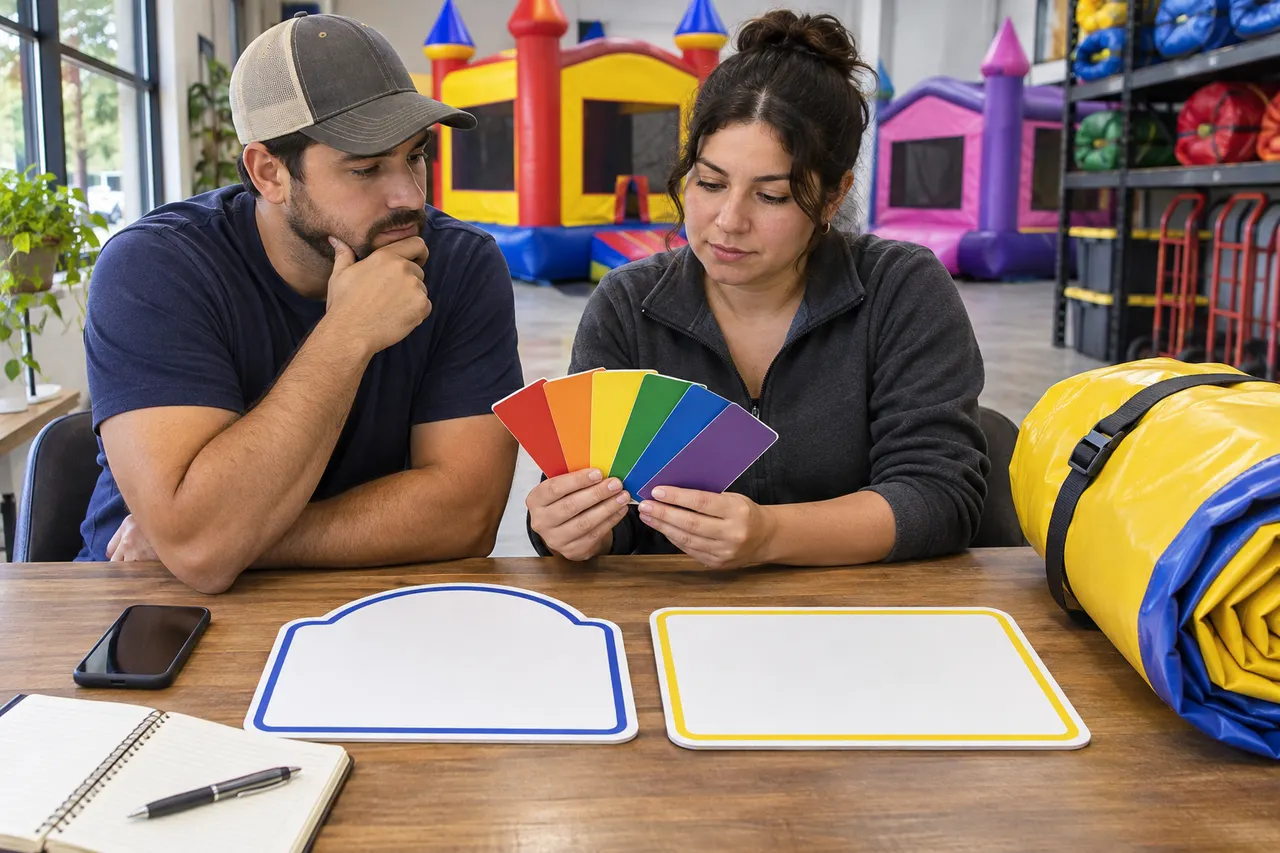
A parent asks another parent for the name of the company that brought the bounce house to a school party. The second person remembers the colors on the truck and half of the name. They try to say it aloud and search for it later. If the business is easy to recognize from that small clue, the referral has a better chance of making it to the right catalog. A name has to work this way in addition to looking good on its first sign.
Choose a name by testing how people will hear, remember and use it. Start with what the rental business wants to be known for. Build a shortlist, check each candidate’s use in the actual market and across relevant registries, and compare it in ordinary conversations and booking documents. Keep those decisions ahead of permanent printing or branding expenses. A promising name should be understandable to customers, distinct enough to find, and appropriate for the offers the team will really serve.
Decide what the name has to communicate
Write one sentence that a customer could use to explain the business to a friend. It might describe bounce house and inflatable rentals for private parties in a particular service area. If the team also serves schools or community events, state whether that work is part of its ordinary offer. Use plain language rather than a slogan. This exercise will help you see which names are compatible with the current service and which suggest something different.
Think about the customer’s first question. A parent may want to know whether the shop supplies a certain kind of equipment. An organizer may be evaluating whether it can handle a specific venue or event. A name can trade some descriptive detail for a memorable distinctive phrase. A short catalog subtitle or description can then explain the category and area. Try saying the name and description together. Ideally the customer hears a clear introduction instead of needing a second explanation for what the business actually does.
Decide which claims belong under the name, rather than inside it. A brand that promises every occasion or a very wide area may send people toward jobs the shop cannot currently serve. A name tied closely to a particular city or product can be useful if that focus will remain central. Test whether it still makes sense for expected changes, such as adding water slides or choosing a smaller service area. Base that test on a reasonable direction for the business instead of trying to cover every product it could ever add.
Generate candidates that make different tradeoffs
Make a list of words customers already use for the service, such as bounce house, inflatable and party rental. Add words that convey the location, occasion or experience the business can reasonably represent. Create several styles of candidate: a descriptive name with a distinctive word, a memorable short phrase with a descriptor, and a broader event name that could support several product categories. Keep an internal note of which idea each is meant to test.
Avoid leaning on familiar character, product or franchise names unless the business has appropriate rights and advice for the proposed use. Describing an actual item in a catalog has different implications from using another brand as the business identity. A name that depends on people recognizing somebody else’s work can be difficult to use consistently. Keep the early shortlist focused on words and visual ideas that you can develop independently.
Check for accidental meanings and awkward readings. A combination with a nice written appearance might sound like another familiar word. A name might be difficult to distinguish from a venue or another local business when spoken. Ask coworkers what they hear, without showing them the spelling first. Keep candidates that survive that quick check and a few that are meaningfully different. A useful test compares different choices rather than several spellings of the same idea.

Test how the name travels through an ordinary referral
Ask a few people who resemble your customers to hear each candidate read once. Use a natural phrase like “I rented it from this company.” Ask them what they think the business offers and how they would search for it. Try the same exercise by phone or using a short voice note with their permission. Write down what they actually repeat. If several people hear a different word or could not guess how to type it, consider whether the distinctiveness is worth that confusion.
Give the same candidates to an employee who answers inquiries. Have them say the name in a greeting, spell a simple email address and repeat it to a caller. Try a scenario with background sound or an unreliable connection. A small difference in pronunciation can matter when two rental companies sound similar. The goal is to find a name that works in the way bookings really reach the shop. A useful variation might shorten a phrase or use a clearer word.
Ask someone to recall the name later without showing the list again. See whether they remember a distinctive word, the service description or only a color they associated with it. Pay attention to whether remembering part of it still leads to the correct business. A memorable name that points to the wrong industry can work with a stronger descriptor, while a familiar service phrase may need a distinctive element for people to find it. Note which part of the design should carry the rest of the explanation.
Check how the candidates appear out in the market
Look up the full candidate and meaningful variations in relevant markets. Include local rental businesses, adjacent event services and the places customers may use to find you. Try similar spellings, sounds and word order. Look at services as well as the words. A seemingly small difference can still leave customers thinking two companies are related. Capture examples a qualified reviewer may need, along with dates and the markets in which you saw them.
For U.S. operations, the USPTO describes broader clearance research that includes federal trademark records, state resources and common use. An exact-name search is only one part of an assessment. If a candidate appears similar to another business in related services, get suitable professional advice before committing to it. Where the business operates outside the U.S., use the official resources and qualified advisers for those markets. USPTO guide to researching similar trademarks
Check names held by existing businesses, any required entity or trade-name registration and the separate steps for an online address. Confirm what applies to your business and location with the appropriate sources. Domain and handle availability can help you find a usable address. They do not settle whether a name is available to use for the proposed business. The U.S. Small Business Administration explains the different roles of entity names, trade names, trademarks and domain names. SBA guidance on choosing a business name
Mock up the name where it will actually appear
Put the leading candidates on a sample product catalog, quote header, vehicle sign and customer confirmation. Use the same type and colors initially so you can compare the words rather than comparing an elaborate mockup with an unfinished one. Check a phone view and a printed version. A long name could be clear in a logo and get shortened in a contact list, agreement or payment message. See which shortened form people actually notice.
Test a basic web address and email. Ask someone to type it after hearing it, then check it against the intended result. Consider how it looks when written without spaces. Look for ambiguous character combinations and awkward abbreviations. If the exact name cannot be used in the address, see whether a short usable variant feels connected to the business. Treat any candidate addresses or accounts as unverified until you have checked their current availability and the intended ownership.
Put the product category below the name in a few places. A business might lead with a distinctive word and clarify “Bounce houses and event rentals” below it, if that description accurately fits. Make sure a parent seeing the brand on a quote or van understands the offer. Include location or service information where it helps rather than repeating it in every phrase. The brand name can remain simple when other words nearby explain precise product and service options.
Decide whether the name can carry future offers
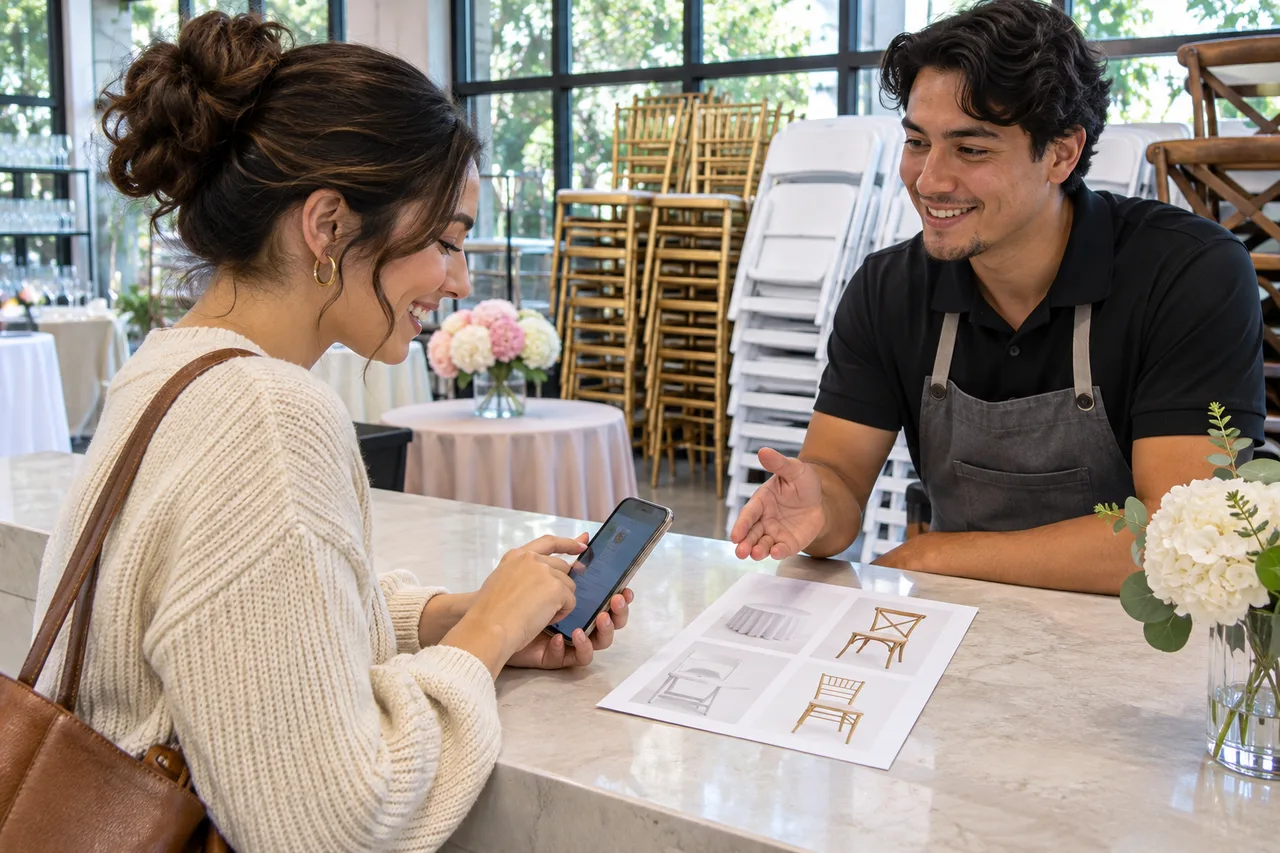
Imagine the catalog a year into normal operations. It may include a familiar inflatable family, compatible add-ons or a small number of other event packages. Put each under the leading candidate and ask people whether the combination seems plausible. A name focused on one product can be exactly right if the business wants that niche. A slightly broader name can help if the company has a credible plan to support several offers and can still explain the core service clearly.
Try a venue referral where the customer first sees another category. A school coordinator might land on an event package from a message instead of starting at the homepage. The name, category and business information should give enough context to know where the quote will come from. If customers think they have reached a venue or a manufacturer instead of a rental company, clarify the descriptor and contact information. Revisit the choice if the underlying name keeps creating that error.
Discuss geography with the employees who decline requests. A location word may improve recognition for a focused local business and create confusion for customers outside that immediate area. If the business expands only within a particular service radius, make those boundaries plain in the offer. Do not rely on a city name to enforce delivery eligibility. Staff and customers still need a practical way to check which locations you can serve.
Keep brand choices consistent across communications
Once you choose a vetted name, decide its standard spelling and the descriptor staff should use. Store the approved version where the team can copy it into quotes, email signatures and catalog pages. List any required legal or billing name separately where it needs to appear. Make sure customers can recognize the company whose quote they approved when they reach the store’s supported payment or customer portal. If several records show different names, ask where consistency is important and fix that path first.
Create a short list of surfaces that will need the identity. Include the website, appropriate directory listings, order confirmations, rental agreements and truck or equipment markings when relevant. Identify who can update each and which updates need the business’s normal authorization. Try one ordinary booking from the product page to the confirmation before printing a large batch of material. The customer should be able to follow a consistent name and contact route the whole way.
Keep a lightweight style reference the crew can use. Show the approved wording, an ordinary spoken introduction and the primary address customers should use. An employee sending a pickup message should not have to invent a shorter version on the spot. Rehearse how staff will answer when a customer pronounces it differently. If the same misunderstanding recurs after launch, adjust the descriptor, search listing or supporting text before investing in replacements.
Compare three finalists on the same scorecard
Give each finalist one row on a sheet. Use columns for what someone repeated after hearing it, whether they found the right business in the market test, how well the name fits current offers and which checks still need action. Put the actual observations in the first columns. “Four people recalled the distinctive word and three could spell it” gives the team something to discuss. A score of eight for memorability tells them much less. A person who was already part of the naming conversation should be counted separately from a first-time listener.
Suppose your descriptive finalist is easy to spell and causes confusion with a similarly named provider in the next town. The phrase with a made-up word attracts attention but leads people to type two different versions. The broader event name is easy to recall and customers can identify the service when a short descriptor appears next to it. Those are three different issues. The first calls for more research into the other provider and a suitable review. The second needs a repeat test with a clearer spelling or a shorter phrase. The third calls for checking whether you can carry the descriptor through the places customers usually see it.
Give the scorecard a priority order that reflects your sales. A referral-heavy business may weigh spoken recognition closely because customers often arrive through parents, neighborhood groups or school volunteers. A shop relying on venue referrals may test how the name appears in a coordinator’s supplier list and whether the bookkeeper recognizes it on an invoice. Have someone who works those channels run the exercises and mark the exact phrases that caused confusion. That information is more valuable than a vote on the logo.
Before you lock the choice, decide how to handle the short form people naturally use. Suppose callers repeatedly drop the longer service descriptor. Give staff one way to confirm they reached the right shop and use the agreed full version in the follow-up message. Copy that same wording onto the quote header and invoice where appropriate. Check that customers who repeat only the distinctive word can still recognize the business when they see the full version later. If the repeated short form routinely sends people somewhere else, the shortlist needs another pass before you pay for printing.
Make a decision from the strongest evidence
Keep a shortlist review with spoken recognition, search results, category fit and relevant clearance follow-up. Give each candidate a short note about what passed and what remained uncertain. Treat a memorable name that is too similar to another existing business as a reason to investigate or choose another candidate. Give people involved in daily orders and referrals a voice. They will have to make the name work more often than the person creating the first design.
Before committing design or signage expenses, verify the legal, account and domain steps that apply. Use the appropriate advice if the clearance picture is uncertain. Record who controls the business’s public accounts and where the standard name can be found. Save the decisions and examples so a future employee can make a new listing consistent. If you later change the name, plan what happens to past booking links, customer references and contact points before the switch.
Verify the result with one more realistic referral. Ask someone to hear the name, find the business and identify which rental it offers. Then have them open an ordinary booking message and confirm the sender is recognizable. The exercise takes only a little effort and follows the path customers use. If the choice works in those moments and the required checks have been completed, the business has stronger grounds for committing to it.
A usable bounce house business name works after someone hears it once and needs to find you later. Give it an honest service description, check it in the markets where it will be used and carry the same identity through the actual booking. A strong name makes the next conversation, search and referral easier for the person who is ready to rent.