Pack large rental orders by zone and vehicle
Split a large event rental order into destination zones and vehicle loads, then verify each handoff from staging to return.
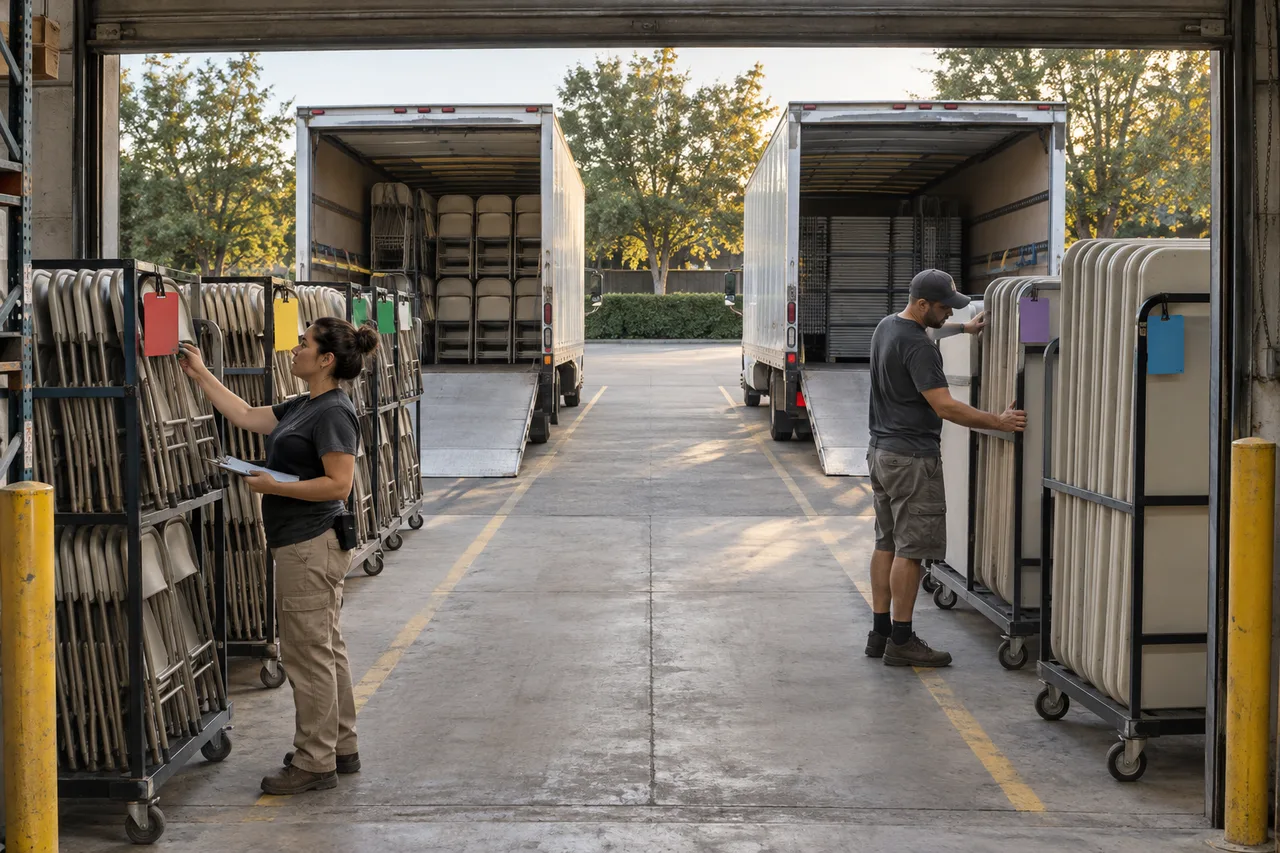
A three-truck rental order is staged in one enormous group. The count is right in total, but no one can tell whether the ballroom chairs ride with the risers or with the linens. At the venue, two employees walk past the equipment they need to unload a pile of tables from the back of the first truck. Another crew has arrived at the side door they cannot use.
Packing a large rental order means deciding which pieces belong together at each stage. The customer’s order defines what must be delivered. A staging plan groups it by destination and work sequence. A vehicle manifest shows which pieces actually travel on each truck. Building those views from the same approved order makes it easier to find a missing stack before it leaves the warehouse and send every item to the right room.
Read the order with the venue layout open
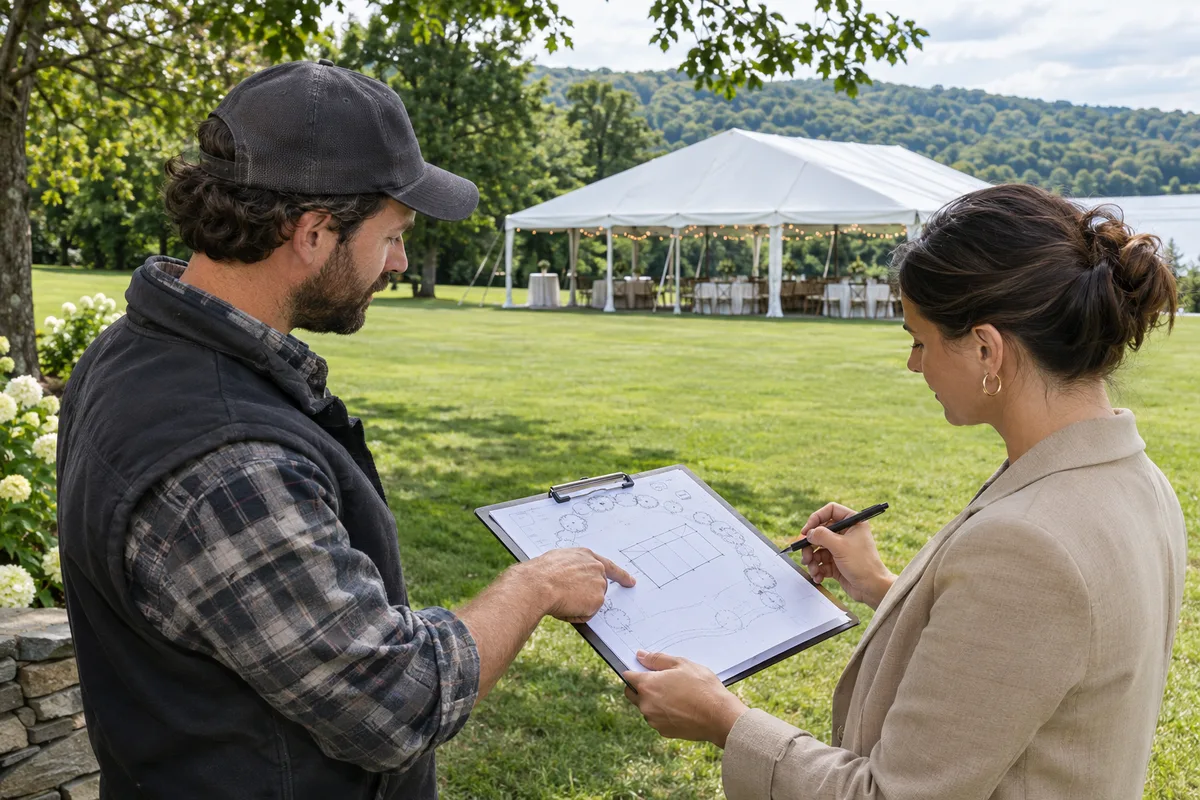
Begin with the approved line items, delivery details and any diagrams they reference. Confirm the event areas, access points, setup deadlines and collection times. Some items may go to a main room, others to a patio, and several may stay on a truck until another crew is ready. Identify the boundaries using names the venue will recognize.
Ask how the work fits together. A stage can go in before chairs are set, while linens might have to wait until tables are placed. Determine which crew needs each item and when. A group of pieces required by a stage crew is a useful staging unit even if the items came from different inventory categories. Grouping by setup work helps staff handle cases, hardware and furniture as an actual job.
Record constraints that affect packing. If one door cannot accept wide dollies, the delivery may need a different cart or a second loading point. If the venue asks for trucks at different times, decide which groups must ride with the first arrival. Check when areas become available and whether a receiving contact will be present. Write the details once in the order and use them when building the vehicle loads.
Keep one person accountable for the approved plan. Ask them to check changes in guest count, room or delivery conditions before the lists are printed or shared. Changes can happen after picking begins. Keep a process to issue only the affected update and tell the next person who needs it. Staff need to know which version is in use when a cart is moved or loaded.
Break the order into destination and work zones
Choose a zone for every group the crew will hand off together. A typical venue might use “East Ballroom,” “Garden Ceremony” and “Service Tent.” A loading plan can use the same names. If the venue gives you room codes or distinctive dock names, preserve them on the list. Avoid names such as “back room” that could mean different places depending on the door the crew uses.
Include components with the equipment they support. A registration station can have tables, linens, a case of signs and a box of ties. If the ties go on the same truck but into a different container, record the container and destination. A list for one zone should answer whether the crew can complete it with the pieces assigned. The main order still holds the total counts for common products.
Choose the unit people will count. Chairs may move in stacks of ten, with a separate stack for five remaining. Glassware can move in racks, with quantities listed by rack and piece. Cases can move as named units, with components checked before they are closed. Mark the counted quantity on the pack record in the same units the crew can verify at unload.
Prepare distinct tags. A short zone name, order reference and sequence number often work well. Use color as an extra cue if two routes or rooms have similar gear. Keep text readable when a card gets dusty or the light is poor. Attach tags where staff can read them without removing a stack or opening cases meant to remain closed.
Assign each group to a vehicle before loading
Start with which vehicle needs to arrive where and in which window. The truck for an early build needs the first equipment for that crew. A later truck can carry items that do not need to be staged until tables are laid out. Confirm which doors can receive each vehicle and whether loading assignments still fit the approved staffing plan.
Check the ability to carry and unload the planned groups with the people responsible for the vehicles. Confirm that the assigned load, restraints, weight distribution and access arrangements meet your operation’s loading procedures and the vehicle’s limits. The equipment list and sequence can inform the plan while the crew determines how the load must be secured and handled. A vehicle assignment that makes sense on the list still has to work with the actual racks and space.
Place items in an unload order appropriate for each vehicle and the stops it will make. A small package for the first stop should be reachable at that stop without blocking the rest. If the crew unloads large rolling racks through a rear opening, check the position of any equipment it has to move first. Agree on the sequence with the person loading the truck so the labels match where they actually place the gear.
Keep items that depend on one another together when possible. If a truck takes a stage deck and all of its supports go in a second vehicle, the first crew cannot start until both arrive. When a split is intentional, write the dependency next to the unload plan. If a vehicle is delayed, the dispatcher can tell which part of the setup can proceed and what needs a new plan.
Turn the booking into pick, check and load lists
Give each team the view it needs. Pickers need inventory names, counts, shelf locations, variants and zone assignments. The check lead needs totals, outstanding pieces and any approved substitutions. The driver needs the final vehicle manifest, stop sequence, dock contacts and the first load to come off. Keep the shared order reference on each view so a change can be traced.
If the same item appears in several zones, provide the total and its split. A furniture booking might need 140 chairs overall, with 90 for dinner and 50 for the ceremony. The warehouse can pick the whole count in one run, then separate the stacks using the zone list. The check lead confirms that the two zone counts reconcile with the order. When a planner adds ten chairs, staff can see exactly which destination needs them.
Identify readiness states that aid the next step. Picked means the equipment is physically at the zone. Checked means someone verified the count and variants it needs. Loaded means the items are on the assigned vehicle. Mark exceptions where they occur. A note saying “ready except linen bin” helps only if the missing bin can still be found and the truck remains open until it is verified or the issue is resolved.
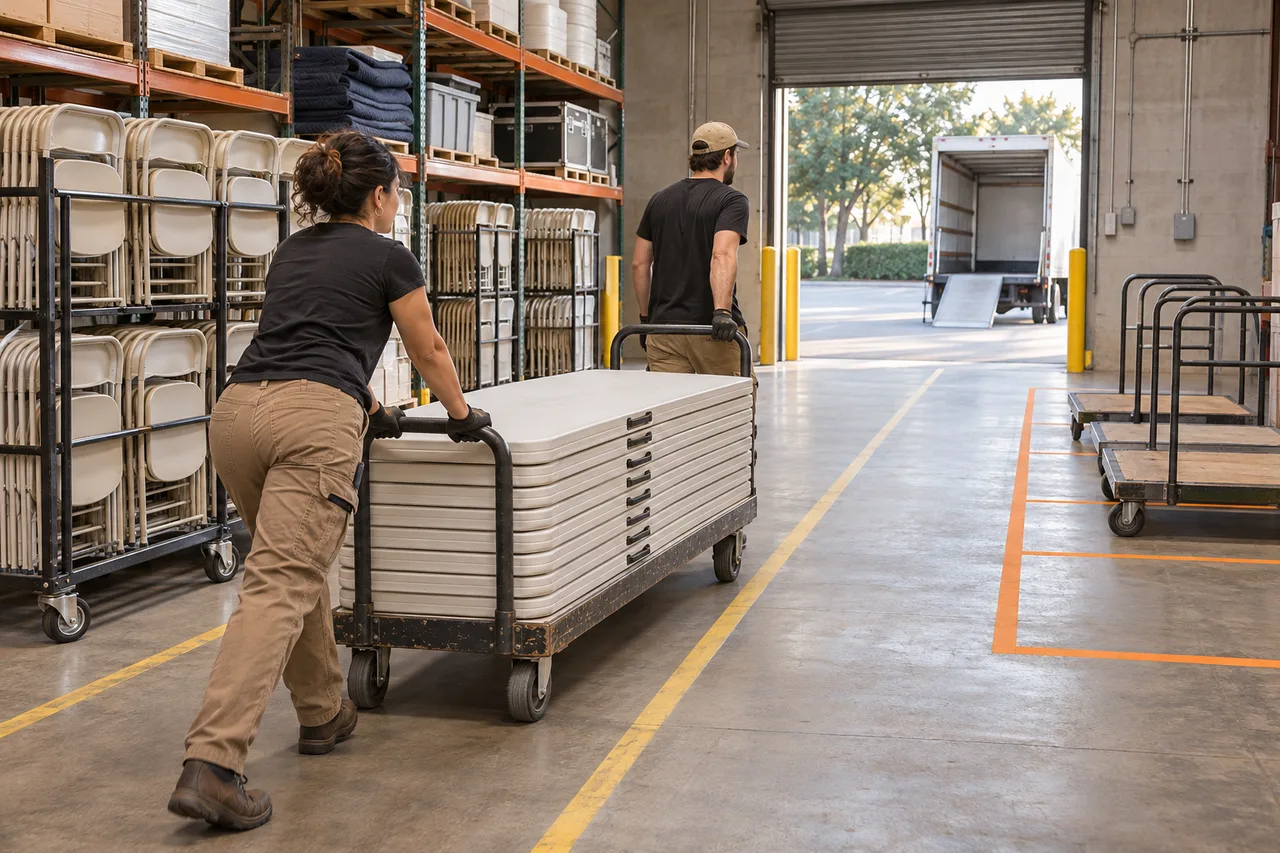
Have someone confirm the actual vehicle contents. A cart can sit in the correct lane and still end up on a different truck. Record the move or check the tag at the loading door. If staff need to shift boxes to a vehicle with more space, update the manifest before departure and tell the people receiving both trucks. The paperwork should follow the actual equipment.
Keep substitutions and missing pieces visible
Build an exception list for items that have not passed the staging check. If eight couplers are expected and only seven are picked, record the missing piece, the zone that needs it and who will resolve it. Put a hold on the parts of the job that cannot go out complete. Staff can still check other zones as long as the outstanding item stays visible.
Use the customer’s approval process for material substitutions. A different chair shape or table dimension may change the room layout. Match the replacement to the expected function and get the appropriate decision before treating it as the confirmed item. Update both the inventory allocation and the line the crew will see. Check any components that need to change with it, such as covers or connector types.
Document cases that must be collected from another site or will arrive later. Give the additional move a source, destination, time and owner. Identify which zone would be affected if it misses the cutoff. If it will go straight to the venue, make sure the receiving crew knows which supplier or driver to expect. An item that is not at the loading bay needs a practical record before it can be treated as part of delivery.
Keep the customer, office and crew aligned on real changes. The planner might approve a later arrival for one case if the rest of setup can start without it. The warehouse must see which stock to load, and the driver must see where the delayed item is going. Put those details back into the job and notify the people whose next action changes.
Walk through a two-truck venue delivery
Suppose a venue order includes 90 dinner chairs, 50 ceremony chairs, fifteen banquet tables, four registration tables, and the linens and hardware for each zone. The ceremony needs to be ready early, while the ballroom is unavailable until a meeting ends. A side dock will take the ceremony vehicle in the morning. A larger truck can reach the ballroom dock after noon.
The team assigns the patio chairs and setup accessories to Truck 1. It places the gear for the registration entrance on Truck 1 as well because the lobby must open early. The dinner chairs, banquet tables and ballroom linen racks go to Truck 2. Pickers stage three zones separately, even where two zones travel together. The load lead confirms that the counts add up to 140 chairs and nineteen tables. The registration crew can identify its own tables when it meets Truck 1.
During checking, workers find that one of the registration linens was packed with the dinner covers. The color is the same, but the dimensions and drop are different. The check lead moves it to the correct bin and opens the registration list to verify the other pieces. Both zones can now be completed without a call from the venue. The manifest gives the crew the number of bins expected at each stop.
An hour before departure, the venue changes the side dock’s time. Dispatch confirms that the first truck can come earlier and that the ceremony crew will be present. The ballroom delivery is still after noon. Staff update the first truck’s plan, notify the crew and venue contact, and check that the equipment is fully loaded before the revised departure. The packing zones and counts remain useful through a timing change because the schedule and physical assignments are distinct records.
Confirm the manifest with the receiving crew
Send the receiving lead the vehicle assignments and sequence before the first truck arrives. In the two-truck example, the ceremony crew should know that the ballroom chairs are still on the way. Give the venue enough information to direct each vehicle and make the right staff available. For a large room, specify where the equipment will pause before the setup team takes it. A loading lane that works at the warehouse can still lead to a crowded dock if the receiving plan is unclear.
Have the unloading lead compare each tagged group to the manifest as it comes off the vehicle. Note any quantity that differs and leave a record of which truck or location was checked. If the crew finds five chair stacks where the list shows six, ask them to confirm the count and tell dispatch which zone is waiting. Dispatch can check the other manifest or the staging record and respond while there is still time to make a correction.
Pack for recovery as well as delivery
Plan how the gear comes back. Establish which zones are collected together, where the equipment should wait, and which crew checks it before loading. If venue staff must stage instruments, furniture or cases in a specific place, make that agreement visible. Where a client will keep some items for another day, give the crew a clear partial collection list.
Reuse useful labels. A zone tag on a cart can help the return crew identify which room sent it. A protective holder for the manifest can keep it readable after a long shift. If the crew groups returns differently for transport, record each group in the return manifest while keeping the booking reference. A grouping can change after the event without losing track of the equipment promised on the original job.
Check the return in actual units. A stack of chairs may be shorter than the stack that went out. Components can come back in another container. Have the crew record counts and problems before mixing stock with other returns. Give staff a place to hold incomplete kits and a route to report items they believe are still at the venue. The office can then decide whether a pickup or a customer follow-up is needed.
Review whether the pickup plan fits the late shift. If the loading dock is shared with other vendors near closing, confirm the order in which your vehicles can arrive. Recheck who has the keys, access details and contact information. A return plan contributes to the next day’s availability and saves the warehouse from trying to identify miscellaneous gear after the crews have left.
Improve the packing plan after each difficult order
Choose a few outcomes to review. Ask which zones were delivered in the right sequence, which vehicles arrived with a complete manifest and how often someone had to search for an item at the venue. Record material differences between what was expected and what reached a zone. Look for a fix that can be tried on a similar job.
Talk to the people who loaded and unloaded the vehicles. Ask what they had to move before reaching the next item, which tags were hard to read, and whether the stated room matched where they were asked to unload. The crew may need a better rule for separating two destinations or a way to see which items ride on the next truck. Update the pack plan near the step that created the problem.
Keep useful examples from jobs the team expects to repeat. A diagram for a familiar venue, a set of destination labels or a staging sequence can give the next planner a head start. Check each against the current order and venue instructions. Crew size, loading access and room arrangements can change between events. The plan should help employees notice a difference instead of hiding it behind an old template.
Begin the next large booking with the physical handoffs in mind. Each group needs an expected count, a destination and a vehicle where appropriate. Staff should be able to confirm that it is actually packed before departure and count it again at return. When those steps are clear, a large order becomes several smaller jobs the crew can complete in a reliable sequence.