Manage equipment subrentals from shortage to return
Track borrowed event equipment from a stock gap through supplier confirmation, receiving, temporary allocation, and a verified return.
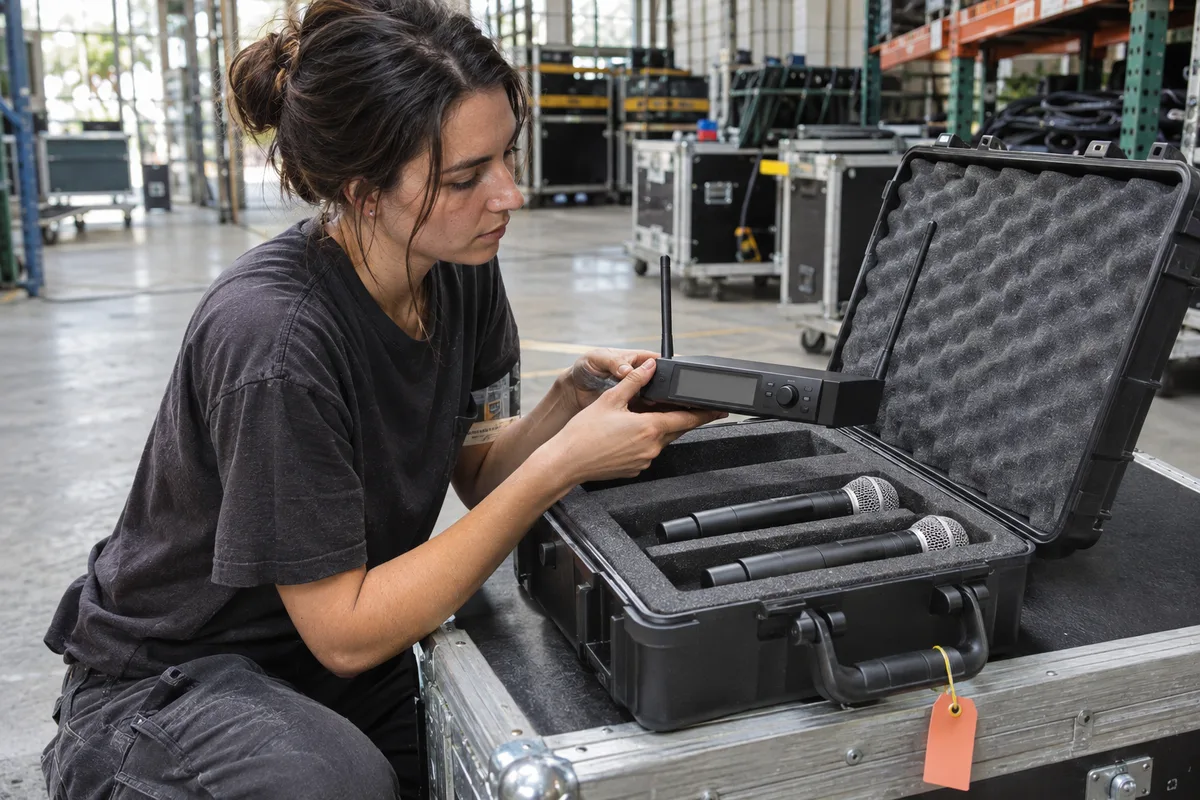
A confirmed event needs twelve wireless microphones. You own eight that fit the job, and another booking may need two of those during rehearsal. A supplier tells you they can probably cover the rest. At that point you have a customer requirement, a shortage, and a conversation. You still need to establish exactly what is coming, when it will arrive, what it costs, and who will return it. If the supplier backs out or the freight is late, those details determine whether you can recover.
Subrenting means bringing in equipment from another rental business for a job you are responsible for. It lets you take on work that exceeds your own stock and cover an unusual specification without buying equipment you rarely need. It also adds a chain of commitments beside the customer booking. Follow the order all the way from the first shortage to the supplier’s signed return receipt. The process below uses audiovisual equipment as a worked example and applies just as readily to additional chairs, specialty tabletop, or staging inventory.
Work out the shortage across the real rental window
Start with the equipment list the customer has actually requested. For each item, distinguish quantity, acceptable alternatives, required accessories, and the date it needs to be usable. Record rehearsal, installation, and pickup dates separately from the public event. The rental may start when your team starts building a system in your warehouse, even for an event that opens three days later. Note when a borrowed item is expected back with the supplier. A late customer return can leave you paying for an extra supplier day before you have decided what to do about the next booking.
Check your own availability before requesting outside stock. Include equipment that is committed to another job, awaiting a return, or held for inspection. There are two different shortages in the microphone example. If you can use all eight units for rehearsal and the event, you need four more. If only six are available during rehearsal, you need six more at that point. Moving the rehearsal or choosing a compatible alternative can change the shortage. Make that decision with the project lead while the quote is still flexible.
Record the shortage against the booking even if the supplier will take a day to confirm. A project manager can see what needs sourcing and the salesperson can see where the promise is still conditional. Use an owner and a decision date. “Six additional compatible handheld systems, confirmation needed Tuesday by 2 p.m.” is actionable. “Mics from vendor” is hard to follow up if the coordinator is away. Keep the customer’s requested quantity intact and show the supply split separately so the final equipment list still describes one complete job.
Ask suppliers for a commitment you can compare
Send the necessary details in one message. Include the requested model or required compatibility, quantities, accessories, condition expectations, delivery or collection details, and the full range of dates. Tell the supplier whether equivalent equipment is acceptable, and find out how they mark a hold and when it expires. “In stock this weekend” is less useful than a written confirmation for pickup on Thursday at 10 a.m. with return by 11 a.m. on Monday. Schedule enough time for receiving checks before the kit goes to the venue.
When comparing suppliers, evaluate the full job. A cheaper quote that excludes a pickup or requires a tight return window can be more expensive after transport and crew time. Ask about what happens if an item is missing, fails a receiving check, or is substituted. Get any freight terms, late charges, and equipment protection arrangements into the written record. The appropriate details depend on your agreement and the equipment. Give the supplier time to answer instead of assuming the terms from a previous job still apply.
Store the agreed supplier quote or order reference beside the customer booking. Assign someone to acknowledge changes from either side. If your customer moves the event, a calendar update in your account does not extend the supplier’s reservation. Send the revised dates, verify the return deadline, and update the supplier confirmation after they respond. If you expect an alternate source to cover a failure, verify its availability window and keep the contact details where the shift lead can find them.
Build the customer estimate from the full cost
For the outside pieces, start with the supplier rate for the whole period. Add freight or collection costs, receiving and verification time, repacking and return time, and any expense you can reasonably anticipate for the job. Keep refundable amounts apart from expenses so you can plan cash flow and compare actual cost after the event. If an expense will change with dates or delivery, give the customer’s price an expiration or make the assumption explicit. Set your selling price using the expected profit on the job and the cost of carrying the obligation to the customer.
For illustration, say the supplier charges $45 per borrowed microphone system for the period and you need six, so the equipment cost is $270. Collection and return are expected to cost $85. A paid hour to receive and repack them costs $35. The expected incremental cost of the borrowed portion is $390. If you charge $500 for that portion, it contributes $110 before any other costs. A $90 extra day would reduce that contribution to $20. The sensitivity matters more than the particular rates. It shows why a return deadline should be tracked as carefully as the event start time.
Decide how to quote a contingency. For an estimate that depends on a specific supplier, note when availability will be confirmed and when the customer can accept the final scope. If a customer requests equipment with a tight specification, state the agreed model or compatibility. If you allow an alternate, put the acceptable characteristics in the order in terms the customer can review. That avoids a conversation after delivery about why a substitution they never accepted turned up at the venue.
Receive borrowed equipment as a separate handoff
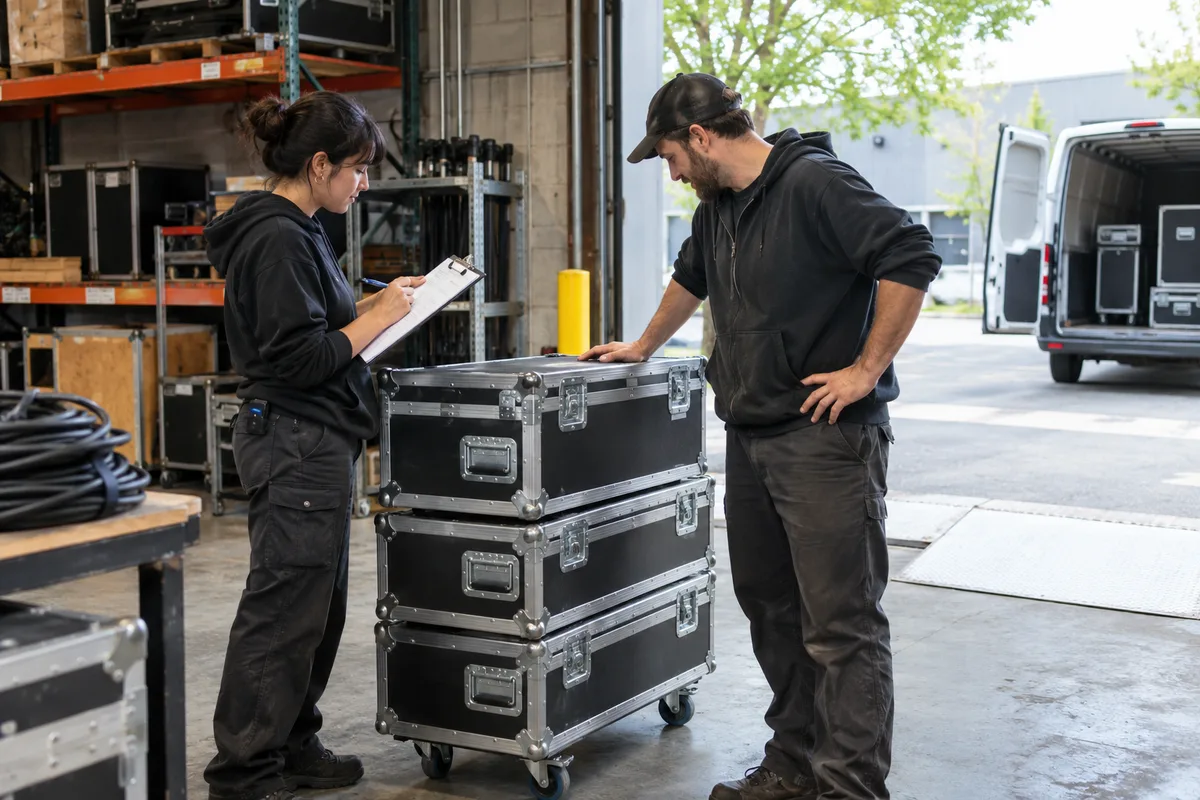
Create a receiving list from the expected supplier shipment. At minimum include item, model, quantity, identifier if applicable, expected accessories, and the return deadline. Add a field for actual arrivals and differences. Check boxes and components while the delivery is still associated with its paperwork. For a kit, compare the contents with the expected kit list. A case with the right label may be missing a power supply or a particular accessory. Record differences at arrival and raise them with the supplier so you still have time to resolve them.
Mark the borrowed equipment or its container in a way that is safe for the asset and acceptable to the supplier. A reusable tag attached to the handle may be enough for a rented case. Use a source and booking reference, so two incoming orders of similar equipment can be separated. Keep identifiers or photos where authorized and useful. If a supplier tracks items by serial number, record the same numbers on receipt and return. Do not treat the supplier’s identifiers as labels you can freely change. Your own identifying tag can coexist with theirs.
Store the pieces in a location where they are easy to pick for the intended order. Do a functional or compatibility check appropriate to the equipment before combining it with your own kit. In the microphone example, confirm the receiver, power supply, handheld unit, and associated accessories against the order. Have a qualified technician handle the relevant setup checks. Put anything requiring inspection in a distinct place, tell the person who owns the booking, and state explicitly whether the rest of the order can proceed.
Keep borrowed stock attached to the intended job
Make sure the equipment appears on the job’s packing and return lists. Identify the supplier-owned pieces on internal records so the crew can tell which equipment goes back to the rental partner. If the customer sees only a combined twelve-unit equipment line, the warehouse still needs the internal split between owned and borrowed stock. Show each borrowed kit with enough detail to match it to incoming paperwork without making every crew member search through supplier emails.
Avoid permanently increasing the quantity you own to account for temporary borrowed inventory. That can cause another booking to see borrowed units as available after they have gone back. If your system supports a separate tracked commitment, tie the outside equipment to the job and the supplier window. Otherwise maintain a linked supplier list with explicit quantities and statuses, and keep the ordinary available-stock number accurate. The goal is for a future booking to see the right capacity without relying on someone remembering the Monday return.
Give dispatch the supplier collection and return deadlines in addition to customer stops. A plan that assumes a technician will drop off a case after strike may fail if the supplier receiving counter is closed when the event ends. Arrange a route and a known place for overnight storage when needed. Put a named person on each supplier stop. When a task transfers to another person, include the paperwork and the status of outstanding items along with the equipment.
Have specific actions for a late, partial, or incorrect delivery
Choose a last acceptable arrival time based on the receiving checks and prep the job needs. If the supplier misses an earlier checkpoint, the coordinator can call for a tracking update and see whether the remaining time is workable. If the last acceptable arrival is at 11 a.m., putting an alert at noon defeats the point. Agree on the decisions to make before the deadline. The options may include a compatible replacement, a different split across your own jobs, a backup supplier, or a revised agreement with the customer.
On a partial delivery, record what arrived and what remains outstanding. Suppose four of six kits arrive Thursday morning. The driver expects the remaining two that afternoon. Have the supplier confirm the new commitment and mark the four received. Keep the missing two visible until someone checks them in. If another vendor could provide two before the pack deadline, ask what the fallback would cost and when you must decide. Tell the lead when one option becomes binding so you do not end up with two overlapping purchase commitments.
For a substitute, check the reason the initial model was requested. The customer may care about compatibility with their existing equipment, dimensions, or the handling they specified for a production. The supplier may have met the commercial quantity and still delivered something the job cannot use. Ask the project lead for a compatibility review and record client approval when required. Keep the revised list available at pickup so everyone counts against the equipment actually accepted.
Decide what to do when the customer asks to extend
An extension that is easy to approve for owned stock can be impossible for a borrowed item. First read the supplier’s return date and the logistics already arranged. Ask the supplier whether they can extend the specific units, when they need a decision, and what changes in price or transport. Your customer may only want to keep two of the six kits. Confirm whether the supplier can take a partial return, whether a second trip is needed, and which identifiers stay on site. Avoid implying an extension is confirmed while those answers are pending.
When the supplier has another booking, check whether you can supply a replacement for the extra time. Compare travel and changeover against the value of the extension, and explain which equipment must be exchanged and when. If the swap cannot happen without interrupting the customer’s event or compromising the agreed specification, tell them what period you can support. Record the approved change on both the supplier order and the customer booking. Tell the warehouse and dispatch which units are due back on the original route so a verbal extension does not become a warehouse-wide assumption.
Verify the return against the supplier’s list
The customer’s return and the supplier’s return are separate events. When the job comes back, count all equipment and set borrowed pieces aside even when the warehouse is busy. Match them to the original receipt, including serial numbers, cases, and accessories where recorded. If the items arrive in two vehicles, give the borrowed kit an identifiable return location while the remaining pieces are on their way. Keep the owner and deadline visible at that same point.
For a discrepancy, contact the supplier while the facts are fresh. Record what is absent or damaged, when the team noticed it, and what they know about the handoff. Discuss how the rest of the loan should be returned and when the supplier will assess the difference. Take photos or record identifiers when useful and allowed. Avoid resolving a dispute from a vague note at the end of the week. The outgoing and incoming counts help you tell whether an accessory was missing on receipt or went missing on the job.
Request a receipt or written acknowledgement for the pieces returned. Record whether the supplier has accepted all units, is still assessing condition, or expects an outstanding item. Close the supplier task after checking that acknowledgement against the purchase record. Then compare the final invoice with expected charges and reconcile deposits or refunds. Review whether a delay adds cost that needs to be addressed under your agreement with the customer or absorbed by your company. The bill may arrive later, so leave the financial follow-up open until the supplier account is settled.

Use the job to improve the next sourcing decision
Review the order after the invoice and credit are settled. Compare the supplier’s promised and actual delivery times, the completeness of the kits, and how quickly exceptions were handled. Record any mismatch in the equipment description that caused extra work. If the shipment was correct but prep still ran late, look at your receiving window before blaming freight. A small file of verified supplier performance helps future coordinators know who to call when the arrival window is tight.
Look for repeated shortages across several comparable jobs. Six borrowed systems for one exceptional booking might be a sensible variable cost. Needing six more every other weekend may justify comparing ownership, storage, maintenance, and financing with the cost and reliability of borrowing. Include the periods where extra equipment would sit idle and the alternatives you could offer to customers. The decision should use actual jobs and supplier invoices. A single stressful weekend can encourage a purchase that rarely earns its space.
Build a one-page operating record that the next coordinator can use. Put the customer requirement, gap, approved supplier, expected cost, collection, receiving check, event release, and supplier return in sequence. Add a space for dates and exceptions, with one person responsible at each step. If several employees work on the same order, make sure the person overseeing the final invoice can find the initial confirmation and signed return without reconstructing the booking from their inbox.
Walk through those steps before your next large job. Ask one employee what they would send to the supplier, a second where they would stage a partial delivery, and a third what they need to close the return. Their answers tell you whether the outside commitment is visible from request to release. When the process works, borrowed stock covers a business opportunity without distorting your own inventory or leaving the team uncertain about who owes what after the event is over.