Make lawn game rentals simple to book and count
Build lawn game listings and kit checklists that make it easy to book, prepare, hand off and count back each set.
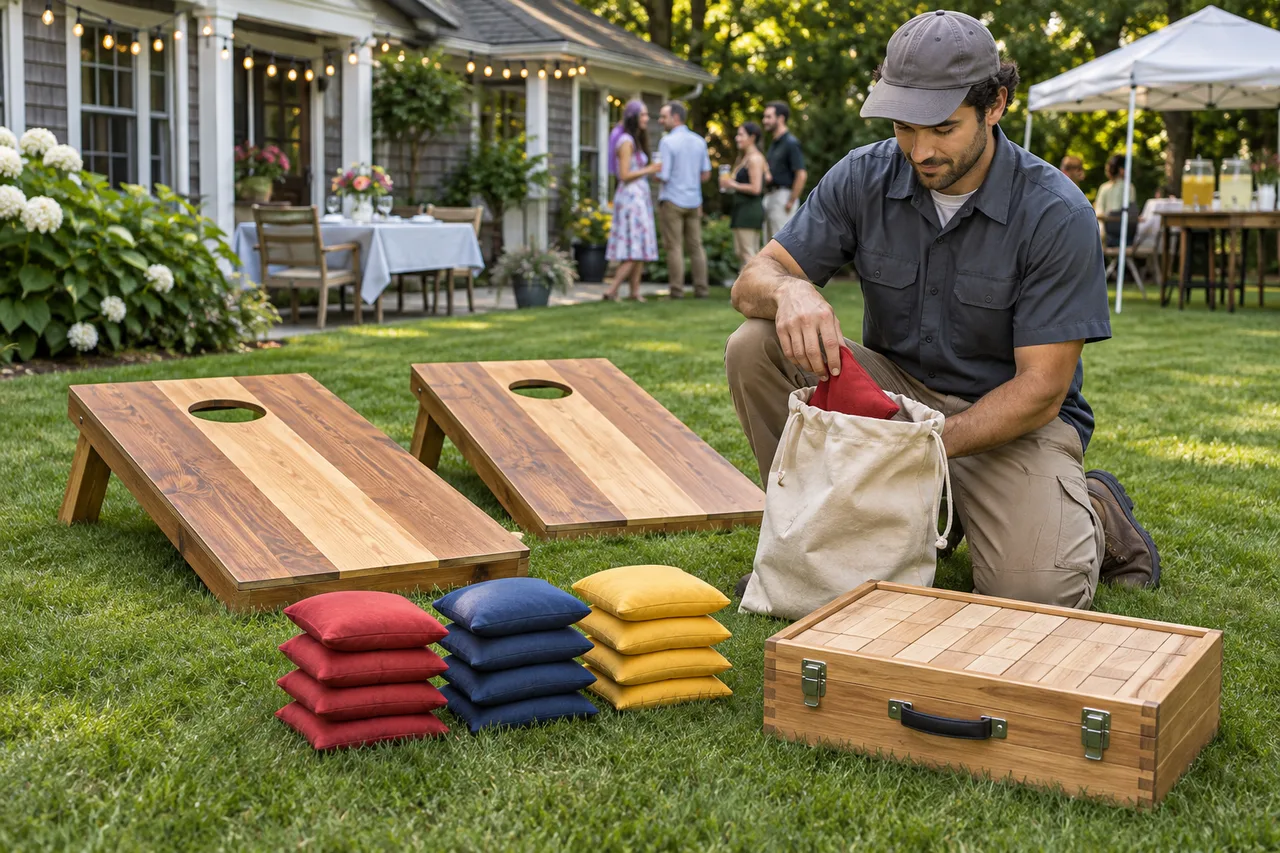
A customer books three games for a backyard party. The crew drops off two boards, a wooden frame and a crate of loose pieces. The customer calls about how the frame is set up, and the return worker later has to guess whether four bean bags or eight were supposed to come back. The booking was easy to accept. The kit and handoff were hard to use.
Lawn game rentals work best when people can choose an appropriate set, see what comes with it and return it in the same groups it went out. Start by defining a complete game, then make those parts and the planned handoff visible from the product page through receiving.
Choose games around the events you can serve
Look at recent parties, school gatherings, weddings and workplace events the business already supports. Notice where games could fit alongside food, seating and other activity. A small backyard may have room for one compact setup. A larger lawn could support several areas if the organizer has space to separate them. Ask what the customer needs from the games, such as a short activity between scheduled events or something people can use throughout the afternoon.
Choose a first set that staff can explain and move. Consider each game’s size, carrying method, intended setting and parts. A small set may fit the same pickup route as folding chairs, while a large frame might need its own packing space. Look at how the item comes apart and what it needs at return. A game with many pieces can still make sense if there is a reliable way to count them.
Use the manufacturer’s description and the actual equipment to write setup information. Tell customers which space, ground and conditions the product needs, without making claims you cannot verify. Explain when placement or a staffed handoff is required under your offer. For a venue question you cannot answer online, ask for enough information to see whether that game will work.
Limit the first catalog to what the business can prepare consistently. You might choose a pair of familiar tossing games and one larger group game, then see which requests recur. Record the pieces, packing dimensions and repair or replacement route for each. Before adding another type, check whether it gives customers a meaningful choice and whether staff can account for it at handoff.
Turn each game into a complete kit record
Define what a customer should receive. A bean bag toss set might use two boards and two color groups of bags. A wooden stacking game needs a specific number of blocks, a playing base if normally supplied and a carrying container. Count your own equipment and record the number of each piece. Include any instructions, accessories or covers your offer supplies.
Identify pieces by type or group. Two colors of bags can be counted separately to verify that both players have a set. Blocks might be grouped in compartments inside the container. If one piece belongs to a particular model, make that visible. A worker checking the return should know which parts can be replaced from common stock and which need the matching item.
Give the kit a consistent name in the catalog, storage location and booking. A price might show “backyard game bundle” to the customer. The warehouse needs to know which named games, parts and containers are included. If the customer can pick three from a list, capture those exact choices. Keep the package count distinct from the inventory it reserves.
Think through reusable parts and extras. If each toss game reserves one complete bag set, identify which parts are shared with another kit. Reserve spares in a clearly defined way. An extra item can make the customer’s day easier, provided it can be counted back or treated as an agreed consumable. A missing spare should not turn into an unexpected disagreement about what the customer received.
Write the product page for the person deciding which games fit
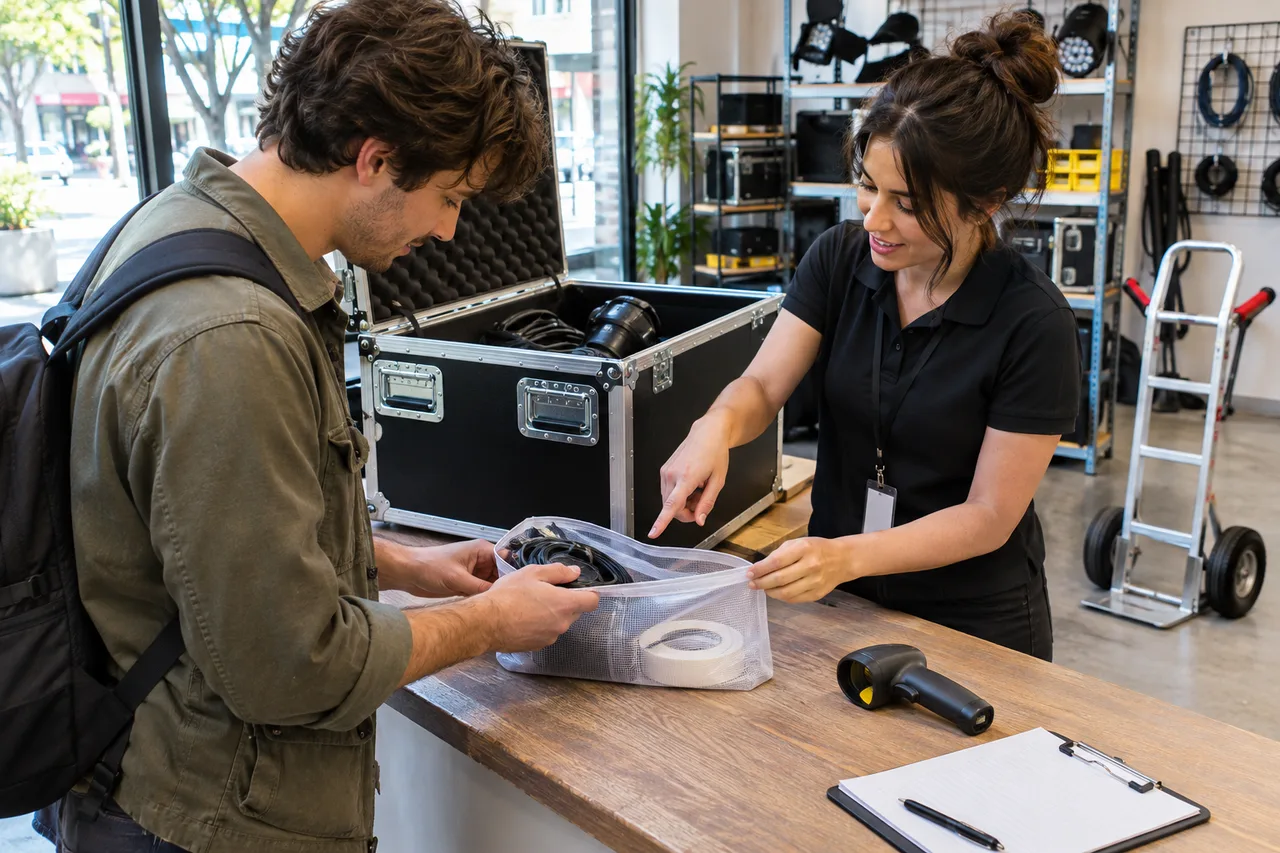
Show a useful picture of the actual game set up and enough detail to judge the space. Include equipment dimensions and any additional room described in your approved setup guidance. Show packed dimensions where they affect a customer pickup. A familiar game can still have a completely different size or carrying case from the one the customer owns.
Describe what the rate includes. Put the number of game sets, the relevant parts and the rental period near the price. If delivery or placement is separate, give a clear way to see those choices. A customer renting several games should be able to compare individual and grouped options from the same event dates.
Make the service expectations short and practical. Explain whether the renter collects, sets up and repacks the item or the crew provides some of that work. If the shop needs someone available at delivery, show which role can receive the equipment. Describe how to ask the business about uneven ground, venue rules or a change to the site before confirming a booking.
Give customers a choice that starts from the occasion. A planner may need three distinct games or two of the same game for different groups. Let them see the available quantity and understand what will be delivered. If a bundle depends on a shared item, check the combined selection before promising the order. An available individual game does not make a whole group available.
Make pickup and delivery feel like one clear handoff
Set the appointment around the order size and how the gear is packed. A small set can leave in a tote after a quick count. A larger set might need a cart, vehicle space and a walkthrough of the storage case. Show the customer what to expect at pickup. If the order needs a different vehicle or help at the site, discuss that with them before the day of the event.
Record who actually receives the pieces. For pickup, the booking can identify the collector and the period the kit will be out. For delivery, note the receiving point, contact, collection time and whether the crew sets up the games. Give the person accepting the kit the same component list the warehouse used. They can confirm it without counting from memory after opening boxes at the venue.
Keep setup guidance short and available at the point of use. Use the game’s approved instructions and provide the customer with the right copy. If the business’s service includes installation or positioning, record which game was placed and where the customer should leave it for collection. Ask staff to flag a site change before providing equipment that needs a different setup.
Put return information with the kit. Identify what needs repacking, how small pieces should be grouped and when the equipment comes back. The customer may delegate return to someone who never saw the original handoff. A clear list and named containers can give that person enough information to find the pieces and return them together.
Count the return from the same list
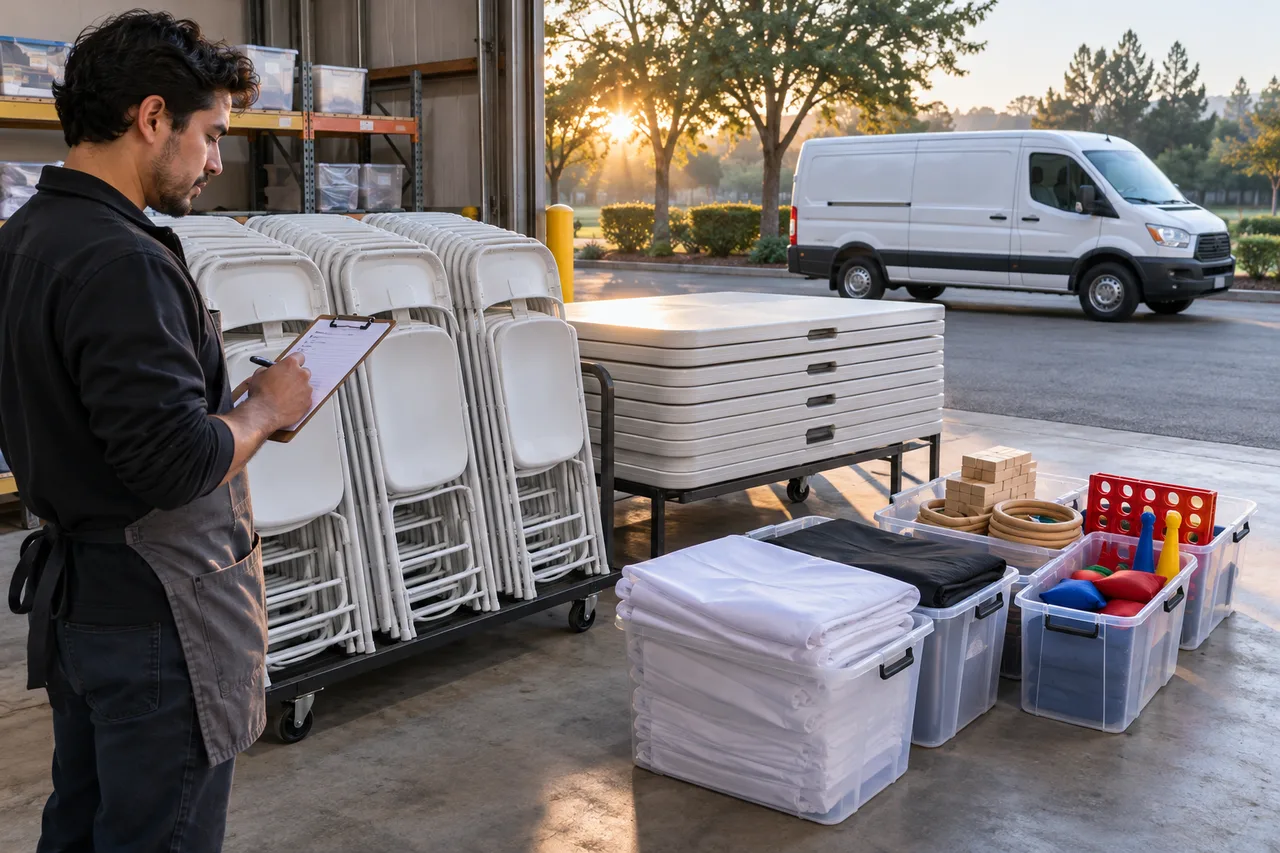
Use the same kit breakdown at return that you used at pickup. Count the containers, then open them where the operation normally checks condition and parts. If one bag of eight pieces is present, check the actual count before clearing the set. Document missing units by type, and keep the observed condition distinct from any decision about repair or customer follow-up.
Give the worker a place to record partial returns. One of three games might be coming back the following day. If a kit has a missing component, mark the main pieces physically received and the complete set unavailable until the required part is checked. Keep the customer and office records clear about what is still due.
Assign a place for the gear while it waits. A game may be wet or need a surface check, even with all pieces counted. Put it where the team can identify and prepare it without mixing it with another kit. Return it to the ready location only after the work is complete and update the availability record accordingly.
Review recurring issues. If two color groups are frequently mixed, give them separate pouches or a simple divider. If customers regularly return a part in a separate bag, show its intended place in the kit during pickup. Measure whether the change improves the next several handoffs. A useful checklist removes repeated questions from the process.
Work through a backyard party with different set sizes
Imagine the customer selects two bean bag toss games and a large stacking set. Each toss game includes two boards and eight bags divided by color. The stacking set uses a separate case and has its own block count. The customer collects on Friday and returns Sunday afternoon. The booking shows three game sets, with each set’s parts listed for the team that stages it.
The pickup worker checks the two bag pouches, the boards and the stacking case. They show the customer which pieces go together and where the instructions can be found. The customer confirms the return slot. The staging record shows that both toss kits and the stacking game left together. If the customer asks to switch to delivery, the office can check the route and revise the offer before promising a time.
One toss kit comes back short two bags. The worker records that the boards and the six remaining bags arrived, and that the set needs two matching pieces before release. They check the spare supply, note how the missing pieces are handled under the booking’s terms and release the kit only when the required set is complete. The other game returns in full and can be cleared on schedule.
At the next review, the team sees that both shortages occurred on kits with loose bags packed in a crate. It moves to color-labeled pouches with the count printed on each. The next customer can identify the parts easily, and the return employee has a clear count to check. One small change improves both the customer’s packing and the business’s stock record.
Decide when several games belong in one package
Choose a bundle based on the customer's event and the team's actual capability. A set of three compact games might fit a single vehicle and a short setup window. A larger game may change which person can collect the order or how many crew members are needed at delivery. Record the package choices, the pieces each choice consumes and the times that work for the customer and warehouse.
Check which parts are shared between individually listed games and packages. If the shop has three bean bag toss sets, a package with two of them uses two sets from the same pool. A second customer asking for two during the overlap cannot receive both unless there is another complete set available. Test a booking that draws from both the individual listing and package so the checkout and warehouse counts match.
Price the bundle from the work it includes. You may be able to stage and deliver several games together, with one receiving stop. That can make it simpler to sell a group. Check the added space, setup and return inspection required for each piece. Give the customer a clear total and the service it covers. The packing record should show each selected game even if the customer pays one group price.
Give staff a way to revise a package. If the customer wants to switch the large stacking game for a second tossing game, verify the new quantity and update the terms if necessary. The preparation list can keep the rest of the order and mark the changed game. Check the parts and return notes after the edit. A group price should still give the warehouse an exact list.
Set up a small test with customers who can use the games
Pick a few orders where the customer plans to use the game in an ordinary setting. Begin with a single pickup and a small delivered package. Look at how the customer chooses the games, what questions they ask and whether the full order fits the time you offered. Keep space and handling definitions consistent so you can compare the next order.
Ask the person who picks the order to use only the booking and kit record. Notice how long it takes to find the small pieces and verify the count. At pickup, ask the employee what the renter needs to see or take with them. If they need a separate paper list or instructions, include them with the game or in the confirmation. Keep those aids where the actual renter will find them.
Try a return from someone who did not do the pickup. Give them the same booking details and ask the receiving worker to follow the usual count. See whether they can identify the grouped pieces and distinguish any extra or optional parts. If a container comes back from the wrong kit, record what happened and give the person checking it a visible way to recognize the difference next time.
Check the time needed between rentals. A game might arrive back while another customer has a pickup scheduled for the same afternoon. If it still needs drying, counting or an inspection, account for that preparation in the fleet schedule. A package can be ready only once all of its parts have been cleared. Review availability in the same view the next customer will see before increasing the number of slots.
Use the first few jobs to decide what to improve. A business might need a smaller carrying case, a more useful product photograph, or separate pouches for pieces that are hard to distinguish. Add one improvement and run the next booking with the same checks. A shorter handoff or a more reliable returned count can be a better reason to expand than a larger number of views on the product page.
Review the first orders before expanding the offer
Record which games people asked about, which they rented and the time each one took to prepare, deliver and inspect. Compare prices with the work required. A popular small game might be useful as part of a furniture pickup. A larger frame may make more sense for delivered events if it takes longer to handle or needs more space. Use actual orders to decide.
Ask what customers had to clarify. If the same question appears on several orders, update the relevant product information or handoff. Add a useful photograph of what is included if some parts are unfamiliar. Review what the customer can understand before booking and what they will need when the case arrives.
Keep the kit record current when you replace something. A different board, carrying case or part can affect the intended quantities or setup. Update the booking view and the reference used at receiving. Verify the next order with a worker who did not make the change. The gear should be just as easy to account for after it has had a few seasons of use.
Expand one product or package at a time. Identify the event it serves, the pieces needed to provide it, and the steps the customer and crew will follow. A reliable lawn game rental gives customers something they can use right away and gives the business a repeatable way to prepare and count it.