Make an equipment buying list before the trade show
Build an equipment buying list from bookings, warehouse measurements and delivered costs before going to a trade show.
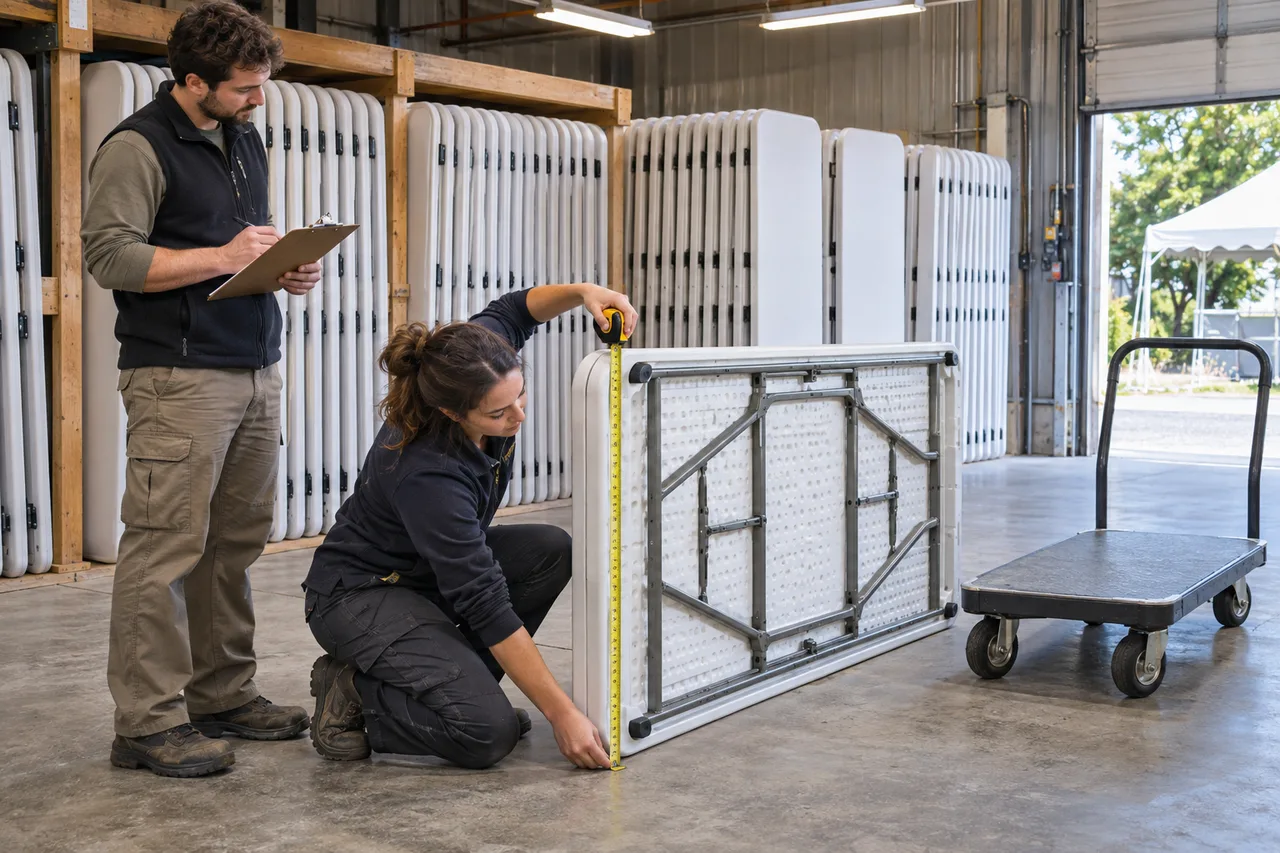
A crew lead asks for more folding tables after three weekends with shortages. The owner plans to look at tables on the trade show floor. The shop has limited space on its carts, two of its busiest trucks have narrow rear doors, and most of the shortages happened when tables were still being cleaned for the next job. A buying list should bring those facts to the show. They determine how many units are useful, which products fit the operation and whether a purchase will address the shortage.
Prepare the list from completed jobs, requests you had to decline and a physical check of how equipment moves through your shop. Then use the show to answer questions you can't resolve from a product photo. A vendor can show you how a table unfolds. The rental business still has to decide whether the table, cart, storage and repair arrangement will work over repeated events. Put the important questions in writing before someone gives you a quote with a short expiration.
Identify which part of the job is missing capacity
Start with a category your business already handles or an offer it can describe clearly. Read a few orders from the weeks that prompted the buying request. For a chair shortage, confirm the number requested, booked, staged and returned. Ask which units were unavailable because they were damaged, in cleaning or on a truck. If an order needed eighty chairs before a neighboring event came back with a hundred, the calendar can reveal a genuine overlap. If eighty chairs were already in the building but nobody could process them on time, your list may need supplies, equipment or labor that improves turnaround.
Look for repeated demand rather than assuming that a large one-time request predicts the next season. For example, a community festival might ask you for an additional sixty chairs once a year. Several halls might separately request the same table shape every month. The festival could make a short-term source practical while the recurring orders justify testing a new table model. Note whether callers were flexible about style, color or quantity. A list of rejected requests is much more useful if it explains what an available substitute could have covered.
Translate the evidence into a sentence the buyer and the crew can evaluate together. One example is “We need to fulfill three more weekday pickups of six tables without taking Friday venue orders off the schedule.” That gives you a target quantity and identifies which other work must fit around it. A request to “buy more tables” leaves open whether the business needs larger orders, better turnaround or a separate pool of stock. Confirm the relevant dates and rough quantities before selecting vendors to visit.
Bring a few measurements from the warehouse
Measure where equipment will be received, stored, staged and loaded. For a folding table, note the depth and height of your carts, rack clearances, aisle turns and door openings along a normal route. Include handles, feet, casters and any part that protrudes when the equipment is folded or stacked. If the business uses multiple vehicle types, identify the one the category actually travels in. A table that fits one truck could still create a problem on the day the smaller truck has to take the route.
Walk the route with the person who moves the equipment. Ask where the team needs to stop to turn a cart, open a door or unstack pieces. Measure the cart with the intended load if you can do so safely under existing shop procedures. A product spec may tell you the width of one unit. A crowded loading area can have a different usable width once two crews are staging at the same time. Record that usable space so the buyer can ask a more specific question at the booth.
Write down what you own now that a new product would need to fit. Bring a photo or model identifier of the current cart, rack, connector or replacement part when appropriate. Keep the list focused on practical compatibility. For example, designers may like a new table finish, while the warehouse has to verify the securing method it uses with that type of cart. If a vendor confirms a pairing, ask for the corresponding model number and documentation so the receiving team can check the actual shipment.
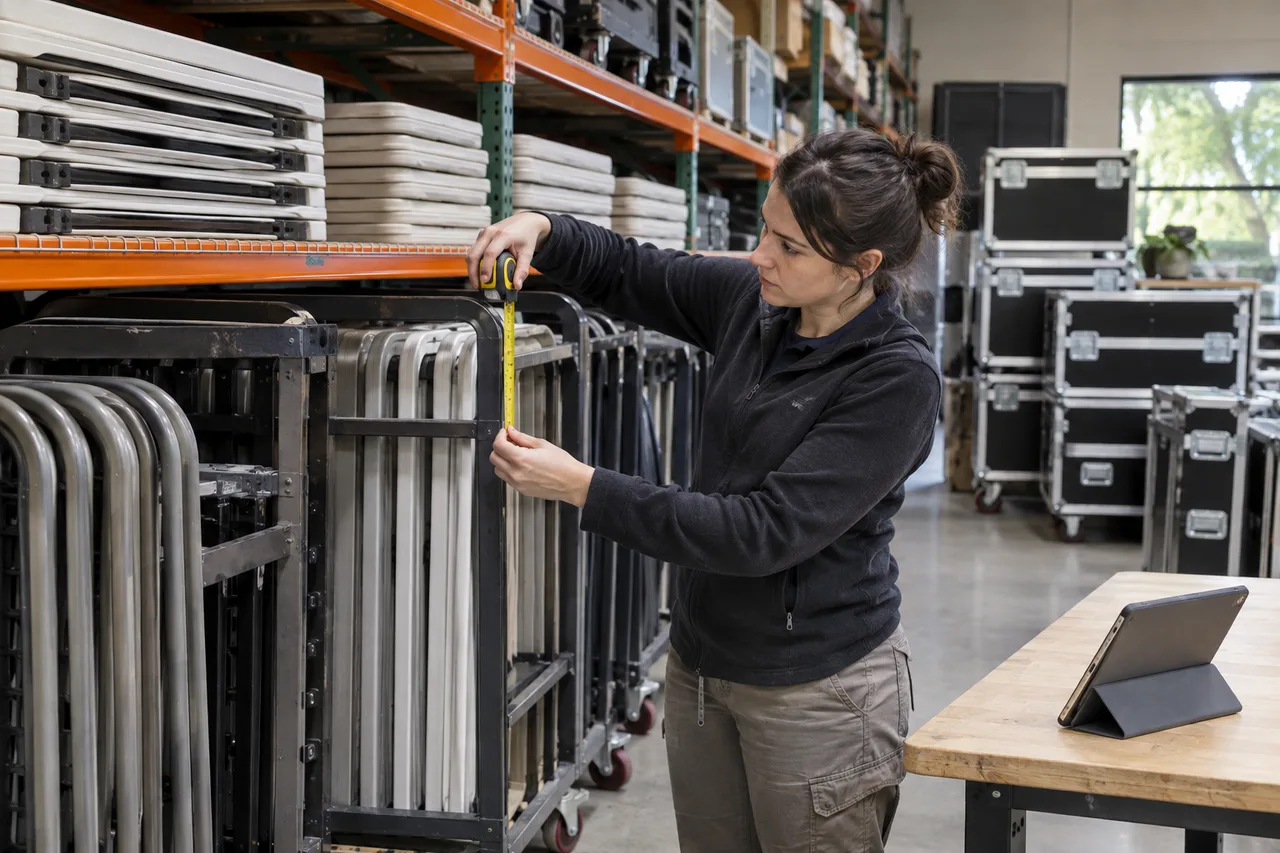
Set the initial quantities and the space you can give them
Make a first-order quantity for each category and a separate estimate of the maximum you could store and handle. Work from planned rentals rather than a supplier's carton size. If chairs ship in groups of twenty, two packs may provide enough for the events you are targeting. A third pack may need another cart and another section of shelving. Price the extras and count the space before deciding whether the larger order is worth it.
Use a simple schedule to test the quantity. Put two common bookings on consecutive days, with booking quantities, returns and cleaning blocks. Then add a typical busy weekend where some stock will be unavailable because of damage or inspection. Ask the team what changes if one order needs six more pieces than expected. That can reveal whether the extra inventory gives you flexibility or introduces a lot of stock that will rarely leave the shop.
Also record what you could start with if the preferred item has a longer lead time than expected. A smaller initial order is useful when it lets staff try storage and handling on actual jobs before buying the full quantity. Determine whether the first batch must look identical to existing stock. For example, the shop may be able to sell a lounge grouping as a separate set but need consistent chairs for larger wedding orders. Ask about color or finish consistency between lots and whether you can obtain more of the model before the busy season.
Divide the list by the evidence still needed
Make each row a decision the buyer can complete after the show. Put the category, intended rental use, first-order quantity, measurements and questions in the row. If you know the fit and the demand, the next step might be a written quote. If the crew hasn't handled the item, ask for a suitable sample or a demonstration that addresses the unknown. If the order depends on a pending venue booking, save the vendor information and wait until the shop has a dependable date or volume.
For a table category, three rows could read like this:
- Existing six-foot banquet tables. Compare the same model and a compatible alternative. Ask for total delivered cost for twelve units and replacement feet.
- Smaller cocktail tables. Check whether six units can be stored and moved on the available cart. Ask for packed dimensions, replacement top options and a sample to confirm fit.
- New statement tables. Collect samples of the finish and dimensions. Revisit the category after estimating delivery, protection and expected bookings.
Use the same level of detail for accessories the purchase depends on. Additional table tops may need covers or dividers. Chairs may require a particular cart or an appropriate securing method. If the product can be used indoors or outdoors under different conditions, ask for the manufacturer's instructions and identify the uses the shop plans to offer. Someone reading the record a week later should be able to tell what to verify before the seller prepares an order.
Ask the booth for the information a rental shop needs
Compare the items in their rental configuration. Look at where crews grip a folded piece, which parts they replace when something wears out and how the vendor expects units to be stored or transported. If you have a measurement concern, ask a representative to show that dimension on the item. Ask for the same dimension on the written spec sheet. Sample builds or photos can help you understand an item, while the exact model on the quote tells the receiver what to expect.
Ask the vendor to identify what is included with the quoted units. Depending on the category, the missing item might be a cart, cover, power cable, connector or other part needed for normal use. Write down model variants, parts availability and what the company currently expects for delivery. Ask how orders with different lead times are handled and which items can ship together. If a delivery date affects an event you've already agreed to, build in time for receiving, assembly, inspection and a practice run.
Give the vendor a realistic example. “We deliver sixty chairs with two crew members, and we need to check what happens when one foot wears down” is more useful than asking which chair is best. Request the parts list and documented repair procedure for the specific model. Review the approach with the people who perform maintenance before assuming they can carry out the work in-house. If a required part is difficult to source, note whether the business can keep a small supply on hand and who would be responsible for ordering it.
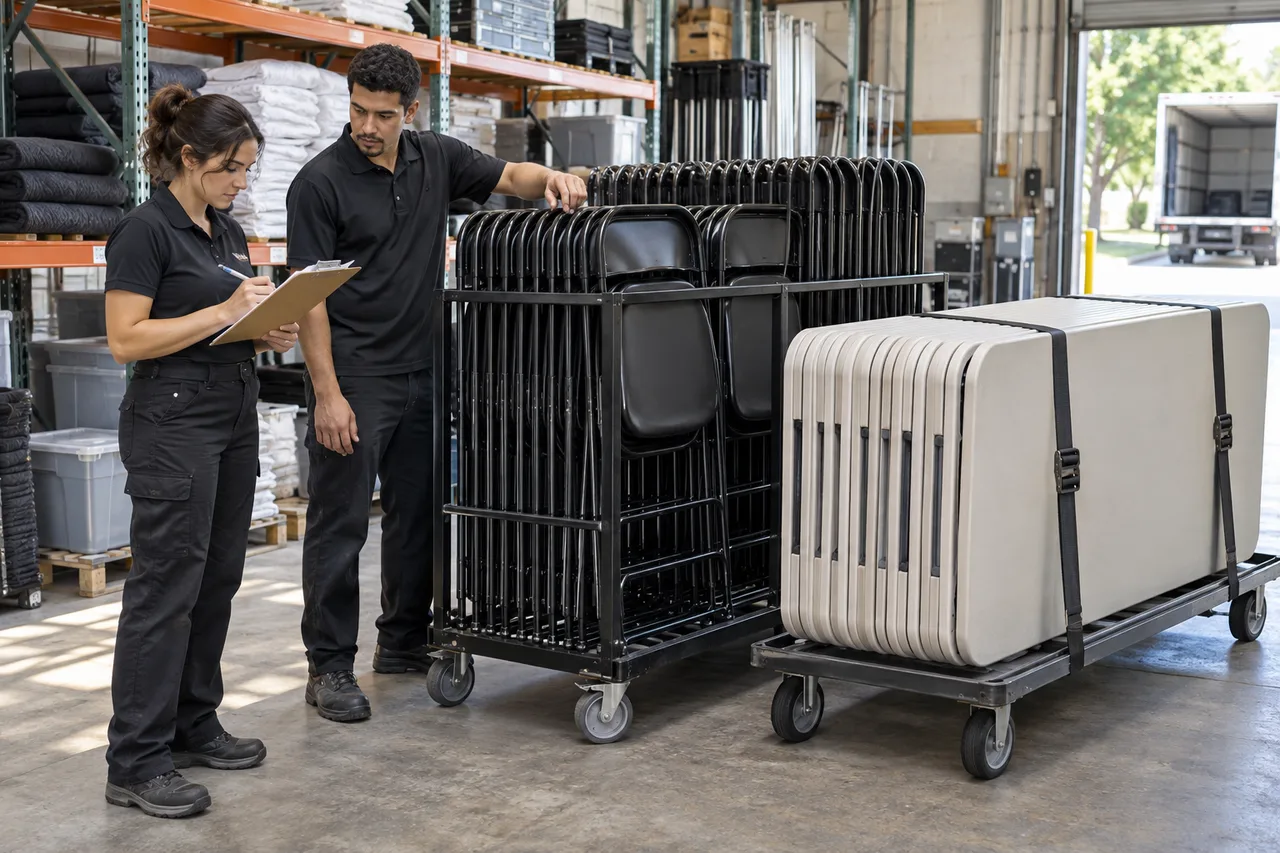
Compare the quote with the full cost to put equipment into service
Record the unit price and the quote's minimum order, then add freight and any accessories the shop needs for the new units. Keep a column for taxes or other costs the vendor quotes separately, if applicable. Include the labor and supplies required for receiving, assembly, labeling and initial inspection in your internal estimate. If existing carts can handle the new units, record how you verified that so you can compare with another proposal that requires new carts.
Suppose a vendor quotes twelve tables at $165 each, with $290 freight. Your landed equipment subtotal is $2,270 before any other charges. A second vendor quotes twelve at $150 with $220 freight, but the new folded dimensions require a $340 cart. That equipment subtotal is $2,360 before other charges. Both quotes should still be checked for delivery terms, parts and the time it takes staff to unpack and prepare them. In this example the cheaper unit price doesn't describe the cost of the first usable order.
Add an operations note beside each number. If one vendor delivers everything together, the receiver can prepare one staging area. If another sends carts later, the tables may need temporary storage and a second inspection plan. Record when the equipment could realistically become available to rent. Give the person creating listings a usable date based on the shop's acceptance process. A delivery estimate should give you time to plan, and an inspected unit gives the crew stock it can put on an order.
Use the show to identify what still needs a test
Arrange a test that reflects the reason for the purchase. If the decision hinges on folded thickness, check how a few units sit on the intended cart and where they need clearance. If reset time is the concern, have a crew member walk through a normal return, inspection and storage routine in an appropriate space. Ask what the employee has to lift, clean or remove each time. Keep notes about setup size, storage and any issues the team could verify without relying on guesswork.
If you can't do the test at the show, ask the vendor how to order a sample, visit a suitable showroom or schedule a demonstration. Confirm any terms of a sample in writing before treating it as available for purchase or return. Hand the crew the questions you couldn't answer so they know what they are assessing. “Fits our cart with the stack height and gate clearance we measured” gives them a criterion. “Looks better than the old one” gives them an impression that may not help under a normal workload.
Separate decisions by whether you can verify them now, what you need to confirm with the team, and what you can only learn after a trial. There may be enough information to buy replacement equipment that matches the existing model and still be too little to buy a new product line. Choose a date to compare the proposals after the show. If a discount expires first, ask whether the vendor can hold a written quote until you can finish the checks that matter to your operation.
Confirm how the order can change after the show
Before you accept a quote, ask what happens if it must ship in two parts or the vendor substitutes a different finish or model. Note what the vendor would communicate, who at the shop can authorize a change and how it affects the landed cost or promised date. Request a copy of the applicable order and freight terms so someone taking delivery has access to the same information the buyer reviewed. Record which details you still need to verify and the date of the next conversation. A buyer returning with six quotes should know which prices have a decision deadline and which vendors are waiting for a dimension from the warehouse.
For example, suppose the vendor can ship eight of twelve tables by the end of April but the other four won't be ready until June. That might work for small weekday pickups and fail to serve an existing delivery of twelve matching tables. Check whether the eight can be used on their own as planned and what the split delivery costs. Ask how the vendor identifies the finish on each shipment. If it matters that all twelve match, agree on how you will verify the complete order before staff make it available for that job. Keep this decision with the sales and warehouse records so everyone knows when they can quote the count the shop expects to own.
Turn the purchase into a receiving and follow-up plan
When the shop chooses an order, save the quote, model identifiers, expected quantities and promised accessories. Assign a person to receive and inspect the shipment. Decide where it will go and how the shop will handle missing or damaged units. Leave time to count the products, match them to the quote and verify how they work with the carts and racks you planned to use. Ask the warehouse to record the date it is ready to release the items to the booking calendar.
Check one early job from reservation to return. If the stock was purchased for weekday pickups, look at the first group of weekday bookings. Track whether the new units filled the expected capacity gap and whether loading, returns, cleaning and storage went as planned. If a buyer first noticed recurring orders of a particular quantity, check whether those orders arrived. The sales team may have found worthwhile new demand, or the additional items might still be waiting for the rental season. Decide how long you need to observe before placing a larger order.
Keep the findings for the next trade show. A useful record states the original shortage, what the shop ordered and what happened when the equipment began to move. Add practical details such as the compatible cart and which replacement pieces staff used. You can then take that experience into the next vendor meeting. A buying list earns its value after the show, when the crew can put the equipment into service and see whether it helped fulfill the jobs it was bought for.