Keep a shared venue inventory accountable
Allocate equipment across venue rooms, track actual handoffs and resolve overlapping claims before setup.
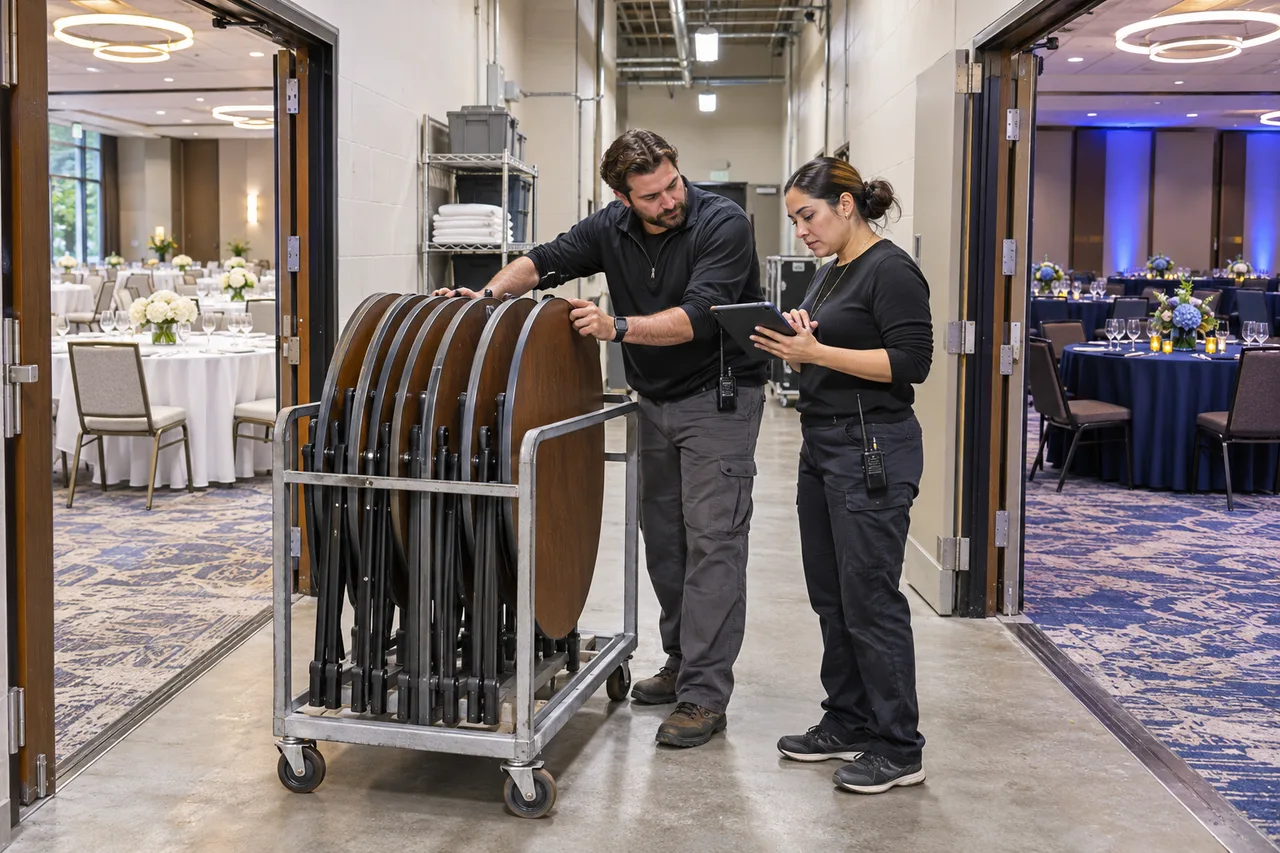
A venue hosts a wedding in its main room and a company lunch in a smaller room on the same Saturday. Both teams request cocktail tables from the same storage room. Each event plan looks well stocked on its own. During setup, the second team discovers that four of the tables it expected were already sent to the first room, and several more are sitting on a cart from Friday’s event.
A shared stock system gives a venue a clear way to promise equipment across rooms, staff and events. It has to show who has reserved each quantity, where the items are physically and when they can be used again. The most useful version begins with a few real conflicts and follows equipment through a normal weekend.
Decide which stock is truly shared
List the items several teams draw from. Common groups might include cocktail tables, stage risers, portable bars, easels and room dividers. Add the departments or event spaces that use each group. Identify whether the equipment stays in one stockroom, moves between buildings, or belongs to a department that sometimes lends it to another. A shared resource can be managed centrally while still having an accountable owner.
Distinguish common stock from items that are assigned to a particular room. If a room’s standard furniture should always remain in place, give it its own stock group or show its restricted use. If it can be moved with approval, include the circumstances in which it is available. A planner should be able to see which chairs they can promise without assuming the team will empty another room.
Check which items can substitute for each other. Ten matching tables can often share a quantity record. Ten tables split across two sizes may need separate records. A portable bar with a specific pass-through opening or an arch with different bases may need its own type. Use the names staff recognize and record the dimensions or components that affect room setup.
Assign someone to maintain the shared list. Decide who can add equipment, who can retire a damaged unit, and who can approve moving gear between locations. The person managing the count should be able to reconcile it with the people who move the items. If several teams can adjust records, agree on the same reasons and descriptions so a correction at one location makes sense to everyone.
Build the booking window around custody
Give each event an equipment window that follows the work. A lunch may start at noon, but the crew stages tables at nine and cannot count them back until two. Those tables are unavailable during the entire window. Record the earliest pickup or start of staging and the point when the item can be released for another room.
Include turnaround when it affects the next booking. Some items can go straight from one room to another after a count. Linens may need washing, easels may need repair checks, and rolling bars may need cleaning and a restock. Ask staff how long they need and what evidence shows the work is finished. Use realistic windows and review exceptions as staff gain better data.
Think about travel and staff at the same time. A venue with two buildings may have enough equipment on paper and too little time to move it between events. An item’s location and the people available to move it can matter as much as the time printed on the run sheet. Include the travel and load time where it affects what can be promised.
State what happens when an event overruns. Keep the original booking and show the revised return estimate. Note which later reservations may be affected. A coordinator can then check whether there is spare stock, a substitute or an adjusted setup plan before the second crew starts waiting. A reliable warning gives teams more options than a conflict discovered during installation.
Publish one view of reservations and actual stock
Give the people planning events one place to check shared availability. By date and time, it should show quantities that are available, reserved, physically out, in turnaround or held for condition review. Departments can keep private event notes, with the equipment commitment visible to the people who need it. If each room maintains its own stock spreadsheet, agreeing on the current count after the fact becomes a daily task.
Keep temporary requests visible where they affect commitments. A planner working from a tentative headcount may need ten tables provisionally and confirm eight later. If you allow short holds, define when they end and how staff are notified. The shared list should show who has a priority claim and what happens when the deadline passes. Use status names the planners and stockroom staff interpret the same way.
Compare requested quantity with allocated quantity. An event plan may show an ideal count while another room has already reserved some stock. The inventory view should show exactly what the venue has committed and who needs to approve any remaining change. Staff should see the same result from the planner’s view and the location receiving the pick list.
Record actual location separately from ownership. A stage riser can belong to the main hall and be temporarily loaned to another building. A cleaner looking for it needs the recent location, while the team balancing purchases needs the owner and default storage location. Record both if they affect how the equipment is returned and maintained.

Decide who can resolve a conflict
Create a rule for when two teams request the same equipment. Check which quantities are committed first, when each event needs them and whether a substitute works. Identify who can approve a change. A decision about which room must use a different size of table can affect a customer promise, so the people managing both events need a stable place to review it.
Keep the conversation focused on available alternatives. If a hall needs four more cocktail tables, check whether nearby stock is available with a realistic transfer window. If the room layout allows standing space without the tables, ask the event lead to approve the change. If the client has already agreed to a particular equipment specification, record what they accept before altering the order. When no replacement works, tell the teams early enough to change the plan.
Document the outcome in the shared record. Show which reservation moved, whether inventory was shifted between rooms, and who approved it. Put a suitable note in the crew instructions or event confirmation. A change made in a hallway conversation should be visible before a second employee creates another commitment based on the previous information.
Review urgent claims with the same data. An executive visit or last-minute booking may need careful consideration, but staff should still know whether equipment is already promised. A person with authority to move an allocation can then assess the impact and communicate the result. A rule that does not work under pressure will eventually be replaced by informal agreements.
Track the physical move between teams
Decide what staff should record when gear leaves storage. For pooled furniture, the transfer may need a count, source, destination and event reference. For important individual equipment, record the specific asset. If a cart holds several items, the cart may have a temporary movement record and the items their own counts. Use the level of detail needed to find the gear later.
Give the receiving team a chance to check what arrived. It can confirm a quantity or check the named assets. If ten tables were sent and nine arrive, keep the sent and received counts visible while someone checks the route. Correcting the first record to nine would hide the fact that one left storage. A good movement trail distinguishes what was requested, what departed and what was accepted.
Keep staging locations readable. A cart for Room A can be marked with the event, time and item counts in the normal work area. Its movement should match the shared record. If the team uses separate staging zones for ready stock and held returns, the visual marker helps new employees avoid using chairs they see in the bay but that still need inspection.
Handle returns as their own handoff. The person receiving equipment compares it with the outbound record. They note damage, short counts and gear returned to the wrong location. After the equipment is counted and ready, mark it available at its real location. A rental order should still show what came back from the room even if an item needs to go elsewhere next.

Walk through a Saturday with two rooms and an overrun
A venue has 24 identical cocktail tables. Six are set aside for its lobby and are unavailable for room reservations without approval. Of the 18 in the common pool, two are labeled for inspection and waiting in a separate area. The shared schedule can therefore allocate 16 deployable tables until those two are cleared.
The wedding team needs ten tables staged by nine and kept through the evening. The lunch team needs eight set by ten and expects to release them at three. The windows overlap, so the planners can immediately see that the two teams are short by two. One possible plan is to use six common cocktail tables and two approved alternate tables for lunch. Another is to borrow two from the lobby if the venue can move them and the lobby’s plans permit it.
The manager approves the alternate tables for lunch and the planner records the choice with the agreed placement. Before staging, the stockroom lead notices that the lunch team also needs fitted covers and verifies whether the alternates can use them. The planner approves covers that fit the alternate tables. The warehouse can now build both orders without taking equipment from the inspection bay.
Lunch runs late, and the six shared tables expected back at three will stay in the room until four. A later reception planned to take three of them. The coordinator sees the new release time and checks the exact setup deadline with the reception team. They move three of the six to a separate staging lane as soon as the tables are returned and counted. If the revised timing still misses the required setup, the manager can use the defined process to approve an alternative. The shift report records when and where the later crew received the tables.
Count discrepancies where they are found
Audit a sample at the stockroom, staging zone and event room. Follow a booked quantity to the equipment and trace several physical items back to their reservations. Check whether they show the right room and stage. This will catch items that were taken from a nearby room without a transfer and returns that were moved before staff recorded them.
Document the specific difference and who can look into it. If a count shows 17 shared tables and the record says 18, start with current event rooms and transfers in progress. Look for tables that stayed with a vendor or went to condition review. Record the physical location when found and correct the process that left it unclear. If someone confirms an actual loss, record the adjusted stock separately from movements.
Decide whether a discrepancy affects today’s bookings. If a missing easel will not be needed until the following week, someone can investigate it outside the setup rush. If a short count leaves the next room with fewer chairs than booked, contact the event owner with the options before marking the order ready. The next team needs a clear answer about what is safe to promise.
Look for patterns over several events. If almost all discrepancies happen when a room sends equipment straight to another room, add a check at that transfer instead of asking the stockroom to recount everything. If empty carts are moving back before the equipment counts are closed, give the return lead a better place to record partial movement. Measure the effect with another sample.
Give borrowed and vendor-supplied stock its own handoff
A planner can bring in six more tables from an outside rental company without increasing the venue’s own stock. Record the outside quantity, the event it supports, the supplier’s expected drop and collection time, and who is responsible for the handoff. Put the supplier’s paperwork where receiving can access it. A cart marked with the event can still contain equipment the venue has agreed to return to another business.
Check incoming stock against what the room needs. If the supplier delivers five of six tables or sends a different size, tell the event lead early enough to decide whether it works. Record the actual count separately from the order. Put the new gear in the appropriate staging lane and label it so staff can distinguish it from matching venue-owned items. Check the count and condition before it is handed back at the end of the event.
Use the same idea when one department borrows from another. The stock remains connected to the original room or team while it is temporarily booked elsewhere. A room lead may be able to see the planned return time and contact person. The team receiving the stock should confirm the quantity and location after the event. If the booking overruns, update the return estimate so staff can see whether the next use is affected.
Review which transfers should count toward room availability. A borrowed item can be ready for the event it was committed to without being ready for another event afterward. The people planning the next day’s layout need the difference to be visible. Confirm when the gear must leave, who owns it, and when its use can be promised again before treating borrowed stock as part of the venue’s ordinary pool.
Keep a short operating record as the venue grows
Record the shared groups, restricted stock, responsible people and storage locations. Add the usual staging and return approach, hold windows and escalation path. Use language people can find under pressure. A new planner should be able to identify which stock they can reserve, what a hold means and who approves a change.
Review the next busy week together. Confirm commitments on overlapping events, transfer routes and turnaround needs. Ask whether any team has a quote or room plan that still shows different equipment than the shared view. Correct the records before the warehouse prepares the load. Repeat after adding an event space or changing staffing hours, since the new operation may need different windows.
Use the record when deciding whether to buy more. If stock frequently runs short because events share the same Saturday window, an additional set may help. If the original inventory sits in staging for longer than necessary, a clearer return and release process may solve more of the problem. Compare what staff can observe in the schedule with what they actually handle in the room.
Finish each event by making the next one easier to plan. The venue should know what it promised, where its equipment ended up and which items are ready to use again. A shared count earns trust when planners can make commitments from it and staff can verify those commitments with the equipment in front of them.