Design storage around the condition of returned equipment
Plan a warehouse return path that separates incoming, held, and cleared equipment. Includes a worked example for partial returns and a layout pilot.
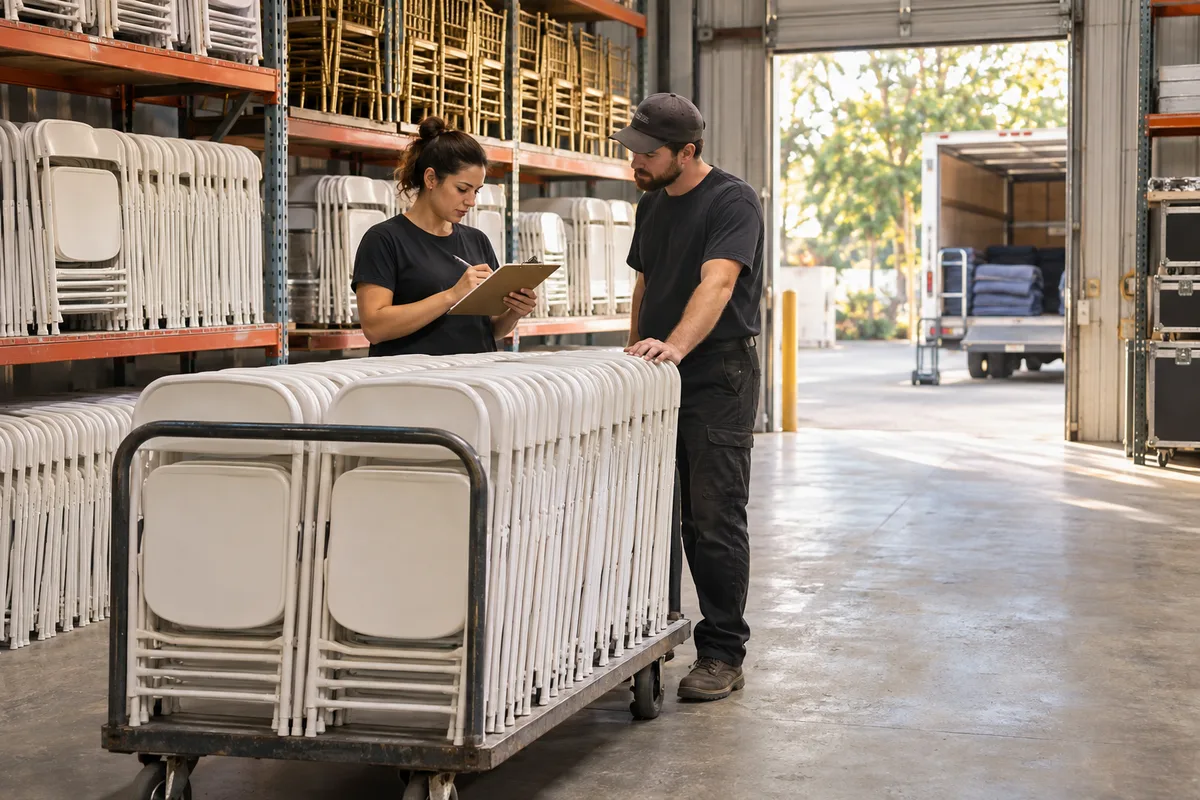
Most rental warehouses have an obvious place for a clean chair. The harder question is where to put the chair that came back late, looks clean from across the room, and has a hinge that may be bent. If that chair lands on a clean rack, the next person sees a chair that looks ready. If it sits beside the loading door for a week, nobody can tell whether it belongs to an open return, needs a repair, or was simply left behind. Both outcomes cost more than the few minutes it takes to give incoming stock a clear destination.
A return layout should let each crew member answer three questions at a glance: what has arrived, what still needs work, and what can be picked for the next booking. That requires more than separate shelves. The path through the building, the record for the booking, and the person who can clear an exception all have to agree. This guide walks through a layout you can trial in an existing building, using folded chairs and tables as an example. Adapt the checks to your own equipment and follow the manufacturer’s instructions for inspection, cleaning, storage, and service.
Walk one order from truck to shelf before moving the racks
Pick a recently completed booking that used a mix of furniture and small accessories. Find the actual loading list, the promised pickup time, and the people who handled the return. Ask them to walk through the job while the warehouse is quiet. Start at the point where the truck parks, then follow pieces in the order they come off the vehicle. Note where the crew counts, where they set aside a questionable piece, and where a person has to stop what they were doing to find a pen, clean cart, or spare tag.
Use a sheet of paper to sketch the building. Mark the truck door, pedestrian route, outbound staging, and the place where a customer may collect an order. Draw the path a returned table follows to inspection and back to stock. Use a second line for an order getting ready to leave. Where the lines cross, ask what happens when both crews arrive at the same time. A return cart that blocks the picker for five minutes once a day may be tolerable. Four carts parked across the only route for half of Monday creates a different problem.
Time the pauses as well as the work. A thirty-second chair check might be followed by a fifteen-minute wait for somebody to decide whether to hold it. If the delay is usually a decision, moving the chair rack will have little effect. Give the inspector a clear way to flag the piece and hand off the decision while the rest of the order keeps moving. Set aside a manageable area for these exceptions so they can be found and resolved deliberately.
Assign a place to each condition an item can be in
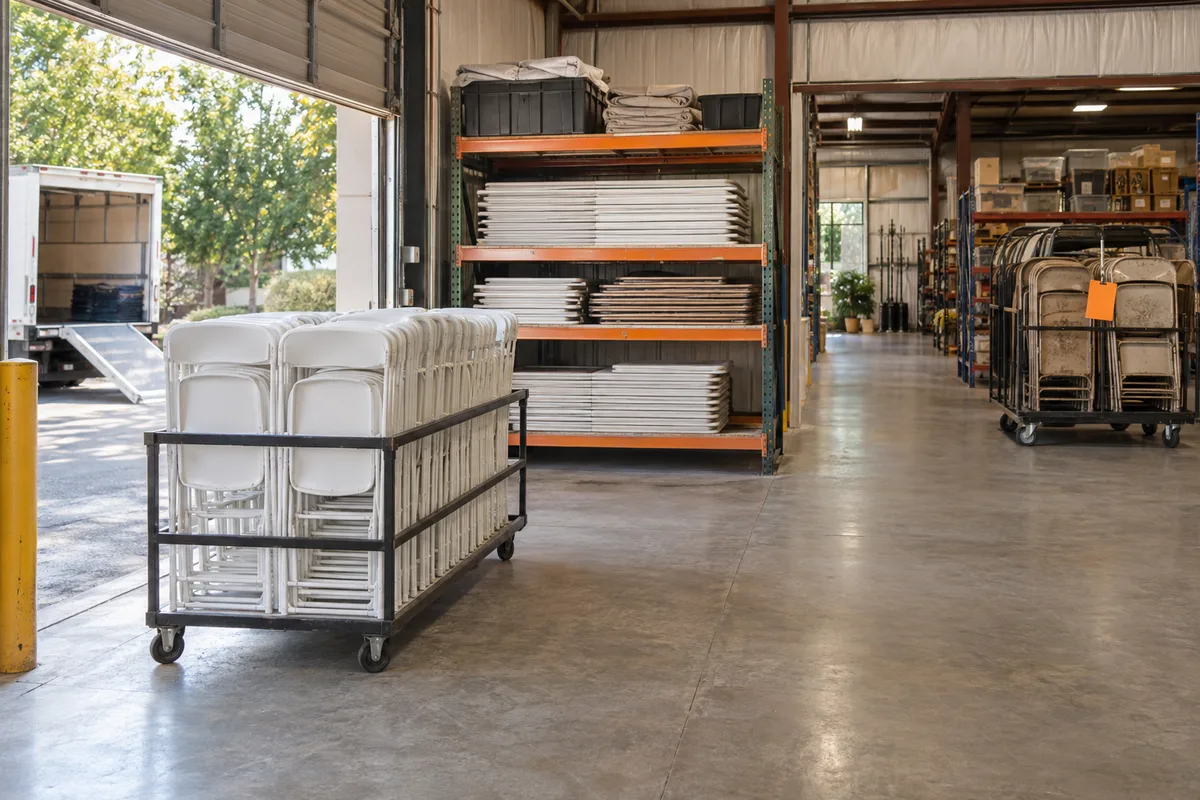
Start with a small number of destinations people can distinguish from across the room. Incoming and uncounted stock needs a marked staging position. Counted pieces that still need cleaning or inspection go into a work queue. Equipment that has cleared those checks goes into ready stock. Pieces that are damaged, missing a part, or in doubt go into a hold area with a named owner. Label the physical areas in plain words the crew already uses. Match the labels to the meaning of your statuses in the booking or inventory system, even if the two use different wording.
Giving incoming stock a home is especially valuable for returns that arrive in pieces. Keep the carts or bins associated with the original booking until they are counted. Once a person starts counting, separate counted from uncounted pieces on the cart or move the pieces to another marked position. The method matters less than the fact that a second person can step in halfway through and tell what was counted. Include the booking reference, arrival time, and initials on a reusable tag. A standalone note saying “chairs returned” leaves too much to reconstruct when the count turns out to be wrong.
Keep the route from inspection to ready stock short. If the natural shortcut leads through a ready aisle before the checks happen, crew will eventually take it. Put a clean cart or a clearly marked drop position on the cleared side of the inspection point. Use text with any color code so the system still works in poor light, with a faded tag, or when a new employee joins midseason. A simple held tag needs the piece identifier or product, booking or case reference, reason, date, and next action. Add enough detail to find the item again without asking everyone who was there.
Give counts and condition checks separate jobs
A complete count answers whether everything from the order came back. A condition check answers whether the items can go out again. Imagine a Friday delivery for 80 white chairs and 10 tables. The driver brings back 60 chairs and all the tables on Sunday. The remaining 20 chairs are collected the following morning. The Sunday receiver should record the 60 chairs actually received and leave 20 outstanding, even when the driver expects the rest to be fine. If one of those 60 has a loose component, the physical return still happened. Record the affected piece for review and hold it out of circulation using the appropriate workflow.
The order also has small pieces that travel differently from furniture. Count chair carts, hardware pouches, table skirting clips, or any separately tracked accessories against their own list. Put small parts in a labeled bin with the parent item or booking reference until someone completes the check. Do a dry run with a pouch that comes back in another truck. A person who never loaded the job should be able to see why the pouch is in the bin and match it to the correct order without relying on memory.
Set a standard for the detail needed by product. Uniform folding chairs may be recorded by quantity with individually tagged exceptions. A high-value lighting fixture may be identified by serial number and checked against a case and accessories each time. A linen team might work by size and fabric, with a separate queue for stains requiring assessment. Write a short checklist at the point of use. The check should match what crews can perform competently. When a repair or technical inspection requires a qualified person, label and hold the item until that person can assess it.
Reserve enough floor space for actual arrival patterns
Size the return area for the busiest plausible overlap of trucks, rather than the average number of daily returns. Start with two or three weeks of booking and route records. Count how many carts or pallet positions arrive in each hour and how long they wait before clearing inspection. Separate ordinary weekends from holidays or large events. A week containing no large orders does not tell you how to lay out a warehouse for three large returns due before noon.
Suppose the crew can clear two chair carts in an hour and three trucks are scheduled to bring a total of seven carts between nine and ten. If they all arrive early, the bay may need to accommodate all seven before inspection catches up. A three-cart bay with a second marked four-cart holding area gives the team a defined place to park the overflow. An overflow that is just “wherever you can find room” will spill into outbound staging. If there is no safe room for the extra carts, use a staffed return appointment or adjust route timing to flatten the arrival peak.
Keep access routes, doorways, and emergency exits clear under the applicable building and workplace requirements. Include the clearance needed to move loaded carts and reach each parking spot. Set a simple full-bay rule. For example, the receiver can call dispatch when the last marked spot fills so dispatch can direct the next driver to the agreed waiting point. Make the rule realistic by finding out whether the driver can wait there without blocking neighbors, customers, or vehicle movements.
Keep a hold visible until someone makes a decision
A held item can disappear operationally even if it is perfectly visible on the floor. Consider a returned table set beside the workbench because the crew noticed a damaged edge. The inventory record still shows the table available. The next picker sees one short and either takes the held table or scans the warehouse for a replacement. The hold needs both a physical cue and an availability change. Record the affected quantity promptly and check the availability shown for the next order. If a new hold threatens a confirmed order, assign the person who will review substitute stock and contact that customer.
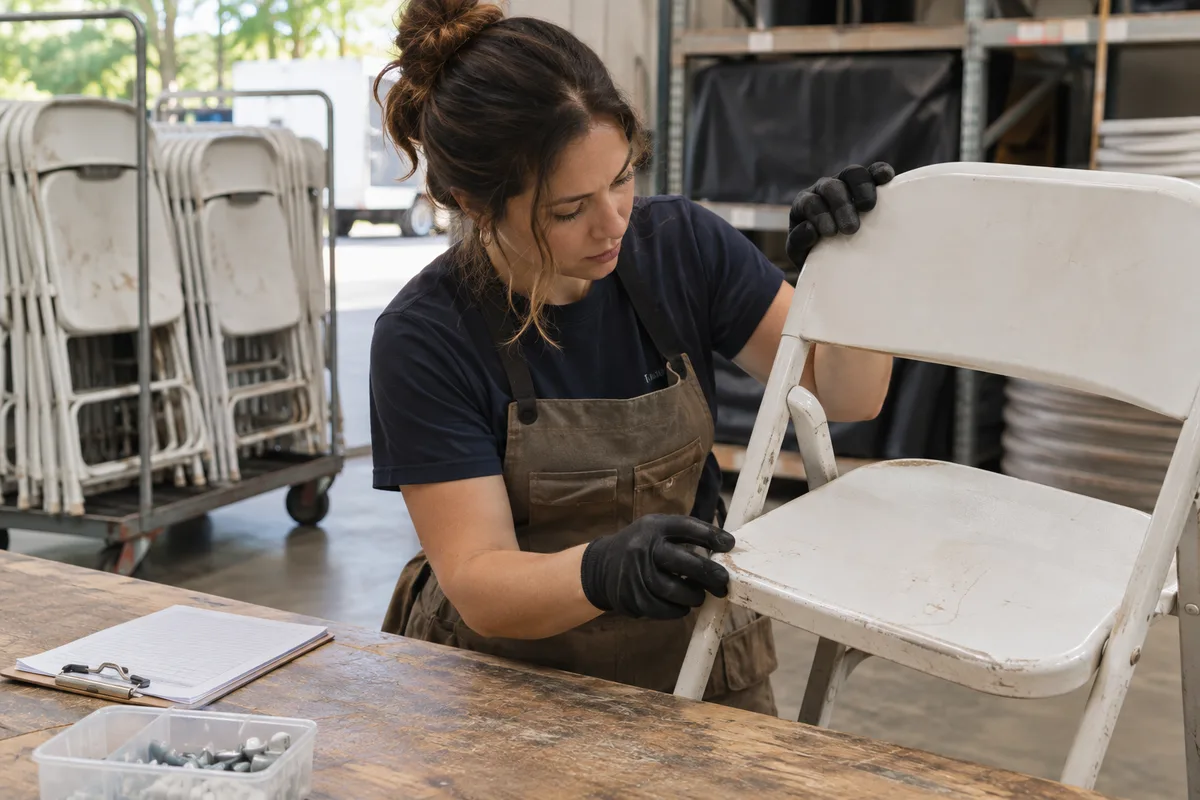
Give each open hold an owner and a next review time. A minor cleaning question might go to the shift lead for same-day resolution. A bent frame might go to a technician or supplier. Disputed return damage might require condition photos and review by the owner under the terms of the booking. Keep the equipment reference, date, and factual notes together. A photo of the defect and a wider image of the item can be easier to interpret later than a close-up with no context. Separate the decision about equipment condition from any decision about billing the customer.
Set a limit on what the hold area can contain before the lead reviews it. If repairs take a week, holding more stock every Monday will eventually turn the bay into long-term storage. Set a separate location for longer cases when space permits. Review aging holds briefly each week. Choose an action for each case, such as schedule service, wait for an identified part, return to ready after a documented inspection, or remove the item from rental stock. Confirm the system and the shelf agree at the end of that action.
Release cleared items deliberately
The end of the process should be clear enough that the next shift knows whether it can pick a piece. Decide who can clear routine cleaning and who signs off on a maintenance case. Mark cleared quantities and store them in the assigned location. Check whether the next order needs a matching set or a compatible replacement before mixing stock. A visually similar table with a different height can create a problem at a banquet even when the count in the system is perfect.
Allow enough turnaround between bookings for the work that happens after the truck arrives. If an item usually takes twenty minutes to clean and dry but spends an hour waiting in the Monday queue, a twenty-minute turnaround will regularly be too short. Measure the elapsed time from actual receipt to release for a few busy shifts. Build enough time into availability for normal variation. Keep extended holds for exceptions separately tracked. A long blanket buffer can unnecessarily hide healthy stock and still fail to handle a serious repair.
If the location of an item changes between shifts, write down the new location using the same names printed on the shelves. This is especially important for overflow. Imagine a shipment of clean linens arrives and temporarily uses a different rack because the usual rack is full. Add a temporary location to the pick instructions or stock notes and remove it when the pieces move. Otherwise the next person may take the wrong size or decide the requested stock is missing. Clear information about location makes the clean stock useful as soon as it is released.
Rehearse changes with one category and two real shifts
Pilot the new layout with a category that comes back several times a week and gives you an honest mix of cleaning and inspection. Chairs are often a better trial than a specialty piece rented once a month. Move only enough to test the process. Use temporary bay labels and a simple condition tag, then walk through an ordinary return and one that arrives late. Include one item needing a hold and one missing accessory in the exercise. Ask the next shift to take over with only the tags and records they would normally see.
Track three measures during the pilot. First, record how long it takes from unloading to the first completed count. Second, note the time from return to release for the last cleared item on an order. Third, count pieces missing from ready stock when the picker starts the next booking. Keep the individual notes so you can tell whether the release lag comes from cleaning, inspection, a missing decision, or a blocked aisle. An average alone can hide a single return every weekend that leaves the following shift short.
Hold a short review at the end of the first busy week. Ask each role where they had to make a guess. Make one correction tied to an observed problem, then watch what happens the next week. For example, the driver may have had a place to put furniture but nowhere to leave the small accessory case. Adding an identified small-parts bin is a narrower and more useful correction than moving the whole inspection station. Document the resulting route on a one-page diagram by the dock and include the hold contact in shift handoffs.
Work through the Sunday return from start to finish
Take the earlier order for 80 chairs and 10 tables. On Sunday, the driver tells the receiver there are 60 chairs on the truck and 20 still at the venue. The receiver counts in the incoming bay, records the partial return, and leaves the outstanding pieces on the booking. The cleanable chairs move to the inspection queue by cart. The chair with the loose component gets an individual hold tag, with the booking reference and a brief note for maintenance. Tables go through their own count and surface check and return to the correct rack when cleared.
The Monday driver collects the remaining 20 chairs plus a small pouch from the venue. The receiver can find the open return by the booking reference and complete the count against the outstanding quantities. The pouch stays associated with the booking until someone identifies the contents and checks them against the original packing list. Dispatch now knows the physical collection is complete. The inventory lead still needs to resolve the condition hold on the Sunday chair, and the picker can see the available quantity without having to guess whether that chair is included.
At the end of Monday, suppose there are 79 cleared chairs and one held chair. A Tuesday order for exactly 80 chairs prompts a decision before loading. The lead checks for a compatible unit in their own inventory and reviews the booking’s requirements. If a substitute changes what the customer ordered, the lead can get agreement before the crew arrives at the venue. The held chair remains clearly identified for assessment. The same walkthrough helps uncover cases where a buffer, a scheduled pickup, or a status is doing work that people assumed somebody else handled.
Make the return path part of every shift
At opening, check the incoming bay and assign responsibility for uncounted returns. Before the main return window, confirm the next marked overflow position and the space the crew needs for outbound picks. After unloading, compare physical counts with the booking before equipment is dispersed. At closing, make sure each held piece has a recorded reason and next action, and confirm cleared pieces are back in the system and in their assigned places. If something remains on a cart overnight, leave the next team a state they can act on.
An effective layout keeps the status attached to the equipment even when jobs get busy or people hand off a shift. The person pulling tomorrow’s order should be able to trust the rack, and the person calling about a missing piece should be able to trust the booking record. Start with one route through the building and a few unmistakable destinations. Expand the layout once the crew can handle a partial return, a damaged item, and tomorrow’s outbound order without sorting those decisions out from memory at the loading door.