Delivery Pricing for Party Rentals
Turn mileage, labor, and vehicle costs into a predictable checkout price.
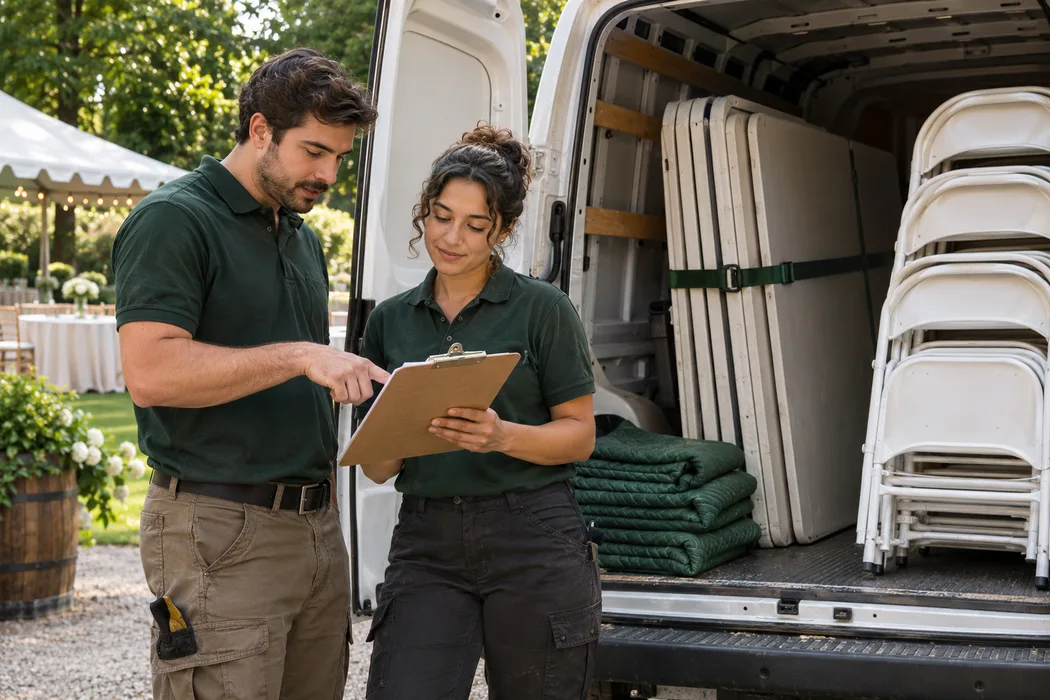
A rental customer sees the price of ten tables and asks how much delivery will cost. The venue is ten miles away. Your driver can reach it in twenty minutes on a quiet morning, but the venue has a narrow setup window, a loading door around the back, and an evening pickup after the office closes. Another venue at the same distance has a driveway, a flexible schedule, and another order nearby. A single mileage figure treats those jobs alike, even though they use your business in different ways.
Build a delivery policy around the trip you actually have to run. Define the service, work out what an ordinary job costs, and decide which exceptions need a separate price or a review. Then make the same rules available at checkout, on the phone and in the dispatch plan. This approach gives customers a clear answer and gives your operators a way to diagnose a price that no longer covers the work.
Write down what the delivery fee buys
Start at the warehouse and follow one typical outbound order. Someone stages the rental, checks the count, loads the vehicle, drives to the venue, unloads and gets a handoff. Later, somebody makes the collection trip, counts the gear again, brings it back and unloads it. The crew may also arrange the equipment on the site, set up a particular product or move it through a building. Write down which parts your base rental price is intended to cover and which belong to delivery or setup.
Give your standard service a definition the customer can picture. A seating order might include delivery to one accessible ground-level drop point and collection from the same place during the agreed window. Laying out the tables in a room could be a separate service. Put that distinction next to the quote. A label like “standard delivery” is only useful if a host can tell what to expect without asking the driver on event day.
List what the customer needs to provide. It may be a point of contact, access for the vehicle, a place to put the equipment, and workable arrival and retrieval windows. For a venue with a staffed entrance, record the name the crew should use. When you need the customer to clear the items before pickup or put them back at the handoff point, say that before they pay. This information also helps staff quote any extra work consistently.
Decide where pickup fits
A warehouse pickup can save the drive while still requiring hands-on labor. Someone has to stage, count and hand over the order. The customer has to arrive during operating hours with appropriate transport. Price those handling costs into the base product or an explicit service, then give customers clear loading and return terms. An offer of free pickup can be practical when your ordinary price covers the handoff and the customer is willing to do the transport.
Test how pickup appears when a customer switches from delivery at checkout. The delivery fee should drop away and the pickup address, window and instructions should become available. If a product requires professional delivery or setup, make that rule visible before the customer builds a cart around collecting it themselves.
Calculate the cost of an ordinary trip
Take two real jobs with different distances and time each part. Count total vehicle distance, crew time, unavoidable tolls or parking, and any direct supplies or handling costs. Track the route from the previous stop or depot through the destination and back to wherever the vehicle is needed next. Include collection separately. A ten-mile outbound leg is not a ten-mile job when the vehicle makes four ten-mile legs across delivery and collection.
Use a loaded hourly labor cost for pricing. If a driver and helper work together for ninety minutes, total labor is three person-hours. Set a vehicle cost using your records for fuel, maintenance and other costs related to the vehicle. If your calculation uses a combined distance allowance, check whether vehicle expenses also appear elsewhere in your overhead. Keep the worksheet readable enough that another team member can tell what the rate already covers.
Work a two-person example
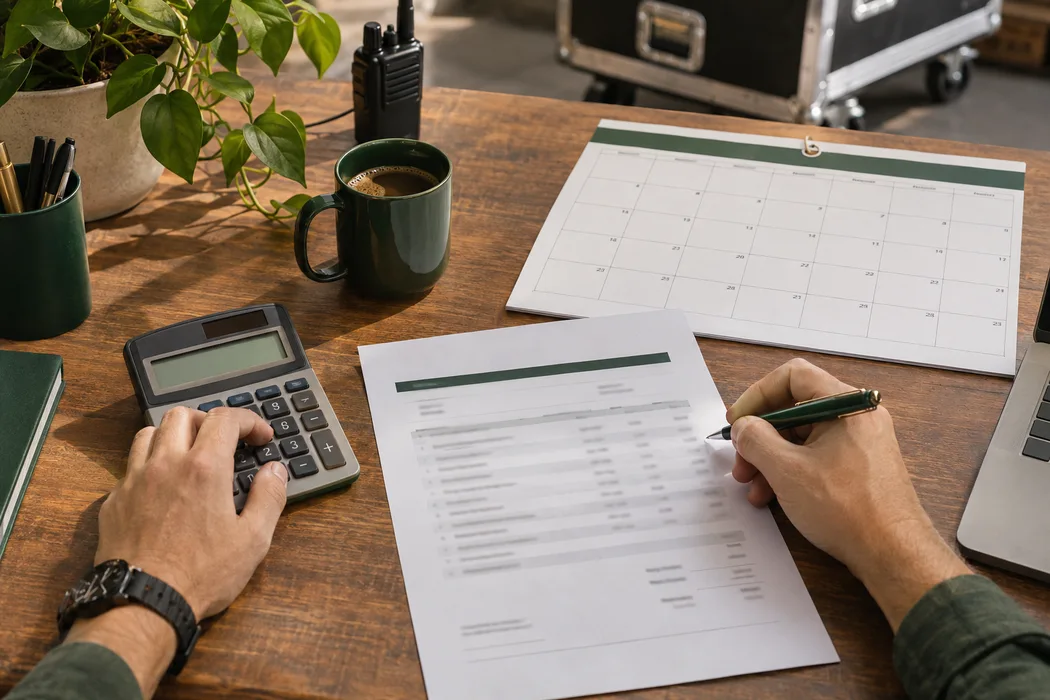
Suppose your numbers for a nearby table-and-chair job show forty total vehicle miles. Use a hypothetical vehicle allowance of $0.70 per mile, which produces $28 in vehicle expense. The driver and helper spend eighty minutes each across driving, loading and handoffs. If the loaded rates are $28 and $22 an hour, labor comes to about $66.67. Add $5 for job-specific handling supplies. The example delivery service costs about $99.67 before any contribution toward overhead or profit.
At a $129 fee, the modeled contribution is about $29.33. If getting in and out of the venue adds thirty minutes for both crew members across both trips, labor increases by $25 and the same fee leaves about $4.33. A further $8 in parking makes the service lose money under these assumptions. Use the exercise to find which part of the job needs a rule. If the extra time only happens at some sites, changing every local customer’s base charge may hide the point of the worksheet.
The amounts here are examples rather than market rates. Substitute actual mileage, times and expenses. Some operators allocate loading partly to the rental price, while others include all handling in delivery. Either can work if you account for each cost exactly once and can explain what the quoted service includes.
Measure time as well as miles
A route that looks short on a map can be slow at the hours you operate. When you measure prior jobs, make a note of the weekday, time, site access and whether the team was staffing more than one order. Twenty minutes at noon may become forty on the only available route at 5 p.m. If strict arrival windows line up with that period, include the effect when deciding which times you can offer.
Distance is easy for a customer to understand, and a distance rule can still be practical. Use time measurements to check whether its output covers ordinary jobs in each range. Price unusual access separately, and reserve the right to review a destination that cannot be served on the displayed schedule. Use a review request with a response time rather than leaving a customer to guess whether anyone saw the order.
Choose a rule that fits how you sell
A flat fee makes sense when most jobs are close together and have similar requirements. It is easy to show at checkout and explain on the phone. Measure whether it still works when a job is near the outside boundary of your service area. If the farthest ordinary location cannot be served at that fee, shorten the area, add a zone or use distance beyond the base radius.
Zones help when the city has recognizable service areas with different travel patterns. Put a table together for the suburbs, islands or outlying towns you commonly serve. Try it against addresses near the edges. A customer should be able to understand why their venue falls in the quoted area, whether you use a verified street address, postal code or actual route distance. A postal code is quick to enter but may cover locations that are much farther apart than the ordinary job.
A distance-based fee can be useful when your bookings have a wide geographic spread. A base charge can cover handling and the shortest trip, with a mileage amount beyond a defined radius. Explain whether the customer's distance is one-way driving distance from your dispatch point. Your rate can account for the work on both trips while using a customer-facing distance the buyer can understand. If a second depot is available, specify how the booking picks the dispatch point and avoid quoting from a warehouse that does not hold the equipment.
Compare three sample addresses before picking
Choose a straightforward nearby venue, an address close to the outer service limit, and a venue known to require difficult access. Prepare sample orders for the same quantity at each site. Apply your proposed rate, then prepare a plausible route and labor plan. Keep quotes for these test orders as examples your staff can use to explain the policy.
Next, change only the size of the load. A compact order might fit with another delivery and need one person at the handoff. A large order might require a separate trip or a second helper. If the same delivery calculation applies to both, look at the product margin, the requested setup work and the route. Some teams can publish a standard rule and require a quote for oversized loads. Define oversized using an operating fact someone can check, such as needing more than one trip, rather than a vague label.
Handle setup, timing and access as separate decisions
A job may have a manageable trip and difficult setup. Identify which products include setup and which packages need it priced separately. Ask for information that changes the job. A venue with a service elevator, a long carry, or a narrow access window may require a different crew plan. Request venue instructions or a usable description before finalizing the price if the difference is material.
Ask for the earliest and latest acceptable times for delivery and collection. A hard deadline can prevent a shared route even if the destination is close. A flexible window can allow a crew to pair the stop with another job. Decide whether to offer a guaranteed appointment for a higher fee, a wider range at the standard rate, or a schedule review for special hours. If the venue controls access, confirm that your customer can reserve the slot you are quoting.
Watch the interval between an event ending and equipment collection. A job that remains at a venue until Monday can block another rental and may be easier to route than an overnight pickup. The correct schedule depends on inventory, staffing and the customer's needs. Write down the trade-off and only offer windows your business can actually cover.

Give the office a short list of quote-review triggers
Consider a review when the delivery address is outside the configured area, the order needs more than one vehicle, venue access is unconfirmed, or the customer requests hours you cannot safely promise through checkout. Document the trigger on the order and ask for the missing piece. “Can the venue confirm a loading slot between 2 and 4?” gives the customer a clearer next step than “call us about delivery.”
Set a process for an updated location after booking. Compare the new address and access conditions with the original quote. Identify which changes affect the cost, whether the new location is feasible, and whether the current arrival window needs reconsideration. Put the revised agreement where both staff and the customer can find it, with a clear acceptance step for any material change.
Make one rule work across checkout and dispatch
Put the dispatch address, service boundary, fee rules and delivery constraints in one set of settings or one written reference your staff actually uses. Check that your address lookup is using the destination the driver will visit. A billing address, venue mailing address and loading-door address can all be different. Capture practical directions alongside the verified delivery location. The dispatch plan can use the instructions even if a checkout service calculated the fee from the street address.
Separate the quoted amount from the route assignment. The customer buys the service at a stated price. Dispatch decides which crew and truck can fulfill it. If your practice is to price from a particular depot, keep that fact with the quote so a later scheduling change does not silently recalculate the customer's charge. Likewise, a driver should know which stops have special access without learning that from a price line.
Test what happens after the customer pays
Reserve a test booking at the edge of your standard service area. Follow the customer through the quote or cart, including delivery and collection windows and the total shown before payment. Then open the order in the office. Compare the address, fee, route details and times. Ask the dispatcher to create both trips. The job should be understandable without a follow-up call to the person who tested checkout.
Run the test again with a location that requires review. It should reach a quote or inquiry route without pretending to guarantee the service. If you allow customers to adjust the dates or quantities after pricing, check whether the previous delivery quote becomes invalid when one of those fields changes. A correct checkout updates the price or asks staff to review the new terms before confirming the order.
Check which orders actually paid for their routes
For the first ten jobs under the rule, record the fee, vehicle distance, person-hours, and significant exceptions. Include both outbound and collection legs. Make a note of other revenue only if it belongs in the comparison you are making. A package may cover more than its delivery fee suggests, but mixing its item contribution into delivery hides where your price or route assumptions were wrong.
Sort the jobs by the promise made to the customer. Compare flexible windows with scheduled appointments, easy handoffs with staffed setup, and short trips with the outer edge of your service area. Look for a repeatable pattern. If the outer zone consistently underpays, check whether drive time or separate trips account for the gap. If a series of access problems caused overruns, fix what your team asks before booking or add a charge for the measurable work.
Run the same comparison after a change. You may discover that drivers can combine two pickups when customers are offered a wider return window, or that an extra early route needs its own price. Ask whether the new rule reduced cancellations, raised acceptable fees or made the schedule less reliable. Keep the figures close to the calendar. A policy that brings in more delivery revenue but consistently strands a crew after closing can still be a poor fit for the team.
Use a checklist for any new service area
- Choose the dispatch point and test actual travel from it at the hours you serve.
- Document the service customers will receive at the standard fee.
- Check the smallest order you commonly deliver and the largest load you can handle routinely.
- Establish when an order gets a published price and when someone needs to review it.
- Write the arrival and collection expectations in terms customers can confirm.
- Test an order in the public checkout and as an office quote. Compare the amount and terms.
- Have a dispatcher build the outbound and return plan from those records.
- Review completed jobs after enough orders to separate a recurring problem from a one-off exception.
A workable delivery price starts with a trip that a real crew can complete. When you can trace the quote to the warehouse, the route and the handoff, you can give customers a clear offer and revise it when your work changes. Keep the old quotes visible, give staff a few examples of the new rule, and test the first booking that falls near a boundary before applying the change more widely.