Decide whether your catalog should sell, rent or do both
Decide which products to sell, rent or offer both ways, and test stock, fulfillment and returns before launching a mixed catalog.

A party rental shop sells unopened packages of tableware and rents the tables they will sit on. Customers often need both. The owner adds each to the catalog as a product, and the first shopper buys enough for sixty guests. The warehouse has to answer two different questions. Are there sixty sale units to send with the next order? Are there enough tables free for that customer’s Saturday, with time to bring them back and inspect them? A catalog that can answer both questions gives customers real choices without giving the warehouse two versions of the order.
Decide which offers should be sold, which should be rented and which genuinely benefit from both. Start with a small selection and follow what happens after the customer orders. An offer that looks attractive on the product page can become expensive if staff cannot pack it correctly, if the business counts the same item twice or if renters expect terms that only apply to a purchase.
Follow ownership and inventory after each transaction
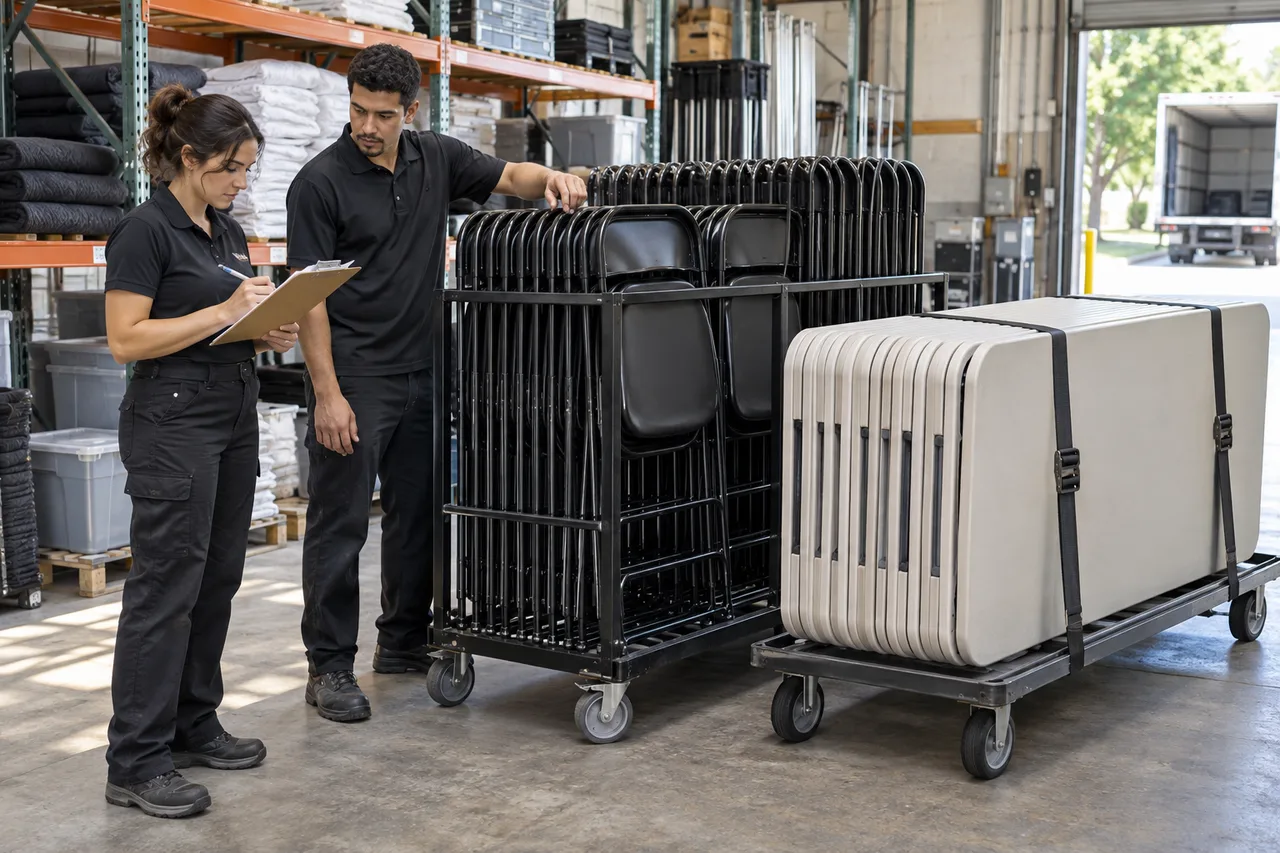
A sale transfers a unit out of stock when the transaction reaches the appropriate stage. A group of rentals is committed for a period and returns through receiving, inspection and release. That difference matters when two visitors look at the same object on different dates. Twelve tables can support many orders in a month if the schedule gives them enough time to move and come back. Twelve boxes of cups can fill twelve one-box sales until the business replenishes stock.
List which items are reusable and which are normally consumed, kept by the customer or individualized for the event. Chairs, stands and equipment cases may have enough useful life for repeated rental if transportation and care are manageable. A color-specific printed sign may be more appropriate as a sale. A rental package can include items the customer will keep. Record the owned resources that have to return and the consumables that are leaving. Make sure the terms and the warehouse list describe the same distinction.
Decide how to handle an item you sometimes sell from the rental fleet. A sellable projector listed alongside rental units can lower the physical fleet available for future orders. Before the business confirms a sale from shared stock, check commitments for the exact unit or equivalent group. Put a clear number aside for retail if you want that path to work independently. If sales and rentals can draw from the same units, identify who approves a sale and how it updates the rental capacity.
Choose the model from the customer’s reason for buying
A customer may need equipment once, for a weekend, with storage and pickup handled by the shop. Renting can fit that use case. Someone who uses a tool every week or wants equipment customized permanently might prefer to own it. Observe what customers actually ask. If the same customer repeatedly asks to keep a reusable item, consider whether there is a real retail offer the business can deliver without taking capacity away from profitable rentals.
Consider the way items travel together. A venue already has several table styles but may rent a set of matching specialty pieces when its regular stock is in use. It could buy extra accessories it wants to keep on site. Another customer might rent a sound system and buy batteries or tape for a one-off job. A sale add-on makes practical sense when it reduces a separate trip or gives the renter what they need to use the equipment. It still needs a clear price and fulfillment promise.
Try explaining both offers without any product page in front of you. Say what the customer receives, for how long, what it costs and what they must do after the event. If the explanation becomes confusing, examine whether both options belong on one page. Separate entries might make sense for a new unit sold outright and a returned unit the customer rents. If the items look identical, use clear names, images and checkout details so nobody can mistake a starting rental rate for a purchase price.
Compare the economics over a realistic service life
Estimate the cost of acquiring, preparing and keeping a rentable unit. Include supplies, handling, cleaning, repair and a reasonable allowance for time when the unit cannot earn. Use a documented or observed estimate of how often you can rent it. A rental rate that pays back a table after five bookings may look reasonable until you account for delivery hours, inspection, protective materials and empty periods. Test the model after accounting for those costs.
For a sale, calculate landed cost, selling fees, handling and any expected returns or support. A sale may offer earlier cash and less operational work after fulfillment. It still ties up money until purchased stock sells. Ask how many units you can afford to store, how long they may sit and whether the same warehouse capacity could serve rental work. Consider actual order sizes instead of assuming every item earns the listed margin.
For illustration, suppose a display stand costs 180 to acquire. A shop might rent it for 60 per job before handling. If each rental uses 14 in labor and supplies, it contributes 46 before overhead and other costs. Four such rentals produce 184 of contribution before those other costs. A sale at 250 with ten in direct fulfillment costs contributes 60 after the 180 acquisition cost. The comparison is only useful if the expected number of rentals, turnaround and repair assumptions are grounded in how the shop operates. Use the same currency and assumptions throughout your own calculation.
Decide what happens when a customer switches offers
A shopper might reserve a rented backdrop and later ask to buy it. Verify what the business can sell and what is already promised to another person. A manager may want to offer a separate new unit while leaving the existing rental unchanged. If a specific asset is available for sale and the next rental can be served, record the sale with its own terms and make sure the equipment leaves the pool only once. Preserve the original rental record when reviewing any adjustment.
Do the inverse test. If a customer who bought a sealed item wants to rent something similar, decide whether it can enter the rental fleet after a return. Staff need to verify condition, completeness and suitability. Put new, returned, sale stock and rentable stock in clearly labeled locations. Keeping those groups visible prevents a worker from accidentally fulfilling a retail order with an inspected but used unit. Document how an approved movement changes counts and who checks it.
Give staff wording for common requests. A customer may ask to rent an item advertised for sale while another wants to keep an accessory included in a package. If the business can offer it, explain the difference in price and obligations before the customer agrees. If somebody asks on delivery day, let the crew know whom to call before changing what will come back. Commitments recorded in the office and at the venue should match.

Make the catalog explain what customers can do
Use distinct actions where the choice matters. A rental can say “Check dates” or “Request a rental quote.” A sale item can use a purchase action and show the quantity available or a clear ordering timeframe. Avoid repeating the same button on offers with different consequences unless the following step makes both choices clear. Customers should see which items they keep, which items they return and when money will be due.
Show price units alongside each offer. A rented set might show a rate per day or per event. A sale item might show a price per box, case or unit. For a mixed package, show what is included and which optional items change the total. Keep the sale item’s unit of measure visible on the pick list. A carton holding twelve boxes is a different commitment from one retail box, even if customers see a similar picture.
Decide whether the same page can make both choices usable. Display two clear choices if the item is legitimately offered both ways and customers can select a path before entering dates or checking out. Separate pages can make details easier to maintain if the rental involves service that a retail listing does not. Link between the pages from a sensible place. Keep the record that owns product facts current so a color or size correction is reflected wherever it matters.
Verify a mixed order from the cart to the return bay
Try a practice order with four rental tables and five packages of sale supplies. Include pickup or delivery timing if the shop offers both. The dated quantities should remain attached to the tables. The sales count should represent the packages leaving permanently. The total should show the charge or amount due for each part as the customer approves it. If the business needs two checkouts, state that clearly and make the second step easy to find.
Check the warehouse record separately. Staff should know whether products are staged, shipped, delivered or collected, and which items they expect back. Give the person receiving returns a way to count the tables without treating the sale supplies as an open return. If someone mistakenly brings back sealed goods, staff should know whether and how to handle a return under the sale policy. Separate consumables from rented accessories in the record.
Make a change after the booking is confirmed. Remove one package of supplies and move the delivery to another date. See which part of the order must be rechecked for availability. Verify which charges remain, whether the sale quantity can be released and whether the tables are free on the new date. Compare the update in the customer’s message, office and warehouse views. A workflow that handles the first checkout can still fail if the office cannot make an ordinary change safely.
Set limits on delivery and service before advertising both
A sales order may ship through a carrier or be ready at a counter. A rental can take a van, route window and collection trip. Even when both fit on one vehicle, verify the plan and any service fees. Show whether the supplies arrive with the equipment. If someone asks for the retail portion first, tell them if the business can arrange that and what follow-up is needed. Keep dates for each relevant movement.
Clarify what happens if one part cannot be fulfilled. You might have tables ready but five packages of the requested color are unavailable. Tell the customer whether you can supply a substitute, allow a split order or need a decision before accepting the entire request. Keep the quantities and dates visible to the employee discussing options. Do not commit the rental on the assumption that a missing sale item will appear on a truck later.
Train staff on who can approve exceptions. A driver may be able to record what was handed off, but someone else may need to agree to a discount or change. Document which customer action accepts a revised offer. Give the crew a current list showing the items to deliver and the pieces due back. Compare that result with the order so a salesperson’s last-minute note does not make the return bay hunt for goods the customer bought.
Make the reporting useful for both kinds of stock
Review one complete month of a representative equipment family. For sale stock, compare units received, units sold, adjustments and the quantity at the end of the month. For rental stock, compare the number of serviceable units, the periods when they were committed, work held for maintenance and reports of late return. A shop that owns ten tables can rent them many times in a month. Tracking those bookings as separate uses helps the owner see why a single report of units sold would give the wrong picture.
Record the value of the two offers in terms the team can act on. If sale packages go out frequently but contribute little after packing and fees, decide whether they work as convenient additions to larger jobs. If the rental schedule looks busy but drivers make several poorly grouped trips, check the cost and timing of fulfillment before adding more inventory. Keep notes on returns and damage. A busy weekend can be profitable in the booking report while the workshop spends several days preparing items to go back out.
Agree with the person managing your accounts on how to record sale amounts, rental charges, refundable amounts and adjustments. Use the operational records to reconcile what happened on the order. The team needs to know whether a package was handed over, a cash balance was recorded or a refundable amount is still pending. Keep balance and return outcomes tied to their source records. This makes it easier to explain an unusual transaction when a customer calls later.
Choose quantities for an offer that shares storage or transport
Put two plausible orders on a dispatch schedule. One venue rents a dozen cocktail tables and wants glassware it will return. Another wants two tables and enough disposable supplies for a larger group. Estimate the space needed on the racks, the truck and the return side. Test the loading plan with the packaging you really use. If retail stock is stored near the rental staging area, make the labels and pick instructions distinct so the two crews can work at the same time.
Use the real capacity to put sensible limits on the first offer. A shop may be able to rent twenty tables for a weekday pickup but only deliver ten on a Saturday with a constrained route. The product count does not determine all your capacity. Set the online promise or quote process around the people, vehicles and return windows needed for the job. Keep one date with room to accommodate a last-minute adjustment and see how much extra work the new offer produces.
Pilot an offer the shop can count and deliver
Start with one rental family and a short list of related consumables or retail goods. Give the warehouse and office a clear procedure for accepting an order, adjusting it and handling a return. Keep a simple comparison of inquiry volume, orders, contribution and time used for packing and corrections. Ask employees which details they have to clarify manually. Better labels or item separation can fix an issue before you add more offers.
Look at what sells together. A package of liners bought with every equipment rental may deserve a clear add-on listing. One that attracts interest but often needs a lengthy shipping exception may be easier to sell only at pickup. Review actual use before committing to deeper stock. The right catalog for a small portfolio can grow once the team can reliably handle the first few combinations.
Pick a confirmable point in the calendar to review the experiment. At that time, compare the model with returned equipment, remaining sale quantities and current commitments. Decide whether to add an item, remove a confusing option or route more orders through staff. Keep the order examples and use them again when the shop changes a rule.
Your customer can buy the tableware and rent the tables if the shop can fulfill both parts confidently. Let the customer see what they are getting, what they keep and when the rental has to return. Keep the stock logic rooted in those same promises. That makes the combination useful to customers and practical for the people who send it out.