Decide whether to partner on catering before adding it in-house
Test a catering partnership by comparing quotes, venue handoffs and staff time before offering food service in-house.

A customer asks whether your rental company can provide tables, chairs and a meal for a reception. The crew already knows how to deliver and collect the furniture. Food service brings a different schedule, staff and service agreement. A good referral or working partnership can answer the customer's question while helping you learn what the work requires. Before deciding to offer catering through your own business, examine a few events where both teams can see how their work fits together.
Start with the requests customers already make. Identify which items your crew can quote reliably and which service the catering business will handle. Be clear about who is responsible for the quote, payment, venue arrangements and changes. Test a small number of real jobs that fit the agreement and review how the handoffs work before investing in an in-house service.
Find out what customers are asking you to solve
Review the last few requests that included food or service. A family might need a caterer recommendation and a table configuration. An event planner might have a catering company but need buffet tables, linens or room setup. A customer could want a single estimate covering several service providers. These requests require different commitments. Record which ones your team sees regularly and which ones already turn into the kind of rental work you want.
Ask callers what has been decided. Check whether they have a venue, guest count and service time, and whether the venue already has catering arrangements. Ask whether they want recommendations, pricing or a provider to handle food service end to end. Use the answers to understand why the customer contacted you. A business that often gets asked for extra serving tables may be able to meet most of the demand with the existing catalog and a trusted referral for the rest.
Look at timing and staffing. The catering provider might need early access to prepare while the furniture delivery team has a tightly scheduled route. If customers tend to ask at short notice, check what the partner could reasonably accept. The best initial trial should combine a rental your crew can fulfill with a food or service request a potential partner can evaluate through its normal process.
Choose what kind of partnership you want to test
A referral is the simplest kind to explain. Your shop quotes and fulfills the rentals, and the caterer speaks directly with the customer about its services. You can agree how people make the introduction and when each business should review dates. If there is a referral arrangement, record the terms and make any applicable disclosures. Each business needs a clear contact who can look up its part of the event.
A coordinated offering adds more work. The two businesses may plan delivery and service together while each sends its own quote. The customer can see which company is responsible for which work. The rental team should know when the caterer needs setup complete, and the caterer should know where to send revised floor plans or arrival times. Agree how both teams learn about a change after the customer confirms one of the orders.
A single offer through your business requires the office to understand all of the work it is promising. You may need to reconcile partner quotes, coordinate payment and support the customer when something changes. Before making that offer, identify what goes in the agreement and confirm with the partner who can make decisions about scope, staffing and substitutions. Start with a model you can describe to a caller and operate during a busy week. Learn from the handoffs before making your promise broader.
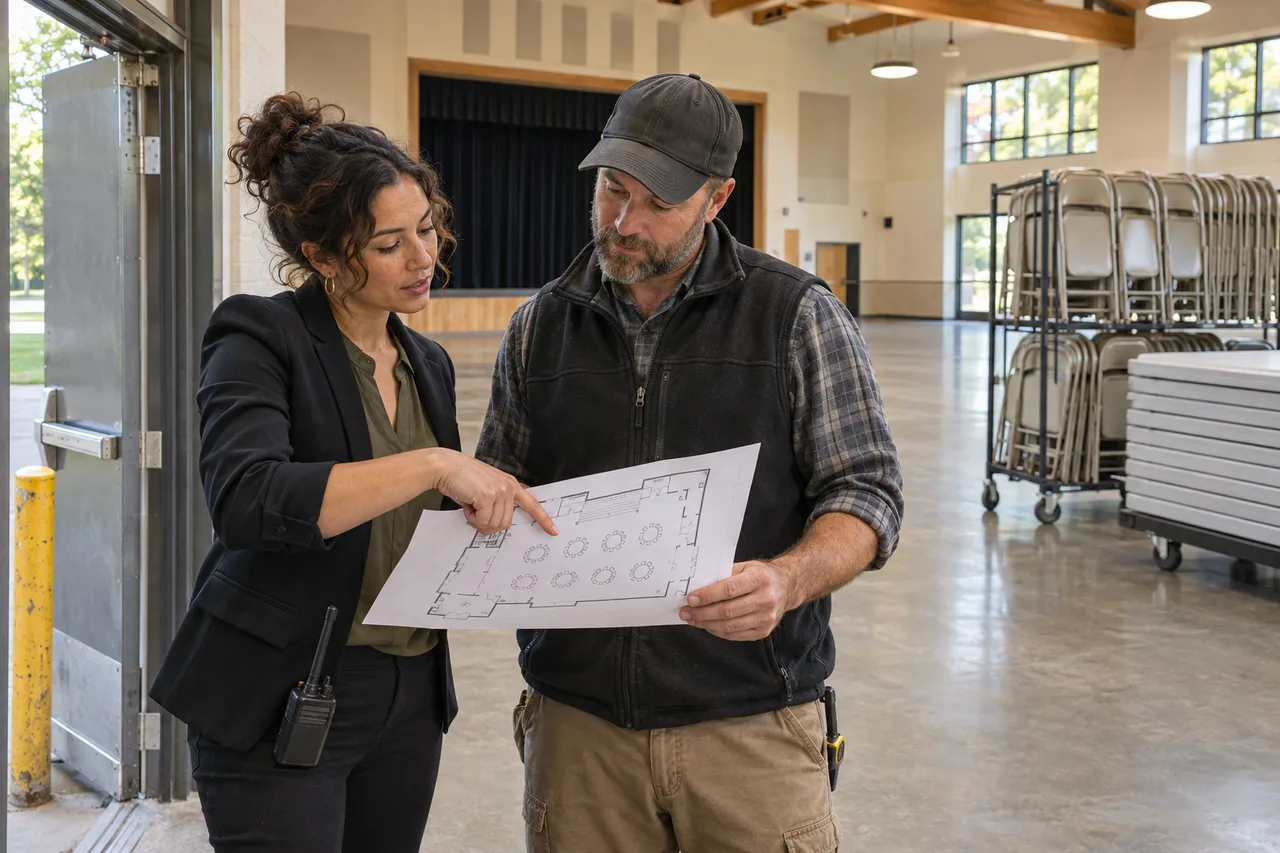
Compare partner availability with the jobs you can actually serve
Bring a representative order to a conversation with the caterer, using a hypothetical customer or an appropriate practice case. Show the approximate guest count, venue, furniture and target times. Ask when the caterer needs access, how it confirms the date and what changes it normally handles before an event. Find out which questions the rental team can answer and which should go directly to the catering team. Keep a single named contact for routine coordination.
Review a date with more pressure. For example, the rental crew can deliver on Saturday between nine and eleven, and the catering team needs the service area clear earlier. Confirm whether another delivery time or a previous-day handoff is possible without disrupting existing jobs. If the venue cannot open at a suitable time, the collaboration may make sense for a different order. Each provider should agree to the parts it will actually fulfill.
Ask how the partner documents the service it is accepting. For an order with rentals and food service, make sure both businesses can identify their agreements, requirements and contacts. Review the arrangements your business would need for insurance, venue access and any applicable food-service obligations with the right people before promising new work. Keep the first job within the roles each provider is equipped to handle.
Put a simple responsibility list beside both quotes
Use an ordinary event plan and identify who owns each task. The rental shop may supply tables and chairs, place them according to the agreed layout and collect them later. The catering team may provide the food and its own service equipment. The venue may control which door each team uses and when crews can enter. Check whether any item someone assumes is included is missing on both quotes. A diagram can reveal a service table or collection time neither business has planned for.
Verify what the customer sees. If the businesses issue two quotes, the client should know whom to contact for menu, staffing and furniture changes, and which amounts each provider collects. If they receive one coordinated summary, it should still identify who performs every part of the work and how they will confirm it. Use explicit names such as “caterer supplies buffet service equipment” or “rental business delivers three banquet tables by ten” where the detail matters.
Decide who communicates when the order changes. Suppose the guest count rises from eighty to ninety. The caterer needs to review food and staff, and the rental shop needs to review seating and table quantities. Set a clear contact path so both learn about the new request before quoting it. Each team can then check its capacity and communicate what it can actually approve.
Agree which event information the two businesses need to share and how they will share it. A rental supervisor may need a venue contact and the time the room must be ready. They may have no reason to receive details about a guest's food preferences or a caterer's internal staffing costs. Set up the schedule with the common information and keep each provider's own order details in its usual records. After the first change, check that the new arrival time reached both teams without forwarding a long thread the warehouse would have to read to find it. Treat a useful handoff as a specific exchange with an owner and an expected next step.
Test one schedule from delivery to collection
Build a shared schedule for a small pilot event. Include venue access, the furniture delivery window, when the room needs to be usable, when the caterer expects to arrive and who needs to be present for collection. Mark dependencies that affect both groups. If the tables are needed before the catering team sets out its equipment, the venue and both providers should agree on the order of work. Keep unrelated client details in each company's own records.
Give the crew lead one current plan to work from for furniture. Check that the catering lead has the same delivery and access information. If the room layout changes, make sure someone can tell whether the change adds furniture, affects the install time or requires another delivery trip. A single person might own messages to the venue, while each business updates its own order. Write down when those updates are due so the new plan reaches staff before loading.
Include the end of the event. The furniture crew might arrive to collect equipment after food service has cleared the tables. If the venue allows next-day collection, agree who removes other supplies and where the furniture can wait. Identify who keeps the room available and how staff will handle an access change. A smooth delivery can still leave both businesses with unexpected work if nobody planned the return.

Agree what happens when the plan changes
Talk through one schedule change and one quantity change before the event. Suppose a building representative moves the arrival window to 11 a.m. The rental office checks its route and confirms whether it can still deliver ahead of service. The caterer checks its own schedule. Someone communicates the resulting plan to the customer. If that plan requires different costs or times, each business explains and approves the change for its part of the agreement.
Have each lead identify the urgent decisions their team can make. A driver might be able to call the venue and let dispatch know the loading door is closed. They may need approval before delaying another stop or agreeing to an alternate room. A catering representative can decide how to handle its own service issue. Make it possible for each business to respond quickly while keeping the agreed rental scope clear.
Try an event cancellation or a change of date on paper. Ask which items are currently reserved, how staff record the new date and who reviews payments and terms. The customer should be able to find the current status of each provider. Keep any revised terms within the normal approval process. The goal of the practice is to see whether your teams could give a consistent answer on a difficult day.
Compare the work that each event brings your business
Record the rental revenue and staff time from the events you try. Include work people often miss, such as coordinating a layout, answering calls about another provider's services or making a second site visit. Keep track of which bookings come from new introductions and which are similar to jobs you already serve. If the catering partnership helps you fulfill venue orders you would otherwise lose, that may be useful even when your role stays limited to rental work.
Walk through an illustrative example. Suppose your rental quote is $1,100 and the direct costs you track for delivery, pickup and prep total $540. The estimated contribution for the rental portion is $560. If a coordinated version uses three extra hours of staff time and a second vehicle visit, record those costs before comparing it with a straightforward referral. The point is to see whether the new arrangement brings enough useful rental work to support the coordination. The caterer reviews the costs and capacity of its own service.
Now sketch the work an in-house service would add. Learn who would own food preparation, contracted staffing, customer changes, transport and cleanup. Identify costs the business would take on even on weeks with few bookings. Ask relevant advisers and local authorities what would apply to that scope before treating the idea as a feasible offer. Compare the investment and operating work with what the business saw during the pilot. Avoid using a large bundled invoice as a shortcut for deciding whether the work is a good fit.
Review the customer experience with both teams
At the end of a pilot event, ask the people who answered the client's questions what was confusing or easy. The customer may have been happy with the furniture and still had to ask both offices about when the room would be ready. A venue employee may have preferred a single arrival schedule. Review which messages reached whom and whether someone resolved each question without handing the caller back to the other provider.
Follow one detail through the records. If a layout revision added another table for service, find the approved plan, updated rental count and what the staff brought. Ask whether the person reviewing the quote knew where the table would go. If it was added during the event, record how the team made that possible and whether the new work displaced equipment or crew time from another booking. A concrete example helps both companies improve the next job.
Keep the review focused on what each provider can change. The rental business might add a clear line to its event worksheet for tables used by service staff. The caterer might send its confirmed timeline earlier. Both may agree who checks with the venue when access changes. Note who will make the change and how the next event will show whether it helped.
Use a second pilot to test whether the arrangement repeats
Choose a second event with a similar size and service plan but a different venue or date. Use the same roles, quote process and schedule checkpoints. Check whether the improvement from the first event holds under a different access arrangement. If one partner handled most communication on the first job, ask what would happen while that person is away. Design the overlap so a normal office employee can find the current information and know which decisions belong to the other business.
Review whether the collaboration can fit both calendars in a busy period. A quiet weekday event with an accommodating venue may be straightforward. A Friday night installation followed by a Saturday pickup could be harder to coordinate. Identify which event types both teams can serve dependably. Build any future guidance for your office around those specific jobs before mentioning the offer more widely.
Agree on a point to reconsider the partnership. It could be after a few completed jobs, or after a season that reflects the kind of demand you wanted to test. Give each business time to discuss missed handoffs, extra labor and changes to availability. Decide whether to keep sending occasional referrals, coordinate more work together or investigate an in-house option with a more detailed plan.
Make the scope of the next offer clear
Use the evidence from the pilot to write a brief description for the office and the partner. Include the rentals you can quote, how introductions work, what the client should expect in writing and who handles changes. Keep the statement narrow enough to stay accurate. If your partner's service depends on a venue or event type, describe how the customer can get an answer for their plan.
If you decide to explore bringing part of the service in-house, start with the part of the operation you can define and staff. Write down which work would transfer from the partner and which tasks would remain external. Review the expected direct costs, current workload and steps the business would need to complete before selling it. Base the decision on the kinds of jobs you observed and the limits you still need to resolve.
A partnership test should leave the business with a credible answer for the next customer. The office can explain which rentals it supplies, how to reach the catering provider and when the event schedule can be confirmed. The crew knows what to deliver and when to collect it. That is valuable whether the best long-term choice is to keep collaborating or to make a more substantial investment in a new service.