Create rental bundles that share component inventory
Build rental packages that draw from the same stock as individual bookings, with clear rules for options, substitutions and returns.
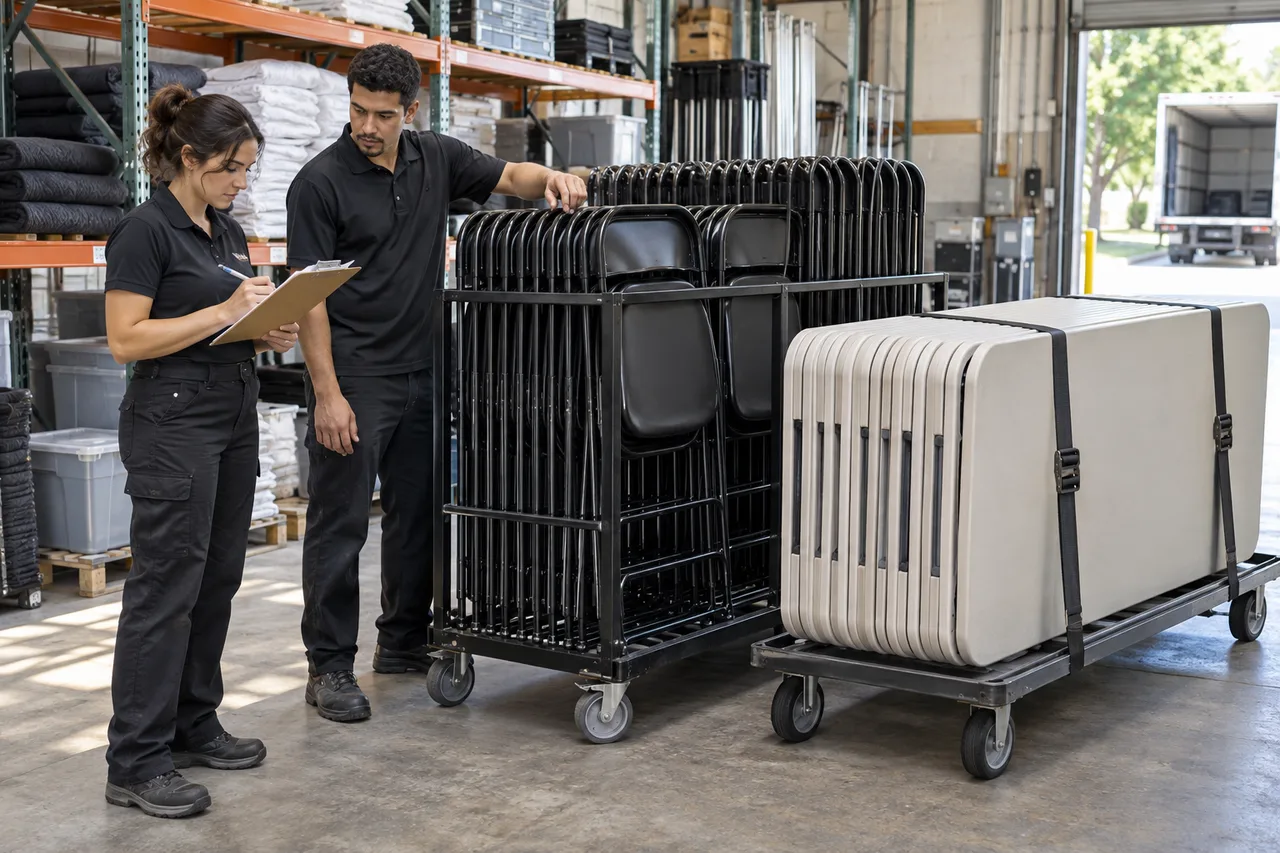
You offer a reception package with six tables and forty-eight chairs. A customer books the package for Saturday evening. Later that day, another customer requests fifty chair rentals for the same time. The storefront can honor both orders only if it has enough chairs in one place for both jobs. Set up the package so a confirmed reservation for the bundle draws from the same stock as a confirmed reservation for chairs on their own.
Start with what customers already order together. A delivery history showing the same table, seating and linen quantities on several quotes can suggest a good package. Review how these orders were staged and returned before deciding which options to standardize. If every quote required a different product or a special handling rule, keep a flexible set of add-ons or an assisted quote. A bundle is easiest to use when the business can describe what goes out and how the pieces come back.
Define the bundle with the person who will pack it
Write the components exactly as they appear on the pick list. A page that promises “dinner setup for 48” should also show six tables, forty-eight chairs and the included linen count. Decide whether table shape, chair finish or other choices are fixed. If carts, cover bags or setup accessories are included, identify them in the warehouse record even when they have no separate customer-facing price. Review the resulting order with an employee who has never packed the package.
Distinguish the customer name from the physical units. “Terrace Dinner for 48” can remain the package label even when each order produces separate item lines for tables and chairs. The physical inventory needs traceable item definitions. Use the same product identifiers for those components when they are available individually. An inventory transfer or a stock adjustment should affect the package and the individual item together once the pieces are eligible for the same location and time.
Check the return plan as you design the package. Decide whether the customer or the crew will pack each piece, whether different parts may come back at different times and who verifies quantities. A package can look convenient on the storefront while hiding extra work at the return bench. When you can write a clear out-and-back list and assign a place for each piece, you have a stronger starting point for selling it.
Calculate capacity from all required parts
Imagine a warehouse with thirteen eligible tables, ninety chairs and eight clean linens, with no other bookings in the interval. Each standard reception package uses six tables, forty-eight chairs and six linens. The tables allow two sets with one table left, the chairs allow one set with forty-two chairs left, and the linens allow one set with two left. The warehouse can offer one whole package. If thirty of the chairs are already booked separately, sixty remain, so it can still offer one package and twelve individual chairs. If five linens have been reserved, the package becomes unavailable regardless of the seating count.
Run the calculation against the full operating interval of each component. A linen may spend an extra day in cleaning. A table could need time for inspection after pickup. Apply the correct handling time before deciding which pieces are ready for the next job. Consider scheduled maintenance, incomplete quantities and existing holds where they count in your process. The smallest usable total for the required parts controls the number of complete bundles.
Make the result understandable for office staff. If a customer asks for two packages and only one is available, the sales role should be able to see which piece creates the limit. The team can offer one package plus a suitable set of alternate products or another time if it can fulfill that arrangement. A quick count of cases in a warehouse aisle needs to match the booking record whenever employees make a promise.
Give options specific inventory rules
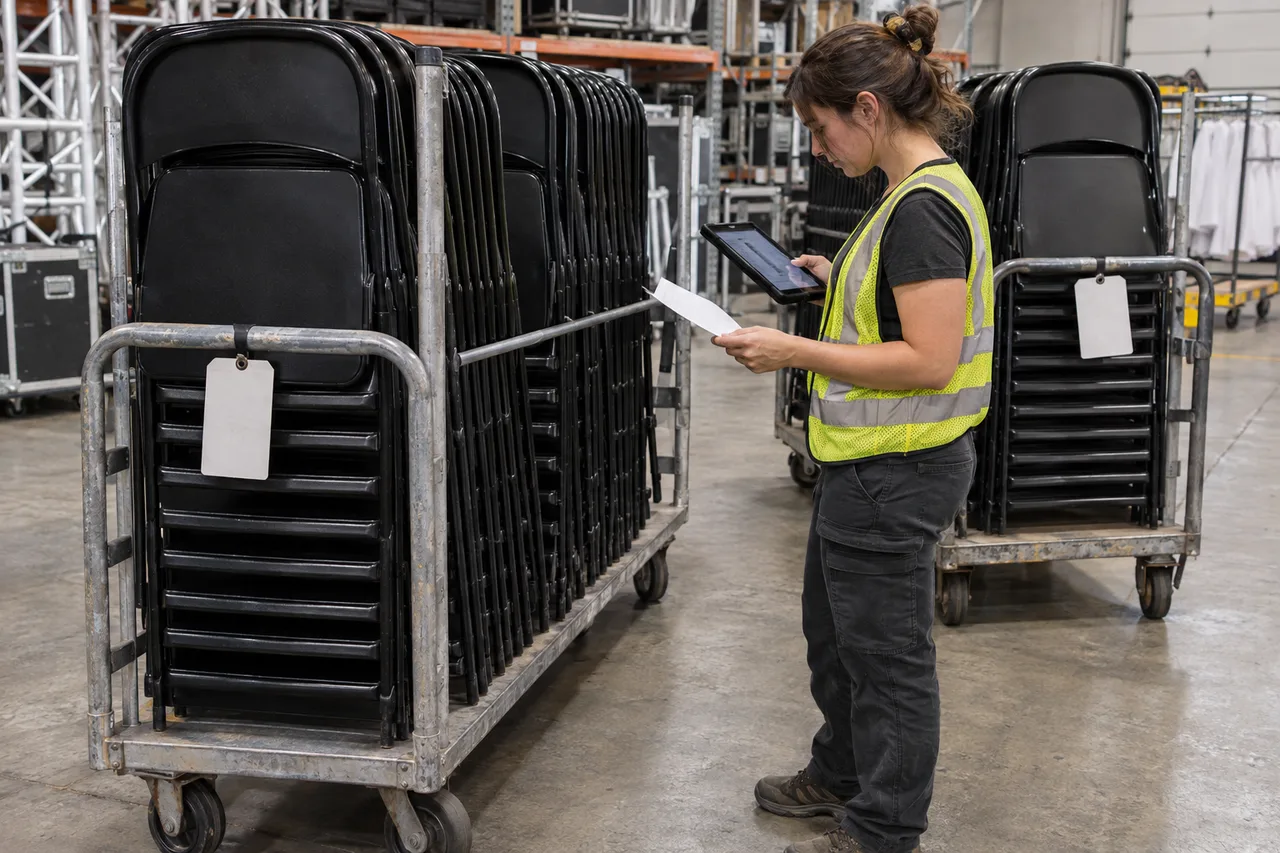
Choose which components customers can exchange. If they can swap standard chairs for padded chairs, assign the selected chair to its own stock and use the quantity the package requires. If a customer only chooses a linen color, show which colors affect availability and how it responds when one is booked. Use an explicit quantity for every choice that represents a physical item. A note in the cart is easy to overlook when the warehouse receives a different product.
Treat extra items that use stock as additional demand. An order with one package and twelve extra chairs uses sixty chairs if all are the same type. A separate add-on for a second table can change loading time and the amount of space needed. The order should make the quantities visible in the customer summary and the physical list used for staging. A bundle name that already mentions a guest count doesn't answer how many extra pieces were accepted.
Write an employee procedure for approved substitutions. If the actual unit differs from the original offer, confirm the change with the customer as needed, reserve the intended replacement using the same booking and release the original capacity at the right point. Check whether the price or the pickup location changed. The employee should be able to see what was originally promised and which items are now expected back.
Test two orders that compete for the same unit
Use a practice inventory that can fulfill a package or an individual booking, with too few remaining pieces to honor both. Give Orders A and B the same interval and location. Submit the first through the usual booking flow, then make the other request while the first one has committed the stock. The second order should show the accurate maximum quantity or offer another time. Check that A still has exactly one allocation and that no package was left half-reserved.
Reverse the order. The independent booking now gets the chairs first. If a customer still sees a package from an earlier browse screen, check the result when they reach the confirmation step. A reliable booking process can explain the change and let them revise the order. The office should see the same allocation for inventory shared between its internal bookings and the storefront.
If both requests are in progress before either confirms, check how the business handles that state. Some workflows hold stock temporarily. Others check again at the point of confirmation. Observe what happens when a quote expires or an order is abandoned under the normal flow. The chair count should reflect the status you intend and should reopen at the planned time. Practice the same check with one bundle and a different bundle that both draw chairs from the same pool.
Keep fulfillment capacity in the package price and schedule
Calculate what the crew actually does for the full set. There may be extra prep for sorting and wrapping linen, loading several carts, bringing the tables into a hall and inspecting all the pieces at return. Decide which work is included and which is sold separately. Build a sample order with the delivery charge and any applicable service options, then compare it with what the team has to do at the venue. The customer should be able to tell whether the package includes delivery and setup before paying.
Review the busiest pickup or delivery windows. One package may easily fit in an open time slot while two packages in the same hour could occupy the loading team and the same vehicle. Keep the truck and staffing checks tied to the order. If the business can see available equipment without being able to offer the requested service, give staff a practical next choice. That might be a later window, different delivery arrangement or smaller bundle.
When comparing revenue, look at parts separately to understand what the package uses on dates that usually sell out. If chairs are the constraint, compare a package taking forty-eight chairs with what else the business is likely to book for those seats. Review the outcome across real weekends. Use the evidence to decide whether the standard size or the offer schedule needs adjustment.
Follow an edited bundle from the quote desk to the return bench
A customer reserves the forty-eight-seat set for a dinner and asks the office to add eight chairs two weeks later. The account coordinator checks the actual remaining variant at the same location before promising the extra seats. When the customer confirms, the order reads six tables, fifty-six chairs and six linens. The staging lead sees the base quantities and eight additional chairs. Dispatch can recheck whether those pieces fit on the planned vehicle.
Two days before the event, another customer asks for a linen-only rental. The quote desk opens the same available linen count used by the dinner package. It sees that six pieces already belong to the dinner and decides whether the new customer can be served. That check is where shared inventory matters. Both bookings can use the same catalog while drawing from only the eligible warehouse stock.
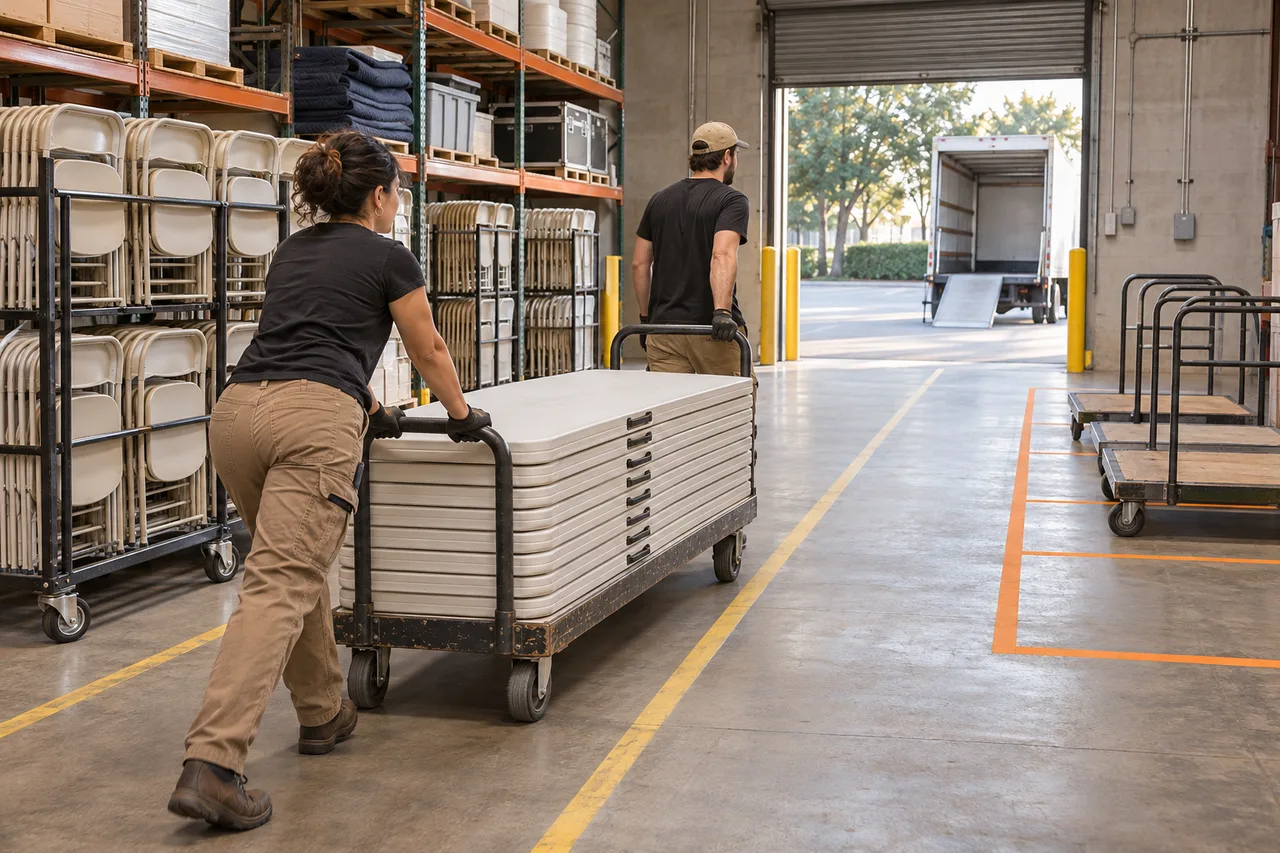
At return, fifty-six chairs and six tables arrive in the first load. The linens arrive with the venue's collection the next morning. The employee records the pieces that came back and verifies their condition. The table and chair availability moves forward according to their inspection schedule. The linens still carry the order reference as they are collected and cleaned. Give the office someone to follow up if the venue returns only five. The bundle stays useful at the return bench because its components have their own expected quantities and handling steps.
Make changes deliberately when a package is already booked
A business may update the package for a new season by switching the linen style or offering a different table. Keep an accurate list of what each existing customer accepted. Use the new component list for new bookings after you confirm inventory and staging instructions. Make an explicit change through the normal process if an existing booking will use different items. A warehouse lead needs to see the correct list even if two dated versions of the same package go out on the same weekend.
Look closely at copy and images when you make that revision. If a photograph shows padded chairs and the new version includes standard folding chairs, review what the customer expects from the page. Explain how changes to the options affect availability and add-on prices. Have a coworker open the current customer page and place a test order. The choices made there should carry to the exact products the crew will select.
Retire unused bundle variants when you can preserve older orders and their records. Confirm the component products still appear independently wherever the business offers them. If a customer comes back asking for the prior configuration, staff can quote it as a custom order from the available parts. Record why a version was retired if that information helps sales explain the closest alternative.
Use the results to improve the set
Track a few orders through the full cycle before expanding the offer. Note the components that limit availability, the number of requests that need a custom substitute, and any stock errors discovered at staging. Review the actual time spent loading and receiving a package. A useful bundle should make choices easier for customers and give warehouse staff a repeatable list. If employees spend a lot of time explaining which tables are compatible, a clearer set of choices may help more than an additional discount.
Try one small change at a time. If customers often need sixty seats, compare a larger advertised bundle with the current package plus extra chairs. Run the numbers for all parts, including tables and linens. A larger size might work on dates when the warehouse has a second crew, while the smaller one may need to remain the default in the busiest windows. Use history and actual delivery capacity to choose.
Set a routine to verify parts after stock changes. When a pallet of chairs goes out for service, ask the office to check a package and a standalone order for the affected dates. Compare both views with the warehouse count. Repeat when pieces become eligible again. The system is working when the sales team can offer sensible alternatives, the warehouse can pack what was promised and every part can trace its way back to available stock.
Give staff a quick way to explain an unavailable package
Keep a sample package order to use when training staff who answer customer questions. Ask a new employee to locate the limiting component, then show which chair finish or pickup window would make the order possible. Have them compare that with a case where a product is available on its own but the bundle still needs an additional matched item. Both are normal results when the business can see demand for the parts separately.
Agree how employees should discuss the alternatives. It may be enough to say that the desired linens are unavailable for that day and offer the same table setup with an approved color. If no suitable configuration is available, give the employee a way to record demand and check another date. Keep the order open for follow-up only as long as your capacity rules permit. The useful outcome is a promise that matches the inventory and the work the crew can actually deliver.
Check the parts when you serve from more than one warehouse
Use the location that can actually get the order to the customer on time. A package might look available if you add up four tables at a northern warehouse and four more at a southern one. A request for six tables at the northern pickup will work only if the business can have six eligible tables there by the agreed time. Build a normal practice order with that split. Ask the office how it will quote the order and ask the warehouse when the stock record should reflect the transfer.
If you do move parts, reserve the right quantities at their source and plan when they become ready at their destination. Verify that the original warehouse no longer offers those same pieces for the overlapping interval. Test the result after a scheduled transfer runs late. The person coordinating fulfillment should be able to find the booking and offer a practical fallback, such as a later pickup or a different set confirmed with the customer. Keep the receiving event and any condition check visible before the parts are offered or loaded.
A location change can also affect the collection plan. For a package returned to a different warehouse from where it went out, compare the selected return site against the route and the stock view after inspection. The business should be able to track where each part is available for the next booking. Take extra care with pieces returned separately, like linens sent from the venue to a cleaner. The bundle is still one customer order, but the physical parts may become available at different times and places.