Compare ways to fund your next rental purchase
Compare cash, staged buying, financing, leasing and partner sourcing using the same rental demand and monthly cash estimates.

A catering equipment rental shop turns down its third request for an extra hot holding cabinet. Buying the cabinet would be easy. Paying for it through a quieter season, finding space to store it, getting it ready for a job, and knowing whether it attracts enough paid orders are separate decisions. Compare the purchase options against one realistic schedule and the same definition of a profitable rental.
Begin with the orders you can verify, estimate the contribution the new equipment could earn, and test the months when bookings may be light. Compare buying from available cash, buying in stages, financing or leasing, and serving uncertain demand with equipment you can obtain for individual jobs. Make a decision based on both the cost of the equipment and whether your crew can use it productively.
Identify the specific work new equipment would win
Use a list of actual requests for the appliance, tent, equipment case or furniture you are thinking about buying. For each one, note the date, quantity, relevant service area, reason you declined it and whether it came close to confirming. Follow the customer from the first inquiry to a usable quote where possible. Exclude bookings where the warehouse had spare stock but the crew or truck could not serve the route. That is a capacity constraint the purchase would leave in place.
Look at how often the requests overlap. Six in one month might represent six opportunities across open dates, or five organizers competing for the same Saturday. The unit could serve only one of the latter five, even if you add sufficient labor and transport. Ask whether the bookings need the same configuration and whether there is time to clean, test and inspect the item between them. Use the actual calendar to estimate which work you can take.
Check existing stock first. One older cabinet might have been out of service waiting for a part. Another could be booked for long periods because the next available collection creates a gap. In that case the more effective investment might be the repair or a different return schedule. Compare the proposed new unit with the best credible use of the equipment you have. Record any change to turnaround time the new unit genuinely provides and verify why.
Decide whether you are increasing capacity, replacing an unreliable asset, or adding a different service. A replacement can preserve revenue rather than generate more orders. The benefit might be lower repair spending, less down time or a reduction in short-notice substitutions. A new package should be tested for demand, supplier terms and staffing. One set of figures can obscure these different purposes if the proposal lists only how many items the business will own.
Calculate the cost of putting the unit into service
Ask comparable suppliers for the exact equipment, capacity, included parts, delivery time, warranty and service support. Calculate the purchase plus freight, tax or fees where applicable, inspection and training, separate accessories, covers, storage fixtures or other preparation costs. For used equipment, account for condition, availability of parts, service history and any testing or approvals needed for the role. Put your assumptions next to the estimate and avoid substituting a lower sticker price for the full landed cost.
Imagine the cabinet has a $3,800 quotation. Freight and initial inspection total $450, holders and accessories cost $300, and the warehouse needs to spend $250 on a compatible cart. The planned cash cost is $4,800 before any additional amounts that apply. The team must also make room for training and a new inspection procedure. A quote that includes the accessories and a cart could compare favorably even if its base equipment line is higher.
Write down what follows the purchase. The cabinet will take rack or floor space, electricity during its checks, staff time, maintenance and applicable insurance. If it weighs more than another unit, check what lift or vehicle you need and whether existing staff can handle it under approved procedures. If the purchase requires another van or a bigger warehouse, include the relationship in the forecast. Comparing a five-year value estimate to the sticker price makes that constraint easy to miss.
Check the supplier's timeline. A high season can be over by arrival, and a promised delivery dates the first opportunity to rent the equipment. Consider breakdown support and the turnaround for parts. If the supplier plans to deliver in stages, learn which combination you need before you can take a booking. Ask whether deferring an accessory leaves you with an incomplete product or merely delays an additional option you can add when demand is proven.
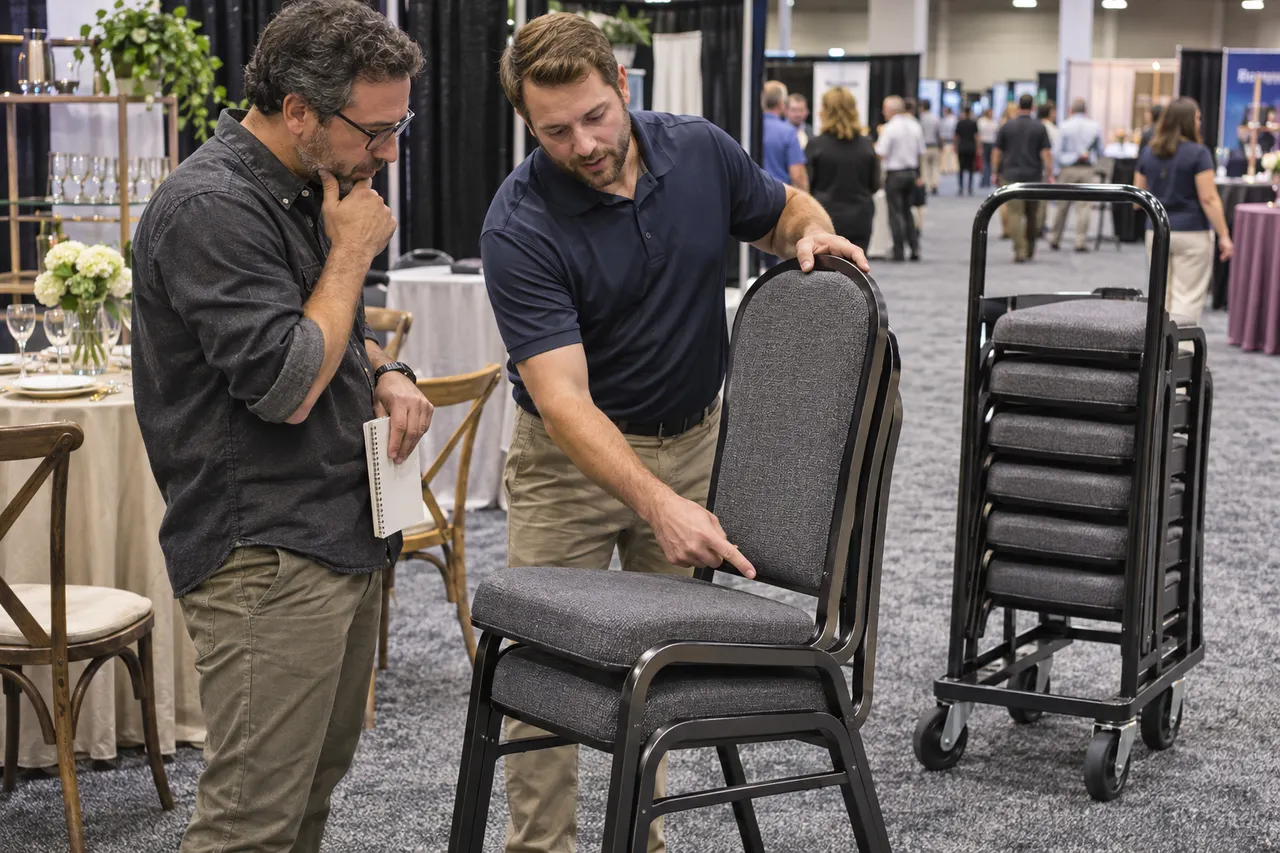
Compare offers with different inclusions
A supplier who takes responsibility for freight damage, provides a usable loaner and can source a replacement control panel gives the business different protection from a supplier offering the item as-is. Ask for an itemized quote and a description of how support works at the site where you will use it. Verify the time and likely expense to get it repaired, including return shipping when applicable. Add any conditions you have to meet to receive warranty service. Include a reasonable estimate of the support costs you would bear in your own scenario.
For a used purchase, reserve enough time for a qualified inspection and for following the requirements that apply to putting the item into rental service. Check whether you can obtain the documentation and accessories you need. In the funding comparison, treat an upgrade that is needed before first use as part of the cost of entry. A cheaper unit with an uncertain service history may still work if the price and backup arrangement reflect the risk.
Compare different quotes with a common baseline. A supplier could include commissioning for an extra $250, while your staff would otherwise spend several hours and pay a qualified technician to do the equivalent work. The invoice total is only one side of the comparison. Use an estimate for both options, then ask whether the job you intend to book is ready to use after whichever process you pick.
Estimate contribution and cash timing
A rentable unit can generate gross revenue without paying for itself. Build a typical order and subtract the costs specific to serving it. Include handling and cleaning, payment fees, travel, ordinary consumables and labor if it uses a different crew. Include an allowance for repair and wear where appropriate. If the cabinet goes out on a route that would already run, estimate any extra load and handling. If it needs a dedicated run, include the real trip and attendance.
For illustration, a cabinet rents for $310 as part of an order, and the shop estimates $130 in additional cost for transport, handling and turnover. The unit contributes $180 per such completed rental before fixed cost. Recovering the illustrative $4,800 purchase under that assumption would take about 27 completed rentals, ignoring ongoing fixed expenses, financing, and any resale value. This provides a useful comparison across options when those missing figures are clearly stated and added where needed.
Set a strong, ordinary and weak demand estimate using what you learned from the calendar. A scenario could have 30 completed rentals in a year, a more typical one 22, and a weaker one 12. At the modeled $180 per rental, those generate $5,400, $3,960 and $2,160 of contribution before standing costs. Show the months when bookings happen, how long the customer has to pay, and when the business pays people and suppliers. Lender payments may arrive on a schedule even if a customer's event is rescheduled to a later month.
Check assumptions on damaged, cancelled and shifted bookings. A provisional order can be meaningful without being an invoice your business has collected. Estimate what proportion of quotes usually reaches completed rental, and note an additional risk where the product group is new. If you haven't offered the item before, build the estimate from trials or a realistic range. Show how much the result changes when supplier prices, utilization or repairs differ. The best forecast lets you see how wrong you can be while still having a workable plan.
Compare an outright purchase, staged buying and a loan
For an outright purchase, look at the cash remaining on the day you pay and the lowest cash balance in the following months. Include amounts already committed for payroll, taxes, supplier work and customer obligations. Set a minimum cash reserve that the business can live with. If a purchase keeps margins healthy but consumes the reserve during a slow stretch, compare a later acquisition date, a smaller starting quantity or a different financing method.
For staged buying, define the smallest useful package that can be rented on its own. One cabinet can be tested through weekend catering jobs while you track usage. You could buy another once you see multiple confirmed requests the business could actually serve. Check whether smaller purchases get different freight charges, and whether the components remaining to be purchased will still be available. If a partial set would weaken the offer or leave the warehouse with incompatible pieces, account for that in the staged plan.
For a loan or equipment financing arrangement, request complete terms and compare equivalent amounts and periods. Look at the cash due at signing, total scheduled payments, any fees, rate terms, use restrictions, collateral, personal guarantees and what happens if you repay early. Track taxes or accounting effects with a qualified adviser. The U.S. Small Business Administration provides information on loan programs and how businesses work with participating lenders. Use actual written terms for your decision. SBA loan programs
Put both the recurring payment and total acquisition cost in the comparison. A model offer could require $1,200 upfront and twenty-four payments of $175. The scheduled cash outlay is $5,400 before fees, taxes or other contractual amounts. Compare that to the hypothetical $4,800 outright purchase and project how the $175 monthly payment fits each low-demand month. At $180 of contribution per completed rental, one rental's contribution would roughly cover one $175 payment. The owner still needs to cover all other incremental and standing costs. Treat these as arithmetic examples, not as loan terms a lender is offering.

Compare leasing and sourcing by the job
A lease can have a lower initial cash requirement than buying. Inspect the complete agreement, including payment dates, permitted use, insurance, maintenance, who owns the item, return conditions and end-of-term options. If ownership matters, obtain a clear written price and mechanism for buying out the equipment. Confirm that the arrangement permits the actual rental business use, transport and storage profile. Some contracts place restrictions on using an asset at customer sites. For broader planning context, the SBA describes factors businesses can compare when leasing or buying equipment. SBA guidance on buying or leasing equipment
Sourcing by the job can be useful for demonstration and as a backup. Check whether a partner can deliver the actual compatible unit, how cancellations and damage are handled, who holds it between jobs and what it costs in the strongest demand weeks. Verify that the delivery process can support your commitments. If the source price is so high that the booking has little contribution, the arrangement may still produce useful demand and workflow evidence if you plan for its cost. Use realistic figures so trial jobs cannot distort the business case.
Compare the cost of sourcing with the benefit of ownership only for work the shop can actually serve. If twelve jobs would cost $160 each to source but require only $40 each in direct ownership-related costs for the same portion of work, the per-job difference is $120. At twelve completed jobs that saves $1,440 before ownership cost. At forty it saves $4,800. Adjust for the real scope of each option and existing delivery and labor costs. A partner could include delivery in its price, and you might still need to send your own truck with owned equipment.
Factor in fallback requirements. A unit in your warehouse can still fail inspection before dawn. You may want access to a compatible replacement and clarity on cancellation or substitution with your customers. Ask which funding option makes capacity dependable enough for the bookings you accept. A relatively inexpensive asset with weak service support can become unusable when a specialized part is unavailable and its payments keep coming due.
Check what else the same money could buy
Compare the proposal with a few other things that are competing for the same funds. Ten more chair carts may save enough handling time to accept several jobs on equipment you already own. A storage improvement could make the return schedule predictable. Repairing two frequently used units can restore availability sooner than buying a single new one. Place each proposal on the same time horizon, and describe which active requests or problems it can address.
If the best use depends on a scarce resource, measure that resource explicitly. A bulky new cabinet might fit three jobs per month because available vehicle space is limited. More short jobs using the existing fleet could fill the same labor hours with less additional storage. Compare estimated contribution per trip or occupied warehouse slot when those limits are real. This also helps identify when paying for more stock would cause profitable existing orders to be turned away.
Ask what you can learn before the decision becomes expensive to reverse. The business can take one approved partner-sourced job or invite staff to rehearse loading a demonstration unit. If you do run a trial, give it a cost limit and define a result that would change your choice. The learning should belong to a real purchase decision, such as whether the cabinet fits the route, gets back in time for inspection or attracts enough paid work to justify a payment commitment.
Put the monthly decisions on one page
Make a worksheet with one column for each option. Record the initial cash cost, recurring payments, timing, useful capacity, plausible completed bookings, expected contribution, reserve remaining in weak months, and any contractual commitments after the use ends. Add the cost to leave the arrangement early and your expectation for equipment value if the business resells it. Verify the actual agreement before keeping those figures in a permanent plan.
Try a low-month exercise. Three expected events move to later dates, one quote is lost, and the shop must pay for an approved repair. Look at available cash after payroll, existing obligations, the repair and the proposed payment. Ask which expenses are committed and what choices remain. If the cash falls below the amount you need to operate, decide whether to wait, stage the purchase or revise the scope. A high expected annual total cannot resolve a near-term cash shortfall on its own.
Write down the conditions that make the decision work. For example, “Buy one unit when installation space is ready, available cash after the purchase clears our reserve, and the delivery date allows us to serve these confirmed and plausible orders.” If you finance it, add the proposed amount, complete terms, reserve threshold and the person authorized to approve it. Make sure planned bookings come from observed demand and actual capacity. If the business would be relying on a new route or crew, treat that dependency explicitly.
Define a time to check the purchase afterward. Compare booked, completed and lost work, real contribution, turn time and repairs with the forecast. Use what you learn before adding a second unit. A purchase can be a commercial success when the equipment fills a dependable need, crews can deliver and process it, and the financing or cash decision leaves the company able to meet its other obligations. Each option is easier to judge when it is tested against the same orders and season.