Compare rental ideas by what they require to fulfill
Compare rental ideas using full job timelines, shared stock, vehicle and crew capacity, direct costs and real trial orders.
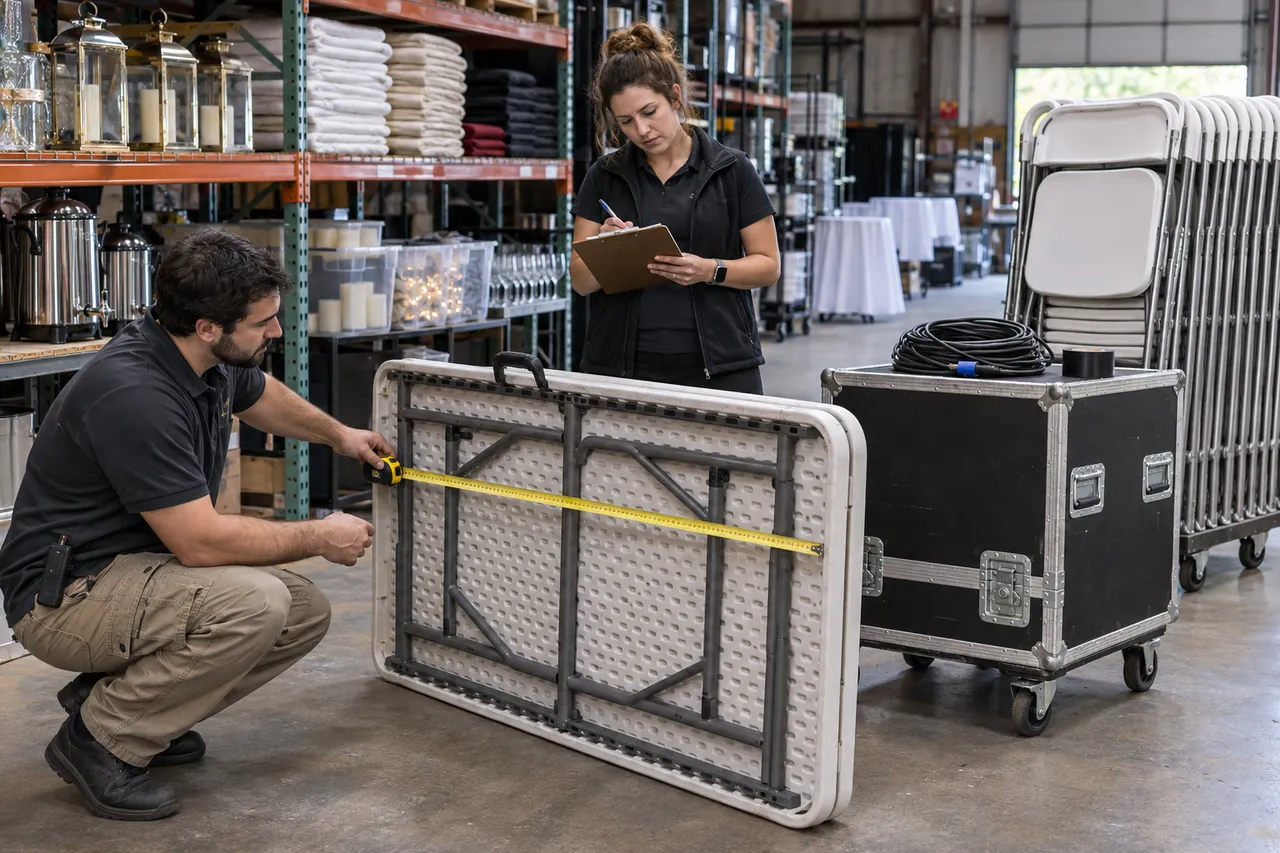
Two rental offers can earn the same amount on a quote and leave a team with very different Saturdays. Forty chairs may require a box truck and a second person at the venue. A compact speaker kit can fit on a shelf and leave through the pickup counter, but someone needs to test it, explain the connections and check every accessory at return. A photograph and a rate do not show either kind of work. Compare rental ideas by the jobs they put on the schedule before investing in the inventory.
Work through one representative order for each idea. Record what the customer needs, what the business must prepare, and which people and equipment must be free. Compare what happens on a normal day and a busy one. The exercise can expose an offer that would use spare capacity, a larger package that should stay on a quote process, or a rental you cannot serve with the current team.
Pick comparable orders instead of comparable products
Choose a real use for each offer. A furniture package might serve a forty-person birthday, with delivery on a Saturday morning and collection Sunday. An audio kit might cover the speeches and music at a small reception, with Friday pickup and Monday return. Use dates and quantities close to what you expect customers to ask for. A product with an appealing daily rate may have a different average order size or service requirement than the other idea.
Describe the promise in words a customer can verify. For the furniture, write down how many chairs and tables arrive, whether the team sets them up and when they will be collected. For the audio kit, list what comes in the case, what a customer needs at the venue and what help is included. Keep delivery, collection and optional service separate so you can see which combination makes the comparison work.
Include one ordinary variation for each package. The furniture customer asks for ten extra chairs or a delivery after the venue opens. The audio customer needs one more microphone. Show how the shop would verify the change, what it has to pick and which other booking or supply might be affected. If the variation requires an unusual exception, keep it outside the baseline and test it separately.
Trace the order through the whole day
Begin with the inquiry. Count the time an employee uses to explain the options, check space or schedule and prepare a quote. Record whether the normal customer could pick a date online or whether someone must review a venue first. If the offer usually calls for a site visit or a joint planning call, include that work in the example. It belongs to fulfillment even if it happens long before a truck leaves.
List preparation tasks in sequence. A furniture order might need counting, staging, loading and straps. Audio might require inspecting a cable set and testing the power or inputs. Decide what must happen before the crew can leave or the customer arrives. Estimate staff time per task and record which role or tools it takes. A shop with available drivers may still have one person who can prepare sensitive equipment.
Continue to the point where the item can be rented again. Record collection, return travel, unloading, missing-piece review, cleaning or service, and putting the item back in its storage location. This interval prevents a new promise until stock is checked. A package sold as a one-day rental can occupy the business for several days after preparation and return. Show the entire window on the schedule before comparing utilization.
Write down the resources each job makes unavailable
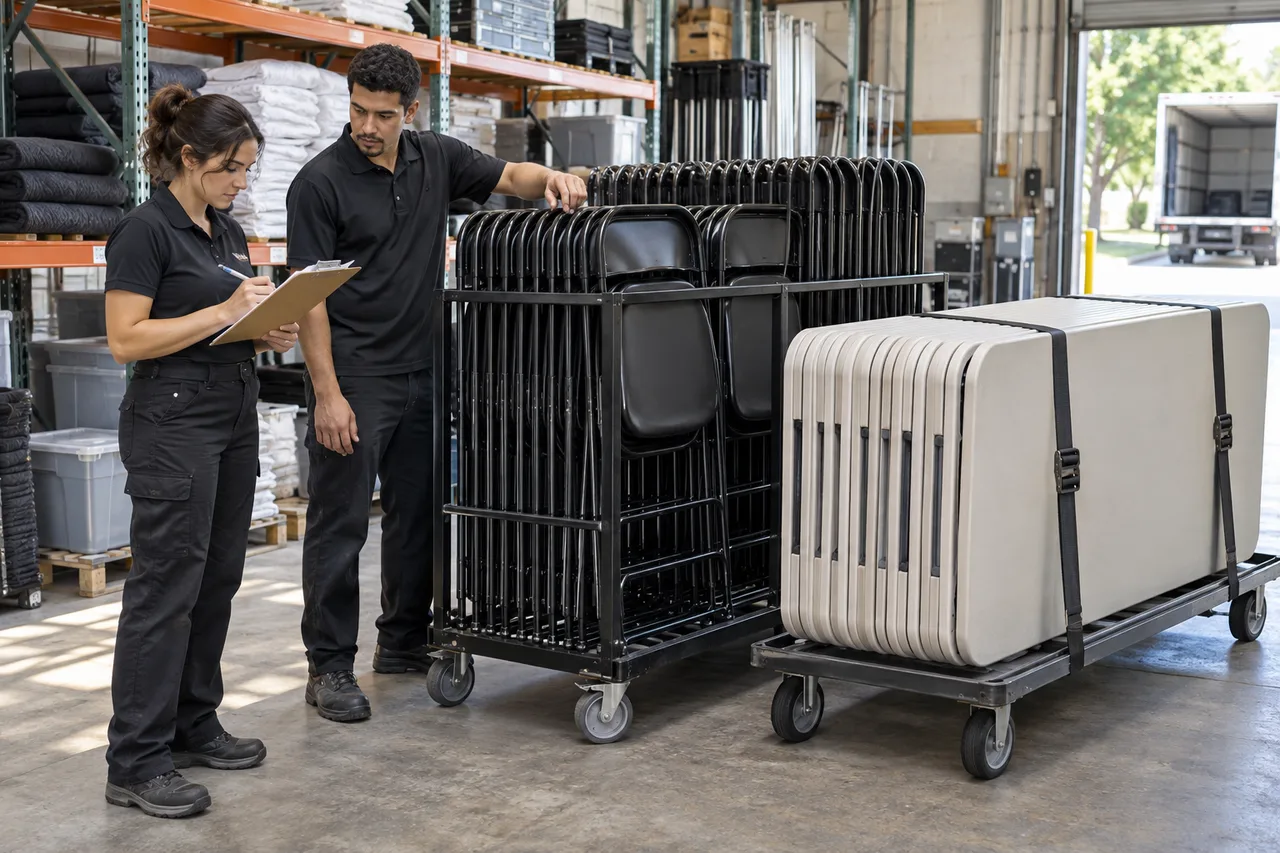
Count physical units and common parts. If a package requires four tables and forty chairs, check how many of each you own and how many can be staged at once. A second package may compete for the same chairs. An audio offer can need batteries and a cable kit the rest of the catalog also uses. Use actual shared resources instead of treating a bundle as a set of equipment with its own independent count.
Add the people, storage, workshop space and transportation used. A stack of chairs can sit in a trailer overnight, but that also commits the trailer. A second truck may need a qualified driver and a sober schedule of travel and unloading. A pickup package can avoid driving and still require a worker who knows the equipment. Record who can substitute and when they are available. Include a work surface or preparation outlet when several orders must be tested before dispatch.
Consider space at the destination as well as the shop. A venue can have a reserved loading door, awkward route or narrow drop-off window. A kit that uses a hallway or outdoors might need staff to verify basic setup conditions. Have a conversation with the role that delivers it. If the customer must confirm details in advance, decide who asks and how the result will reach the crew. That contact takes time and can affect how many similar jobs the business can accept.
Put two versions of the job on the same calendar
Sketch a normal day with one rental and a busy day with enough demand to matter. Add the team’s existing bookings first. Put the two new jobs where they would actually fit, using preparation and return times. A useful comparison might show that two furniture orders can be staged Friday but require the same van on Saturday morning. The audio pickup could fit both weekends except when the technician is processing returns from another event.
Test the bottleneck you expect and one you did not expect. Count how many chairs can fit in the truck with the tables and protective gear. Then time how long it takes to move the full order from storage to the loading bay. For the kit, run the checkout handoff and see how many customers can arrive together without blocking the return counter. If the answer requires a specialist, put that person on the busiest reasonable schedule and see which work waits.
Write down the capacity the business can confidently admit. Assume the equipment will need normal turnaround, and leave space for a typical delay. Use that number in the quote or booking rules when practical. If the remaining constraints need review, make the customer’s first response a request rather than a promise. A capacity limit is useful even when it sets a lower number than you hoped to sell.

Compare contribution using the same unit of work
Use an example order with a realistic charge and direct costs. Suppose a table-and-chair package yields 420 in rental and delivery revenue. If direct labor, truck time, supplies and payment costs total 180, it leaves 240 to cover ownership and shop overhead. An audio kit could yield 240 and have 70 in direct costs, leaving 170. Those figures are only illustrative. Use your own work logs, fees and currency, and make clear whether you counted each trip and each preparation step.
Now identify the resource that most limits each offer. The larger package might use four person-hours and two truck windows. The kit might use ninety minutes of skilled labor and almost no vehicle time. Compare contribution per constrained hour or booking slot where it helps a decision. It is possible for the lower-value order to fit better on a busy weekend while the higher-value order is a good use of an idle weekday route.
Review ownership costs separately. Storage, periodic service, replacement pieces, insurance and eventual replacement all affect the offer. Ask how many usable bookings a unit realistically sees over a season. For an item with peak demand concentrated on a few dates, the practical number of useful slots may limit payback more than the amount of interest. Note what happens if an item breaks and what it would cost to fulfill a booking using a supplier. A grounded scenario is more useful than a precise result built on assumed demand.
Check how each idea responds to a bad day
Choose an exception you can rehearse. The furniture drop-off moves two hours later because access is blocked. The audio kit returns without a power cord just before the next pickup. Describe who sees the problem, who can decide how to respond and what the customer will be told. If another order is affected, identify it while you still have time to fix the route or offer a substitute.
Estimate how often nearby constraints make exceptions harder. A van may be full on the busiest days. A replacement cable may be easy to find while a special microphone may take longer to source. A subcontractor might only be available with advance notice. Check these assumptions with the team before using them in a price or service promise. Leave enough time to cleanly record the customer’s revised agreement and the actual work performed.
Look at the consequence if an employee with special knowledge is away. Can another person count the chairs and check the driver’s manifest? Can they test the audio kit from a simple checklist and demonstrate basic operation? If the answer requires training, make that part of the setup. A service that depends on one owner answering every after-hours call can be worthwhile, but the owner should include that time when comparing it with a simpler offer.
Choose the smallest version you can trial safely
Start with a small batch or borrow inventory from an approved supplier under clear terms. Use limited dates and tell customers when the offer needs approval. A shop could try a furniture package for pickup before adding separate routes and setup work. An AV shop could serve a straightforward room with a standard kit before adding a second series of configurations. Keep the trial narrow enough that the team can compare forecast and actual work.
Record actual times during a test order. Ask the person who prepared it what they needed twice, and ask receiving what was unclear about the return. Use the pick list to see whether a sold or lost supply item has been confused with something you expect back. Store an ordinary photo of a complete package if that will help the team recognize it. Then rerun the case after changing the layout or checklist.
Ask customers what made the offer appealing and which part they expected the shop to handle. A low-cost delivery can turn out to be the decisive benefit, while a particular accessory may matter little. If the customer wants someone to set up the audio system, compare that staffed offer as a different operation with its own timing. Keep the same test methods for each version so the team can see the change in work.
Compare the opportunities to use the resources you already have
A new offer may fit because particular resources are idle. An existing vehicle might already make a nearby run. A workshop worker may have time to reset one more kit before a scheduled pickup. Put the additional task on the real route or shift and check whether it fits after allowing for ordinary delays. Do not count a resource as free simply because an employee or truck is already paid for. It still needs time and room for this order.
Compare the opposite case. A proposed offer might need storage the current fleet urgently uses. Even after a successful test order, it may create more work if the shop has to move other stock to reach it. Walk the warehouse with a representative quantity, including the space to sort returns. Try loading the new offer after the business has staged its existing Saturday jobs. Record what would need to change before taking more bookings.
Keep one alternative in the comparison when work has to shift. A company could move certain orders to a pickup-only process, define a service zone for deliveries or reserve staffing for certain dates. Try the narrower version rather than assuming the initial idea has to stay exactly as advertised. A clear constraint often makes the test easier to price and easier for customers to understand.
Put the comparison in a form the whole shop can review
Give each offer a row with the date range, loading time, required stock, total person-hours, vehicle commitment and direct contribution. Add one line for the most important exception and one for a constraint you have not yet tested. If the expected quantity depends on a particular customer mix, state it. For example, a small AV shop may have capacity for six easy pickups during a weekday but only three during a weekend with venue deliveries. Use observations from the trial to replace estimates where you can.
Use the same sheet to look at the effect on current customers. Suppose another table delivery would require moving a profitable pickup or placing a second crew on a late shift. Record which existing work would change. If a supplier has equipment to bridge an early trial, include the supplier pickup and return on the schedule. The purchase price of the new inventory tells you little about these interactions. A real calendar exposes them before a customer expects to be served.
Compare cases when the customer changes the service. See what happens to each offer if pickup becomes delivery or setup time increases. Try one version with the same inventory and a different service boundary. The audio kit may become less practical if half the customers need overnight support. The furniture offer may recover when deliveries are restricted to a short operating zone. Explain the difference to the people who prepare quotes. They can better identify which leads fit if they see the conditions that made the offer work.
Review the decision after a defined number of jobs or a month when demand is representative. Check whether the package brought in the kind of orders the team expected. Collect the change types and work that actually caused delay. If most orders fit but one requested service causes repeated problems, revise that part before increasing the fleet. If the first two orders succeeded only because the owner worked extra hours, include those hours in the next decision about whether the offer can grow.
Decide what you can fulfill again next week
Review the options with the people doing the work. Compare the estimated and observed time, capacity, direct contribution and recovery needs. A package may be financially attractive and still need a different window or slower rollout. A smaller idea may be worth continuing because it makes use of capacity that otherwise would be idle. State which condition must be true before you buy more inventory or advertise more slots.
Document what you learned from the trial. Include the kinds of job the shop can serve, the earliest date it can commit, the shared resources that limit quantity and the steps needed at return. Use those details to define the offer and train the next shift. If you drop or defer the idea, keep the evidence that led to the decision. A future change in storage, route or skills may make it feasible without repeating the entire analysis.
The better opportunity is the one the team can deliver repeatedly with the resources it actually has. A job that fits the van, the calendar and the return process is easier to price and promise. Follow each rental idea all the way back to the shelf and compare what it takes to do it one more time.