Choose how to handle deposits and damage claims
Use outbound and return records, a clear approval process and accurate refunds to handle rental equipment damage claims.

The warehouse receives a pair of speakers late on Sunday. Each comes in the correct case, but on Monday a technician finds a broken latch and sees a mark on one grille. The customer remembers the mark being there at pickup. The bookkeeper sees a $300 refundable security payment and asks how much to return. Before anyone can answer, the business needs to identify the exact speakers, find the handoff record, separate the two reported issues and check the agreement that the parties accepted.
Build your deposit and claim process around that moment. A customer should learn what you will check and what may happen to the payment before agreeing to it. Staff need a consistent way to record what happened and a clear point at which the ordinary return becomes a claim. The payment decision comes after that review. It should be possible to trace it back to the right rental, the evidence and an approved amount.
Write down what each payment does
Start with the rental payment, which may include an amount paid at booking and another amount due later. A separate equipment security arrangement can use a temporary authorization or a refundable charge, depending on your processor and terms. Other operations may use an approved invoicing process when a charge arises. Make sure the method fits the transaction, the customer and the actual inspection time. A security method works only when you can administer it reliably.
If your business takes a refundable charge, determine how the payment will be identified and how refunds get recorded. The same $300 can appear in the processor, the rental system and the accounts at different times. Ask your accounting adviser to establish the treatment for the kind of deposits you take. In the shop, mark it separately from the rental fee, and do the same on customer-facing documents. A staff member who closes an order should be able to see what amount is due back, what portion has already been refunded, and whether a refund request is passing through the provider.
If the business uses a temporary authorization, find the deadline for each transaction and know when the office needs to decide whether to capture or release an eligible amount. A card authorization and a refundable charge require different operations. Stripe’s documentation describes canceling an uncaptured payment and issuing a refund after a charge has been captured. Check the rules and the actions available in the flow your business uses, including the conditions for a partial capture or refund. Stripe’s refund and cancellation guide
Put a short summary next to any amount the customer sees. Explain when the security amount is taken or authorized, when you expect to inspect a return, and how you notify people about the release or any exception. Give the customer a receipt or order acknowledgment that links the amount to the applicable terms. Illustrate wear, missing parts and damage using examples from your actual inventory. Take the proposed terms through the review needed for your contract, consumer obligations, insurer and processor before offering them.
Create an outbound condition record that a reviewer can match
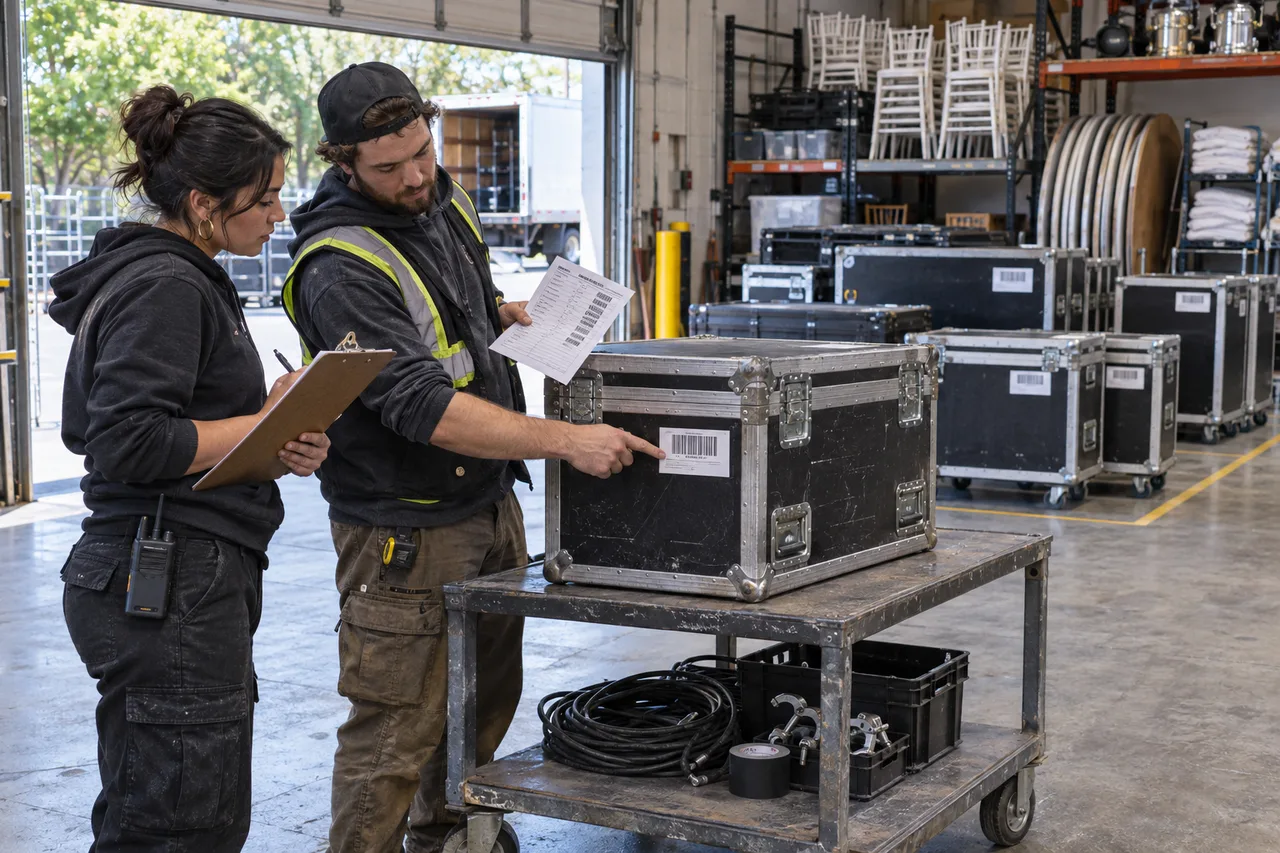
When a serialized item leaves, verify the asset tag, the order and what travels with it. For a speaker kit this could include the actual speakers, their cable pouch, stands and protective lids. When inventory is assigned by quantity, use distinct batch or cart references as needed and record the count and notable pre-existing conditions. Take care that an evidence record can be matched to the specific order. An image of a similar speaker from last week is of limited value when a customer asks about the one they received.
Photograph the areas that take routine wear or need identification, and show the condition of surfaces that matter to a later review. For the speaker example, this could mean a full view, a clear asset label, the grille and the case latches. Prepare the photos while good lighting and the equipment are available, ideally in a regular location where staff can work efficiently. Save dates and references in the approved order or asset record. Keep the images accessible to authorized staff and limit the amount of customer information in view.
Give the customer a reasonable way to note an existing issue at pickup or delivery. If a renter notices an abrasion, staff can add it to the record and confirm whether the equipment is approved to go out. That small step can prevent an argument when the same abrasion is seen on return. Where equipment is delivered to a venue contact, record with whom the handoff was made and the customer’s agreed process for reporting issues found afterward.
Be precise about the types of return conditions you care about. A dark mark on a metal dolly may be ordinary wear. A missing proprietary latch can make a transport case unusable. If staff have been charging for every mark on one product and ignoring similar marks on another, give them a written standard and the approved examples. A consistent approach also helps the warehouse recognize a genuine maintenance issue before the item is booked again.

Inspect returns in a consistent order
Start with the quick facts. Confirm the return time, asset and order. Note whether the customer handed over the item, used an approved drop-off or left it with another person. Compare the included components to the outbound list. Review condition under suitable lighting and follow your equipment procedures. Units with a possible safety or operational issue should enter the appropriate hold or inspection workflow so someone cannot inadvertently reserve and release them again.
Give each result a practical next action. A complete return can go to the normal closing and refund queue. An item that needs routine cleaning can go to processing. A suspected missing item can prompt a search in the packaging and a question to the renter. A damage issue that could affect use belongs with the person qualified to review it. The goal is for an observation to reach the right person before anyone makes assumptions about who caused it.
Keep status labels distinct. “Awaiting technical review” reminds everyone that a possible problem was found and a decision is pending. “Customer notified” tells the next staff member that a message has gone out. “Refund submitted” marks the payment operation. These statuses are useful when someone asks whether more can be done today. A form that offers only returned or damaged leaves the office with too little detail to handle exceptions consistently.
Set a predictable window for the routine inspection and release request and assign coverage. Ask whether a holiday schedule, late-night pickup or rush of returned equipment could break the promise you plan to make. If long weekends regularly create a delay, set the timing you can support or arrange additional coverage. Set a separate review process for an unusual claim and communicate a specific next update. Closing a return and keeping a security payment are decisions that need evidence and ownership.
Review the evidence and calculate an amount
Assign a reviewer who can examine the agreement, outbound and return condition, maintenance information, customer communications and the proposed amount. Start with what the team observed, then what it can reasonably establish. A missing cable may turn out to be tucked under the cover. An old mark may appear in the outbound photo. A damaged latch might require a replacement part. Treat each issue separately and record which facts support the conclusion.
Ask what the business is entitled to recover under its terms and applicable rules for that order. Use a documented supplier quote, repair estimate, priced inventory schedule, or other approved method where relevant. Check whether replacement, repair or another amount is appropriate, and account for any coverage or offsets that apply. Review terms that refer to loss of use, cleaning, or administrative costs before using them. Customer funds should be handled in line with the approved terms and substantiated amounts.
Use a simple example. The business took a $300 refundable security charge for the two-speaker kit. After checking the records, a reviewer finds a prior image of the grille mark. The replacement latch is supported by a written $42 estimate under the approved policy. If the reviewer approves retaining $42 and nothing else, the shop would request a $258 refund and explain the $42 balance. Give the customer a receipt that ties both amounts to the original security charge. The separate rental fee stays in its own record.
A larger repair could exceed the remaining authorized or collected amount. Give that case a defined escalation. The team should know how to discuss evidence, insurance, additional authorization and any agreement about payment. One person should check all amounts already applied before a further request is issued. That review helps avoid charging an amount that has already been settled, or sending two requests under different labels for the same loss.
Ask the renter for their account and explain the outcome
Use neutral language when reporting a potential issue. For example, “When we opened case 42 we found one of the listed cables missing. Could you check your vehicle and let us know by tomorrow at noon? We’ve attached the component list and the return photo. We’ll follow up at three.” The message states the observation and gives the customer a clear action. Use your agreed review and payment deadlines for the actual case. Keep good records of the relevant replies.
If you decide to retain part of a security charge or request another payment, include the reason, item, amount and basis. Where possible provide the relevant evidence, protect unrelated personal information and make it easy for the customer to ask about the decision. State what you have submitted to the provider and when the customer can expect the next update. Avoid promising when a bank app will display a refund. If the status is pending, say how the shop will follow it.
Give staff a path for a disagreement. A return employee may be able to correct a simple count or add a photo. A manager may need to review disputed evidence. An accounts person may be responsible for a formal payment dispute with the processor. Keep the agreement, photos, estimate and messages in the same case, and respond through the provider’s current process if an issuer dispute arises. A concise record created on the day is easier to use than a reconstruction made later. Stripe’s guide to responding to a payment dispute
Decide how to handle new facts after money moves. Suppose the customer finds the cable after a documented partial retention and returns it before the same item needs to be replaced. Follow your reviewed terms and authorized procedure for adjusting the result. Keep the original decision and the later correction in the history so a staff member can explain both. Send a clear update, issue any appropriate adjustment against the original record, and close remaining tasks for the order.
Reconcile discounts, partial refunds and return exceptions
Tie the security record to both the rental and the provider's transaction reference. A manager approving a partial refund should see the starting balance, prior adjustments and the proposed remaining amount. If one employee requests a refund and the register loses network access, check the transaction state before retrying. Use the provider’s supported process for a retry. You want a single intended money movement even if the payment service sends multiple confirmations or someone opens the order twice.
Distinguish the financial record from the inventory record. A customer may reach an agreement about a claim while the equipment still needs repair. The release of the security amount does not clear the item for rental. Conversely, clearing a false alarm at the inspection bench should lead to the appropriate follow-up for the customer's deposit. Connect the steps through the rental reference while keeping the permissions and completion conditions appropriate to each job.
Check the list of open refundable amounts and authorizations at a convenient point in the week. Look for deposits still open after a routine return, refunds in progress, amounts associated with unresolved claims, and orders with no owner for the next action. Compare the list with your existing refund reports and reconcile differences. A small company can begin with a restricted report, but ensure it does not expose full payment details outside the authorized system.
Run a short scenario review with staff each season. For a clean complete return, the team should locate the security transaction and complete the normal disposition. For a returned item with an old remark in the photos, the team should be able to use the record and update the case. For confirmed damage, the reviewer should identify the documented amount and send the correct notice while warehouse staff maintain a repair hold. For a duplicate refund notification, the account should continue to show one refund. Repeat combinations where your provider, warehouse and office each have a separate step.
Rehearse an after-hours venue handover
When a venue is responsible for gathering items after the event, identify who can report what came off site and who will complete the condition review. An evening pickup photograph can show the number of closed cases loaded. A morning inspection can show the parts inside them. Keep both records with their respective time and purpose. If a component is missing, review the pack list and ask the appropriate venue contact to check the agreed collection location as well as contacting the renter.
Decide how the office will respond if a third party offers to pay. Look up the authorized payer and the terms for the specific customer. A site staff member who finds a case is not automatically responsible for paying a past charge, and the booking owner may need to approve any settlement through a different payer. Use the normal payment process and provide each party with the account information they are entitled to see. With a consistent record, the return owner can follow the facts without asking the driver to negotiate after hours.
Improve the policy using the cases you actually handled
Review a month of routine returns and claims. Track the proportion closed on time, the most common exceptions, average time to give a customer a decision and how often evidence was missing. Identify where the issue originated, such as incomplete loading, inconsistent counts at the return bench or unclear packing instructions. A claim may point toward a durable operational improvement. Adding a labeled cable pouch can save the office more time than increasing the deposit on every kit.
Compare the actual retained amounts and refund delays with what you tell customers. If many returns wait for the same approval or several customers ask where a refund appears, update the process or wording. Evaluate whether different categories can use return periods the business actually staffs. Use the findings to refresh the one-page guide you provide to cashiers, dispatch, warehouse and accounts.
Keep the customer’s experience in view from the first quote to the last receipt. The customer needs to know the amount and why it is collected, when the return will be inspected and how to reach someone if the result is questioned. Staff need a condition record, a responsible reviewer and a clean way to complete the payment. The business earns trust by handling both the straightforward returns and the unusual cases predictably.