Choose a rental side business your schedule can support
Compare rental ideas by the hours, storage, staff and returns they require before accepting orders or buying equipment.

A person wants a rental side business that fits around a weekday job. They have room to store a few banquet tables and think the work will mean a Friday pickup and a Sunday return. A first inquiry needs delivery during a workday. A second customer wants to return equipment late in the evening. Both could be good rentals for a shop with the right hours and staffing. The better first question is whether this business can serve them within the time its owner actually has.
Evaluate a rental idea using one order from inquiry through return. Put the work on the schedule you can offer, count the space and equipment it requires and compare the expected money with the time and costs you would put into it. Test demand on realistic terms before purchasing a fleet. Start with a service you can fulfill without depending on routine exceptions to the rest of your week.
Put your actual working hours on a calendar
Start with the periods you can reliably handle customer and warehouse work. Mark when you can respond to requests, prepare equipment and meet people for appointments. Include your main work, family obligations and other regular commitments. Put down specific windows rather than an estimate like ten hours a week. Ten hours spread across a few evenings can support different orders from ten hours in one weekend block.
Look at which work needs a firm time. An inquiry can sometimes wait for an evening reply. A pickup needs an agreed appointment. A delivery depends on travel, loading and the customer's access to the location. Returns can be hard to schedule if renters keep equipment until a late event ends. Put the work in the order it has to occur. If two tasks need you at different places at the same time, the current plan cannot support both.
Choose a point to check whether an order still fits. A customer may ask for a Friday afternoon delivery you can only handle after work. An honest offer could state the actual pickup window or invite the renter to request a delivery time you can verify. Build the public offer around hours you can keep. Test whether those hours fit the people you want to rent to before planning the purchase.
Walk through one ordinary order from start to finish
Pick a small idea you can describe. A customer might rent four tables for a weekend party and collect them from your storage location. Write down how the customer would ask for availability, what they would see in a quote and how you would confirm the time. Then plan inspection, preparation, loading and the return. Include what you do when something needs cleaning or review before the next rental. A booking that looks simple in a description still uses time between handoffs.
Try the same order with a family that asks for delivery. Estimate how much time the route and venue access would take, then add the pickup trip if the business is responsible for collection. See whether you have a suitable vehicle and a lawful and appropriate way to handle the items under your operating conditions. Identify when you would need another person. If the delivery needs a commitment you can't meet, reconsider what the shop should offer rather than promising a flexible time you don't have.
Write down the point where the rental is over for your business. It might be when all items have been returned, checked, reset and stored, and you can reliably promise them again. Put that step on your calendar. If the customer returns Sunday evening but you cannot process the order until Tuesday, that affects the next booking. The hours between events are part of what you plan to sell.
Compare ideas by how they use the time and space you have
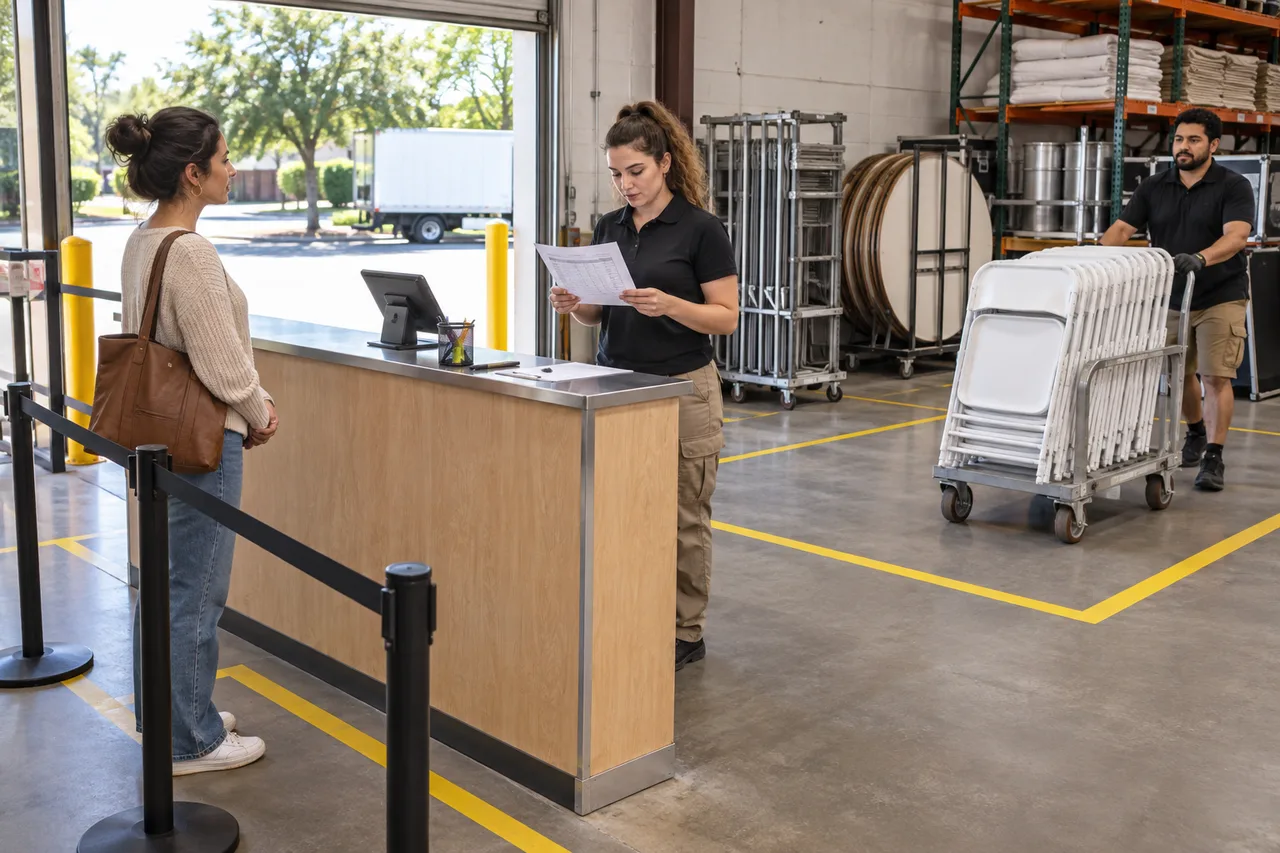
List a few ideas and compare a routine order from each. A folding table pickup may use a larger space for loading but need little setup at the venue. Smaller decorative pieces may be easier to store but require more cleaning or careful packaging. A service that includes setup may bring a larger order total while using a longer and less flexible window. Use the booking examples to see which model fits your time instead of choosing by product price alone.
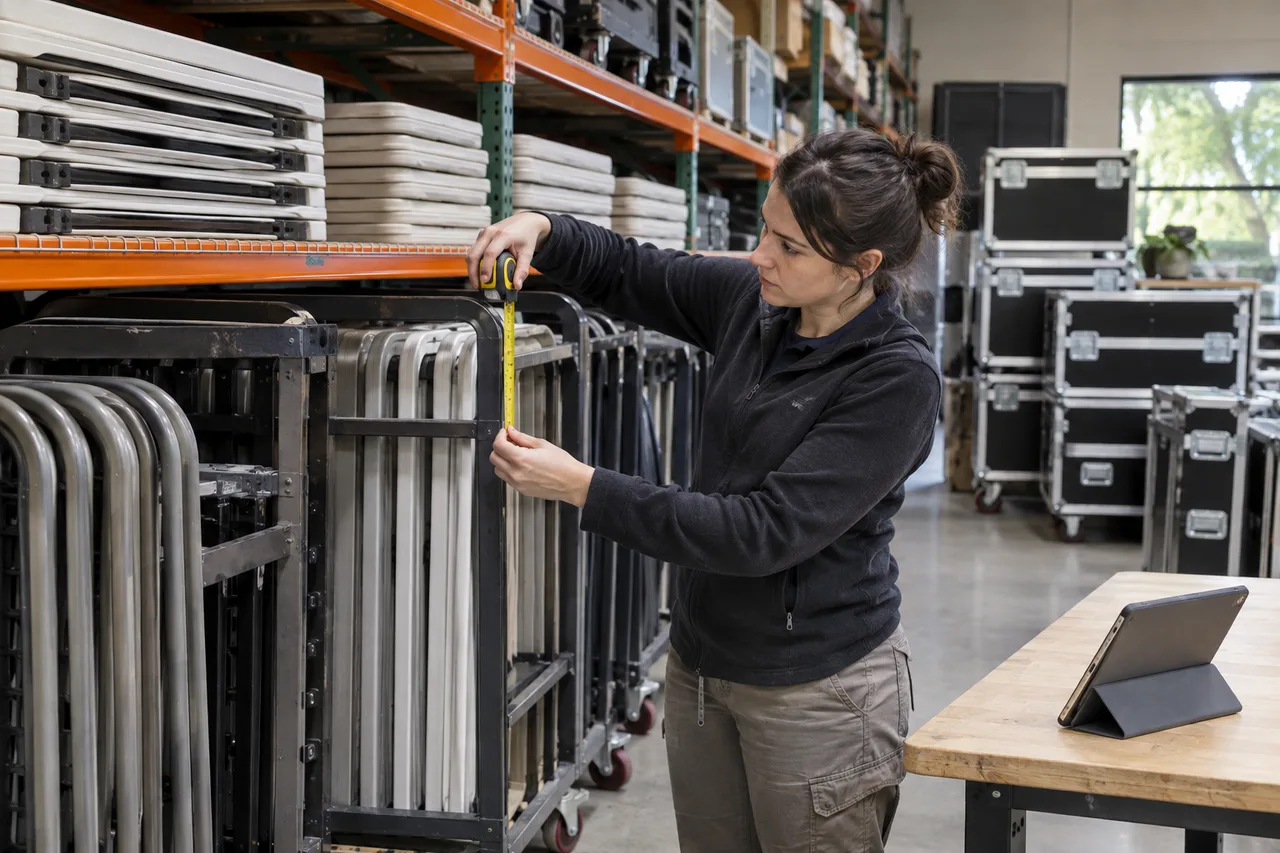
Measure the space you can actually use for the equipment. Include room to receive, inspect and stage a typical rental. If you plan to store items at home or in rented space, check the arrangement with the relevant parties and confirm any applicable requirements before offering customer access. Think about where someone can safely collect equipment under the shop's procedures. A storage space that fits the inventory might still be unsuitable for a customer handoff.
Look at the vehicle and staffing you need. Ask someone who knows the work to review what has to be moved and whether your planned operation supports it. A product can be compact in a photo and still require another person or a larger vehicle. If you rely on an outside service for one part, verify its schedule, terms and cost. The idea should work on the dates you expect to accept, including the next trip and return.
Decide which variations you can serve
Describe one core offer, then list the changes you might accept and those that require review. A simple start can be one equipment type, one pickup location and a few regular windows. If someone wants an extra unit, a longer reservation or a different collection time, check which part of your plan changes. A clear first offer helps you see whether those requests fit the kind of business you want.
Try a late return. A table originally due back Sunday morning comes back Monday evening. Look at the next booking and the time required to inspect and prepare it. Decide how the office will find the current return status, what it will say to the next customer and which alternatives it can offer. Use a booking window that lets the business make reasonable commitments even when one order needs follow-up.
Try another scenario where the usual pickup appointment is unavailable. A customer has to change times after confirming. Check whether a different appointment could work and decide who can approve an exception. If the business often has to interrupt other responsibilities to make a rental possible, the offer needs a narrower schedule, more support or a different service. Make the change before building a larger inventory.
Verify demand for the terms you can actually offer
Talk to prospective renters about a realistic offer. Ask what dates, quantities and service they would need and when they would expect to pick up or receive the equipment. Compare those answers with the hours you can provide. Someone can like the idea while needing a service you don't plan to offer. A narrower group willing to use your actual terms gives you better evidence about the first purchase.
Look for the context around the order. A community hall may have its own equipment most weeks and only need extra items for a few dates. A group organizing recurring programs may need the same pieces but cannot accept your available delivery hours. Record which requests might fit a pickup model, which ones need a different service and when a customer is likely to make a decision. Keep confirmed orders separate from early conversations.
If you can safely and appropriately run a small trial with equipment you already own or can source with permission, choose one or two jobs you can fulfill. Use accurate descriptions and your intended terms. Make sure the inventory, schedule, applicable requirements and business arrangements are ready before accepting anything. Track the work from quote to return. That evidence lets you compare the experience with the schedule you planned.
Compare revenue with the work and cost of the whole order
Estimate a complete booking including the item rate and any service the customer needs. Take into account direct expenses such as cleaning supplies, packaging, travel or outside help you would pay for. Include the expected time to prepare, hand over and receive the items. If the business needs to buy or rent storage, equipment or other services, record the assumptions and determine whether they add to startup or ongoing costs.
For example, suppose a small pickup order earns $120 and uses $32 in direct costs and supplies. The $88 left in this illustrative case still has to contribute to other business expenses and compensate the owner's time. Add a delivery request that takes another trip and more preparation. Estimate the new costs and what you would need to quote for the service. The customer may value the delivery, while the owner needs to decide whether the hours and vehicle commitment are available.
Estimate how many orders you could realistically fulfill in an ordinary month. Look for periods with no available appointment and leave time for returns or problems. A rate that works on a sample order might need several completed bookings to cover the actual storage and equipment costs. Check how many such jobs fit the business's schedule and whether the demand you observed could fill them. Keep the estimate modest until you have completed comparable orders.
Compare two versions of a six-hour week
Imagine that you have six dependable working hours. Two come on Thursday evening and four are on Saturday morning. A pickup offer might let you prepare the equipment on Thursday and handle both collection and inspection for staggered orders on Saturday. It only works if you can agree on a return window or otherwise have an appropriate way to receive the equipment on the expected date. Write down when the renter needs each item and when it will be available again. The constraint may be the return appointment rather than the amount of handover time.
Now put a delivery order on the same calendar. The travel and venue schedule could use most of the Saturday block, and the collection might take place at a different time. If a partner handles one trip, add the time you still spend coordinating it and the actual cost. If you complete both trips, decide where the hours would come from. This comparison helps you see which version of the offer customers can use and which work you can take on without depending on spare time you may never have.
Try the next week as well. Some equipment may be out longer, while other items will need to be returned and reset before a confirmed pickup. A busy first weekend can leave you with too little time to prepare a second one. Treat each booking as a sequence of appointments and work blocks. Notice tasks that can move to a quieter time and tasks that must happen by a specific hour. Use the more restrictive window when deciding how many orders you can confirm.
Write an estimate you can update after the first jobs
Separate initial purchases from recurring expenses and the costs attached to each rental. For an initial estimate, list equipment, storage, business setup and any tools you need to get the operation ready. Then list the expenses that keep coming in even on a slow month. Use a separate line for costs that increase with each booking. The U.S. Small Business Administration offers a break-even calculator that can help organize fixed costs, order price and variable costs for a simplified estimate.
Make the month match your operating schedule. If six orders would be needed under your assumptions, check whether the shop has six feasible customer appointments and enough stock across their dates. Look at whether another column should capture a return visit, a need for staff or a time-consuming maintenance check. Label estimates and use the same method on completed orders. A spreadsheet is useful when it helps you decide what to confirm in the calendar, rather than treating a plausible price as proof the business can run.
Set a deliberate limit for a first trial. Choose what you can spend, which dates you'll use and when you'll review the outcome. If a business needs specialized arrangements or qualifications for the service, check them before accepting work. At the end of the trial, record the hours, the actual costs and the number of bookings you could serve. If demand didn't arrive under your available terms, that should change the next test. If customers used the offer but returns took longer than expected, the schedule may need to change before you add more orders. Base the next step on a clear observation.
Make the first version small enough to operate well
Decide what you need to accept the first set of bookings. Prepare the item list, available dates, condition checks and the equipment you can reliably hand over. Set a method to reserve stock and keep payments and terms tied to each order. The customer should know what they will receive, when they can collect it and how to contact the business about a change. You can test a small catalog without promising every variation customers might want.
Use one evening or weekend to run the entire example. Simulate a request, prepare the pieces, verify that the pickup space works and stage a return. Try a schedule that contains two customers. If the same equipment is required twice before you could inspect it, adjust the reservation window. If customers can't collect at the available times, investigate a different equipment or service model. Make those changes while it is still easy to change what you offer.
Give yourself a reason to review the size of the operation after the first few jobs. A demand bump might justify opening another appointment if you have the stock and staff. If the workload already fits tightly around other commitments, a smaller number of predictable bookings may be easier to run. Check which problem the next purchase would solve before adding more equipment.
Review the season in terms of evenings, weekends and returns
After serving a few orders, compare planned hours with what you did. Look at preparation, appointments, questions and the work after the customer returns. Notice where you had to make exceptions. A consistent pattern of work during a period you can't protect is a signal to change the offer or business model. If the work fits the hours you planned and customers can use those windows, consider a modest next test.
Record the bookings you can repeat and the ones you couldn't serve. Ask whether an alternate pickup window, a different product or a separate provider would make future orders work. Compare the direct costs and available space with the original estimate. A business that is small enough to fit the schedule can still learn which customers want a different arrangement.
The best idea for a side business is a rental you can prepare, hand over, receive and reset when you have time to do it well. Test one honest offer, use a calendar that reflects your real commitments and let completed jobs tell you when the operation is ready to grow.