Build delivery routes around access and truck capacity
Match event rental deliveries and collections to venue access, usable truck space and the crew’s actual loading sequence.

The shortest route may look right on a map while sending the tallest truck to a venue with a restricted entrance. It can also put a small delivery first even though its chairs will be buried behind the tables for the next stop. Plan the route around which vehicle can serve each venue, what will be on it when it gets there and how the crew can handle each order. Compare drive times once the physical plan makes sense.
Pick one day with more than one truck or with several stops on the same vehicle. List the accepted deliveries and collections, the service windows, and the actual equipment on each. Ask the warehouse to show how the items will travel, including carts, cases and other handling equipment. Consult dispatch about access information already confirmed with the venue. Keep the working list small enough for the people loading and driving to verify.
Collect the access information that can change the vehicle
Start with the place that receives the actual load, which may differ from the address printed on an invitation. Record the service entrance, approach, contact or role and the time it can be used. Ask the venue whether it has a published load-in guide, a dock reservation requirement or restrictions relevant to your equipment. Check the approved place for the truck to wait if the site cannot receive it yet.
Compare the requirements with the vehicle and crew you intend to send. A small van may reach a loading point where a box truck can't operate. The useful information is the confirmed access arrangement and the actual equipment it can accommodate. Use verified vehicle and venue information, and involve the responsible fleet or site staff when a clearance or loading condition is uncertain. Keep those decisions attached to the booking where the next dispatcher can find them.
Look beyond the door to the destination. A venue may accept the truck at the dock while the furniture needs to travel to another floor. Check the approved path, equipment handling steps and normal access arrangements with the venue. Estimate the difference between handing cases to a receiver and transporting them to a hall. Tell the customer which work is included so the receiving crew has the right expectation.
Estimate the load using the way items actually travel
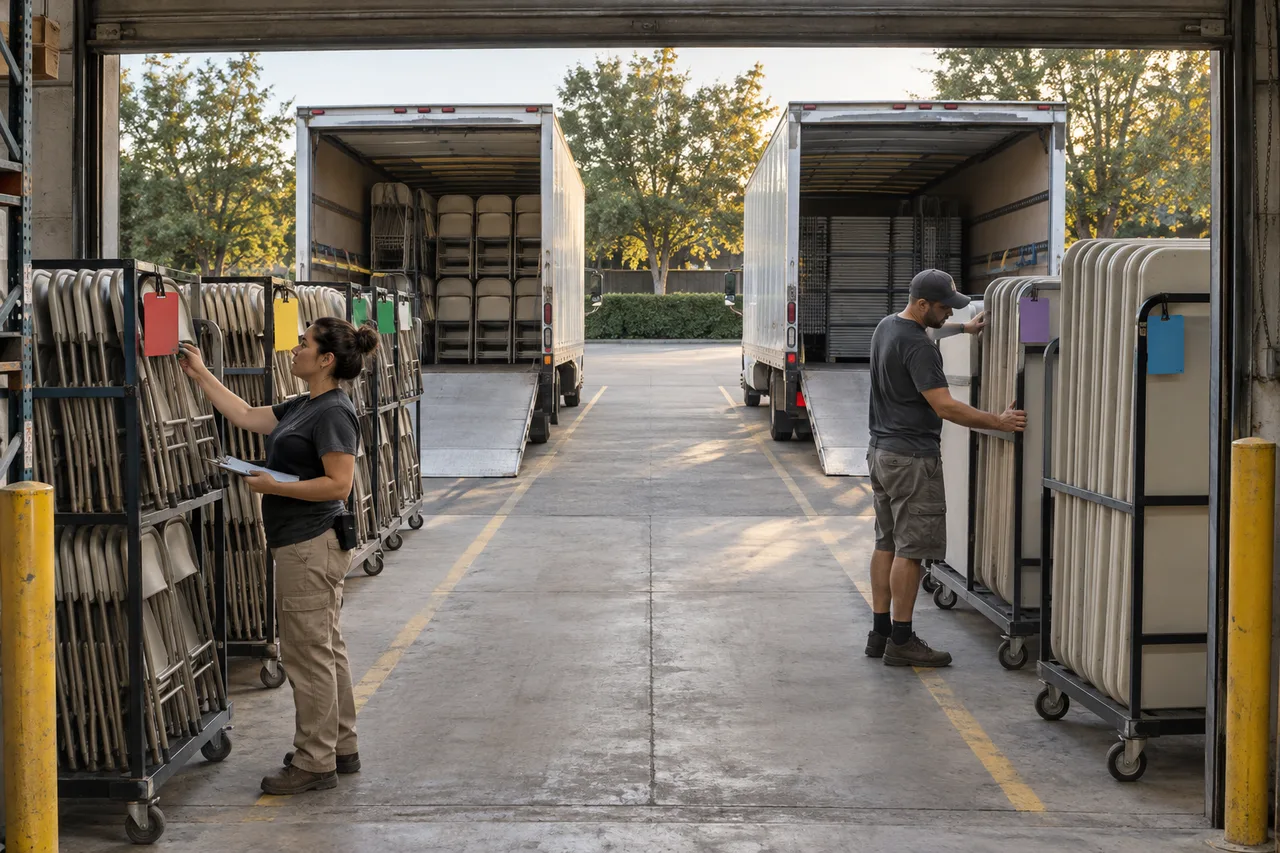
Build the first load estimate from the packed dimensions, quantities and weights the warehouse has verified. Consider awkward carts, cases, loading equipment and the space needed to access the next stop after another order is removed. Ask the people who regularly handle the gear to identify items that cannot travel together under their normal procedures. Work within the documented vehicle limits and the business's approved loading and securing process. A route plan should identify work that needs another vehicle before the crew is asked to fit it.
Use a small diagram or staging lane to describe the load order. Mark the groups by stop and make the first delivery easy to identify. When the vehicle and handling plan allow it, arrange the last stop toward the front and the first stop near the unloading door. Some equipment can only be secured in certain places or requires a particular way to load. Ask the qualified person in charge of the vehicle to confirm the sequence fits the approved plan before treating it as the route.
Check what still needs to remain on the truck after each unload. A delivery can create room, while a collection can fill that space again. Use the load at each leg rather than the starting capacity alone. Decide where returned equipment should travel and where it goes back at the warehouse. If the collection includes a different count from the delivery, use the expected collection quantities and keep room for ordinary discrepancies under the approved plan.
Group stops by fit before comparing distance
Give dispatch a list of fixed constraints. Include delivery and collection windows, vehicle requirements, any setup crew assignment and the handling tools each stop needs. Group visits where the same truck and crew can realistically complete the work. Compare travel options after grouping. An extra few minutes of driving may be acceptable if it avoids changing vehicles or disturbing a confirmed venue appointment.
Check the order of delivery and collection. If one job returns twenty tables, the earlier delivery may need to unload before there is room to receive the returns. An alternative is to assign collections to another truck with an appropriate setup. Confirm the availability of people and equipment on that vehicle. If a crew expects to use the same cart on two routes at the same time, settle the assignment before accepting the plan.
Try the proposed route against a normal variation. A venue might approve a later window, or a customer might want a slightly different number of chairs. Check whether the proposed variation affects the vehicle, unloading order or the next stop. For an accepted change, update the warehouse staging list and check the same physical details again. That lets dispatch compare routes using the order that will actually leave.
Work through two trucks with different jobs
Imagine that one truck can serve a narrow courtyard gate and carries a smaller load. The other has enough usable space for a larger rack of tables but can only use a bigger service approach. The courtyard job needs chairs and a handful of tables. A hall needs a full table rack and has a confirmed dock appointment. A third venue needs an afternoon collection of chairs and cases. Confirm the venue access for all three before deciding which truck receives the work.
Dispatch assigns the smaller truck to the courtyard and uses the larger truck for the hall. The warehouse checks the real packed layout and puts the equipment for each confirmed order in its own lane. After the mapped hall delivery is complete, the larger truck may have enough usable space for the collection, provided the venue can receive that vehicle and there is time to verify the return. Ask the driver and warehouse lead to confirm what will still be aboard before making the commitment.
Now consider a venue update. The hall changes the dock time so the truck would still be at the delivery when collection begins. Dispatch contacts the collection site to see whether another confirmed window works. The smaller truck could only help if it can handle the load, get to the venue and complete the assignment without affecting existing stops. Once a plan is agreed, both routes and the warehouse receiving notes need to show the same result.
Make a route brief a driver can act on
Put the stop order, receiving location, time window, scope and relevant contact together. Include the items and handling equipment that should be accessible when the crew arrives. Where a venue offers a preapproved alternate entrance or holding point, include it with the conditions for using it. If there is no alternate, say which office or venue role can make the decision. A driver should be able to explain the next step while safely stopped.
Use a short instruction for an unexpected load or access change. The driver can give dispatch the booking reference, what they see at the stop and what needs a decision. Dispatch can compare the current vehicle and later assignments before proposing an alternate. If the remaining return quantities differ from the reservation, record the actual count. Do not assume the truck can take them simply because it had room earlier. Give the responsible person a way to confirm the next movement.
Review the brief with the person who will take the first stop. Ask them where to enter, which equipment is being unloaded first and what could block the visit. Then ask someone at the warehouse to identify what the vehicle will bring back. If both read a different version, align the current booking and route before release. A readable stop list should let each person identify the current assignment without needing the scheduler to narrate it.
Plan where collections go once the truck returns
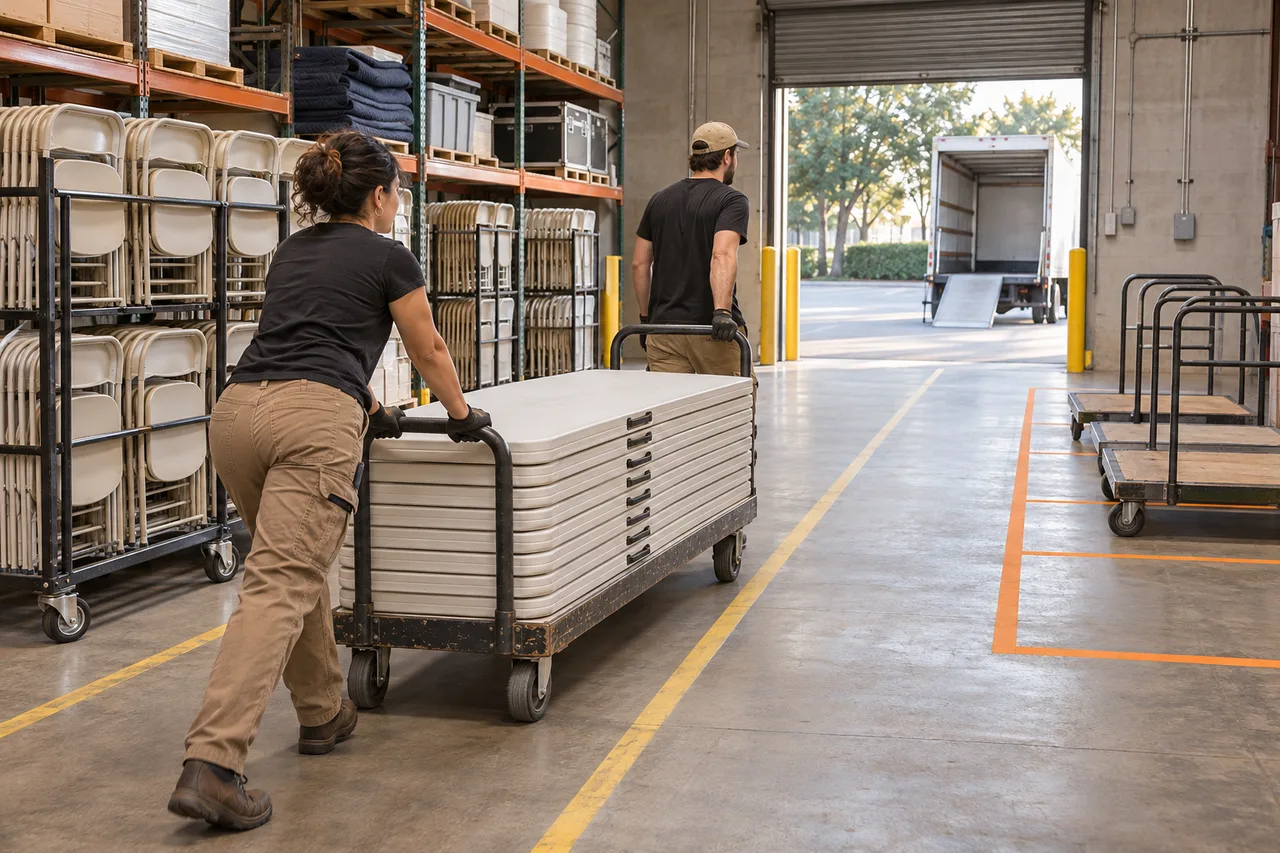
Decide which stop's items will be received first when several returns share the same truck. Use the booking reference and actual count so the warehouse can keep them separate. A cart of tables might need routine inspection while a few cases go to another bench. Make sure the employees who receive the truck know the plan, the quantities expected and how to follow up on anything still at the venue.
Use a late collection to test the plan. If the vehicle returns after normal intake, confirm where it should park and who will receive the equipment next. Keep the order and inventory status aligned with equipment still aboard. The sale of a rental for the next morning should depend on actual readiness under your normal rules. Ask which part of the return will be visible to the opening shift and who can explain any difference in quantities.
For a return to a different branch, check that the destination expects the equipment. Record what was collected, which vehicle carried it and what the branch received. Inventory that has left a venue may still be in transit. A receiving employee needs the actual result before offering it for the next booking. Review the capacity of the new location as well as the truck before moving the return.
Measure the work that a distance estimate cannot see
Keep actual times for travel, waiting at the site, unloading and any setup or collection work. Compare those with the route plan. Pay attention to stops where a crew took several trips from the truck, needed to wait for a receiver or loaded returns in a different order. Ask staff which part they could predict for another booking. Update the venue or product notes with information that will make the next estimate closer.
Review the load assumptions as well. If the planned rack required more usable space than expected, record which case or accessory caused the difference. If the same truck has spare space after its first stop but regularly can't serve a later collection, check the return volume and route window before adding more jobs. Use one specific change in the next run. Better staging, a different vehicle, or a confirmed dock time can each affect the result in different ways.
Give dispatch one or two reliable examples for training. Include a simple day with correctly grouped stops and a case where collection or access required another decision. Ask a colleague who didn't plan the route to explain what the truck can carry and who checks any exception. The system is working when the warehouse can stage it, the driver can recognize an access problem and the office knows which later promises still fit.
Review the plan before accepting an additional order
Ask which vehicle, crew and receiving time would handle a new job. Check the load after the stops already booked and before any planned collection. Find out whether the site has a confirmed approach and whether that vehicle can use it. Include who will complete the work and where the order goes on the staging list. If any necessary detail is still missing, have the responsible person verify it through the usual process before adding a commitment.
Compare a feasible alternate with the original request. A certain warehouse pickup can serve a local customer while the trucks are full. A different day may give the business a vehicle that fits the venue. Record which alternative the customer accepted and pass the result to the employee preparing the order. That keeps the route grounded in real equipment and schedules while giving people a useful path to a booking.
Check each leg with the proposed vehicle load
Put the unload and receive quantities on the same sheet. In a practice example, a truck has eight positions approved for this route's type of cart and case arrangement. It leaves the warehouse with six positions occupied. The first delivery removes three groups, and a pickup later in the route needs four. The estimate then shows seven occupied positions after the pickup, leaving one position under that simplified plan. Have the team check the actual equipment, allowed load, securing arrangement and usable space at each step before confirming the route.
Now add a change to the practice order. The collection site expects two extra groups on the same truck. Under the proposed arrangement, the pickup would end with nine occupied positions. Dispatch can consider a later stop after another unload, a different vehicle or an agreed second collection. The office can explain why the timing changed even though the number of stops and the driving distance hardly moved. Use separate checks for dimensions, weight and access when the equipment mix varies.
Give the warehouse a role in catching edits. If the collection manager adds an extra piece, dispatch should know whether its size or shape changes what can be carried. If a delivery quantity is reduced before loading, verify where the extra space will be and whether it can be used for the later collection. Update the record that the driver actually reads. A small change to an early stop can affect every later load on the same vehicle.
Keep access notes useful for the next visit
After the job, have the crew confirm which entrance it actually used and which conditions mattered. Record where it was allowed to unload and how staff reached the destination inside the building. A path used for one room may differ from the path for another room. Name the area, date and source of the confirmation rather than putting a vague “dock is fine” note on the venue. The next dispatcher can tell which parts need another check.
If a venue temporarily approved a different arrangement, mark that detail with the affected booking. The next customer may have a different access window or receiver. Keep recurring facts in the venue record and one-time approvals in the order. Before sending a crew back, compare the current request with the previous note. Talk to the right venue contact if there is any uncertainty about the first receiving point.
Rehearse a vehicle swap without losing the order
Walk through a practice day where a truck becomes unavailable before loading. Give dispatch the current jobs and the documented options for the replacement vehicle. Have the warehouse check the packed layout and a coworker confirm each venue's access. Mark anything that needs a revised arrangement and choose who confirms the new details with the customer. Rebuild the planned order only after the revised truck and crew can handle it.
Check the record at the warehouse, with the driver and with the person receiving returns. Explain which equipment moved to another truck and confirm that the original plan doesn't still appear as the active assignment. Run the same check for an ordinary day with no changes. The goal is a daily plan that remains readable while workers are getting ready, then carries the actual delivery and collection result back to the people planning the next route.