Build complementary roles on a rental crew
Build clear roles, backups and handoffs that carry current orders from your rental office through staging, delivery and return.

A rental shop has four people on a Saturday shift. Two know the warehouse well, one person knows the venues and another is usually the first to spot a problem in a quote. All four help load the trucks, yet calls still pile up and nobody knows who approved a late quantity change. Building complementary roles starts with points where one person needs to hand work to another. It gives each worker a chance to apply what they do well while making responsibility clear when the plan changes.
Start with a sample booking and name the decisions that occur from inquiry through return. Look at who is prepared to own each decision and what information the next person needs. Put a backup in place for decisions that can't wait while someone is on a route. Then test the assignments under a realistic workload and adjust the roles to match the way the crew actually serves orders.
List the decisions that change an order
Begin with an ordinary booking. The office receives a request, checks the equipment, confirms the terms and schedules the handoff. The warehouse needs approved quantities and time to stage them. A driver or pickup employee needs an accurate location, contact and a way to report a change. The receiving worker needs the outgoing list and enough information to decide which items can return to available stock. Map the route the order takes, including the messages and documents people rely on.
Identify points where someone has to make a decision. For example, a salesperson can check an unfamiliar date but may need the warehouse to verify a tight turnaround. The dispatcher can propose a new delivery time but may need the customer to agree before changing the route. A receiving employee can mark an item checked or hold it for review under the shop's procedures. These details help you assign responsibility more precisely than a label such as “helps with operations.”
Find the handoffs that create repeat work. A warehouse employee might prepare a list and then call the office to confirm every quantity. A driver might need a separate text to recognize the current address. Ask the employees what they need to see and when. The role arrangement should help them find the answer before they perform the work, with a clear route for questions that need another person's decision.
Match people to work they are prepared to perform
Talk with the crew about what each person does well and where they want training or support. Someone who knows the layout of the warehouse may be good at planning staging and verifying counts. Someone who works regularly with venue contacts may be prepared to review access questions. Use observed work, training and the requirements of the role as the basis for assignments. If someone has just learned a task, give them an appropriate way to practice before relying on them during the busiest shift.
Consider the kinds of attention the work needs. A warehouse lead may be able to watch the flow of carts while a colleague carries out a count. A coordinator can check new requests while dispatch reviews the vehicle schedule, then both can exchange the parts that affect the final booking. When everyone tries to act on each new request at once, staff may duplicate the work or assume somebody else has finished it. Choose one role to own the decision and make another employee available when it needs a separate check.
Give people room to cover one another without blurring responsibility. A small shop may have the same person handle customer messages in the morning and pickup appointments later. Define which role they are handling at each point and what happens to unfinished questions when they switch. If two people are available to answer, agree who handles new messages first and who takes over when needed. The arrangement should fit normal staffing rather than depend on extra people who exist only in an ideal plan.
Give each handoff one owner and one useful record
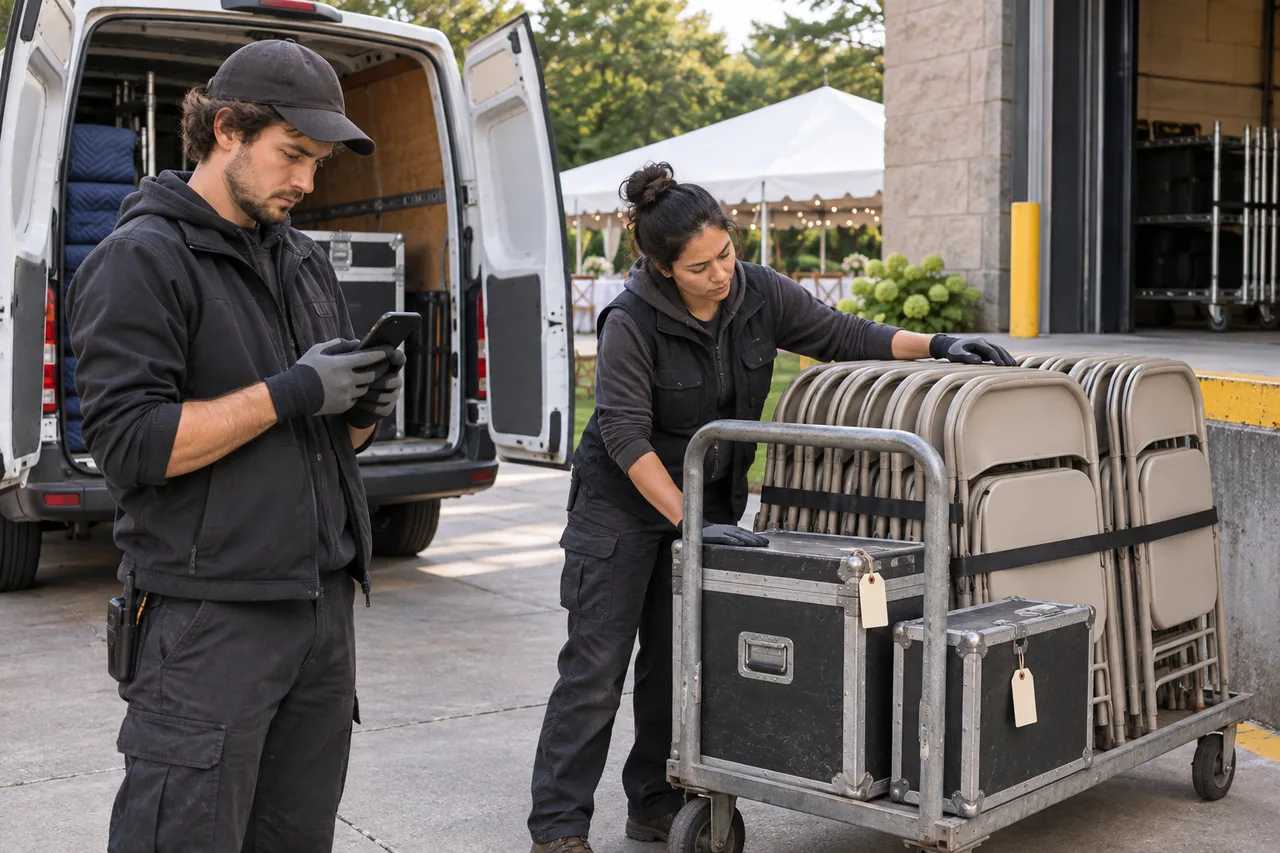
State the outcome each role provides to the next person. The office should pass an approved order with the items, dates and service agreed. The warehouse should pass a picked list identifying what has actually been staged and any missing pieces. Dispatch should give the crew the current stop and venue instructions. The receiving lead should make the condition and status of returned items clear. Each role can identify when its part is ready for someone else to act.
Put the outcome in a record the recipient already uses. For example, if the warehouse checks the order page before loading, make the approved changes visible there. If a printed list is necessary, agree how to identify whether a newer one has replaced it. Include a contact for questions. Avoid making the employee read a long update thread to find the single quantity or address that changed. The handoff is useful when it makes the next action clear.
Decide what the sender does when the work isn't ready. A staging worker might find that one item cannot be loaded. Give them a way to record the exception and tell the person who can review it. The warehouse can identify what it has prepared, while the office or dispatch reviews how that affects the booking. Make it clear which role can approve a substitution or revised customer promise. Staff should know what to do even when the right answer takes another check.
Include a backup for the work that cannot wait
Choose which decisions need a backup each day. Approving a late order change, confirming available stock, or updating the route may be time-sensitive. More routine work can sometimes wait while the responsible person is out. Put the backup role and contact beside the plan, and make sure the person can access the right records. A backup who has to ask the original employee to share a login cannot handle the decision when that employee is unavailable.
Give the backup a normal example to try. The driver is already away and the customer calls with a change to the pickup time. The employee covering the office needs to find the current agreement, check whether the crew can support a new window and confirm how to notify the driver. Use the same approval process that applies when the primary owner is available. Note any action the backup cannot do and determine who will handle it instead.
Walk through a transition between shifts. If an order is waiting for a quantity decision, give the next person the current state, next action and time it needs review. Avoid passing the whole shift's notes without highlighting what is active. A short handoff might state the order reference, who has been contacted and what the next worker is expected to verify. Practice the exchange before the crew faces several open issues at once.
Test a Saturday with two orders and a late change
Set up a hypothetical schedule with an early delivery and a customer pickup. Give both orders enough detail for staff to work them through. The delivery includes thirty chairs and has an agreed arrival window. The pickup is waiting on four tables that have returned and need a receiving check. Ask each role to prepare the job it owns and state the next action it expects someone else to take.
Add a late request to increase the delivery to thirty-six chairs. Ask the office who can approve the change and how it finds out whether the additional pieces can be reserved. The warehouse checks the current quantities and reports what it can stage. Dispatch verifies whether the revised load still fits the time and vehicle plan. After approval, have the worker at the loading door identify the final number without an explanation from the person leading the test.
Check the pickup at the same time. The receiving employee needs to record which tables are ready, and the person meeting the customer needs the current result. If the office cannot confirm all four, give the customer an accurate answer through the normal process. See whether both bookings keep moving or whether everyone moves onto the loudest problem. The test shows where a clear owner or a backup would make the shift easier.

Compare the number of interruptions before and after
Pick a few representative shifts and check how often employees had to stop and ask who owned a decision. Look at how many changes reached the crew before loading, how often a worker used an earlier instruction and which questions had to go back to the office. Use the order record and staff observations. Give people a place to explain the reason when the normal handoff wasn't enough.
Measure work that moved to another person. The warehouse may make fewer calls because a coordinator now verifies each revision. Count that time and check whether it is reasonable during a busy hour. A better arrangement can deliberately put more responsibility on a role that has the appropriate knowledge. It should be visible in the staff plan so the person has the time and support to do it.
Look again after someone uses the backup. That experience can show whether the responsibility is clear enough for another person to assume. If it only works when one employee knows the history of every order, write down the details a replacement needs before the shift. A good test should help the business identify which training or access is necessary rather than assuming it has covered the role by naming someone.
Train on the exchange between roles
When someone is learning a new role, show them the ordinary handoff as well as the list of tasks. Let them open a sample order and find what the office approved. Have them spot a missing item and tell the right person about it. Give them a second example where the booking is complete and they can go ahead. This lets the supervisor see whether the employee understands the condition that controls the next step.
Use a short instruction where the employee does the work. A driver can have a reliable place to find the current route and a person to contact about access. The warehouse can have a place to verify the final quantity before staging. Avoid making everyone learn unrelated steps just to answer one common question. Make training available for staff who want to move into a role and verify their readiness with a practical example.
Ask the employee what information felt missing during the practice. If they could do the job only after the trainer explained a code or a note, update the directions or order record. Bring the correction to the people who produce that information. A role is easier to teach when it receives useful inputs from the rest of the business.
Use a short shift plan to make responsibilities visible
Take one shift and put the main duties beside the hours when they need an owner. A Saturday may need the office to answer customer calls from eight to noon, a warehouse lead to verify staging before each truck is loaded and a receiving employee to check items as customers return them. Assign time for the transitions as well as the work itself. If one person owns more than one duty, show which work they should stop or hand over when the next one begins. A schedule with names but no time for handoffs can look complete until the first change arrives.
Read the plan from the point of view of the newest employee. They should be able to find who can confirm a customer change, where to report a problem and which job instructions to follow. Avoid adding a name to every small question when the ordinary record already provides a reliable answer. Use the shift plan for decisions that genuinely need an owner. Check that backup coverage fits those periods. A worker who is leading a delivery may be a good backup another day and an unavailable one during that route.
Try a ten-minute pre-shift check on a day with several jobs. Review only orders that need a decision, unusual access arrangements and which employees will cover the handoffs. Ask each role to identify the record it expects to update or receive. If two people think they are responsible for approving a change, settle it before opening the schedule to more work. If nobody can identify who is responsible for a pickup exception, assign an appropriate contact and tell the people serving the customer.
Keep the authority to approve changes visible
A task can require one person to do the work and another to approve the result. For example, the warehouse may confirm there are six more chairs but the office still needs to agree on the price and collect the customer's approval. A driver can report a change in access and may need dispatch to decide how to adjust other stops. Keep these distinctions on the booking and in the shift instructions. An employee can be useful at a decision point even when their job is to supply a verified fact.
Suppose a customer wants to move their delivery after the vehicle has left. The office finds the accepted time, the dispatcher checks the route and the driver can report the current location. The owner for the change decides what the shop can offer and records the agreed result. Practice the example with a clear limit: if the new time can't be confirmed, staff keep the current agreement visible and explain the next step to the customer. That prevents someone from acting on a draft plan that another employee hasn't accepted.
Review exceptions at the end of the shift. Note tasks that needed several calls because the responsibility was unclear. Decide whether staff need a better record, a short instruction or a different assignment. Keep approval authority with people trained and authorized for that work even when a change would be convenient. Clear roles let an employee bring the right information to a decision instead of expecting everyone to make the decision independently.
Revisit the roles when the week changes
Review the arrangement before a larger event, an extra vehicle route or a period when someone is away. Keep the important decisions covered and check whether responsibilities still match the work. A role that fits when the owner handles most quotes may need a different backup when both owners are on deliveries. Keep enough detail in the schedule for people to see where coverage changes and what to do with an open question.
Take a note from the first shift after an adjustment. Check which decisions were easy, which needed another person and whether customers and crew received the same current instructions. If the rules work for normal orders and become unclear around an exception, improve the escalation path instead of replacing the whole arrangement. Share what you learned with the employees who helped test it.
Complementary roles work when they give the right decisions to people who are ready to make them and give everyone else trustworthy information in time to do their part. Follow a real booking, verify the handoffs and practice coverage when something changes. That makes the crew more dependable even when the same few people cover more than one job.