Build a kayak rental day around launch and return logistics
Schedule kayak rentals around check-in, approved launches, shuttle capacity, verified returns and equipment readiness.
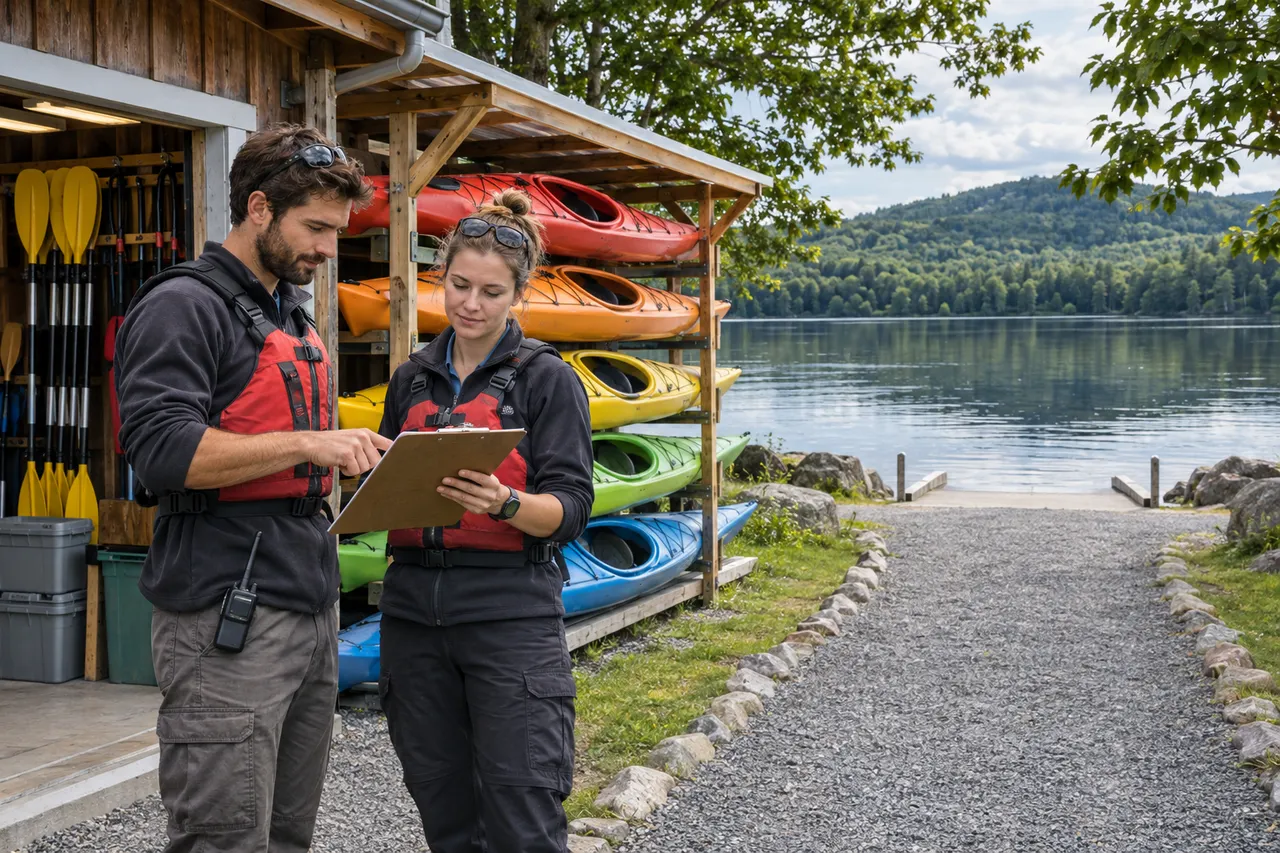
A kayak outfitter has eight boats ready at nine in the morning. Three customers arrive at the same time, one group still needs to check in, and the staff member who reviews equipment is due at the return area. The bottleneck is the launch, even though the boats are all free. Later, two customers finish at a different collection point and the shuttle has no room for the next group. A workable kayak rental schedule has to account for each physical handoff before it puts another trip on the calendar.
Start with one rental route or operating area and map the day from check-in to verified return. Identify the equipment, launch, pickup and staff that each booking uses. Set your operating rules with qualified local advice and current official guidance. The booking calendar can then enforce the service you can actually supervise, without treating the number of kayaks on a rack as the number of trips you can accept.
Define the operating model for one route
Distinguish a same-site return, a one-way trip with scheduled collection and a cautiously scoped delivery arrangement. Ask where each booking begins, who has to be present and where staff will accept the boat back. For a return at the same site, two groups might share the launch at different times. A one-way rental depends on people and equipment being at the right collection point. Document which formats you can support before letting customers select one.
Use a qualified review of each operating area, including site access, hazards, permissions, weather, emergency procedures and participant requirements. Tell the customer what the business will check before departure and what conditions can change the plan. Use the appropriate official forecast and warning information for the site. A calendar entry should be clear about its status when conditions still need to be reviewed. National Weather Service inland boating information
Create a route card for the business with the approved pickup points, launch instructions, allowed service windows and any relevant site contact. It should help a staff member confirm the intended route and know when to call a supervisor. Keep route versions current. If the planned collection point closes, review the change before treating another point as equivalent. The customer should receive only the route and instructions the business has actually approved.
Put check-in and the launch on the same timeline
Work backward from the planned departure. Include time for arrival, the shop’s required checks, equipment selection and a briefing by trained staff. Add a window for the group to reach the launch and for the preceding group to clear it. Tell customers when to arrive and what information to have ready. The public rental period may look like three hours. The shop handles the booking on both sides of that block.
Plan around several parties arriving together. Measure how many employees can handle check-in and gear fitting or selection at the same time. Give a group with several boats more room than an ordinary solo booking. Identify a safe waiting area and keep people from choosing unchecked gear to speed up the queue. Plan launches in blocks that match both site rules and observed staff capacity. Overlapping groups can be reviewed individually where the calendar cannot express the shared constraint.
Try a late arrival on paper before it happens. Find out when the business can repeat the required checks and still support a workable return. Give staff a specific way to offer a later or different supervised slot within the shop’s approved policy. Avoid promising the same end time if it cannot accommodate the changed plan. Communicate what is available before asking the next group to wait.
Match the whole kit to an approved rental
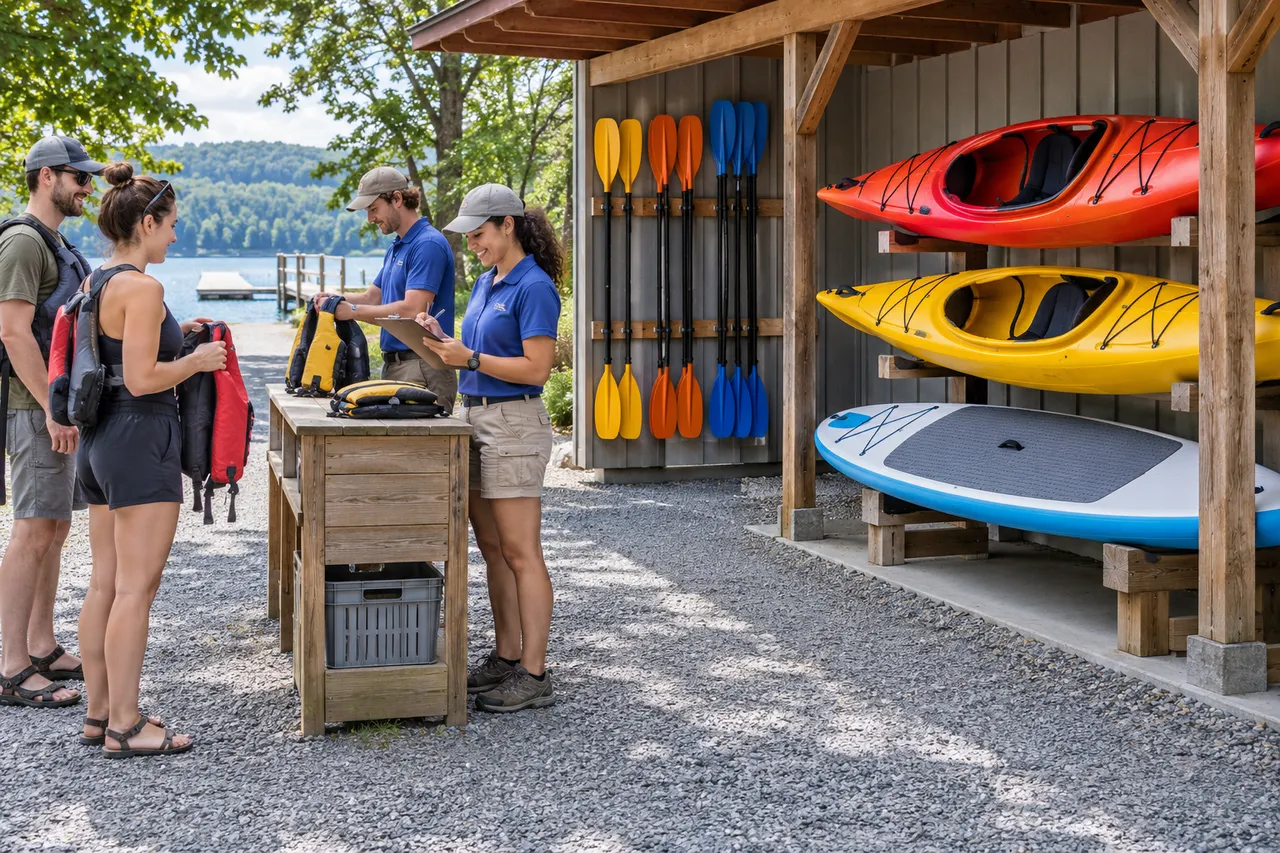
Count usable kayaks by type and condition, along with the properly selected equipment each booking needs. The team should be able to see whether it has the approved boat and all required gear for each participant. Give the employee responsible for that step a way to verify the selection. Keep current procedures based on the equipment, manufacturer documentation and applicable boating requirements. Reserve a boat and supporting equipment as a complete job.
Separate quantity from suitability. A shop may own extra gear that does not fit a particular participant or route. Do not promise an outing based on a larger combined count. Give staff a clear way to ask for appropriate details and route uncertainty to the qualified lead. If conditions, participants or equipment fall outside the service the business can safely support, change the booking only after the lead verifies an acceptable alternative.
Assign a known boat and key equipment to the trip. Tell both launch and recovery staff what has gone out and where it is expected back. Include how to contact the business. A crew can log changes when a boat is swapped before launch without losing the original assignment. Verify the replacement against the same procedures and update the return list before the group leaves.
Plan the collection point and the driver separately
For a one-way trip, set a collection window based on the service the company actually runs. Determine which location can be used and how the driver will identify each group and boat. A road-based shuttle should have capacity measured for its approved vehicle and actual equipment, passengers and staff. A free trip on the driver’s calendar does not guarantee the right vehicle or capacity for the group. Check the entire assignment before opening another time.
Schedule the movement after collection. A vehicle returning to the launch with boats may still need unloading and staff verification. If the same driver needs to start a second collection, account for those tasks and travel. Give the receiving team an expected arrival, and tell the customer which time represents return on land versus the end of service. If collection times vary, share the supported process for reporting that a group has arrived or needs assistance.
Run one example with more than one group at the collection point. Confirm who can be collected as planned and how staff identify extra or missing boats. Keep pickup acknowledgments attached to their own booking. If one group changes the approved end location, route the request through dispatch and a qualified lead. Update the plan only after confirming the new arrangement can be supported. The next employee needs a clear current location, not two conflicting notes.
Define the return check before the first group leaves
Set explicit return expectations and staff responsibilities. Ask the qualified team to define normal communication, how to verify completion and how to address overdue or missing groups. Maintain an appropriate route and return record. The U.S. Coast Guard offers a float-plan resource that includes small craft. Use it as a reference for the organization’s procedures and follow the relevant guidance where you operate. U.S. Coast Guard float plan resource
At return, account for the participants and equipment under the shop’s approved procedures. Mark the time and location of the verified return. If some gear comes back separately, record what arrived and who is following up on the rest. Keep an item out of circulation if it needs review. The team should distinguish “expected back,” “received” and “ready for the next booking.” Verify each stage when it happens.
Try a practice handoff across shifts. The employee leaving should be able to show which groups are still expected, what is outstanding and what to do with any exception. Give the incoming employee a clear contact and next review point. A group that has reported its return but is still waiting for collection has a different status from a group the team has not heard from. Use the organization’s approved escalation process for concerns. Direct emergencies to the appropriate local emergency service.
Decide how many departures the launch area can handle
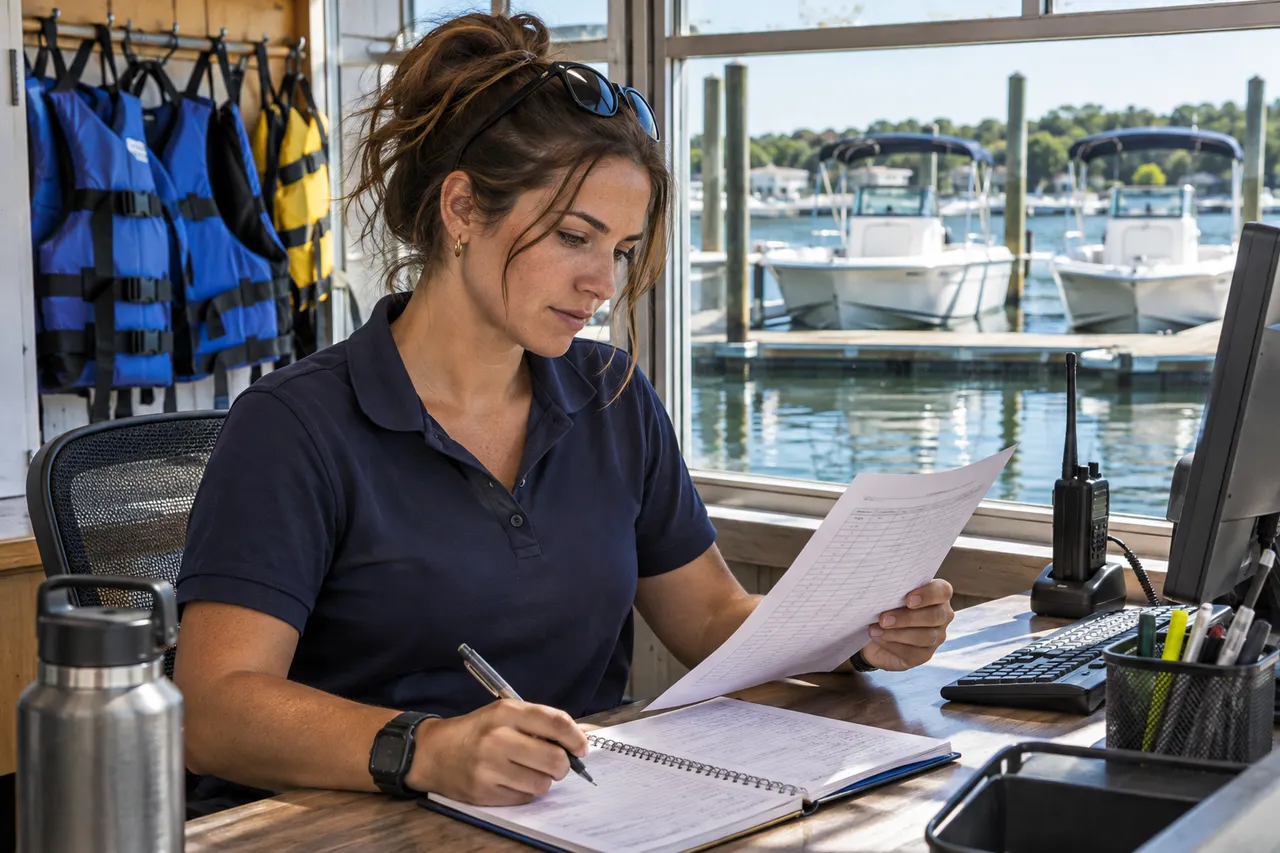
Walk the route from arrival parking to check-in, equipment selection, the waiting area and the approved launch. Ask the responsible staff to identify where simultaneous activity becomes difficult to manage. One employee may need to stay with a group while another verifies gear. A path might have to remain available for other visitors. Make the limit match the actual supervised process and site rules. Observe an ordinary group and a larger booking before adopting the same interval for both.
Create a practice schedule that includes time at each stage. If checking in a regular pair takes ten minutes and a group booking needs longer, put that difference in the arrival window or approval process. Use different buffers for routes if the team must move equipment farther or hand off more pieces. A departure stagger can prevent a queue from moving to the shoreline. Verify where groups wait and which staff member tells them when to proceed.
Run the example with a return at the same time. Someone needs to document the arriving party and receive the equipment even if the next launch is ready. Decide whether the same worker can do both or whether departures need to pause in that window. Measure the pause on an ordinary day and adjust the slots before peak demand. Add necessary work to the schedule rather than simply asking staff to move more quickly.
Make it clear which pieces of the fleet are at each site
If you work from more than one location, build a view of the units and staff actually assigned to each location. Keep approved transport between them as a separate movement. A kayak due back at one location may need a collection, inspection and transfer before it is ready at another. Do not make it available at both places while that movement is pending. A worker should be able to see the confirmed location and when the next verified check is expected.
Create a practice case where a group chooses a different start location after reserving. Check whether the new site has the proper boats and equipment, whether the route is supported and who can supervise the departure. If it cannot work, give the customer an accurate answer before anyone changes the confirmation. When the change is accepted, update the original booking so both locations see the current assignment and neither prepares duplicate gear.
Look at what staff need when transport is late. The coordinator at the new location should see which unit is actually coming and what could affect its release. Someone at the original site might be able to verify an alternative that follows the same approved route. Keep one worker responsible for sharing the update. This can prevent two people from offering different start times to the same customer.
Make weather and site changes part of the schedule
Assign responsibility for reviewing conditions before departure and while bookings are active. Use official local information and qualified judgment for the exact conditions and equipment. Do not let a fixed rule in a booking page replace the operator’s procedures. Create a visible status for bookings awaiting a decision so the customer and staff understand whether to arrive. Communicate any change as early as practical.
Practice a schedule interruption when the launch site becomes unavailable. Decide which bookings need to be postponed, which can be supported under a separately verified plan and which customer messages need to change. Give staff a list of bookings already checked in as well as those still expected. Carry forward the actual schedule for boats, transport and staffing instead of creating a replacement time for everyone without checking the rest of the day.
Define how cancellations or rescheduling reach the warehouse and office. A customer might receive a new date while the original equipment hold still uses stock. Check both records. Keep the revised time attached to the booking and the applicable terms visible. A weather-related change may affect several bookings at once, so give the team a single source for the current plan.
Rehearse a practical morning and afternoon
Try a simple example with six ready boats, two trained staff and one collection vehicle. Schedule two morning groups and one collection, then include the return check before another launch. Assume the first group arrives late and one boat needs qualified review after return. See what the business can still offer in the afternoon. Compare the result with the available-start-times view customers see. The goal is to expose an assumption before it becomes a booking.
Observe where staff do extra work. They may answer the same parking or pickup questions. They may need to move gear between distant staging areas. A better confirmation or an approved change in layout can relieve a constraint without adding boats. Check whether the following shift can see what changed. Then rerun the same example and compare results.
Keep a few useful measures. Record scheduled versus actual launch times, collection trips and equipment release. Note incomplete kits, bookings deferred for conditions and delays that affected the next group. Review whether the issue was staffing, gear readiness, a route detail or the booking window. Change the rule that caused the repeated conflict and test the effect before offering more slots.
Review what a complete kit looks like at closing
At the end of the day, compare ready boats with verified returns, open issues and the first departure assignments for tomorrow. Check that unit references still identify the boats on the rack. Review which equipment is missing or needs attention and who will clear it. A group marked returned can still have an incomplete gear record. Put the specific shortage on the next shift’s list rather than assuming it will be found in the morning.
Check the collection vehicle too. A crew may have brought a set back just before closing and left it staged on the vehicle under its normal procedure. Dispatch needs to distinguish that from gear released and available at the launch. Give one person the next check and time. Keeping the physical states accurate at closing protects the first booking most vulnerable to a surprise the next day.
Consider how the last scheduled pickup affects the business’s closing time. The crew needs time to reconcile the final group and follow up on incomplete returns even after the public counter closes. In a one-way model, reserve a reasonable window for the vehicle to reach the receiving area and for equipment to be checked. Review the staffed hours before adding another late departure. If an approved contingency requires a worker to remain after the normal close, assign that responsibility in advance and keep the next shift informed.
Increase capacity where the launch-to-return cycle allows it
Choose the next addition based on observed limits. The business may need more ready boats of a particular type, more staff available to manage departures or a different collection schedule. Check how each option would affect the rest of the day. More boats will not change the number of groups the current launch crew can safely handle. Another driver cannot make an unverified collection point workable.
Add a route or departure window only when you can verify the operating conditions and staff can repeat the full cycle. Update the customer information and make sure bookings for both routes cannot claim the same supporting gear or crew at the wrong time. Try the new plan on a small number of jobs. Keep what you learn when the schedule returns to its busiest pattern.
The useful question at nine in the morning is how many complete trips can start and return as planned. Count the people and steps that make each trip possible. Give customers a clear schedule and give staff a verified record of who has launched, who is expected back and which boats are ready to go again.