Add a final inventory check before equipment leaves
Build a final rental inventory check for what actually leaves the warehouse, including quantities, accessories, route assignments and exceptions.

Ten minutes before a delivery truck leaves is a useful time to find that the order has ten table legs and twelve tabletops. It is a much better time than the moment the crew starts setting up at a venue across town. A final inventory check works when it catches mistakes that can still be fixed. It should take the crew through the handful of decisions most likely to affect the job, with a clear place to report exceptions and enough information to put the truck back on schedule.
The check starts with the last approved version of the order, follows the equipment out of the staging bay, and ends with a record of what the crew actually took. Folded tables are a useful example because quantities, style, condition, accessories, and loading order all matter. The same check can cover inflatables, lighting, linens, or other equipment with its own identification and inspection requirements. Keep operational checks separate from any specialized setup or safety inspections your crew must perform.
Make a list that describes what actually has to leave
Start with the order as it was last confirmed. Include the booking reference, event date, delivery or pickup window, and the items and quantities. Show a product name the warehouse recognizes plus a distinguishing feature when it matters. “Sixty white resin chairs” gives a better instruction than “chairs.” Add dimensions or style to table lines when two products look alike. Record the units clearly. One bag of clips, one kit, and one individual clip are three different counts.
Translate packages into the parts the crew needs to load. If a client orders an eight-table package with linens, include the table size, quantity, linen size and color, and any other included pieces. If a commercial package draws stock from separate shelves or businesses, give the pickers those locations and make it obvious which parts are already staged. The client does not need to see every warehouse component on the invoice. The person checking the truck does need enough detail to know the package can be delivered as sold.
Mark additions and changes with a revision date. A late change to the linen color or quantity should appear in the active list rather than a separate message that might be missed. Keep only the current working copy at the staging bay. Where there is a printed manifest, replace it or have the person issuing the change note exactly what was superseded. The crew should be able to tell which totals to use without comparing screenshots from a group chat.
Separate picking, preparation, and final check
Picking gathers the items. Preparation makes them ready to go. The final check verifies that the prepared order matches the booking and the assigned route. In a small warehouse, the same person might do all three, but they can still perform them as separate steps. A picker can confirm that all the chairs are present, then set a cart in the marked staging bay for inspection. A later check can confirm condition and readiness before the cart moves again. Mark each state so an item mid-process does not look ready to load.
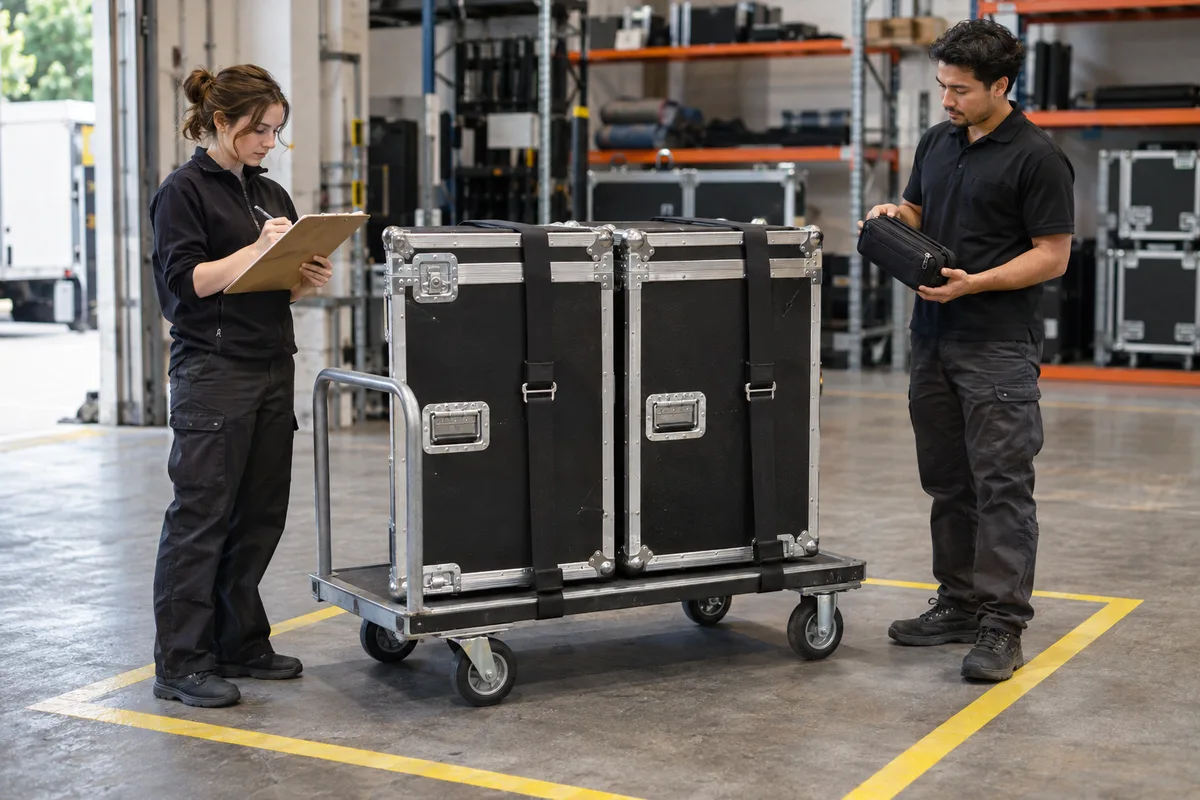
Plan a clean place to stage each order, with enough room for labels and counts. If the truck carries two stops, give each stop its own identified area or cart. Add smaller bins for hardware and accessories that cannot safely be stacked with the main pieces. Put a copy of the list or a visible booking reference on the staged load. When the loader receives stock that is prepared for several bookings, they should be able to tell which stop each piece belongs to without opening cases.
Schedule the final check before the departure deadline with enough time to act on what it finds. A large order may need a separate check the afternoon before, followed by a quick comparison in the morning for last-minute changes. Ten minutes may be enough for a small pickup if all items are laid out. It may be far too late for dozens of mixed cases. Record how long checks and corrections take for several orders, then give the crew realistic time in the dispatch plan.

Check quantities and completeness in the right units
Use the physical unit the crew can verify. Count individually when that is the only way to tell how many are present. For known full carts or sealed packages, use a verified cart count or packaged quantity and check partial groups separately. For example, four verified carts with twelve chairs each plus a partial cart with nine gives fifty-seven, even if the pick ticket says sixty. If one cart has been used to fill another order, its old tag should no longer be treated as proof of its contents.
Call out every item that can be missing while the main product is visibly present. A sound system might need stands, cables, adapters, and any agreed backup pieces. A set of tables might need compatible legs or base parts. Keep each list as short as it can be without hiding an important dependency. Package the small items together where appropriate, and label the bin with the order and kit so a second person can identify what it contains.
Check model or condition when the customer and crew rely on it. A different cable may look plausible and still fail a compatibility check. A table with a damaged edge may be present and countable without being suitable for the booking. Where equipment needs specialist inspection, give responsibility to a qualified person, record the outcome, and keep questionable stock out of the outgoing stage until it is cleared. An equipment count is only one part of deciding readiness.
Confirm the order against the route
When the truck carries multiple stops, make sure the staging identifier matches the route and the planned vehicle. A perfect count does not help if the order goes out on the wrong truck. Show the primary venue contact and the relevant access window in the dispatch notes. Include the entrance or pickup point if it differs from the venue address. Review the planned drop order and ensure the pieces for the first stop can be unloaded without moving equipment for the second. Follow the equipment and vehicle loading requirements that apply to your work.
Schedules change during busy mornings. A driver might have a vehicle issue or a venue might move an access window. When dispatch changes the assignment, check whether the revised vehicle and crew can handle the load and the stop timings. Put the new route where both the warehouse and driver can see it. Confirm which orders moved and which stayed on the original truck. Avoid using vehicle shorthand that two people interpret differently. A copied label or an old route sheet can be enough to send equipment in the wrong direction.
At pickup counters, check the order against the correct customer and collection window. Confirm the items are staged for them and make any instructions or documents available at the handoff. Where a customer returns for the missing pieces later, record those as a separate handoff so the outstanding items are clear. The check is equally useful for customer collections even though no staff driver loads a truck. The same question applies either way. What equipment did the customer or crew actually take away?
Decide how to handle a discrepancy before somebody finds one
Give staff permission to stop a load briefly when the equipment on the list does not match what is staged. Define where the discrepancy goes and who decides what happens next. Some differences are easy to fix, such as a counted cart that needs three more chairs from ready stock. Others need an office response, such as a venue-approved change or a substitute of a different size. The crew should be able to continue checking unaffected items while the exception is sorted out.
Record what is wrong in a form the next person can act on. “Tabletop missing” may be enough if there is only one. On a mixed order, write the size, finish, expected quantity, observed quantity, and where the crew looked. Record the next decision time if the truck is waiting to leave. Ask the person who can make the decision to return a specific resolution. “Use one matching tabletop from rack T3 and tell dispatch when it is loaded” is clearer than “should be okay.”
If you need to substitute an item, verify that the replacement fits the job and obtain customer or venue agreement when the change requires it. Update the final list with the item actually loaded. Do not silently overwrite the original specification and lose track of what the client approved. If you split the delivery, give each trip its own list and clear ownership of the remainder. Record when the customer should expect the rest and how the team will confirm the final handoff.
Keep a usable load record when the warehouse loses its connection
A digital checklist helps when the office can update a booking and the warehouse can see the change. A weak signal near a loading bay can undo that advantage if staff discover it while several trucks are waiting. Test the connection where the check actually happens, with the doors open and with a vehicle parked in the usual position. Have a planned fallback for the staff member who discovers that a tablet has stopped syncing.
A printed list can work for a single shift. Give each page the order or stop reference and the time the list was produced. When the office makes a change, have it tell the person holding the list and record the approval beside the amended line. A penciled quantity with initials and a time gives the next employee enough context to follow up. Keep confirmed changes with the order when the connection comes back. The person doing that reconciliation should be able to tell whether a change had already been entered from another device.
Use the same fallback for an unexpected stop added after the route leaves. Send the driver only the list relevant to that stop and agree on how the driver will acknowledge it. If a person waiting for equipment calls the office, somebody should be able to look up the most recent confirmed list and answer whether the gear is still in staging, on a vehicle, or already delivered. Collect the paper copies at the end of the shift so an old list is less likely to be mistaken for tomorrow’s plan.
Walk through a two-stop loadout
Imagine Truck A is scheduled to deliver sixty white chairs and eight banquet tables to a morning venue, then twenty black folding chairs and four cocktail tables to a second address. The first delivery has a tight setup window, so it is staged nearest the loading position with its own booking reference. The driver’s manifest shows the order of the stops and the location of the morning venue’s unloading entrance. Each order has a bin of any included accessories tagged to match its equipment.
During the final check, the checker finds fifty-seven white chairs, eight tables, and all included accessories at the first bay. There are twenty black chairs at the second. The picker could correct the first shortfall with matching stock from the ready rack if it is available. Taking three of the black chairs would change the customer’s order and short the second delivery. Reserve the ready replacements for the first job, count them into its staging area, and update the check. The driver can then verify that their load includes the new cart or separate stack.
Now suppose one of the cocktail-table bases in the second bay needs inspection. Hold it out of the load, determine whether an interchangeable base is ready, and have the appropriate person verify the fit. Update the affected order as soon as the replacement is known. If there is no suitable replacement, have the office review the alternatives with the customer before the vehicle leaves. The first job can still go out on time if dispatch can split the second stop without disrupting other commitments. The aim is a confirmed decision and a visible record of what remains outstanding.
Make the record useful at the venue and at return
Give the driver or pickup employee the checked list. The person receiving the equipment should be able to tell which pieces belong to the order and what was intentionally delivered separately. At the venue, note any additional shortage, substitution, or damage found during unloading. Take a photo or record an identifier when it is useful and allowed. Add it to the booking or condition record so it will be available for the next handoff. A delivery receipt without equipment details can confirm arrival but still leave the disputed quantity unclear.
The final loadout can also be the basis of the return count. If eight tables and sixty chairs left, that is the starting point for what should come back, adjusted for documented changes at the venue. If the rented equipment comes back in stages, count it against the correct load record and keep the outstanding amount visible. Follow any equipment inspection process before moving it to ready stock. The order should remain easy to trace when the employee who loaded it is off the next morning.
Use the check record to see whether the process helped. If a missing accessory is found at the warehouse instead of the venue, record the kind of issue and how it was corrected. A pile of unchecked “all good” rows is less useful than a few clear examples of where the process catches errors. Track late departures, incorrect item types, missing small parts discovered at the venue, and repeated changes to manifests. Use trends to improve list details, storage locations, training, or review timing.
Trial the checklist before rolling it out across the warehouse
Start with a category that has enough orders to reveal common mistakes. Test the list on an ordinary day and on a day with several deliveries. Ask someone familiar with the booking to prepare the order and someone who has not seen the quote to check it. Watch where they need extra information. If the checker cannot tell whether a table’s hardware is included, make the equipment list explicit. If the quantities are clear and the delay is waiting for a decision, focus on the exception handoff.
Draft a simple checklist from the trial. Put the current order and route at the top, then group the work into quantity, compatibility or required components, condition status, and final handoff. Provide a place to record exceptions and who cleared them. Keep it visible at the bay and usable on a phone if the crew works from a digital list. When you revise the checklist, keep one current version and remove older printed copies from the work area.
End with a quick review after the next busy weekend. Ask which problem the check caught and which one slipped through. Improve the specific part of the workflow that failed. If hardware repeatedly lands in the wrong bin, labeling the staging location and bin may help more than adding another count. If route assignments change after the checker signs off, move the route check closer to departure. The best inventory check protects the next handoff and tells the team exactly what still needs attention before the equipment leaves.